Windows Errors? Fix Them Before They Spread
Repair common Windows errors and clear accumulated junk for a smoother, more stable PC - no reinstall needed.Free scan · no reinstallOutdated Drivers Are Slowing You Down
One free scan finds every outdated or missing driver and matches the right update for your exact hardware.Free scan · exact hardware matchRoberta Flack’s essential catalog begins with two towering performances—“The First Time Ever I Saw Your Face” and “Killing Me Softly With His Song”—but it does not end there. Across jazz, folk, gospel, soul, pop, adult contemporary, soundtrack work, and landmark duets, Flack made understatement feel dramatic. The 18 songs below are arranged broadly chronologically, creating a listening path through her breakthrough, Atlantic-era peak, Donny Hathaway partnership, later collaborations, and final studio statement.
1. “The First Time Ever I Saw Your Face” — First Take (1969)
Flack’s defining recording is a study in controlled intensity. Ewan MacColl’s folk song moves at an unusually spacious pace in her hands, with piano, strings, and silence doing as much expressive work as the vocal. The recording became a major cultural breakthrough after appearing in Clint Eastwood’s 1971 film Play Misty for Me. It reached No. 1 on the Billboard Hot 100 for six weeks and won the 1973 Grammy for Record of the Year.
| # | Preview | Product | Price | |
|---|---|---|---|---|
| 1 |
![The Montreux Years[180g 2 LP]](https://m.media-amazon.com/images/I/41o13Qg-NpL._SL160_.jpg)
|
The Montreux Years[180g 2 LP] | $37.60 | Buy on Amazon |
| 2 |

|
First Take | $23.51 | Buy on Amazon |
| 3 |

|
The Best of Roberta Flack | $44.99 | Buy on Amazon |
| 4 |

|
Killing Me Softly | $34.75 | Buy on Amazon |
| 5 |
|
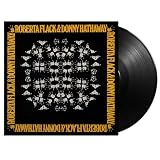
Roberta Flack & Donny Hathaway | $36.63 | Buy on Amazon |
Its importance is not simply commercial. Flack makes the song feel intimate without becoming showy: each phrase seems carefully placed, and the emotional temperature rises through restraint rather than vocal excess. It is the clearest introduction to her signature style.
2. “Compared to What” — First Take (1969)
The opening track of First Take reveals the side of Flack that two famous ballads can obscure. “Compared to What” is jazz-soul with a firm, propulsive groove and a socially pointed lyric. Her delivery is cool but not detached, allowing the rhythm section and the song’s tension to carry the protest.
#1 Best Overall
- Robert Flack: The Montreux Years presents live performances spanning nearly four decades, from her Montreux Jazz Festival debut in 1971 through to 2008
As a starting point for the album, it announces that Flack’s music will not be limited to romantic material. She could be politically alert, rhythmically assertive, and deeply connected to jazz as well as folk and soul.
3. “Tryin’ Times” — First Take (1969)
“Tryin’ Times” supplies another piece of the debut album’s character. Its blues and gospel undercurrents emerge through Flack’s phrasing, which sounds searching rather than performatively anguished. The song has spiritual and social gravity, but the arrangement leaves room for the listener to sit with its uncertainty.
Placed alongside “Compared to What” and “The First Time Ever I Saw Your Face,” it makes First Take feel like a complete artistic statement—not simply a collection of sophisticated ballads.
4. “You’ve Got a Friend” — Roberta Flack and Donny Hathaway, Roberta Flack & Donny Hathaway (1972)
Flack and Hathaway turn Carole King’s composition into an intimate, church-inflected conversation. Their voices do not compete for dominance. Instead, the performance depends on blend, response, and the sense that each singer is reassuring the other.
The collaboration had roots beyond the studio. Flack and Hathaway were connected to Howard University, and Hathaway had worked with Flack as a pianist and arranger before their formal duet album. That shared musical background helps explain the recording’s natural, almost communal quality.
5. “Be Real Black for Me” — Roberta Flack and Donny Hathaway, Roberta Flack & Donny Hathaway (1972)
This deep cut is one of the most revealing recordings in the pair’s catalog. “Be Real Black for Me” is warm and conversational, with the emotional force coming from the way the two singers inhabit the song together rather than from a conventional vocal climax.
It is also a useful corrective to the idea that Flack and Hathaway’s partnership was defined only by crossover singles. The album’s identity is built just as much on this kind of intimate, culturally grounded exchange.
6. “Where Is the Love” — Roberta Flack and Donny Hathaway, Roberta Flack & Donny Hathaway (1972)
“Where Is the Love” became one of the duo’s signature recordings, reaching No. 5 on the Hot 100 and earning a Grammy nomination for Pop Performance by a Duo or Group with Vocals. Its appeal lies in the contrast between Flack’s measured, almost conversational delivery and Hathaway’s gospel-rooted intensity.
Rank #2
- The breakthrough debut by the iconic mistress of pop, jazz, soul, R&B, blues is unparalleled in the years since in its genre blending, emotional power, and raw impact. Recorded over 10 hours in 1969 during the turmoil of the late 60s in the wake of the assassination of Martin Luther King, and before the general realization of the cultural shift that would become embodied in Woodstock, First Take is the work of a woman who was known as a child prodigy and would later earn the title of genius. The album opens with “Compared To What,” a politically charged track that pre-dated Marvin Gaye’s “What’s Going On” (an incredible cover of which was rel
The arrangement never turns the duet into a contest. Their different vocal centers remain distinct, yet the performance sounds emotionally unified—bittersweet, poised, and quietly urgent.
7. “For All We Know” — Roberta Flack and Donny Hathaway, Roberta Flack & Donny Hathaway (1972)
Their reading of this standard emphasizes tenderness and blend. Rather than treating “For All We Know” as a showcase, Flack and Hathaway give it the feeling of a shared remembrance. Beneath the romantic surface is the devotional quality of their musical upbringing: the performance has the closeness of two voices shaped by church singing.
It is a quieter choice than “Where Is the Love,” but an essential one for understanding why the album remains such a persuasive duet record.
8. “Killing Me Softly With His Song” — Killing Me Softly (1973)
Flack transformed “Killing Me Softly With His Song” from a relatively slight folk-pop composition into a dramatic soul narrative. The singer in the lyric recognizes her own life in another performer’s music; Flack makes that recognition feel private, unsettling, and unavoidable.
The song topped the Hot 100 and won the 1974 Grammys for Record of the Year and Female Pop Vocal Performance. It also gave Flack consecutive Record of the Year victories—the second half of an achievement that began with “The First Time Ever I Saw Your Face.” The performance is not powerful because it overwhelms the song. It is powerful because every controlled phrase seems to reveal another layer of vulnerability.
9. “Jesse” — Killing Me Softly (1973)
“Jesse” shows the more psychologically intimate side of the Killing Me Softly sessions. It is quieter and less instantly recognizable than the title track, but that is precisely its value: Flack makes absence and longing feel suspended in the room.
For listeners exploring the album beyond its hit, “Jesse” is an ideal next stop. It demonstrates how much emotional detail she could create without raising her voice.
10. “Suzanne” — Killing Me Softly (1973)
Flack’s version of Leonard Cohen’s “Suzanne” connects her commercial peak to the folk and singer-songwriter repertoire that had shaped First Take. She does not treat the song as a museum piece. The arrangement recasts its elusive imagery through sophisticated soul phrasing, giving the narrative a warmer and more fluid emotional setting.
Free tools Windows power users keep installed
One-click scans. No signup required.
Rank #3
It is another example of Flack’s gift for interpretation: she could take a song associated with a particular writer or genre and make it sound as though it had always belonged to her.
11. “Feel Like Makin’ Love” — Feel Like Makin’ Love (1975)
The title track became Flack’s third No. 1 pop single and helped define the smooth, intimate R&B sound later associated with quiet storm. Its sensuality is understated rather than theatrical. Flack lets the groove remain relaxed while her vocal gives the lyric a feeling of adult confidence.
The album also marked an expansion of her studio authority. She took a stronger production role, working under the name Rubina Flake. That makes “Feel Like Makin’ Love” important not only as a hit but as evidence of Flack’s increasing control over the atmosphere and construction of her records.
12. “The Closer I Get to You” — Roberta Flack and Donny Hathaway, Blue Lights in the Basement (1977)
“The Closer I Get to You” reunited Flack and Hathaway after their celebrated 1972 duet album. Written by Reggie Lucas and James Mtume, the song reached No. 2 on the Hot 100 and became one of the most recognizable recordings in either artist’s catalog.
Recommended Free Tools
Compared with “Where Is the Love,” this is a more polished late-1970s crossover production, but the essential balance remains: Flack’s poised phrasing meets Hathaway’s emotional lift. The result is romantic without losing rhythmic definition.
13. “Why Don’t You Move in With Me” — Blue Lights in the Basement (1977)
The opening track of Blue Lights in the Basement shows Flack moving toward a more contemporary late-1970s groove. Her vocal remains controlled, but the setting is less hushed and more rhythm-forward than the early albums.
That shift matters. “Why Don’t You Move in With Me” helps explain the album’s commercial importance while showing that Flack could update her sound without surrendering the space, clarity, and emotional reserve that made her distinctive.
14. “Back Together Again” — Roberta Flack and Donny Hathaway, Roberta Flack Featuring Donny Hathaway (1980)
“Back Together Again” offers an upbeat counterpoint to the hushed intimacy of “Where Is the Love” and “The Closer I Get to You.” The groove is lively, and the performance feels celebratory, but the duet still depends on the singers’ ability to leave room for one another.
The Tool Desk
Outbyte PC Repair FREEClear out junk files and repair common Windows errorsFree Scan →Outbyte Driver Updater FREEScan for outdated or missing drivers - takes under a minuteDriver Scan →Rank #4
- Ships in Certified Frustration-Free Packaging
The recording received a Grammy nomination for R&B Performance by a Duo or Group with Vocals. Its place in the catalog is especially poignant: it documents the partnership returning to a more buoyant, rhythm-led setting during a later phase of their collaboration.
15. “You Are My Heaven” — Roberta Flack and Donny Hathaway, Roberta Flack Featuring Donny Hathaway (1980)
This lively duet reveals a brighter, more buoyant side of Flack and Hathaway. Co-written by Stevie Wonder, it moves with considerably more rhythmic lift than their most famous slow songs while preserving their close vocal interplay.
It also carries unusual historical weight. “You Are My Heaven” was one of only two songs recorded for a planned second duet project before Hathaway’s death. It therefore belongs in an essential listening path as both a strong song and a document of a partnership that still had creative possibilities ahead of it.
16. “You Stopped Loving Me” — Bustin’ Loose soundtrack (1981)
Written by Luther Vandross, “You Stopped Loving Me” connects Flack to a younger generation of sophisticated R&B songwriting. The soul-funk setting is more contemporary than the arrangements on First Take, but her interpretive discipline remains intact.
Do these 3 things before closing this tab:
1Fix the driver behind crashes, sound loss and screen glitches2Clear out junk files and repair common Windows errors3Scan for outdated or missing drivers - takes under a minuteVandross had toured with Flack’s band, making the song a particularly meaningful example of her willingness to support emerging writers and musicians. It is a valuable later-career inclusion because it shows her responding to a new groove rather than simply repeating the sound of her peak period.
17. “Tonight, I Celebrate My Love” — Roberta Flack and Peabo Bryson, Born to Love (1983)
After Hathaway’s death, Flack formed a successful creative partnership with Peabo Bryson. “Tonight, I Celebrate My Love” became a Top 20 hit and represents the plush adult-contemporary direction of her 1980s work.
The production is polished, but Flack’s phrasing keeps the duet connected to soul rather than allowing it to become merely decorative. Her partnership with Bryson was not a replacement for Hathaway; it was a different chapter that extended her appeal to a new audience.
Independent reader supportYour contribution helps us test, update, and keep practical guides available for everyone.18. “Here, There and Everywhere” — Let It Be Roberta (2012)
This closing selection comes from Flack’s final studio album, a collection of Beatles interpretations. The recording is especially notable because it is a live Carnegie Hall performance dating from 1972, revisited in the context of the later album.
Best Value
- Roberta Flack and Donny Hathaway (Gatefold sleeve) [180 gm LP vinyl]
- Product type: ABIS MUSIC
- Brand: MUSIC ON VINYL
It makes an elegant conclusion to this listening path. Flack returns to interpretive craft, piano-centered intimacy, and the repertoire of an earlier generation. The performance also reminds us that her artistry was never dependent on one era’s production style: the essential element was always the intelligence and restraint of her interpretation.
Where to start with Roberta Flack
If you want the shortest route through the catalog, begin with “The First Time Ever I Saw Your Face,” “Killing Me Softly With His Song,” “Feel Like Makin’ Love,” and “The Closer I Get to You.” Then listen to First Take and Roberta Flack & Donny Hathaway in full. Those albums explain more about Flack than a hits playlist can: the former establishes her blend of jazz, folk, gospel, soul, and social commentary, while the latter shows how naturally she could make a duet feel like a private conversation.
For a physical introduction, a Roberta Flack vinyl release such as First Take suits listeners who want the album experience, while The Best of Roberta Flack CD is the more practical low-commitment option for sampling her major recordings. Listeners especially drawn to the duets should look for a Roberta Flack and Donny Hathaway CD or vinyl edition of their 1972 album.
For collectors: the Atlantic-era overview
Flack’s central period runs from First Take in 1969 through Roberta Flack in 1978. That span contains the breakthrough, the two Grammy Record of the Year winners, the major Hathaway collaborations, and the move toward the smoother late-1970s sound.
What’s actually slowing this PC down?
Pick the symptom - the matching free tool is one click away.
The 2026 eight-CD retrospective With Her Songs: The Atlantic Albums 1969–1978 is therefore a particularly well-matched option for dedicated listeners who want the albums rather than isolated tracks. Availability and retail or affiliate status can change, so check the current edition and seller before buying. Casual listeners should start with one album; collectors may find the full Atlantic sequence more revealing than a compilation.
A listening path, not a definitive ranking
These 18 songs are an editorial selection, arranged broadly chronologically rather than presented as an official ranking. They trace Flack’s development from the chamber-soul spaciousness of First Take through the dramatic narrative of Killing Me Softly, the smooth R&B of the mid-to-late 1970s, her enduring duet work, and the interpretive focus of her final studio album.
The best way to hear the arc is to move between singles and albums: play the familiar songs first, then stay with the records that surround them. The deeper cuts are not extras. “Compared to What,” “Tryin’ Times,” “Be Real Black for Me,” “Jesse,” “Suzanne,” and “Why Don’t You Move in With Me” show why Roberta Flack’s catalog is considerably broader than its two most famous songs.
Frequently Asked Questions
What is the best Roberta Flack song for a new listener?
Begin with “The First Time Ever I Saw Your Face,” “Killing Me Softly With His Song,” “Feel Like Makin’ Love,” and “Where Is the Love.” For the fullest introduction, listen to First Take and Roberta Flack & Donny Hathaway as complete albums.
Quick wins for a faster PC:
Repair Windows errors before they cause bigger problemsFix Now →Scan for outdated or missing drivers - takes under a minuteDriver Scan →Clear out junk files and repair common Windows errorsFree Scan →Which Roberta Flack albums should I hear first?
The key starting points are First Take (1969), Roberta Flack & Donny Hathaway (1972), Killing Me Softly (1973), and Feel Like Makin’ Love (1975). Together they cover her early artistry, major duet work, commercial peak, and expanding production role.
Are these Roberta Flack songs ranked?
The list is arranged broadly chronologically as a listening path, not as an official or objective ranking. It balances major singles with album cuts that show Flack’s jazz, gospel, folk, socially conscious, and later-career range.
The Bottom Line
Bottom line: Start with First Take and Roberta Flack & Donny Hathaway, then move to Killing Me Softly and Feel Like Makin’ Love. Together, they capture Flack’s defining qualities: spacious phrasing, gospel and jazz musicianship, emotionally precise interpretation, and an ability to make both a folk standard and a polished R&B hit feel deeply personal.
Quick Recap
Product prices and availability are accurate as of the date/time indicated and are subject to change. Any price and availability information displayed on Amazon at the time of purchase will apply.