Free tools Windows power users keep installed
One-click scans. No signup required.
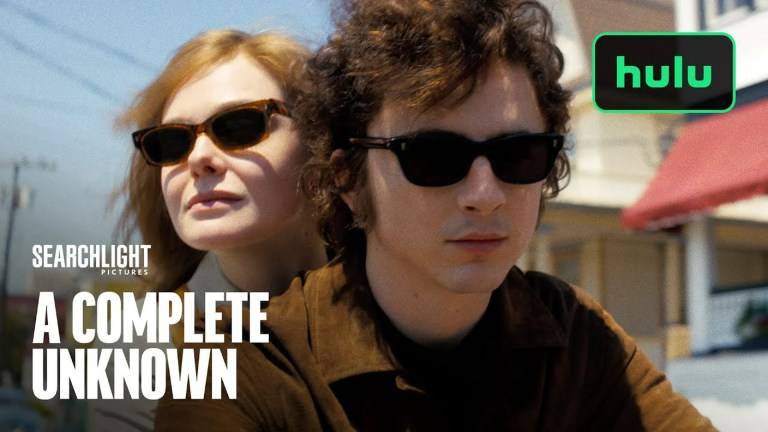
Bob Dylan did not publish a conventional review of A Complete Unknown, but he did publicly signal approval before its release. He called Timothée Chalamet a “brilliant actor,” said Chalamet could make a version of Dylan believable, and recommended Elijah Wald’s Dylan Goes Electric! as historical context for the story.
Dylan endorsed the actor—not every detail of the movie
Bob Dylan did not publish a conventional review of A Complete Unknown. His documented public reaction came before the film’s U.S. theatrical release on December 25, 2024, when he praised Timothée Chalamet as a “brilliant actor,” said Chalamet could make the role believable as Dylan, a younger Dylan, or “some other” Dylan, and directed readers to Elijah Wald’s book Dylan Goes Electric!: Newport, Seeger, Dylan, and the Night That Split the Sixties.
That distinction matters. Dylan’s comments support calling his response favorable, and they show confidence in Chalamet’s casting and in the historical source material. They do not show that Dylan reviewed the completed film scene by scene, approved every event in the screenplay, or certified the movie as a fully accurate biography.
![Legend [Vinyl]](https://m.media-amazon.com/images/I/51zqmyQRPvL._SL160_.jpg)
What exactly did Bob Dylan say about A Complete Unknown?
In a public post reported on December 4, 2024, Dylan responded to the film’s casting and its portrayal of his early career. He described Chalamet as a “brilliant actor” and expressed confidence that the actor could make audiences believe he was Dylan—or a younger, different, or otherwise elusive version of him.
What’s actually slowing this PC down?
Pick the symptom - the matching free tool is one click away.
The qualification is characteristically important. Dylan was not suggesting that an actor could reproduce the real person completely. Instead, he appeared to accept that a film interpretation would necessarily be a version of Dylan, shaped by performance, memory, and dramatic storytelling.
#1 Best Overall

- ✔️ Legendary Performances – Enjoy unforgettable interpretations by renowned artists including Arthur Rubinstein, Pablo Casals, Friedrich Gulda, Wilhelm Kempff, and the New York Philharmonic.
- ✔️ Collector’s Edition – Pressed on exclusive 180g marble vinyl, making each record unique.
- ✔️ Timeless Classics – Featuring some of the most beloved masterpieces from Beethoven, Bach, Chopin, Debussy, and more.
- ✔️ Exceptional Sound Quality – Rich, detailed recordings that capture the essence of live performances.
- ✔️ Perfect Gift Choice – An ideal present for classical music lovers, audiophiles, and vinyl collectors.
Dylan also urged audiences to read Wald’s Dylan Goes Electric!. His recommendation points readers toward the historical framework behind the film: Dylan’s arrival in New York, the early-1960s folk scene, the competing ideas about what folk music represented, and the controversy surrounding his move toward electric performance at the 1965 Newport Folk Festival.
Was Dylan reviewing the finished film?
No—not based on the documented comment. Dylan’s remarks were made before the movie’s theatrical release and focused primarily on Chalamet and the source material. They are best understood as a pre-release endorsement of the project’s central casting choice, rather than as a detailed assessment after watching the completed movie.
There is also no basis for expanding the comment into a claim that Dylan approved every historical scene. A favorable reaction from the subject of a biographical drama can provide valuable context, but it does not turn a dramatized production into a documentary record.
What is A Complete Unknown about?
Directed by James Mangold, A Complete Unknown follows Dylan through a concentrated portion of his career rather than attempting to tell his entire life story. The film begins with his arrival in New York and his emergence in the folk scene, then moves toward the 1965 Newport Folk Festival and the famous dispute over his electric sound.
The period covers the transformation of an unknown young performer into a major cultural figure. It also places several competing pressures at the center of the story:
Rank #2
![Songs You Know By Heart[LP]](https://m.media-amazon.com/images/I/61mDjp1A3nL._SL160_.jpg)
- Jimmy Buffett's first greatest hits compilation, Songs You Know By Heart, was originally released in 1985 and has been certified 7x platinum
- Dylan’s desire for artistic independence;
- the traditions and expectations of the folk-music community;
- the growing reach of commercial recognition;
- relationships with influential musicians and collaborators; and
- the audience’s wish to preserve a version of Dylan that he was already outgrowing.
The movie’s dramatic endpoint is the Newport controversy, where the electric performance becomes a symbol of Dylan’s break—or apparent break—with folk orthodoxy. That framing gives the film a clear narrative arc, but it also means that a much larger social and musical network has to be compressed around Dylan.
How involved was Bob Dylan in the film’s development?
Mangold spoke with Dylan while developing the project. Reports about those conversations indicate that the director used them to understand Dylan’s personality, motivations, and relationship to the period. Dylan’s perspective offered first-hand context that a filmmaker working only from archives and published accounts could not obtain.
That consultation is significant, but it should not be confused with complete control over the finished production. The director, screenwriter, performers, editors, and studio still shaped the final narrative. The movie combines real people and events with compressed chronology, altered relationships, omitted figures, and rearranged dramatic situations.
A useful way to describe Dylan’s role is that he helped provide insight into the person and the era. He did not make the film a literal historical transcript.
How historically accurate is the movie?
The broad outline is recognizable. The film depicts Dylan arriving in New York, becoming part of the folk revival, writing and performing increasingly influential songs, and building connections with figures such as Pete Seeger, Joan Baez, and Johnny Cash before challenging folk expectations with an electric performance.
Rank #3

- Nirvana- Nevermind
The individual details are more complicated. Critics and Dylan specialists have pointed to omissions, changed timelines, compressed relationships, and situations that have been invented or substantially rearranged for dramatic purposes. One recurring criticism is that the film narrows a complicated musical and social network in order to keep Dylan at the center of the story.
For that reason, it is more accurate to say that the film depicts or dramatizes these events than to present every conversation or sequence as something that happened exactly as shown. This is especially important when discussing Dylan’s relationships, the people around the folk revival, and the circumstances of the Newport performance.
The central question is not only whether the movie gets every date or encounter right. It is also whether a conventional biographical drama can portray an artist whose public identity was built partly on resisting fixed explanations. The film’s title and Dylan’s own reaction to Chalamet’s “some other” Dylan remark both point toward that problem of representation.
Why the musical performances are central to the film
One of the movie’s strongest distinguishing features is its use of live-style musical performances. Rather than reducing every song to a brief montage, the film often allows performances to run long enough to carry character, conflict, and historical meaning.
That approach makes the music more than background. A song can show Dylan testing an audience, asserting independence, changing his public identity, or colliding with the expectations of the folk scene. The performances also give Chalamet’s interpretation a physical and musical dimension that dialogue alone could not provide.
Do these 3 things before closing this tab:
1Fix the driver behind crashes, sound loss and screen glitches2Repair Windows errors before they cause bigger problems3Scan for outdated or missing drivers - takes under a minuteRank #4
Chalamet performed Dylan songs for the film, and those performances were released as the A Complete Unknown motion-picture soundtrack through Columbia Records under license from Searchlight Pictures. Physical editions have been reported in both vinyl and CD formats.
Listeners should keep the distinction clear: the soundtrack contains performances associated with the film, including Chalamet’s work, and is not a replacement for Bob Dylan’s original studio recordings. Readers who want a companion listen after watching can look for the film soundtrack, while those seeking Dylan’s original versions should use his own catalog instead.
The book Dylan recommended
For readers who want to investigate the history behind the movie, Dylan Goes Electric! is the most direct companion. Dylan Goes Electric!: Newport, Seeger, Dylan, and the Night That Split the Sixties by Elijah Wald focuses on the cultural and musical setting surrounding Dylan’s rise and the Newport transition.
Dylan Goes Electric! is not a scene-by-scene factual transcript of A Complete Unknown, nor is it a complete biography covering every period of Dylan’s life. Its value is more specific: it gives readers a broader account of the people, traditions, arguments, and historical pressures that the film condenses into a dramatic story.
The Tool Desk
Outbyte PC Repair FREEClear out junk files and repair common Windows errorsFree Scan →Outbyte Driver Updater FREEScan for outdated or missing drivers - takes under a minuteDriver Scan →What critics disagreed about
Critical responses were broadly engaged with Chalamet’s performance and the film’s musical construction, but they differed over the movie’s storytelling choices. Some reviewers praised the extended performances and the way the film preserved a sense of Dylan’s unknowability. Others felt that conventional biopic devices simplified the surrounding music scene or made Dylan’s history more familiar and orderly than it really was.
Best Value

- 【Vintage Record Player】Bluetooth Input & AUX Audio input & RCA line-out & Headphone jack. 2 Built in stereo speakers,with Bluetooth wireless technology,elegantly listen to the music from your smart phone.Use Aux cable input to directly play the music. Or enjoy your time with headphone. For better or louder sound, connect external speaker via RCA cable.
- 【Belt Drive Vinyl Turntable】Easy to use, simple setup and operation. Great ideal for vinyl lovers. Three-speed Turntable (33, 45, 78 RPM) plays all of your 7" 10" 12" vinyl records.TIPS:When placing a 12-inch vinyl record on the turntable, gently tilt it toward the tonearm to ensure proper playback.
- 【Record Player Bluetooth】 Built-in Bluetooth receiver & 2 stereo speakers,,you can listen to your favorite music from your Bluetooth compatible device like smartphone with ease. Just Bluetooth in connect and play!
- 【Portable Record Player with Built in Speaker】It creates a warm atmosphere when family gatherings. When you are alone, it can help you relax. Even if you don't use it, it can be one of the home's premium decorations. As a gift, it also allows the recipient to feel your heart.
- 【Retro Vinyl Record Player】There is a removable cover on the top to protect vinyl and turntable plat. You can shut the cover shields and keep the dust out. And the beautiful textured exterior are a perfect fit for any environment.
That disagreement explains why Dylan’s pre-release comments are interesting without settling the critical debate. His confidence in Chalamet addresses whether the actor could create a convincing interpretation. It does not answer whether the screenplay’s chronology, relationships, or historical emphasis are satisfactory.
Independent reader supportYour contribution helps us test, update, and keep practical guides available for everyone.What Dylan’s reaction does—and does not—tell us
| Supported by the evidence | Not supported by the evidence |
|---|---|
| Dylan reacted favorably to Chalamet’s casting. | Dylan published a detailed review of the completed movie. |
| He called Chalamet a “brilliant actor.” | He confirmed that every scene is historically accurate. |
| He believed Chalamet could make a version of Dylan believable. | He said the screenplay was a complete biography of his life. |
| He recommended Elijah Wald’s Dylan Goes Electric!. | He certified every relationship, timeline, or Newport detail shown. |
| He provided first-hand context through conversations with Mangold. | He transformed the dramatization into a documentary record. |
The clearest takeaway
Bob Dylan’s public response to A Complete Unknown was favorable but limited. He endorsed Timothée Chalamet’s ability to portray a believable version of him and recommended the book that supplies much of the film’s historical context. Dylan’s conversations with Mangold also gave the production unusual access to its subject.
None of that removes the need for caution. A Complete Unknown is a dramatized account of Dylan’s rise from the early-1960s New York folk scene to the 1965 Newport electric-performance controversy. It uses real people and a recognizable historical arc, but it also compresses, rearranges, and simplifies events. The fairest reading is therefore that Dylan welcomed the interpretation—not that he declared the movie a literal record of what happened.
Quick wins for a faster PC:
Scan for outdated or missing drivers - takes under a minuteDriver Scan →Repair Windows errors before they cause bigger problemsFix Now →Frequently Asked Questions
Did Bob Dylan review A Complete Unknown?
No. Dylan’s documented comments were made before the film’s December 25, 2024 U.S. theatrical release. He praised Timothée Chalamet and recommended Elijah Wald’s book, but did not provide a scene-by-scene review of the completed movie.
What period of Bob Dylan’s life does A Complete Unknown cover?
It follows Dylan from his arrival in New York and rise in the early-1960s folk scene through the controversy surrounding his electric performance at the 1965 Newport Folk Festival.
Is A Complete Unknown historically accurate?
It is historically grounded but dramatized. The broad arc and many major figures are recognizable, while timelines, relationships, and dramatic situations are compressed, altered, omitted, or rearranged.
What book did Bob Dylan recommend in connection with the film?
Dylan recommended Elijah Wald’s Dylan Goes Electric!: Newport, Seeger, Dylan, and the Night That Split the Sixties. The book provides historical context for the folk scene and the Newport transition, but it is not a scene-by-scene transcript of the film.
Crashes, No Sound, or Screen Glitches?
Random freezes, missing sound and display glitches usually trace back to one bad driver. Find and replace yours safely.Free scan · under a minuteWindows Errors? Fix Them Before They Spread
Repair common Windows errors and clear accumulated junk for a smoother, more stable PC - no reinstall needed.Free scan · no reinstallThe Bottom Line
Bottom line: Dylan publicly praised Timothée Chalamet and recommended Elijah Wald’s Dylan Goes Electric! before A Complete Unknown was released. His comments support a favorable pre-release endorsement, not a detailed review or certification of the film’s historical accuracy.
Quick Recap
Product prices and availability are accurate as of the date/time indicated and are subject to change. Any price and availability information displayed on Amazon at the time of purchase will apply.