Do these 3 things before closing this tab:
1Repair Windows errors before they cause bigger problems2Scan for outdated or missing drivers - takes under a minute3Clear out junk files and repair common Windows errorsYes. Trial by Fire is based on the real case of Cameron Todd Willingham, a Texas man convicted of murdering his three young daughters in a 1991 house fire and executed in 2004. The film also draws on the real campaign by playwright Elizabeth Gilbert to challenge the conviction and the fire-investigation methods used against him.
Yes. Trial by Fire is based on the real case of Cameron Todd Willingham, a Texas man convicted of murdering his three young daughters in a 1991 house fire and executed in 2004. The film also draws on the real campaign by playwright Elizabeth Gilbert to challenge the conviction and the fire-investigation methods used against him.



However, the film is a dramatization, not a documentary or a complete courtroom record. Its central events are documented, while dialogue, chronology, character relationships, and some individual scenes were shaped for dramatic purposes.
What is Trial by Fire about?
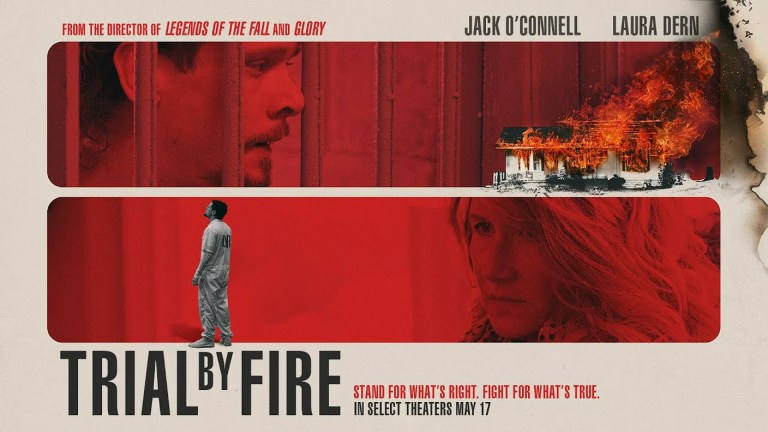
Directed by Edward Zwick and starring Jack O’Connell as Willingham and Laura Dern as Elizabeth Gilbert, the 2018 film follows the case from the fire that killed Willingham’s daughters through his conviction, death sentence, and Gilbert’s attempt to obtain a new review of the evidence.
Outdated Drivers Are Slowing You Down
One free scan finds every outdated or missing driver and matches the right update for your exact hardware.Free scan · exact hardware matchWindows Errors? Fix Them Before They Spread
Repair common Windows errors and clear accumulated junk for a smoother, more stable PC - no reinstall needed.Free scan · no reinstall#1 Best Overall
Willingham was the only known adult in the house when it burned in Corsicana, Texas, on December 23, 1991. His daughters—two-year-old Amber and one-year-old twins Karmen and Kameron—died in the fire. Willingham said he tried to rescue them and consistently denied deliberately starting the blaze.
The film’s principal journalistic source was David Grann’s September 7, 2009 New Yorker investigation, also titled “Trial by Fire.” Grann examined the original prosecution, the disputed fire evidence, later reviews by fire scientists, and Gilbert’s efforts on Willingham’s behalf. The movie is therefore based primarily on investigative reporting rather than being a direct adaptation of a conventional book.
Readers who want Grann’s original reporting can also look for David Grann’s The Devil and Sherlock Holmes: Tales of Murder, Madness, and Obsession, a collection that includes his New Yorker investigation. It is better understood as a source of the underlying journalism—not as a novelization of the film.
Cameron Todd Willingham’s case: the key dates
| Date | What happened |
|---|---|
| December 23, 1991 | A fire destroyed Willingham’s home in Corsicana, Texas, killing his three daughters. |
| August 21, 1992 | Willingham was convicted of capital murder and sentenced to death. |
| March 22, 1995 | The Texas Court of Criminal Appeals affirmed his conviction and death sentence. |
| February 17, 2004 | The court dismissed a later habeas application as procedurally barred and denied a stay of execution. |
| February 17, 2004 | Texas executed Willingham by lethal injection. In his final statement, he said he was innocent and had been convicted of a crime he did not commit. |
Why was Willingham convicted?
Investigators concluded that the fire was arson and that Willingham had intentionally killed his children. The prosecution’s theory relied heavily on fire-scene interpretations that were commonly treated as signs of arson at the time.
The Tool Desk
Outbyte Driver Updater FREEFix the driver behind crashes, sound loss and screen glitchesFind Drivers →Outbyte PC Repair FREERepair Windows errors before they cause bigger problemsFix Now →Those alleged indicators included:
- “Pour patterns” or irregular burn marks thought to show that an accelerant had been spread on the floor;
- multiple points of origin, suggesting that the fire had been deliberately started in more than one place;
- low burning and a burn trail through the house;
- damage interpreted as evidence of a fire barrier that would have prevented the children from escaping; and
- a laboratory finding of mineral spirits near the front threshold.
Prosecutors argued that an accelerant had been used to create a deliberately intense fire and block escape. The state also presented other evidence and testimony during the trial. But the interpretation of the fire itself became the central issue in later reviews.
It is important not to present the original arson theory as an established fact. The conviction established Willingham’s legal guilt at the time; it did not settle the later scientific question about whether the fire indicators truly demonstrated arson.
Rank #2
How did later experts challenge the arson evidence?
Fire science changed substantially after Willingham’s trial. Beginning before his execution and continuing afterward, independent experts reviewed the physical evidence and the investigators’ conclusions.
Gerald Hurst, whose analysis was discussed in Grann’s investigation, challenged several of the state’s interpretations. He argued that the apparent pour patterns, multiple origins, low burning, and burn trail could be explained by the behavior of a fully developed fire after flashover, together with ventilation and the movement of heat through the house.
Hurst also proposed a possible explanation for the mineral-spirits finding: lighter fluid associated with a grill on the porch could have accounted for the chemical result near the front threshold. Based on the available evidence, he considered an accidental cause—such as a space heater or faulty wiring—more plausible than deliberate arson, while not claiming that an accidental cause had been conclusively proven.
Craig Beyler later reviewed the case for the Texas Forensic Science Commission. His report concluded that the investigators’ arson determinations had no sound basis in modern fire science and that a finding of arson could not be sustained using the methods applied in the original investigation.
The Innocence Project has reported that nine nationally recognized experts found the forensic analysis used against Willingham invalid or scientifically unsupported. The controversy consequently became part of a wider debate about outdated fire-investigation practices, overstated forensic certainty, and the danger of using traditional “indicators” as if they were definitive proof of arson.
Who was Elizabeth Gilbert?
In the film, Elizabeth Gilbert becomes the principal outside advocate for Willingham. The real Gilbert was a playwright who began corresponding with him while he was on death row. She was initially skeptical of his claim of innocence, but after reviewing his case files she became concerned about contradictions in witness accounts and the quality of the arson evidence.
Gilbert worked to obtain expert review and to challenge the Texas justice system before Willingham’s execution. The broad outline of that involvement is documented, but the film necessarily compresses events and dramatizes the relationship between Gilbert and Willingham. Viewers should not assume that every conversation or private exchange occurs exactly as shown.
Was Cameron Todd Willingham officially exonerated?
No—not in the formal legal sense. Later experts and advocates argued that Willingham had been wrongfully convicted and wrongfully executed, and the fire evidence used against him was subjected to severe professional criticism. But the Texas Court of Criminal Appeals never vacated his conviction.
On February 17, 2004, the court dismissed his subsequent habeas application as procedurally barred and denied a stay of execution. Willingham was executed that same day. Because he was already dead when the most significant forensic criticism became public, there was no ordinary post-conviction exoneration proceeding that resulted in a court formally declaring him innocent.
That distinction matters:
- Supported by the later record: major fire experts found the original arson analysis scientifically unsound or unsupported by modern methods.
- Widely argued by advocates and journalists: Willingham was wrongfully convicted and wrongfully executed.
- Not established by a final court ruling: that he was legally exonerated or that an accidental cause of the fire was definitively proved.
How accurate is the movie?
Trial by Fire is accurate in its broad narrative: the 1991 deaths, Willingham’s conviction and death sentence, Gilbert’s involvement, the later scientific challenge to the fire evidence, and the 2004 execution all come from the documented case.
Recommended Free Tools
Rank #4
It should still be watched as a fact-based dramatic film. Filmmakers may combine people, rearrange events, simplify legal proceedings, or create dialogue to make a complicated investigation understandable on screen. The most reliable account of the evidence is found in the underlying reporting and official legal and forensic records, not in treating every scene as a transcript.
What to watch or read after Trial by Fire
For the source journalism, David Grann’s “Trial by Fire” in The New Yorker provides the most direct background to the film. His collection The Devil and Sherlock Holmes offers a book-length way to read that investigation in the context of his wider work.
Incendiary: The Willingham Case is another potentially useful follow-up for viewers who want a documentary-focused examination of the same case and its forensic controversy. Availability can vary by country and platform, so check current listings before trying to watch it.
Independent reader supportYour contribution helps us test, update, and keep practical guides available for everyone.The fairest answer
Trial by Fire is based on a true story—the case of Cameron Todd Willingham—and its central forensic controversy is real. The conviction relied substantially on fire-scene interpretations that later experts criticized as outdated and scientifically unreliable. That makes the case a powerful example of how flawed forensic assumptions can affect a capital prosecution.
But the most precise conclusion is not that a court proved Willingham innocent. His conviction was never formally overturned, and the fire’s accidental cause was not conclusively established in court. The film presents a documented and deeply disputed case in which the scientific foundation of the prosecution was later seriously undermined.
Frequently Asked Questions
Is Trial by Fire a true story?
Yes. The 2018 film is based on the real case of Cameron Todd Willingham, a Texas man convicted of killing his three daughters in a 1991 house fire and executed in 2004. It is a dramatization, not a documentary.
What is the source of the movie Trial by Fire?
The film’s principal source was David Grann’s September 7, 2009 New Yorker investigation, “Trial by Fire.” It was not a direct adaptation of a conventional book, although Grann’s collection The Devil and Sherlock Holmes includes the investigation.
Was Cameron Todd Willingham officially exonerated?
No. Later experts and advocates argued that he was wrongfully convicted and wrongfully executed, but the Texas Court of Criminal Appeals never vacated his conviction. Calling him officially exonerated would overstate the formal court record.
Free tools Windows power users keep installed
One-click scans. No signup required.
Why was Cameron Todd Willingham’s conviction challenged?
Experts including Gerald Hurst and Craig Beyler challenged the interpretation of burn patterns, multiple origins, low burning, alleged accelerant evidence, and other supposed arson indicators. Beyler concluded that the arson determination could not be sustained under modern fire science.
The Bottom Line
Bottom line: Yes, Trial by Fire is based on the real Cameron Todd Willingham case and David Grann’s investigative reporting. Later fire experts found the arson analysis scientifically unsound, but Willingham was never formally exonerated by a court before or after his 2004 execution.
Quick Recap
Product prices and availability are accurate as of the date/time indicated and are subject to change. Any price and availability information displayed on Amazon at the time of purchase will apply.