There is no objective number-one horror movie. The best choice depends on whether you mean the most influential, frightening, artistically accomplished, emotionally devastating, or easiest to recommend. This global, spoiler-light selection brings together 101 essential films from the silent era to 2024, including landmark work from Germany, Japan, Italy, France, Mexico, South Korea, Spain, Sweden, Iran, and beyond.
The list is grouped by historical and thematic pathways rather than presented as a definitive countdown. Each entry includes its year, director, country, significance, and a concise content or intensity note.
| # | Preview | Product | Price | |
|---|---|---|---|---|
| 1 |

|
Horror 20 Movie Collection | $15.96 | Buy on Amazon |
| 2 |

|
Friday The 13th The Ultimate Collection | Buy on Amazon | |
| 3 |
|
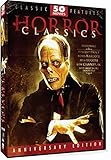
HORROR CLASSICS 50 MOVIE MEGAPACK | $15.79 | Buy on Amazon |
| 4 |
|
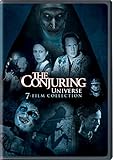
Conjuring 7-Film Collection, The (DVD) | $19.96 | Buy on Amazon |
| 5 |

|
Final Destination Franchise (5pk) | $9.41 | Buy on Amazon |
There is no objective number-one horror movie. The best choice depends on whether you mean the most influential, frightening, artistically accomplished, emotionally devastating, or simply easiest to recommend. This list treats best as a critical judgment rather than a scientific ranking, and brings together foundational films from the United States, Germany, Japan, Italy, France, Mexico, South Korea, Spain, Sweden, Iran, Senegal, Australia, New Zealand, and elsewhere.
The 101 films are arranged in broad historical and thematic groups, and are broadly chronological within those groups. The number signals importance, not a precise score. Some films are terrifying; others are comic, political, tragic, experimental, atmospheric, or culturally influential without being conventionally scary.
Do these 3 things before closing this tab:
1Scan for outdated or missing drivers - takes under a minute2Clear out junk files and repair common Windows errors3Fix the driver behind crashes, sound loss and screen glitches#1 Best Overall
This is a curated synthesis informed by the BFI’s year-by-year history of horror, its decade surveys, the BFI Sight & Sound canon, AFI’s 100 Years…100 Thrills benchmark, preservation-minded film history, and specialist horror criticism.
How to use the warnings: Content notes are deliberately concise. They flag material such as graphic violence, child peril, sexual violence, animal harm, body and reproductive horror, racism, colonial violence, religious trauma, and extreme psychological distress. They are guidance, not a claim that intensity makes a film better.
A numbering note: The Host was counted twice in the source selection because it belongs both among creature films and international essentials. It appears once here, at #54. The Conjuring, identified as an entry point in the accompanying recommendations, fills the remaining slot so this is a list of 101 distinct films.
Silent cinema and early sound: the foundations
Horror did not begin with the modern jump scare. Its early vocabulary came from distorted sets, theatrical performance, folklore, unreliable perception, grotesque bodies, and the uncanny possibilities of film itself. These films established images and structures that the genre still uses.
Recommended Free Tools
- The Cabinet of Dr. Caligari (1920) — Robert Wiene, Germany. The defining German Expressionist nightmare, with painted shadows and crooked architecture that make reality itself appear unreliable. Content: murder, coercion, psychological unease; intensity medium.
- Nosferatu (1922) — F. W. Murnau, Germany. Its ratlike vampire, stark locations, and uncanny daylight imagery remain among silent cinema’s most influential monster inventions. Content: plague imagery, death, predatory violence; intensity medium.
- The Phantom of the Opera (1925) — Rupert Julian, United States. Lon Chaney’s astonishing performance anchors a grand theatrical gothic spectacle about obsession, concealment, and the violence of the gaze. Content: facial disfigurement, abduction, threat; intensity medium.
- The Unknown (1927) — Tod Browning, United States. A psychologically extreme silent film in which bodily transformation, performance, desire, and obsession become inseparable. Content: mutilation, coercion, disturbing body imagery; intensity high.
- Dracula (1931) — Tod Browning, United States. Bela Lugosi’s controlled, hypnotic Count became the screen image against which generations of cinematic vampires would be measured. Content: blood drinking, seduction, death; intensity medium.
- Frankenstein (1931) — James Whale, United States. More than a monster movie, it is a foundational tragedy of alienation, with Boris Karloff’s creature becoming an enduring symbol of misunderstood otherness. Content: corpses, experimentation, mob violence, child peril; intensity medium.
- Dr. Jekyll and Mr. Hyde (1931) — Rouben Mamoulian, United States. Pre-Code body and identity horror expressed through inventive subjective camerawork and a frighteningly physical performance by Fredric March. Content: sexual violence, transformation, murder; intensity high.
- Vampyr (1932) — Carl Theodor Dreyer, Denmark/France/Germany. Dream logic, disembodied shadows, and unstable space take priority over conventional plot in one of cinema’s purest atmospheric nightmares. Content: death, vampirism, surreal dread; intensity medium.
- Freaks (1932) — Tod Browning, United States. A confrontational outsider film whose humanist treatment of its performers and controversial censorship history are inseparable from its place in horror history. Content: exploitation, revenge, disability-related discomfort; intensity medium.
- The Old Dark House (1932) — James Whale, United States. A haunted-house story that is genuinely eerie while satirizing the eccentric families, stormy nights, and impossible architecture of developing genre conventions. Content: menace, fire, death; intensity low–medium.
- The Black Cat (1934) — Edgar G. Ulmer, United States. A sleek, pre-Code occult thriller and the first major screen pairing of Bela Lugosi and Boris Karloff. Content: occultism, torture imagery, murder; intensity medium–high.
- Bride of Frankenstein (1935) — James Whale, United States. Arguably the supreme Universal sequel, balancing macabre wit, pathos, queer subtext, theatrical design, and a profound longing for companionship. Content: corpses, experimentation, persecution; intensity medium.
- The Wolf Man (1941) — George Waggner, United States. A central werewolf text that helped define Universal’s monster cycle through tragic transformation and doomed romantic folklore. Content: animal attacks, transformation, death; intensity medium.
- Cat People (1942) — Jacques Tourneur, United States. Shadow, suggestion, and psychological ambiguity do more work than explicit spectacle in this elegant study of fear and repression. Content: implied sexual threat, stalking, animal menace; intensity medium.
- I Walked with a Zombie (1943) — Jacques Tourneur, United States. Caribbean gothic, ritual imagery, and colonial atmosphere create a haunting film whose setting is as psychologically charged as its supernatural story. Content: colonial violence, illness, death, ritual imagery; intensity medium.
- Dead of Night (1945) — Alberto Cavalcanti, Charles Crichton, Basil Dearden, and Robert Hamer, United Kingdom. This influential anthology demonstrates how framing stories, recurring nightmares, ventriloquism, mirrors, and repetition can build cumulative dread. Content: supernatural threat, suicide references, psychological distress; intensity medium.
- The Night of the Hunter (1955) — Charles Laughton, United States. Fairy-tale Expressionism, religious menace, and Robert Mitchum’s unforgettable performance turn a Depression-era pursuit into a sinister American fable. Content: child peril, domestic abuse, murder, religious trauma; intensity high.
Gothic, psychological, and supernatural modernism
From the 1960s onward, horror increasingly moved inside the mind, the family, the apartment, the marriage, and the body. Several of these films are frightening because they refuse to settle whether the threat is supernatural or psychological.
Rank #2
- Friday the 13th - 8 Movie Collection - Part 1 / Part 2 / Part 3 3D / The Final Chapter / A New Begin
- The Innocents (1961) — Jack Clayton, United Kingdom. An exquisitely composed ghost story in which repression and ambiguity make every apparently supernatural event unstable. Content: child peril, possible abuse, psychological distress; intensity high.
- The Haunting (1963) — Robert Wise, United Kingdom. Hill House becomes an active psychological presence through sound, architecture, suggestion, and the fragile perceptions of its visitors. Content: suicide history, psychological breakdown, implied violence; intensity high.
- Repulsion (1965) — Roman Polanski, United Kingdom. Claustrophobic apartment horror renders fractured perception through sound design, distorted space, and an increasingly unreliable point of view. Content: sexual violence, hallucination, murder; intensity high.
- Rosemary’s Baby (1968) — Roman Polanski, United States. Domestic paranoia and occult conspiracy unfold through controlled naturalism, making ordinary marriage and urban life feel quietly hostile. Content: reproductive horror, sexual assault, satanism, religious trauma; intensity high.
- The Cremator (1969) — Juraj Herz, Czechoslovakia. Surreal political horror about how vanity, ideology, and bureaucratic self-justification can normalize evil. Content: antisemitism, murder, cremation imagery, fascist persecution; intensity high.
- The Wicker Man (1973) — Robin Hardy, United Kingdom. Folk horror at its most unnerving: belief, community, ritual, and cultural dislocation collide on an apparently peaceful island. Content: religious ritual, animal harm, sexual themes; avoid spoilers.
- The Exorcist (1973) — William Friedkin, United States. Possession is treated with procedural seriousness and existential dread, making the film’s supernatural crisis feel like an assault on family, faith, and reason. Content: child peril, religious trauma, blasphemy, graphic bodily distress; intensity very high.
- Don’t Look Now (1973) — Nicolas Roeg, United Kingdom/Italy. Grief, premonition, fractured editing, and supernatural dread combine in a film where emotional disorientation is as important as fear. Content: child death, grief, sexual content, murder; intensity high.
- The Texas Chain Saw Massacre (1974) — Tobe Hooper, United States. Its documentary-like immediacy and industrial atmosphere transformed low-budget horror, creating a film that feels more contaminated than staged. Content: graphic threat, implied mutilation, animal harm, torture; intensity very high.
- Carrie (1976) — Brian De Palma, United States. Adolescent humiliation, religious repression, and operatic revenge are shaped into one of horror’s most emotionally precise coming-of-age tragedies. Content: bullying, menstruation, domestic abuse, fire, mass death; intensity high.
- Suspiria (1977) — Dario Argento, Italy. Saturated color, Goblin’s music, elaborate architecture, and nightmare logic elevate giallo into a vivid supernatural fantasy. Content: graphic violence, animal harm, witchcraft; intensity very high.
- Halloween (1978) — John Carpenter, United States. Economical suspense, widescreen composition, and the blank persistence of Michael Myers established the template for the modern slasher. Content: stalking, murder, sexual threat; intensity high.
- The Shining (1980) — Stanley Kubrick, United Kingdom/United States. Formal precision, haunted-space imagery, and psychological disintegration make the Overlook Hotel feel like both location and trap. Content: domestic abuse, child peril, blood, psychological breakdown; intensity very high.
- The Changeling (1980) — Peter Medak, Canada. A restrained, emotionally grounded haunted-house film that builds terror from grief, sound, objects, and patient investigation. Content: child death, grief, murder, supernatural threat; intensity high.
- The Evil Dead (1981) — Sam Raimi, United States. Kinetic camerawork, inventive splatter, demonic possession, and horror-comedy energy turn a remote cabin into a delirious machine of escalation. Content: graphic gore, sexualized violence, possession, animal harm; intensity very high.
- Possession (1981) — Andrzej Żuławski, France/West Germany. A relationship collapse is expressed through body horror, supernatural excess, and performances that deliberately abandon emotional realism. Content: marital violence, sexual content, miscarriage imagery, body horror; intensity very high.
- The Thing (1982) — John Carpenter, United States. Paranoia, isolation, and groundbreaking practical creature effects create a perfect pressure cooker in which nobody can safely trust appearances. Content: graphic transformation, gore, animal harm, paranoia; intensity very high.
- Videodrome (1983) — David Cronenberg, Canada. Media anxiety becomes corporeal transformation in a defining body-horror work about images that invade, reshape, and possibly replace reality. Content: graphic body horror, sexual imagery, torture, media violence; intensity very high.
- A Nightmare on Elm Street (1984) — Wes Craven, United States. Dream logic gives teen horror an almost limitless arena, while Freddy Krueger weaponizes the one condition nobody can avoid: sleep. Content: teen murder, gore, sexual threat, nightmare imagery; intensity high.
- The Fly (1986) — David Cronenberg, United States/Canada. A tragic body-horror story about disease, identity, love, and irreversible transformation, carried by Jeff Goldblum’s extraordinary physical performance. Content: graphic bodily decay, vomiting, animal harm, sexual content; intensity very high.
- The Lost Boys (1987) — Joel Schumacher, United States. Stylish youth culture, comic-book vampirism, music-video energy, and genuine menace make it one of the most accessible 1980s vampire films. Content: blood, predation, teen peril; intensity medium.
- Hellraiser (1987) — Clive Barker, United Kingdom. Sadomasochistic gothic imagery and the puzzle box introduce a mythology of extradimensional horror built around desire, pain, and forbidden knowledge. Content: graphic gore, torture, sexual violence, body horror; intensity very high.
- The Vanishing (1988) — George Sluizer, Netherlands/France. This existential psychological horror turns an ordinary disappearance into an unbearable study of obsession and the need for certainty. Content: abduction, coercion, psychological distress; intensity high.
- Misery (1990) — Rob Reiner, United States. Contained terror driven by coercive fandom and Kathy Bates’s performance, with captivity transformed into a battle over authorship and control. Content: captivity, physical assault, disability-related violence, torture; intensity very high.
- Candyman (1992) — Bernard Rose, United Kingdom/United States. Urban legend, race, class, housing, and romantic gothic horror intersect in a film that understands how stories are created by social wounds. Content: racism, murder, bees, child peril, sexual threat; intensity high.
- The Silence of the Lambs (1991) — Jonathan Demme, United States. A serial-killer thriller with horror’s psychological intensity, remarkable craft, and a sustained confrontation with violence, identity, and institutional power. Content: murder, kidnapping, cannibalism, transphobic framing; intensity high.
- The Sixth Sense (1999) — M. Night Shyamalan, United States. An accessible supernatural drama whose atmosphere, performances, and carefully controlled structure made quiet ghost-story suspense broadly popular. Content: child distress, suicide, domestic violence, ghosts; spoiler-light viewing recommended.
Science fiction, monsters, and apocalyptic horror
Horror and science fiction have always overlapped. Alien organisms, nuclear fear, conformity, ecological collapse, infection, and giant monsters give private terror a public scale.
- The Thing from Another World (1951) — Christian Nyby, United States. Early science-fiction paranoia and creature-feature suspense meet in an isolated outpost where scientific curiosity becomes a survival problem. Content: creature violence, isolation, firearms; intensity medium.
- Godzilla (1954) — Ishiro Honda, Japan. The starting point for the modern kaiju tradition, using a giant monster to embody nuclear trauma and postwar anxiety rather than simple spectacle. Content: mass death, radiation trauma, destruction; intensity high.
- Invasion of the Body Snatchers (1956) — Don Siegel, United States. Conformity and social paranoia become science-fiction horror as familiar people appear to remain physically present while something essential disappears. Content: identity loss, paranoia, social collapse; intensity medium–high.
- The Birds (1963) — Alfred Hitchcock, United States. Inexplicable animal violence escalates into social collapse, proving that the absence of a clear explanation can be more frightening than a revealed monster. Content: animal attacks, injury, death, child peril; intensity high.
- Night of the Living Dead (1968) — George A. Romero, United States. It modernized the zombie film and fused siege horror with racial and political anxiety, making the undead a language for social breakdown. Content: graphic death, cannibalism, racism, child peril; intensity high.
- Dawn of the Dead (1978) — George A. Romero, United States. Zombie spectacle becomes consumer satire and social commentary without sacrificing escalating siege tension or visceral practical effects. Content: graphic gore, cannibalism, suicide, social collapse; intensity very high.
- Alien (1979) — Ridley Scott, United Kingdom/United States. Industrial science-fiction design, slasher structure, and reproductive body horror create one of cinema’s most complete environments of sustained dread. Content: reproductive horror, graphic creature violence, death; intensity very high.
- The Return of the Living Dead (1985) — Dan O’Bannon, United States. Punk attitude, zombie comedy, and an unusually memorable undead premise give the film a distinctive place between satire and splatter. Content: graphic gore, corpses, dark comedy, nuclear anxiety; intensity high.
- 28 Days Later (2002) — Danny Boyle, United Kingdom. Its rage-driven infection and fractured, empty-city imagery helped revitalize apocalyptic horror for the digital era. Content: plague, graphic violence, sexual threat, societal collapse; intensity very high.
- The Host (2006) — Bong Joon-ho, South Korea. Creature spectacle joins family drama, ecological anxiety, and political satire in a monster film that is as interested in institutions as in pursuit. Content: child peril, grief, creature violence, governmental failure; intensity high.
- Cloverfield (2008) — Matt Reeves, United States. Found-footage immediacy makes giant-monster destruction feel like fragmented eyewitness testimony rather than conventional spectacle. Content: mass destruction, panic, injury, creature attacks; intensity high.
- The Mist (2007) — Frank Darabont, United States. A cosmic threat exposes group psychology, religious extremism, and moral compromise, culminating in one of modern horror’s bleakest conclusions. Content: child peril, suicide, graphic creature violence, despair; intensity very high.
- Annihilation (2018) — Alex Garland, United Kingdom/United States. Ecological dread and science-fiction transformation become art horror, asking whether survival requires remaining recognizably human. Content: body transformation, self-harm, animal violence, existential distress; intensity high.
International and non-English-language essentials
A horror canon dominated by English-language studio films would be historically incomplete. These films demonstrate how ghost stories, vampires, demons, monsters, folk beliefs, political trauma, and bodily fear change across national cinemas and languages. Subtitles are not a barrier to the genre’s core emotions; they often open its most distinctive traditions.
- Ugetsu (1953) — Kenji Mizoguchi, Japan. A ghost story shaped by war, ambition, desire, and moral consequence, with supernatural beauty that never erases human responsibility. Content: wartime violence, sexual exploitation, death; intensity medium.
- Kwaidan (1964) — Masaki Kobayashi, Japan. Four meticulously composed supernatural tales use color, sound, and stylized space to make folklore feel like visual painting. Content: ghosts, betrayal, death, folklore-based dread; intensity medium.
- Onibaba (1964) — Kaneto Shindō, Japan. Erotic, folkloric, and shadowed by war, this tale uses a reed-filled landscape to turn hunger and desire into primal terror. Content: war trauma, sexual coercion, violence, mask imagery; intensity high.
- Black Sunday (1960) — Mario Bava, Italy. Baroque Italian gothic built around striking black-and-white imagery, elaborate curses, and Barbara Steele’s unforgettable dual performance. Content: torture, facial violence, witchcraft, murder; intensity high.
- Deep Red (1975) — Dario Argento, Italy. A murder mystery transformed by stylized violence, obsessive color, architecture, and giallo formalism. Content: graphic murder, child trauma, occult imagery; intensity very high.
- The Beyond (1981) — Lucio Fulci, Italy. Surreal, extreme supernatural horror whose episodic nightmare logic values sensory shock and impossible images over realism. Content: extreme gore, eye injury, spiders, death; intensity very high.
- The Devil’s Backbone (2001) — Guillermo del Toro, Mexico/Spain. Historical trauma, orphanhood, and a ghost story combine into a compassionate meditation on violence that adults leave for children. Content: war, child peril, murder, grief; intensity high.
- Audition (1999) — Takashi Miike, Japan. It begins as a restrained romantic drama and gradually changes tone until questions of performance, desire, and consent become an ordeal. Content: sexual violence, torture, needles, psychological distress; intensity very high.
- Ringu (1998) — Hideo Nakata, Japan. Its cursed videotape turns modern technology into a delivery system for an old-fashioned ghost story and became a defining international influence of J-horror. Content: child death, ghosts, disturbing imagery; intensity high.
- Pulse (2001) — Kiyoshi Kurosawa, Japan. Isolation, technology, and spectral urban emptiness produce a slow, mournful horror about disconnection rather than simple attack. Content: suicide, ghosts, depression, existential despair; intensity high.
- A Tale of Two Sisters (2003) — Kim Jee-woon, South Korea. Intricate emotional architecture, family trauma, and supernatural imagery create a psychological puzzle whose atmosphere lingers after its explanations arrive. Content: child abuse, family violence, grief, ghosts; intensity high.
- The Wailing (2016) — Na Hong-jin, South Korea. Possession, suspicion, religious conflict, and epistemological uncertainty make the search for truth itself frightening. Content: child peril, animal harm, violence, religious conflict; intensity very high.
- The Orphanage (2007) — J. A. Bayona, Spain. A melodramatic ghost story about memory and parental grief, balancing classical haunted-house suspense with devastating emotional stakes. Content: child peril, grief, death, ghosts; intensity high.
- Martyrs (2008) — Pascal Laugier, France. Extreme French horror uses prolonged violence to pursue metaphysical questions about suffering, belief, and what people claim to know beyond death. Content: extreme torture, sexual violence, graphic injury, psychological distress; intensity extreme.
- Let the Right One In (2008) — Tomas Alfredson, Sweden. Tender, wintry vampire horror becomes an outsider coming-of-age story about loneliness, protection, and the costs of intimacy. Content: child bullying, blood, murder, violence; intensity high.
- A Girl Walks Home Alone at Night (2014) — Ana Lily Amirpour, Iranian-American production. A minimalist black-and-white vampire western with feminist energy, nocturnal style, and a strikingly patient rhythm. Content: domestic abuse, drug use, predation, violence; intensity medium.
- Raw (2016) — Julia Ducournau, France/Belgium. Coming-of-age, appetite, bodily change, and cannibalistic metaphor collide in a film about desire that refuses to stay metaphorical. Content: graphic body horror, cannibalism, animal harm, sexual themes; intensity very high.
- Titane (2021) — Julia Ducournau, France/Belgium. Radical body horror uses identity, trauma, parenthood, and transformation to challenge the boundaries of the human body and family. Content: graphic body horror, self-harm, sexual violence, pregnancy imagery; intensity extreme.
- Train to Busan (2016) — Yeon Sang-ho, South Korea. Kinetic infection horror gains emotional force from class conflict, parental responsibility, and the moral choices made in a confined public space. Content: graphic zombie violence, child peril, death, social collapse; intensity very high.
- Terrified (2017) — Demián Rugna, Argentina. Inventive supernatural set pieces emerge from an ordinary Buenos Aires neighborhood, where domestic spaces become unpredictably hostile. Content: child peril, corpses, graphic supernatural violence; intensity very high.
- When Evil Lurks (2023) — Demián Rugna, Argentina. Brutal possession horror grounds its demonic threat in social collapse, rural dread, and rules that offer little comfort. Content: extreme violence, child peril, animal harm, possession, despair; intensity extreme.
Folk horror, occult horror, and the uncanny
These films place fear in rituals, landscapes, isolated communities, inherited beliefs, and the possibility that modern rationality is not enough to protect anyone. Several are slow burns; their power comes from accumulation rather than constant action.
What’s actually slowing this PC down?
Pick the symptom - the matching free tool is one click away.
- The Blair Witch Project (1999) — Daniel Myrick and Eduardo Sánchez, United States. It transformed found footage into a mainstream storytelling and marketing phenomenon by making absence, uncertainty, and off-screen space do the frightening work. Content: disappearance, panic, psychological distress, implied violence; intensity high.
- The Others (2001) — Alejandro Amenábar, Spain/United States. Atmospheric haunted-house horror shaped by grief, faith, and perception, with a carefully controlled structure best experienced without advance plot details. Content: child peril, bereavement, religious anxiety; spoiler-light viewing recommended.
- The Descent (2005) — Neil Marshall, United Kingdom. Claustrophobia and creature horror combine in a cave expedition that turns friendship, competition, and survival into escalating physical panic. Content: graphic injury, childbirth trauma, creature violence, claustrophobia; intensity very high.
- The Witch (2015) — Robert Eggers, United States/Canada. Historical language and Puritan anxiety create a slow-burn folk horror about faith, family authority, isolation, and forbidden freedom. Content: child death, animal harm, religious trauma, sexual menace; intensity high.
- The Lighthouse (2019) — Robert Eggers, United States/Canada. Maritime isolation, mythology, masculinity, hallucination, and a nearly square frame produce a darkly comic descent into unstable reality. Content: animal harm, alcoholism, violence, psychological breakdown; intensity high.
- Midsommar (2019) — Ari Aster, United States/Sweden. Daylight folk horror structures grief, relationship collapse, communal ritual, and emotional dependence inside an unnervingly beautiful festival. Content: suicide, graphic violence, sexual coercion, drug use, grief; intensity very high.
- Saint Maud (2019) — Rose Glass, United Kingdom. Religious obsession and possible supernatural experience are rendered through psychological ambiguity, loneliness, and a painfully intimate point of view. Content: self-harm, religious trauma, illness, sexual themes; intensity high.
- The Dark and the Wicked (2020) — Bryan Bertino, United States. Rural isolation and relentless supernatural despair make family obligation feel like an impossible form of entrapment. Content: suicide, animal harm, family trauma, demonic violence; intensity very high.
- The Medium (2021) — Banjong Pisanthanakun and Taweewon Wattanapaisan, Thailand/South Korea. Documentary realism and possession horror gradually abandon observational distance for ritual panic and family breakdown. Content: possession, animal harm, graphic violence, sexual violence; intensity extreme.
Social horror, Black perspectives, queer horror, and horror-comedy
Horror is especially powerful when the monster is connected to a social system: racism, class, housing, exploitation, abusive family structures, celebrity culture, or the rules of the genre itself. These films also show how comedy, camp, queer performance, and satire can be forms of horror criticism.
- Eraserhead (1977) — David Lynch, United States. Industrial nightmare, parenthood anxiety, sexual fear, and surreal body horror become an oppressive black-and-white dream about responsibility. Content: reproductive horror, infant distress, body horror, sexual anxiety; intensity very high.
- The Rocky Horror Picture Show (1975) — Jim Sharman, United Kingdom. Cult performance, sexual transgression, queer theatricality, and participatory movie culture turn horror convention into celebratory spectacle. Content: sexual content, coercion, gender and sexuality themes; intensity medium.
- The Brood (1979) — David Cronenberg, Canada. Family trauma is externalized as grotesque bodily creation in one of Cronenberg’s angriest examinations of therapy, parenthood, and abuse. Content: child peril, graphic violence, body horror, domestic abuse; intensity very high.
- The People Under the Stairs (1991) — Wes Craven, United States. Class, housing exploitation, abuse, and stolen childhood are reframed as a grotesque fairy tale with a child at its center. Content: child peril, domestic abuse, racism, graphic violence; intensity high.
- Scream (1996) — Wes Craven, United States. Self-aware slasher mechanics, sharp genre criticism, and real suspense coexist in a film that understands that knowing the rules does not make violence less painful. Content: graphic murder, stalking, teen violence; intensity high.
- Shaun of the Dead (2004) — Edgar Wright, United Kingdom. Affectionate genre criticism, rapid visual comedy, and genuine zombie stakes make it one of horror-comedy’s most durable examples. Content: graphic gore, death, grief, comic violence; intensity medium–high.
- The Cabin in the Woods (2011) — Drew Goddard, United States. Meta-horror interrogates the machinery of sacrifice and genre convention while still delivering a remarkably entertaining monster showcase. Content: graphic gore, monsters, ritual sacrifice, suicide references; intensity high.
- Get Out (2017) — Jordan Peele, United States. Racial liberalism, appropriation, and social paranoia become accessible, sharply structured horror about the violence hidden beneath politeness. Content: racism, captivity, surgery imagery, psychological distress; intensity high.
- Us (2019) — Jordan Peele, United States. Doubling, national violence, class, and identity are expressed through allegorical horror that operates both as a home-invasion thriller and a social fable. Content: graphic violence, family peril, class trauma, child distress; intensity high.
- His House (2020) — Remi Weekes, United Kingdom. Refugee trauma and haunted-house conventions meet in a socially grounded film about displacement, guilt, survival, and the impossibility of leaving the past behind. Content: war trauma, child peril, racism, displacement, ghosts; intensity very high.
- Nope (2022) — Jordan Peele, United States. Spectacle, exploitation, race, animal performance, and the dangerous gaze of entertainment culture become a large-scale horror puzzle. Content: animal harm, mass death, child trauma, spectacle-related violence; intensity high.
- Barbarian (2022) — Zach Cregger, United States. Reversals of audience expectation, housing exploitation, misogyny, and contemporary monster horror make this a particularly effective film to see with minimal prior information. Content: sexual violence, child abuse, graphic body horror, captivity; intensity very high. Avoid spoilers.
- The Substance (2024) — Coralie Fargeat, France/United Kingdom. Body horror and feminist satire turn age, beauty, celebrity, and self-division into a deliberately excessive nightmare. Content: extreme body horror, surgery imagery, blood, age and body-image distress; intensity extreme.
Best by mood, purpose, and tolerance
A single ranking hides useful distinctions. Use these routes instead of assuming that the most influential film will be the most frightening or that the most extreme film is the best introduction.
Rank #3
- An instant library of 50 horrorics assembled on 12 DVD's.
Best entry points
Scream, Get Out, The Sixth Sense, The Conjuring, A Quiet Place, and The Others. These are relatively accessible bridges into slashers, social horror, supernatural suspense, haunted houses, and creature-driven tension. The Conjuring and A Quiet Place are included here as recommendations, not as claims that every influential film must appear in one canon.
Most influential
Psycho, Night of the Living Dead, The Texas Chain Saw Massacre, Halloween, and The Blair Witch Project. Influence can mean changing visual language, launching a subgenre, altering marketing, or giving later filmmakers a new structure to copy and challenge.
The Tool Desk
Outbyte PC Repair FREEClear out junk files and repair common Windows errorsFree Scan →Outbyte Driver Updater FREEFix the driver behind crashes, sound loss and screen glitchesFind Drivers →Best gothic films
Nosferatu, Dracula, Bride of Frankenstein, The Innocents, and The Others. For lush color and supernatural excess, add Black Sunday and Suspiria.
Best body horror
The Fly, Videodrome, The Thing, Raw, Titane, and The Substance. These films use bodily transformation to explore disease, technology, desire, identity, aging, or social control.
Best international starting points
Ringu, Let the Right One In, The Wailing, Train to Busan, and The Devil’s Backbone. They offer different entry routes into J-horror, Scandinavian vampire cinema, Korean possession and infection horror, and Spanish-language historical ghost stories.
Rank #4
- The Conjuring Universe: 7 Film Collection
- Product type: PHYSICAL MOVIE
- Brand: WB
Most challenging or extreme
Martyrs, Inside, Audition, Possession, and When Evil Lurks. Extreme cinema is not a test of taste or endurance. Check the warnings first, and choose a less graphic alternative if torture, reproductive horror, child peril, or severe psychological distress is not appropriate for you.
Where to watch and how to collect these films
Availability changes by country, date, platform, price, subtitle track, censorship rules, and edition. Before starting a movie, check a current local listing for the exact title and cut; a search for where to watch classic horror is more reliable than assuming a film remains on the service that carried it last year. Older and international titles may be easier to find through a library, repertory cinema, specialty distributor, rental store, or physical release than through a general streaming catalog.
If you prefer collecting rather than streaming, look for a classic horror Blu-ray or a verified 4K UHD edition of the films that matter most to you. Check whether the disc is Blu-ray, 4K UHD, DVD, or a combo pack; confirm region compatibility, subtitles, audio options, restoration notes, and whether the release contains the intended cut. Boutique labels and the Criterion horror collection can be useful places to investigate restored or specially curated editions, but availability and retailer terms must be checked before purchase.
Important version caveat: films can circulate in different cuts, aspect ratios, subtitle translations, and restoration grades. The Descent is a particularly notable example because release versions differ materially, including in how the ending is presented. Avoid reading plot explanations beforehand if you want the film’s intended uncertainty or surprise to work.
A practical horror-film path for newcomers
- Start with a manageable gateway: choose Scream, Get Out, The Sixth Sense, or The Others.
- Move backward to a foundation: try Halloween, Night of the Living Dead, Rosemary’s Baby, or The Haunting.
- Add one international film: select Ringu, Train to Busan, Let the Right One In, or The Devil’s Backbone.
- Choose a formal experiment: watch Suspiria, Vampyr, Eraserhead, or The Lighthouse.
- Only then test your tolerance: move to Martyrs, Terrified, The Beyond, or The Substance if their warnings fit your boundaries.
Method and limits
This is not a transcription of one poll and it is not a complete history. Horror includes regional traditions, direct-to-video landmarks, animation, documentaries, television films, shorts, experimental hybrids, and films whose classification changes across cultures. A canon inevitably reflects selection and omission.
Free tools Windows power users keep installed
One-click scans. No signup required.
Best Value
- Brand New in box. The product ships with all relevant accessories
The list gives extra weight to films that changed horror’s language, established or transformed a subgenre, achieved unusual artistic control, expressed important social anxieties, or remain useful starting points for understanding the medium. That is why an atmospheric film such as Vampyr, a political work such as The Cremator, a tragic body-horror film such as The Fly, and a horror-comedy such as Shaun of the Dead can all belong beside conventional scare machines.
Do not treat the order as definitive, and do not assume all 101 films are equally frightening. The best film for a first-time viewer, the most influential film for a historian, the most formally accomplished film for a critic, and the most upsetting film for a particular viewer may all be different.
For further historical context, compare the list with the BFI’s 1930s horror survey, its 21st-century selections, and its 2010s guide. Those surveys are valuable precisely because they place famous titles alongside overlooked and international works rather than pretending one list can settle the genre.
Frequently Asked Questions
Are these horror movies ranked from 1 to 101?
No. The films are grouped by historical or thematic pathway and are broadly chronological within those groups. The number 101 indicates the scale of the essential selection, not a precise ranking from worst to best.
What are the best horror movies for beginners?
Start with Scream, Get Out, The Sixth Sense, The Others, The Conjuring, or A Quiet Place. They provide accessible introductions to slashers, social horror, ghost stories, haunted houses, and creature suspense.
Which films on the list are the most frightening?
Influence and fear are different measures. Psycho, Night of the Living Dead, The Texas Chain Saw Massacre, Halloween, and The Blair Witch Project are especially influential; Martyrs, Audition, When Evil Lurks, The Substance, and The Thing are among the more intense choices, depending on your boundaries.
Where can I watch these horror movies?
Check local listings for the exact film, cut, subtitles, and format. Streaming rights vary by country and date, while older or international titles may be available through libraries, repertory cinemas, specialty services, or Blu-ray and 4K UHD releases.
The Bottom Line
The strongest way to approach these 101 films is not to watch them as a rigid countdown. Pick a gateway film, explore one historical foundation and one international tradition, then follow the style or subject that interests you—gothic, folk horror, body horror, social horror, monsters, psychological dread, or horror-comedy. Check content warnings and the exact release version before watching.
Quick Recap
Product prices and availability are accurate as of the date/time indicated and are subject to change. Any price and availability information displayed on Amazon at the time of purchase will apply.