Spoilers for the entire film. The last scene of Joker: Folie à Deux does not reveal that Arthur Fleck has a hidden civilian identity or that he is secretly another famous version of the Joker. Arthur remains Arthur—and he is fatally stabbed by an unnamed fellow inmate at Arkham State Hospital.
The attacker then laughs and cuts a smile into his own cheeks. That final image strongly implies that he is taking up the Joker identity, or at least becoming the Joker figure in Todd Phillips’s continuity. But the film never gives him a name, never calls him “Jack Napier,” and never confirms that he is the Joker from another Batman film.
The short answer: Arthur is not the lasting Joker
Joker: Folie à Deux ends with an implied succession. Arthur Fleck has rejected the Joker persona and tried to acknowledge himself as an ordinary, damaged man responsible for his own crimes. He is then killed by a young Arkham inmate who appears to have been inspired by the Joker myth surrounding him.
The inmate’s laughter and self-inflicted smile make the intended implication clear: Arthur may have created or popularized the legend, but somebody else inherits it. The movie stops short of formally identifying the inmate as “the Joker,” so the most accurate conclusion is that he appears to become this universe’s Joker.
PC Slower Than It Used to Be?
A free scan shows the junk files, broken settings and background clutter dragging Windows down - then fixes them in one click.Free scan · Windows 10 & 11Crashes, No Sound, or Screen Glitches?
Random freezes, missing sound and display glitches usually trace back to one bad driver. Find and replace yours safely.Free scan · under a minute#1 Best Overall

- TRENDS WALL POSTERS use high-resolution artwork and are printed on PhotoArt Gloss Poster Paper which enhances colors with a high-quality look and feel
- HIGH QUALITY ART PRINT is ready-to-frame or can be hung on the wall using poster mounts, clips, push pins, or thumb tacks
- MADE IN THE USA and OFFICIALLY LICENSED
- PERFECT SIZE for any room; poster is 22.375" x 34"
- EASILY DECORATE any space to create the perfect decor for a party, bedroom, bathroom, kids room, living room, office, dorm, and more
What happens in the final scene?
After Arthur’s courtroom confession and rejection of the Joker persona, he is returned to Arkham State Hospital. A guard tells him that he has a visitor, leading Arthur—and the audience—to expect a meeting with Lee Quinzel.
Lee does not arrive. Instead, a young inmate approaches Arthur and asks whether he wants to hear a joke. Arthur listens patiently and gives him a polite laugh. This is important: Arthur’s final interaction presents him less as the violent public performer called the Joker and more as a person attempting to show another troubled inmate the empathy he himself was rarely shown.
The inmate suddenly stabs Arthur in the abdomen. Arthur collapses and bleeds to death while the attacker remains in the background, laughing. The inmate then cuts a smile into his own cheeks, creating the film’s clearest visual suggestion that he is adopting the Joker identity.
Is the killer the “real” Joker?
Probably—but not as a confirmed named character. The scene is designed to make viewers connect the inmate with the Joker mythology. He has been watching Arthur, knows the language of jokes and performance, kills Arthur immediately after telling one, laughs during the aftermath, and carves the familiar smile into his own face.
Those details strongly suggest that the inmate is becoming the Joker who may exist in this version of Gotham’s future. However, the film does not provide a civilian name, a backstory, or a line of dialogue explicitly stating, “I am the Joker.” The character is unnamed in the story, even though the performer is credited as Connor Storrie.
That distinction matters. The ending is an implied origin or succession, not a traditional identity reveal. It gives the audience the image of a successor while deliberately withholding the biographical information that would turn him into a fully established comic-book character.
Rank #2

- Batman licensed product: The Joker may always be smiling, but he sure knows his way around a threatening situation! Pay tribute to the villain we all love to hate with this formidably and spooky wall decor.
- Framed Wall Decor: Featuring a clearly tormented Joker with, "Hahaha" in graffiti-style text across his face, this ominous sign is sure to make an unmissable addition to your superhero or villain-themed space.
- Material: This fun wall decor is made of MDF wood, and it features hanging hardware for quick and easy wall display. Made in the USA.
- Places to Use: Channel your inner villain by hanging this wall decor in your man cave, teen room, or movie room.
- Size: 10.8" W X 15.7" H X 0.75" D
Does Arthur Fleck become the Joker?
By the end of the film, the answer is effectively no—not in the lasting identity-defining sense the audience expects.
Arthur previously used the Joker as a mask and a performance. The persona gave him power, attracted public attention, and allowed other people to project their own desires onto him. Lee is drawn primarily to that image, and the public treats the Joker as a symbol larger than Arthur himself.
Do these 3 things before closing this tab:
1Fix the driver behind crashes, sound loss and screen glitches2Repair Windows errors before they cause bigger problems3Scan for outdated or missing drivers - takes under a minuteDuring the trial, Arthur abandons the split-personality defense and accepts responsibility for his crimes. He also rejects the demand that he continue performing as the Joker for Lee, the courtroom, and the crowd outside. He does not end the film by triumphantly becoming a comic-book supervillain. He ends it by reclaiming the more painful, ordinary identity of Arthur Fleck.
The tragedy is that Arthur’s rejection does not destroy the persona. The Joker image has escaped its creator. Once Arthur refuses to keep playing the role, another person can take it over.
Why does the film kill Arthur?
Arthur’s death completes the film’s argument about the difference between a person and a public myth. Arthur can stop performing, confess what he has done, and try to live as himself. He cannot control the way other people use the image he helped create.
The inmate’s attack turns Arthur into a kind of martyr for the very legend Arthur has just rejected. In that sense, Arthur’s attempt to leave the Joker behind becomes the event that allows the Joker mythology to continue without him.
Rank #3

- Movie Poster Title - Joker
- Product Type - Movie Poster Masterprint
- Paper Size - 27 x 40
- Pop Culture Graphics bring Movie Memories to your Walls
- Premium Movie Poster Paper
The final exchange is also deliberately gentle before it becomes violent. Arthur recognizes the inmate’s nervousness and gives him his attention. That brief kindness suggests that Arthur has recovered some ordinary human feeling. Director Todd Phillips has described Arthur as potentially inspiring the Joker rather than necessarily being the definitive Joker, and Joaquin Phoenix has discussed the exchange as containing a degree of warmth. The sequence therefore works less as Arthur’s transformation into a supervillain than as the destruction of a man who has just begun to accept himself.
How the ending echoes the first film
The scene reverses the structure of Arthur’s televised murder of Murray Franklin in the first Joker.
| Joker | Joker: Folie à Deux |
|---|---|
| Arthur appears on television and becomes the performer. | Arthur sits and becomes the audience. |
| Arthur uses a joke as part of a violent public performance. | Another inmate tells Arthur a joke before attacking him. |
| Arthur kills the person who has humiliated him. | Arthur becomes the victim of somebody who has absorbed his mythology. |
| The Joker persona seems to be born through Arthur’s performance. | The Joker persona appears to survive by passing to somebody else. |
This reversal supports the idea that the inmate is not simply a random killer. He is participating in the legend Arthur created, repeating its rituals and turning Arthur’s life into material for a new performance.
Is the inmate Jack Napier?
The film does not establish that he is Jack Napier. Jack Napier is a name associated with particular versions of the Joker, but Joker: Folie à Deux never assigns that name to the Arkham inmate.
What’s actually slowing this PC down?
Pick the symptom - the matching free tool is one click away.
Nor does the ending confirm that he is the same Joker played by Heath Ledger, Jared Leto, or any other actor. Phillips’s films occupy a separate continuity, and the available interpretation from the filmmakers points toward Arthur as an inspiration or prototype—not a hidden bridge to Christopher Nolan’s The Dark Knight or another DC universe.
The inmate is best described as an unnamed successor who may become the Joker in this continuity. Treating him as definitively Jack Napier or as Heath Ledger’s Joker goes beyond what the film shows.
Rank #4

- TRENDS WALL POSTERS use high-resolution artwork and are printed on PhotoArt Gloss Poster Paper which enhances colors with a high-quality look and feel
- HIGH QUALITY ART PRINT is ready-to-frame or can be hung on the wall using poster mounts, clips, push pins, or thumb tacks
- MADE IN THE USA and OFFICIALLY LICENSED
- PERFECT SIZE for any room; poster is 22.375" x 34"
- EASILY DECORATE any space to create the perfect decor for a party, bedroom, bathroom, kids room, living room, office, dorm, and more
What the film confirms—and what it leaves open
Confirmed by the film
- Arthur Fleck is attacked by a fellow inmate at Arkham State Hospital.
- The inmate stabs Arthur in the abdomen, and Arthur appears to die from the wound.
- The attacker laughs after the killing.
- The attacker cuts a smile into his own cheeks.
- The attacker is unnamed in the story; the actor playing him is Connor Storrie.
- Arthur has rejected the Joker persona before the final encounter.
Strongly implied
- The inmate is fascinated by Arthur and the legend built around him.
- The inmate intends to become, or believes he is becoming, the Joker.
- Arthur inspired the Joker myth in this version of Gotham.
- Arthur’s refusal to keep performing as the Joker contributes to the successor’s disappointment or violence.
Not established
- The inmate’s civilian name.
- That he is Jack Napier.
- That he is the same Joker seen in another Batman continuity.
- That a third film will follow his story.
- That the inmate is a second personality or supernatural extension of Arthur.
The scene is staged as an encounter between two separate inmates. Nothing in the ending confirms that the killer is literally an alternate personality of Arthur or that the events are taking place only inside Arthur’s mind.
What does the ending mean for Lee Quinzel?
Lee’s absence from the final scene is part of the film’s rejection of Arthur’s performance. Arthur expects—or at least hopes for—a visit, but the person who arrives is not Lee. The Joker image that attracted her is no longer something Arthur is willing to sustain.
Her interest has been directed largely toward the mythic, theatrical Joker rather than the vulnerable Arthur. The unnamed inmate has a similar fascination. Both characters respond to the public image, while Arthur increasingly wants to be recognized as himself. The ending shows the image surviving even after its original performer abandons it.
Independent reader supportYour contribution helps us test, update, and keep practical guides available for everyone.Where to rewatch the ending
For viewers who want to examine the final scene, the film was released for physical ownership in 4K Ultra HD, Blu-ray, and DVD on December 17, 2024. A Joker: Folie à Deux Blu-ray is the straightforward option for a standard home rewatch, while the Joker: Folie à Deux 4K UHD is the better fit for collectors and viewers with a compatible 4K setup. Check the exact edition and included extras before buying; the ending explanation does not establish that any particular disc contains exclusive ending material.
The film’s songs are also central to how its characters perform identity, so collectors interested in the musical side of the movie may want the Joker: Folie à Deux soundtrack vinyl. It is a secondary companion to the film rather than necessary evidence for interpreting the final scene.
Final interpretation
Joker: Folie à Deux does not reveal that Arthur Fleck was secretly the Joker all along. It does something more deliberately ambiguous: it separates Arthur from the identity and then shows the identity passing to someone else.
Quick wins for a faster PC:
Fix the driver behind crashes, sound loss and screen glitchesFind Drivers →Repair Windows errors before they cause bigger problemsFix Now →Arthur dies as Arthur, after briefly responding to another person with patience and kindness. The unnamed inmate leaves the scene laughing and wearing a self-made smile. That image strongly suggests the birth of a new Joker, but the character’s name and future remain unresolved.
The most accurate one-sentence explanation is: Arthur Fleck is killed after rejecting the Joker persona, and the unnamed Arkham inmate appears to inherit the Joker identity—without the film confirming a civilian name or connection to another Batman continuity.
Best Value
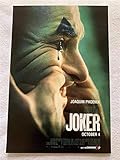
- Grading Scale: Mint, Near Mint, Very Good, Fair & Poor
- Original Promo Movie Poster - Not a Reprint - Sizes are approximate
- Posters come rolled in a plastic sleeve and shipped in a sturdy cardboard tube
- Posters are from Movie Studios and sizes are approximate
- Poster is in Mint Condition
Frequently Asked Questions
Who kills Arthur Fleck in ‘Joker: Folie à Deux’?
An unnamed young inmate at Arkham State Hospital stabs Arthur in the abdomen after telling him a joke. Arthur appears to die from the wound.
Is Arthur Fleck the real Joker?
The sequel’s ending says effectively no. Arthur rejects the Joker persona, while another inmate appears to take up the identity after killing him.
Is the Arkham inmate Jack Napier?
No such name is given in the film. The inmate is unnamed, and identifying him as Jack Napier is speculation.
Is the killer Heath Ledger’s Joker?
No. The film does not establish a connection to Heath Ledger’s Joker or any other Joker from a different DC continuity.
Why does the inmate cut a smile into his face?
The gesture strongly symbolizes his adoption of the Joker mythology. It is the film’s clearest visual suggestion that he will become the Joker, although it is not an explicit identity confirmation.
The Bottom Line
Bottom line: Arthur Fleck is not given a secret Joker identity and is killed at Arkham. The unnamed inmate who stabs him appears to inherit the Joker persona, but the film intentionally leaves his name, backstory, and future unconfirmed.
The Tool Desk
Outbyte Driver Updater FREEScan for outdated or missing drivers - takes under a minuteDriver Scan →Outbyte PC Repair FREERepair Windows errors before they cause bigger problemsFix Now →Quick Recap
Product prices and availability are accurate as of the date/time indicated and are subject to change. Any price and availability information displayed on Amazon at the time of purchase will apply.