For a first complete journey, watch Star Trek in release order. Begin with The Original Series, continue through The Animated Series and the six original-cast films, then watch The Next Generation, Deep Space Nine, Voyager, the later films, and the modern series. Use timeline order only if your priority is following the fictional history of the Federation rather than experiencing the franchise as audiences originally did.
There is no single perfectly tidy order. Discovery begins in the 23rd century and then jumps to the 32nd; Prodigy uses substantial time travel; Section 31 has temporal and alternate-reality complications; and the 2009 film trilogy belongs to a separate Kelvin timeline. The guide below separates those complications instead of pretending they do not exist.
| # | Preview | Product | Price | |
|---|---|---|---|---|
| 1 |
|
Star Trek: The Original Series: The Complete Series | $49.96 | Buy on Amazon |
| 2 |

|
Star Trek: The Next Generation: The Complete Series | $75.14 | Buy on Amazon |
| 3 |
|
Star Trek: Voyager: The Complete Series | $93.94 | Buy on Amazon |
| 4 |
|
Star Trek: Deep Space Nine: The Complete Series | $97.94 | Buy on Amazon |
| 5 |
|
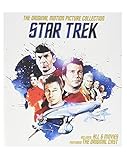
Star Trek: Original Motion Picture Collection | $6.00 | Buy on Amazon |
The recommended first-watch order
This is the most practical release-era order for someone who wants to experience the franchise as a developing television and film universe. It groups related films together rather than asking you to switch repeatedly between episodes and movies.
- Star Trek: The Original Series — 3 seasons, released from 1966 to 1969.
- Star Trek: The Animated Series — 2 seasons, released from 1973 to 1974.
- The six original-cast films — The Motion Picture, The Wrath of Khan, The Search for Spock, The Voyage Home, The Final Frontier, and The Undiscovered Country.
- Star Trek: The Next Generation — 7 seasons, released from 1987 to 1994.
- Star Trek: Deep Space Nine — 7 seasons, released from 1993 to 1999.
- Star Trek: Voyager — 7 seasons, released from 1995 to 2001.
- The four Next Generation films — Generations, First Contact, Insurrection, and Nemesis.
- Star Trek: Enterprise — 4 seasons, released from 2001 to 2005.
- The Kelvin-timeline trilogy — Star Trek (2009), Star Trek Into Darkness, and Star Trek Beyond.
- Star Trek: Discovery — 5 seasons, released from 2017 to 2024.
- Star Trek: Picard — 3 seasons, released from 2020 to 2023.
- Star Trek: Lower Decks — 5 seasons, released from 2020 to 2024.
- Star Trek: Strange New Worlds — released beginning in 2022; it follows Captain Christopher Pike and the Enterprise crew before Kirk’s five-year mission.
- Star Trek: Prodigy — 2 seasons, released from 2021 to 2024.
- Star Trek: Section 31 — a feature-length Paramount+ production released in 2025.
- Star Trek: Starfleet Academy — the latest television series listed in Paramount’s current 2026 viewing guide, set in the 32nd century.
Because the first-time route begins with The Original Series, a physical set such as Star Trek: The Original Series complete series Blu-ray can be practical for viewers who want all three seasons together and do not want their starting point to depend on a changing streaming catalog.
What to expect from each stage
1. The Original Series
The Original Series, or TOS, is the starting point in both franchise history and release order. Captain James T. Kirk, Spock, Dr. Leonard McCoy, and the crew of the Enterprise establish the central Star Trek pattern: exploratory missions, ethical dilemmas, first contact, political conflict, and science-fiction ideas used to examine human behavior.
The production style is older than that of every later series, so expect different pacing, visual effects, and television conventions. It is still valuable to watch rather than treat as optional background because later productions repeatedly build on its characters, worlds, and ideas.
2. The Animated Series
The Animated Series, or TAS, is a direct continuation of the original crew’s adventures. Its two seasons are short and animated, which allows alien environments and creatures that would have been difficult or expensive to show in 1970s live action.
Watch it immediately after TOS. That placement works in both release order and the fictional timeline, where the episodes continue the crew’s late-2260s and early-2270s missions. Viewers focused only on live action can skip it, but doing so means missing a genuine continuation rather than merely a spin-off with no connection to the main story.
The six original-cast films are a natural next purchase or rental block after TAS. The Star Trek original motion picture collection 4K keeps The Motion Picture through The Undiscovered Country together in the order most viewers should use.
3. The six original-cast films
- Star Trek: The Motion Picture
- Star Trek II: The Wrath of Khan
- Star Trek III: The Search for Spock
- Star Trek IV: The Voyage Home
- Star Trek V: The Final Frontier
- Star Trek VI: The Undiscovered Country
Watch these in release order. They form the continuing story of the original Enterprise crew after the television series and animated series. The films are not interchangeable: later entries assume that you know what happened in earlier ones, particularly across the connected story told by The Wrath of Khan, The Search for Spock, and The Voyage Home.
4. The Next Generation
The Next Generation, or TNG, moves the franchise into the 24th century and introduces Captain Jean-Luc Picard and a new Enterprise crew. It ran for seven seasons from 1987 to 1994 and establishes the setting, institutions, characters, and political history that the next two major series expand.
The early episodes can feel uneven while the series finds its voice. The payoff is a long-form exploration of the Federation, the Klingons, the Romulans, the Borg, artificial intelligence, diplomacy, and the responsibilities of commanding a starship. Completing TNG before its films is the least confusing option.
5. Deep Space Nine and 6. Voyager
Deep Space Nine, or DS9, began during TNG’s run and ran from 1993 to 1999. It is based around a space station rather than a continuously traveling starship, and its story becomes increasingly serialized as it develops the Dominion War and the politics of the Bajoran sector.
Voyager began in 1995 and ran through 2001. Its crew is stranded in the Delta Quadrant, far from Federation space, and must find a route home. The series has a different premise from DS9, but it shares the broader 24th-century setting and expands the franchise’s exploration of the Federation beyond its familiar region of space.
For a first watch, the simplest sequence is TNG, then DS9, then Voyager. In strict broadcast history, they overlap. A viewer could interleave episodes according to air date or stardate, but that approach is laborious, and stardates are not a consistently reliable calendar. Crossovers and time-travel episodes make a supposedly exact sequence even less useful. Finish one series before starting the next unless you specifically enjoy constructing an episode-level watch list.
The Tool Desk
Outbyte PC Repair FREERepair Windows errors before they cause bigger problemsFix Now →Outbyte Driver Updater FREEScan for outdated or missing drivers - takes under a minuteDriver Scan →Rank #2
- Genre: TV Sci-Fi
- Number of Discs: 48
- Number of Tracks: 0
- Playback Duration: 8082
- Rating: NR
7. The four Next Generation films
- Star Trek Generations
- Star Trek: First Contact
- Star Trek: Insurrection
- Star Trek: Nemesis
These are the four films led by the TNG cast. Generations follows the television series’ finale and connects the TNG crew with the original-cast era. First Contact was released while DS9 and Voyager were still on television; Insurrection also overlaps that period; and Nemesis was released after Voyager ended.
That overlap is why you may see two different recommendations online. The clean practical choice is to watch all of TNG, DS9, and Voyager, then watch these four films. If you want strict release chronology, place Generations immediately after the TNG finale, First Contact during the early DS9/Voyager period, Insurrection during their later period, and Nemesis after Voyager.
For viewers completing this era, the Star Trek TNG 4-movie collection 4K is a clearly defined film block. It is separate from both the six original-cast films and the later Kelvin-timeline movies.
8. Enterprise
Enterprise is a prequel set in the 2150s, before the United Federation of Planets exists. Captain Jonathan Archer and the crew of the first warp-five Enterprise represent humanity’s early deep-space exploration and the alliances that eventually lead toward the Federation.
It was released from 2001 to 2005, after most of the 24th-century shows had already established the franchise. That makes it a late stop in release order but the first full television series in timeline order. Watching it here lets you see how Star Trek’s ideas about the Federation’s origins were developed after decades of earlier continuity.
9. The Kelvin-timeline films
- Star Trek (2009)
- Star Trek Into Darkness
- Star Trek Beyond
These three films should be treated as a separate branch rather than inserted into the Prime-timeline sequence. The story begins when Nero’s temporal incursion changes events involving the original characters. The result is an alternate reality with younger versions of Kirk, Spock, McCoy, Uhura, Scotty, Sulu, and Chekov.
You can watch the trilogy after the six original-cast films, where its relationship to the earlier crew is easiest to appreciate. It also works as a self-contained modern cinematic introduction, although a viewer who starts here will encounter a different timeline from the one followed by most of the television series.
10. Discovery
Discovery has five seasons, released from 2017 to 2024, but it belongs in two very different places in the in-universe timeline.
Recommended Free Tools
- Seasons 1–2: the 2250s, roughly a decade before The Original Series. These seasons cover the Klingon conflict, the Mirror Universe, and the threat posed by Control.
- Seasons 3–5: the 32nd century. At the end of Season 2, the ship travels far into the future, leaving the earlier era behind.
For release order, watch all five seasons together. For timeline order, stop after Season 2 and return to Discovery only after the 24th-century stories. This split is the single biggest reason a television-only chronological list cannot simply put Discovery in one position.
11. Picard
Picard ran for three seasons from 2020 to 2023 and follows Jean-Luc Picard later in his life. It is a continuation of the TNG era, so it is most rewarding after The Next Generation and the four TNG films.
The series can be watched without completing every other Star Trek production, but its continuity references have more impact if you have seen TNG, Nemesis, and preferably the major 24th-century stories. Lower Decks and Prodigy also sit near this point in the broad timeline, although neither is a prerequisite for understanding the main plot of Picard.
Rank #3
- Genre: TV Sci-Fi
- Number of Tracks: 0
- Playback Duration: 7778
- Movie Title: Star Trek - Voyager: The Complete Series
- Movie Year: 2020
12. Lower Decks
Lower Decks is a five-season animated comedy released from 2020 to 2024. In-universe, it takes place after Nemesis and before Picard. Its jokes, cameos, alien species, ship designs, and references draw heavily on the entire franchise, so it is funnier and more rewarding after the major 24th-century shows.
It can stand alone as a workplace comedy about junior officers, but do not confuse its light tone with a separate continuity. It is part of the broader Prime-timeline setting. A complete physical release is available in formats such as the Star Trek Lower Decks complete series Blu-ray, subject to current retailer, region, and stock conditions.
13. Strange New Worlds
Strange New Worlds is a prequel centered on Captain Christopher Pike, Number One, Spock, and the Enterprise crew before Kirk’s five-year mission. It is set in the late 2250s, after the first two seasons of Discovery in a practical timeline sequence and before TOS.
Its position is unusual in release order: the show arrived decades after the stories it depicts. A new viewer can start with it because it is polished, accessible, and designed around episodic exploration, but starting there means moving backward into TOS rather than following the franchise’s historical development.
14. Prodigy
Prodigy ran for two seasons from 2021 to 2024. It follows a young crew and the USS Protostar, and it is aimed in part at younger viewers while remaining connected to the wider Star Trek continuity.
Do these 3 things before closing this tab:
1Fix the driver behind crashes, sound loss and screen glitches2Repair Windows errors before they cause bigger problems3Scan for outdated or missing drivers - takes under a minuteIts broad setting is around 2383–2384, after the main Voyager era and after Lower Decks in a practical timeline order. Admiral Kathryn Janeway and Chakotay provide a strong connection to Voyager, while the second season includes substantial time travel. For that reason, place the series broadly after Lower Decks, but do not interpret every scene as occurring in one uninterrupted year.
Families can begin with Prodigy if they want an accessible entry point. The show still works on its own, but its Voyager references and ideas about Starfleet become more meaningful after watching at least some of Voyager.
15. Section 31
Star Trek: Section 31 is a feature-length Paramount+ production rather than a conventional multi-season series. It focuses on Philippa Georgiou and the covert organization Section 31, and it uses the franchise’s interest in alternate realities and temporal consequences.
Do not force it into a precise episode-by-episode chronology. The safest choices are to watch it after Discovery Seasons 1–2, when Georgiou and the Mirror Universe are familiar, or to save it as an optional side story until you have completed the main Prime-timeline viewing order. It has also received 4K UHD, Blu-ray, DVD, and digital releases, although the exact edition and availability depend on region and retailer.
What’s actually slowing this PC down?
Pick the symptom - the matching free tool is one click away.
16. Starfleet Academy
Starfleet Academy is set in the 32nd century and follows cadets training at Starfleet Academy. It belongs after Discovery Seasons 3–5 in the broad timeline because it shares that far-future setting. It is currently the farthest-future regular Star Trek series listed in Paramount’s current viewing guide.
Star Trek in chronological timeline order
If you want the primary-universe story in fictional historical order, use this sequence. This is an era-level order, not a claim that every individual episode occurs in a perfectly linear sequence.
Rank #4
- Genre: TV Sci-Fi
- Number of Discs: 47
- Number of Tracks: 0
- Playback Duration: 7986
- Movie Title: Star Trek - Deep Space Nine: The Complete Series
| Order | Series or films | Where it fits |
|---|---|---|
| 1 | Enterprise | The 2150s, before the Federation and during humanity’s earliest deep-space missions. |
| 2 | Discovery, Seasons 1–2 | The 2250s, roughly a decade before TOS. |
| 3 | Strange New Worlds | The late 2250s, following Pike, Number One, Spock, and the Enterprise crew before Kirk. |
| 4 | The Original Series | The 2260s, during Kirk’s five-year mission. |
| 5 | The Animated Series | The late 2260s and early 2270s, continuing the original crew’s missions. |
| 6 | The six original-cast films | The continuing adventures of the original crew after the television-era missions. |
| 7 | The Next Generation, Deep Space Nine, and Voyager | The overlapping 24th-century television era. A practical binge is TNG, then DS9, then Voyager. |
| 8 | The four Next Generation films | The 24th-century film continuation of Picard’s crew. |
| 9 | Lower Decks | After Nemesis and before Picard. |
| 10 | Prodigy | Broadly around 2383–2384, with time-travel stories that complicate a single placement. |
| 11 | Picard | The late 24th century, following Jean-Luc Picard. |
| 12 | Discovery, Seasons 3–5 | The 32nd century, after Discovery travels forward at the end of Season 2. |
| 13 | Starfleet Academy | The 32nd century, more than a century after the Burn and after the far-future Discovery seasons. |
Where is Section 31 in this table? It is deliberately outside the numbered sequence. Its Philippa Georgiou storyline and temporal or alternate-reality elements make an optional placement more honest than assigning it a false precision. Watch it after Discovery Seasons 1–2 or after the main timeline order.
How to handle the overlapping 24th-century shows
The phrase chronological order can suggest that one definitive list of episodes exists. For TNG, DS9, and Voyager, it does not matter enough to justify the effort for most viewers.
PC Slower Than It Used to Be?
A free scan shows the junk files, broken settings and background clutter dragging Windows down - then fixes them in one click.Free scan · Windows 10 & 11Outdated Drivers Are Slowing You Down
One free scan finds every outdated or missing driver and matches the right update for your exact hardware.Free scan · exact hardware match- Simple chronological binge: watch all of TNG, then all of DS9, then all of Voyager. This is the recommended approach for a first viewing.
- Release-history binge: watch the episodes in original production or broadcast order, adding films when they were released. This preserves the way the franchise unfolded for its audience.
- Episode-level chronology: interleave episodes using stardates, production dates, and crossover information. This can be a worthwhile fan project, but it is not a cleaner narrative because some episodes involve time travel, alternate realities, or events whose exact date is intentionally vague.
TNG establishes the 2360s and 2370s setting. DS9 begins in 2369 and extends through 2375, while Voyager occupies the same broad era as its crew travels through the Delta Quadrant. Their overlap is part of the setting, not an error in the viewing guide.
Independent reader supportYour contribution helps us test, update, and keep practical guides available for everyone.Prime timeline versus Kelvin timeline
Most Star Trek television series belong to the primary continuity commonly called the Prime timeline. That includes Enterprise, the early Discovery seasons, Strange New Worlds, TOS, TAS, the six original films, the 24th-century series and films, Prodigy, the late Discovery seasons, and Starfleet Academy.
The 2009 Star Trek film creates a separate Kelvin-timeline branch through Nero’s temporal incursion. The trilogy can reference or echo the original characters without becoming a prequel to the Prime-timeline television shows. Watch it as its own three-film set.
Choose your order by viewer type
For an absolute beginner
Use the practical release-order route: TOS, TAS, the six original films, TNG, DS9, Voyager, the four TNG films, Enterprise, the Kelvin trilogy, and then the modern series in release-era order. This gives you the references and historical context that later shows expect.
Free tools Windows power users keep installed
One-click scans. No signup required.
For someone who prefers modern television
Start with Strange New Worlds, then move to TOS and the six original films before tackling TNG, DS9, Voyager, Picard, Lower Decks, Prodigy, Enterprise, Discovery, and Starfleet Academy. This is an accessibility-first route, not strict release or timeline order. It uses Strange New Worlds as a modern bridge into the classic era.
For a completionist
Make one complete pass in release order, then revisit the franchise in the chronological order table. The second pass makes the Federation’s historical development easier to see, while the first preserves the creative evolution from 1960s television through the 32nd-century setting.
For families or younger viewers
Prodigy is the most obvious starting point for a younger audience and can stand alone. Watching Voyager first, or at least becoming familiar with Janeway and Chakotay, adds context. Lower Decks is also animated but is written primarily for viewers who already know the franchise’s history and recurring jokes.
For movie-focused viewers
Watch the six original-cast films, the four TNG films, the Kelvin trilogy, and Section 31. Then choose a series based on the era or cast you want to explore: TOS and Strange New Worlds for the early Enterprise era, TNG and Picard for Picard’s story, DS9 for serialized political drama, or Voyager for a long-distance exploration premise.
Best Value
Streaming, physical media, and regional availability
In the United States, Paramount’s current viewing guide identifies Paramount+ as the home of the Star Trek collection. Streaming rights, included seasons, subtitles, audio tracks, and film availability can change, and the catalog may differ outside the U.S. Check the service listing in your country before planning an entire marathon around one platform.
Physical media is useful for this franchise because the complete journey spans many decades, series, films, and changing licensing arrangements. Confirmed official or retailer-supported examples include complete-series sets for TOS, Enterprise, and Lower Decks; the six-film original-motion-picture collection; the four-film TNG collection; and home-media editions of Section 31 on 4K UHD, Blu-ray, DVD, and digital formats.
Before buying, check whether the set contains the complete series or only selected seasons, whether it is compatible with your region, which audio and subtitle options are included, and whether the advertised edition is new, used, or a repackaged release. Prices, packaging, stock, and formats are particularly variable for older television collections.
Timeline-order viewers starting with Enterprise may want the Star Trek Enterprise complete series Blu-ray so the earliest major television setting is available as one complete block rather than scattered across services.
Crashes, No Sound, or Screen Glitches?
Random freezes, missing sound and display glitches usually trace back to one bad driver. Find and replace yours safely.Free scan · under a minuteWindows Errors? Fix Them Before They Spread
Repair common Windows errors and clear accumulated junk for a smoother, more stable PC - no reinstall needed.Free scan · no reinstallA concise decision guide
| Your priority | Best order | Main trade-off |
|---|---|---|
| First complete Star Trek journey | Practical release order | You will see prequels such as Enterprise and Strange New Worlds after stories set later in-universe. |
| Fictional historical development | Timeline order | Discovery, Prodigy, and Section 31 make chronology imperfect. |
| Preserving the franchise’s evolution | Strict release order, with overlaps | You must switch among concurrent series and place films during their original release periods. |
| Modern entry point | Strange New Worlds, then classic and 24th-century eras | You begin with a prequel and may lose some of the impact of seeing the franchise develop from its origin. |
| Movies only | Six original films, four TNG films, Kelvin trilogy, optional Section 31 | The films provide less background for recurring characters and political history than the series do. |
Frequently Asked Questions
Is it better to watch Star Trek in release order or timeline order?
Release order is the best default for a first complete viewing because later stories were written with earlier productions in mind. Timeline order is better for a rewatch or for viewers primarily interested in the fictional history of the Federation.
Where should I put Discovery?
In release order, watch all five seasons together. In timeline order, watch Seasons 1–2 after Enterprise and before Strange New Worlds, then watch Seasons 3–5 after Picard and Prodigy, immediately before or alongside Starfleet Academy’s 32nd-century setting.
Do the 2009 Star Trek films belong in the main timeline?
No. The 2009 film, Into Darkness, and Beyond form the Kelvin-timeline trilogy, an alternate branch created by Nero’s temporal interference. Watch them as a separate three-film set.
Can I skip The Animated Series?
You can, especially if you only want live action, but it is a direct animated continuation of the original crew’s adventures. It is short and fits immediately after The Original Series in both practical release and timeline order.
Where does Section 31 fit?
Treat it as an optional side story. Watching it after Discovery Seasons 1–2 provides useful context for Philippa Georgiou and the Mirror Universe, while watching it after the main Prime-timeline order avoids forcing its temporal and alternate-reality elements into a precise slot.
Do I have to interleave The Next Generation, Deep Space Nine, and Voyager episode by episode?
No. They overlap in the 24th century, but a first-time viewer should generally finish TNG, then DS9, then Voyager. Episode-level ordering is a fan project rather than a necessary way to understand the stories.
The Bottom Line
Bottom line: Start with The Original Series and follow the practical release-order list unless you have a specific reason to prioritize chronology. For a timeline rewatch, begin with Enterprise, split Discovery around its Season 2 time jump, place Strange New Worlds before TOS, keep the Kelvin films separate, and treat Prodigy and Section 31 as stories whose time-travel elements make exact placement approximate.
Quick Recap
Product prices and availability are accurate as of the date/time indicated and are subject to change. Any price and availability information displayed on Amazon at the time of purchase will apply.
The Tool Desk
Outbyte PC Repair FREERepair Windows errors before they cause bigger problemsFix Now →Outbyte Driver Updater FREEScan for outdated or missing drivers - takes under a minuteDriver Scan →