TikTok has three defensible start dates. ByteDance launched Douyin in China in September 2016, launched TikTok internationally in 2017, and created the modern global app most people recognize when it merged Musical.ly into TikTok on August 2, 2018.
So, if you mean when the service first appeared, the answer is 2016. If you mean when TikTok launched outside mainland China, the answer is 2017. For the familiar U.S. and international app built from both TikTok and Musical.ly, the most useful date is August 2, 2018.


The short answer: TikTok began in 2016, but became the familiar global app in 2018
The different dates are not contradictions. They describe different stages in the development of ByteDance’s short-video business:
| Date | What happened | Why it matters |
|---|---|---|
| September 2016 | ByteDance launched Douyin in China. | This was the beginning of the short-video platform that became the foundation for TikTok. |
| 2017 | ByteDance launched TikTok outside mainland China. | This was the international rollout of the global counterpart to Douyin. |
| November 2017 | ByteDance acquired Musical.ly. | The deal gave ByteDance an established international audience, particularly in the United States and Europe. |
| August 2, 2018 | Musical.ly and TikTok were unified under the TikTok name. | Existing Musical.ly accounts, videos, followers, and fan bases moved into the TikTok-branded app. |
ByteDance’s own company history identifies September 2016 as Douyin’s launch and says TikTok launched outside mainland China approximately a year later, including a May 2017 international launch. ByteDance’s company history is therefore the best primary source for the 2016 and 2017 dates.
Do these 3 things before closing this tab:
1Fix the driver behind crashes, sound loss and screen glitches2Clear out junk files and repair common Windows errors3Scan for outdated or missing drivers - takes under a minute#1 Best Overall
What was TikTok before it was TikTok?
TikTok’s global success did not begin entirely with a new app. Its international breakthrough combined ByteDance’s short-video technology and recommendation model with Musical.ly’s existing audience and music-centered culture.
Alex Zhu and Luyu Yang founded Musical.ly in 2014. The service became known for short lip-sync and music videos, giving a large youth audience an easy format for recording, editing, and sharing performances. Contemporary reporting documents Musical.ly’s early product and entertainment strategy, while ByteDance confirmed its acquisition of the company in November 2017. The contemporary report on Musical.ly’s development provides context for that prehistory.
The acquisition was reported at approximately $1 billion. The Congressional Research Service’s report on TikTok describes the purchase as a way for ByteDance to enter the U.S. market. In practical terms, ByteDance acquired more than an app: it gained an established community, creator habits, music behavior, and familiarity among international users.
What happened on August 2, 2018?
On August 2, 2018, Musical.ly and TikTok were brought together as one service. Musical.ly users were transferred to the TikTok app, rather than being required to begin again with a wholly separate account.
In its announcement, TikTok said the unified product would retain the TikTok name while introducing a new logo and interface. Users’ existing accounts, content, and fan bases were preserved. The company also described the combination as a way to bring together the two services’ audiences, creative tools, and content. The details are documented in TikTok’s announcement of the Musical.ly merger.
This is why many people remember TikTok as appearing in 2018. For a Musical.ly user in the United States or another international market, August 2 was effectively the date the familiar TikTok-branded service arrived. But it would be inaccurate to describe TikTok simply as Musical.ly with a new name. Before the merger, they were separate products. The modern platform combined Musical.ly’s international community and music behavior with ByteDance’s TikTok product and recommendation technology.
TikTok’s origins: Douyin and the international product
Douyin was launched for the Chinese market in September 2016. ByteDance then developed and released TikTok as its international short-video counterpart in 2017.
Douyin and TikTok share core ideas and are associated with the same parent company, but they are not simply one worldwide app under different names. They are operated as distinct services for different markets. The Congressional Research Service’s overview of TikTok notes that users in China generally use Douyin rather than TikTok.
That separation allowed ByteDance to adapt product decisions to local conditions, including content, moderation, recommendation systems, and market strategy. It also helps explain why “TikTok launched in China” is imprecise: the Chinese service was Douyin, while TikTok was the international product.
Why did TikTok grow so quickly?
1. The For You feed made individual videos discoverable
TikTok’s most important difference from a conventional follower-based social network was its emphasis on the personalized For You feed. A user did not need to follow a large number of accounts to see an engaging stream of videos, and an unknown creator did not need an established celebrity following for a video to be recommended to viewers.
According to the Congressional Research Service, TikTok recommendations draw on signals such as user interactions, video metadata, and device or account settings. The editorial consequence was significant: discovery could happen outside a creator’s immediate social graph.
A dance, joke, recipe, tutorial, reaction, song, or visual effect could therefore travel beyond the people who already knew the creator. This shifted the platform’s growth logic from “build followers first” toward “make each video potentially discoverable.” It did not eliminate the importance of followers, but it lowered the barrier for a new account to reach an audience.
What’s actually slowing this PC down?
Pick the symptom - the matching free tool is one click away.
2. Musical.ly had already normalized short music videos
ByteDance did not have to teach every international user what to do with a short-video app. Musical.ly had already made lip-syncing, music clips, and short-form performance familiar to a large youth audience.
TikTok’s 2018 merger announcement said Musical.ly had reached 100 million monthly active users. That is a company-reported figure, not an independently audited measurement in this context, but it illustrates the strategic value of the acquisition: ByteDance entered international markets with an existing audience rather than starting from zero.
The merger also matched two complementary strengths. Musical.ly contributed audience and creator behavior; ByteDance contributed a rapidly expanding international short-video product and the recommendation-led experience that helped content circulate.
3. Music became a reusable distribution system
On TikTok, a song was not merely background audio. A sound could become a shared template used for dances, comedy, memes, storytelling, tutorials, reactions, and variations on a format. Each new video could introduce that sound to another audience.
Quick wins for a faster PC:
Scan for outdated or missing drivers - takes under a minuteDriver Scan →Repair Windows errors before they cause bigger problemsFix Now →Fix the driver behind crashes, sound loss and screen glitchesFind Drivers →Rank #3

- Piano/Vocal
- Pages: 352
- Instrumentation: Vocal
- Instrumentation: Low Voice
- Instrumentation: Piano Accompaniment
By 2020, TikTok had become an important environment for music discovery and artist promotion. TikTok reported that 176 songs each exceeded one billion video views as TikTok sounds during 2020, and that five songs associated with its U.S. 2020 music activity reached No. 1 on the Billboard Hot 100. These figures come from TikTok’s own reporting and should be treated as company-reported claims. They are summarized in the company’s 2020 music retrospective.
The platform’s structure helped turn a recording into a participatory cultural object. Users could reuse the same sound without making the same video, giving music a built-in mechanism for repetition, adaptation, and exposure.
4. The pandemic increased TikTok’s visibility
The COVID-19 pandemic did not invent TikTok’s recommendation feed or short-video format, but it accelerated digital adoption and increased the amount of time many people spent online. Participatory entertainment became especially attractive when people were looking for ways to connect, create, or pass time from home.
TikTok’s short videos, editing tools, music features, and personalized feed fit that environment. In its 2021 retrospective, TikTok said that more than one billion people used the platform during 2021 to be entertained, learn, and share content. That is a company-reported global figure, and the company highlighted activity involving comedy, food, family videos, education, creators, and music. Its account is available in the 2021 TikTok retrospective.
The pandemic was therefore an accelerant rather than the original cause of TikTok’s rise. The core product model was already in place: a highly personalized feed, low-friction creation tools, reusable sounds, and distribution that could reach beyond an existing follower network.
A complete TikTok timeline
- 2012: ByteDance is founded and launches Toutiao, the recommendation-driven news and information product that preceded its short-video expansion. ByteDance’s company history lists these early milestones.
- 2014: Alex Zhu and Luyu Yang launch Musical.ly, which develops a strong youth audience around short music and lip-sync videos.
- September 2016: ByteDance launches Douyin in China.
- 2017: ByteDance launches TikTok outside mainland China, including a May 2017 international launch identified in ByteDance’s history.
- November 2017: ByteDance acquires Musical.ly in a deal described by the Congressional Research Service as approximately $1 billion.
- August 2, 2018: Musical.ly and TikTok are unified under the TikTok name, with users’ accounts, content, and followers transferred into the upgraded app.
- 2020: TikTok reports major music-discovery and chart activity, including 176 sounds that each exceeded one billion video views during the year.
- 2021: TikTok says more than one billion people used the platform globally during the year.
Why people give different answers to “When did TikTok come out?”
The question usually mixes together three meanings of “come out”:
- When did the underlying platform begin? September 2016, when Douyin launched in China.
- When did TikTok become an international product? 2017, when ByteDance launched TikTok outside mainland China.
- When did the recognizable global app appear for many Western users? August 2, 2018, when Musical.ly was unified with TikTok.
A precise one-sentence answer is: TikTok first appeared in China as Douyin in September 2016, launched internationally as TikTok in 2017, and became the global app most people recognize after ByteDance merged Musical.ly into TikTok on August 2, 2018.
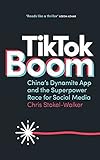
For readers who want a longer account of the company, its international expansion, and the competition around social media, a TikTok history book such as TikTok Boom: China’s Dynamite App and the Superpower Race for Social Media offers a natural next step. Availability and any retail referral arrangement should be checked before publication of a commercial link.
The Tool Desk
Outbyte Driver Updater FREEScan for outdated or missing drivers - takes under a minuteDriver Scan →Outbyte PC Repair FREERepair Windows errors before they cause bigger problemsFix Now →Common mistakes in describing TikTok’s launch
“TikTok launched in 2018.”
This is understandable when describing the U.S. consumer experience after the Musical.ly transition, but it leaves out Douyin’s 2016 launch and TikTok’s international rollout in 2017. Use the 2018 date with that qualification.
Rank #4
“TikTok was just Musical.ly renamed.”
That description oversimplifies the history. Musical.ly and TikTok were separate products before the August 2018 unification. The final platform combined Musical.ly’s audience and music-centered behavior with ByteDance’s TikTok product.
“Douyin and TikTok are exactly the same app.”
They are related services operated by ByteDance, but they serve different markets and are operated separately. China’s users generally use Douyin, not TikTok.
“TikTok became huge only because of the pandemic.”
The pandemic helped accelerate adoption and cultural visibility, but TikTok’s recommendation feed, reusable music format, international rollout, and Musical.ly integration were already important parts of its growth strategy.
Frequently Asked Questions
Was TikTok originally called Musical.ly?
No. Musical.ly and TikTok were separate products before August 2, 2018. ByteDance acquired Musical.ly in November 2017 and later unified it with TikTok, transferring Musical.ly users, content, and followers into the TikTok-branded app.
Did TikTok launch in 2016 or 2018?
Both dates can be correct when properly qualified. The underlying Chinese service, Douyin, launched in September 2016. TikTok launched internationally in 2017. The modern global app familiar to many U.S. users emerged after the Musical.ly merger on August 2, 2018.
What is the difference between Douyin and TikTok?
Douyin is ByteDance’s short-video service for China, while TikTok is its international counterpart. They share core concepts but are operated as distinct services for different markets.
Why did TikTok become so popular?
Its personalized For You feed could recommend videos from unfamiliar creators, reducing reliance on an existing follower network. Musical.ly also supplied an established international audience familiar with short music videos, while TikTok’s reusable sounds made music and formats easy to spread.
The Bottom Line
Bottom line: The best precise answer is that TikTok’s story starts with Douyin in September 2016, expands internationally in 2017, and reaches the recognizable global TikTok era on August 2, 2018, when Musical.ly was unified with TikTok.
Crashes, No Sound, or Screen Glitches?
Random freezes, missing sound and display glitches usually trace back to one bad driver. Find and replace yours safely.Free scan · under a minuteWindows Errors? Fix Them Before They Spread
Repair common Windows errors and clear accumulated junk for a smoother, more stable PC - no reinstall needed.Free scan · no reinstallQuick Recap
Product prices and availability are accurate as of the date/time indicated and are subject to change. Any price and availability information displayed on Amazon at the time of purchase will apply.