Spoilers for the complete My Hero Academia manga, including Chapter 431. The manga ends with Izuku Midoriya defeating Tomura Shigaraki, but losing the remaining power of One For All in the process. Deku becomes Quirkless again, graduates from U.A., and spends years teaching before All Might and his former classmates give him an advanced support suit that allows him to return to frontline hero work. The extended final chapter, “More,” then provides additional closure for Ochaco, Toga, and Deku and Ochaco’s relationship.
There are two final chapters to keep straight: Chapter 430 was the ending of the Weekly Shonen Jump serialization, while Chapter 431 was drawn later for the final collected volume. For the complete manga ending, Chapter 431 is best read as an extended epilogue to Chapter 430, not as a replacement for it.


Why are there two different My Hero Academia endings?
Weekly serialization of My Hero Academia concluded with Chapter 430 in August 2024. That chapter functions as the manga’s serialized curtain call: it resolves Deku’s fate, jumps eight years into the future, and ends with his return to hero work.
The Japanese edition of My Hero Academia Volume 42, released on December 4, 2024, adds a newly drawn 38-page chapter titled “More”. Official franchise material presents it as an episode created for the final volume and set after the main televised and serialized conclusion. That makes Chapter 431 part of the completed manga ending, even though it was not included in the original weekly run.
#1 Best Overall
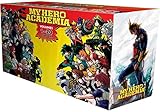
- MHA Fandom: Midoriya inherits the superpower of the world’s greatest hero, but greatness won’t come easy.
- Includes: The first 20 volumes of the bestselling My Hero Academia manga.
- Format: Softcover, 3840 pages.
The simplest way to understand the structure is:
| Chapter | Role in the ending |
|---|---|
| 430 | The serialized finale: Shigaraki’s defeat, the postwar future, Deku’s life as a U.A. teacher, and the support suit. |
| 431, “More” | The extended epilogue: adult life after the war, Ochaco’s continuing grief over Toga, and clearer romantic closure for Deku and Ochaco. |
Readers who want the complete printed ending should look for My Hero Academia Volume 42, because it contains the extended epilogue as well as the conclusion that originally appeared in serialization. Digital readers can also read My Hero Academia officially through licensed manga services such as VIZ Media or Shonen Jump where the relevant chapters and volumes are available. Digital access, language, and regional availability can differ.
How does the final battle end?
Deku’s victory over Shigaraki is not simply a matter of overpowering him with One For All. The final confrontation combines physical combat, the vestiges within One For All, and Deku’s attempt to reach the abused child at the center of Shigaraki’s identity: Tenko Shimura.
Shigaraki has spent much of the story as both a terrifying villain and the product of a society that failed to help him. All For One exploited that damage, manipulated his development, and used him as part of a much larger plan. During the final battle, Deku fights the threat Shigaraki represents while also recognizing that there is still a human being inside the villain.
Deku does reach that person, but “saving” Shigaraki does not mean making him survive, pardoning his crimes, or allowing him to walk away from the destruction he caused. All For One’s controlling presence is destroyed, Shigaraki dies after the confrontation, and the final exchange gives him a measure of recognition that he was more than the role imposed on him. Shigaraki’s last actions and conversation also connect him back to the League of Villains and to the damaged world that produced them.
Do these 3 things before closing this tab:
1Repair Windows errors before they cause bigger problems2Scan for outdated or missing drivers - takes under a minute3Clear out junk files and repair common Windows errorsThis is why the ending is deliberately bittersweet. Deku cannot restore Shigaraki’s life or erase the deaths and suffering caused by his actions. What he can do is refuse to reduce him to a monster. Deku preserves the memory of the person who needed help, even while the villain responsible for the final catastrophe is gone.
What happens to One For All?
Deku gives up One For All permanently. The transfer and the final battle consume the inherited power, leaving only its remaining embers for a time. Those embers eventually disappear, and Deku becomes Quirkless again.
This is not framed as a punishment for winning or as proof that Deku’s story has failed. One For All was never meant to be valuable merely because it made its holder powerful. It represented the accumulated will of people who chose to stand against oppression. Deku’s final use of it fulfills that purpose, even though he no longer owns the power afterward.
The conclusion therefore returns Deku to the condition he had at the beginning of the series, but not to the same person or the same society. At the start, he believes being Quirkless makes becoming a hero impossible. By the end, he has demonstrated that heroism does not depend on permanently possessing the strongest Quirk.
Recommended Free Tools
What happens to Deku after the war?
The postwar story does not jump immediately to a celebratory restoration of the old hero system. Society has to recover from immense destruction and confront the failures that allowed people such as Shigaraki and Himiko Toga to become isolated and dangerous.
That social response is especially visible through Ochaco Uraraka. Toga’s death forces Ochaco to think about how easily people with frightening or misunderstood Quirks can be pushed away. Rather than treating Toga’s tragedy as an isolated villain story, Ochaco turns it into a reason to help children and other vulnerable people before their loneliness becomes irreversible.
The implication is important: the next generation of heroes cannot simply wait for villains to appear and then defeat them. They must notice suffering earlier, make room for difficult people, and address the fear and alienation surrounding Quirks. The series’ postwar vision is about prevention and connection as much as law enforcement.
Deku graduates from U.A. with his classmates. For the years that follow, while the embers of One For All fade, he works as a teacher at U.A. and helps train the next generation. Students such as Kota are part of the future he influences. He is no longer a conventional combat hero during this period, but the story treats education, mentorship, and inspiration as meaningful forms of heroism rather than as consolation prizes.
What does the eight-year time skip show?
Chapter 430 then jumps eight years into the future. Class 1-A has entered adult life and professional hero work, but the members do not all become identical versions of the same celebrity hero. Some are more famous than others, some take different professional paths, and their careers develop at different speeds.
- Shoto Todoroki becomes a highly visible professional hero while continuing to define himself outside the expectations imposed by his family and by hero society.
- Katsuki Bakugo becomes a prominent Pro Hero. He remains competitive, intense, and difficult in recognizable ways, but his adult career also shows how far he has moved from the isolated rival he once was.
- Class 1-A as a whole becomes a distributed network of working heroes and public figures rather than a single replacement for All Might.
The time skip can initially make Deku’s position look lonely because his former classmates are busy with demanding careers. However, the manga does not establish that they abandoned or forgot him. Deku remains connected to them, continues to be regarded as someone who changed hero society, and is still part of the community that formed at U.A.
Most importantly, his teaching career is not presented as a lesser fate. Deku helps create the heroes who will shape the next era. That choice broadens the definition of heroism: a person can protect others directly, educate them, build the tools they need, or help them become brave enough to act.
How does Deku become a hero again?
Near the end of Chapter 430, All Might arrives with an advanced armored support suit. The equipment is based on technology and data developed through the final conflict, and it is funded with help from All Might’s professional network and Deku’s former classmates.
The suit does not restore One For All. Deku does not receive a new natural Quirk, and the inherited power has not secretly survived inside him. He remains Quirkless and uses technology to take part in frontline hero work again.
This resolves the apparent contradiction in Deku’s ending in two stages:
- Deku proves he can be a hero without powers. As a U.A. teacher, he mentors and inspires others while Quirkless.
- Deku’s community gives him another way to act in the field. The suit is the result of engineering, funding, teamwork, and collective belief rather than a miraculous restoration of his old ability.
The support suit is therefore not a conventional late-series power-up. It does not erase the sacrifice of One For All or suggest that Deku was incomplete without it. Instead, it shows a society learning to make heroism more collaborative and accessible. Deku returns to active hero work because other people help build the conditions for that return.
What is Chapter 431, “More,” about?
Chapter 431 is a quieter, more personal conclusion than Chapter 430. The title reflects its purpose: it gives the characters more life after the great battle, more emotional honesty after years of duty, and more evidence of what the new hero society might become.
The Tool Desk
Outbyte Driver Updater FREEScan for outdated or missing drivers - takes under a minuteDriver Scan →Outbyte PC Repair FREERepair Windows errors before they cause bigger problemsFix Now →The chapter spends significant time with Ochaco. She is still carrying grief over Toga, whose death is not reversed or softened into a surprise survival. Toga appears through dreamlike and symbolic imagery connected to Ochaco’s unresolved feelings. These scenes ask whether emotionally reaching someone still matters when it cannot save their life. For Ochaco, the answer is yes: her encounter with Toga continues to influence how she helps children who fear their own Quirks or have been pushed away by others.
Chapter 431 also supplies the clearest romantic closure for Deku and Ochaco. The manga does not depict a wedding, give them a long-form romance subplot, or provide a detailed future relationship status. It does, however, establish mutual romantic intent. Ochaco realizes that she wants to speak with Deku more, and Deku makes clear that his feelings for her have become more than general respect and care for the people around him.
So the accurate description is that Deku and Ochaco receive a canonically established romantic direction, not that the manga shows them already married or provides an exhaustive account of their dating life.
What happens to the major characters?
| Character | Ending |
|---|---|
| Izuku Midoriya/Deku | One For All’s remaining embers disappear, making him Quirkless again. He becomes a U.A. teacher and later returns to active hero work with an advanced support suit. |
| Tomura Shigaraki | He dies after the final confrontation. Deku reaches the human being inside him, but that recognition does not undo Shigaraki’s crimes or allow him to survive. |
| All For One | His consciousness and control are destroyed, ending the long-running manipulation behind Shigaraki’s development and the final villainous plan. |
| All Might | He survives and remains involved in Deku’s life. Helping provide the support suit changes his legacy from that of a solitary Symbol of Peace to one of collaboration and shared responsibility. |
| Ochaco Uraraka | She becomes a professional hero and works toward helping children affected by Quirk-related fear, isolation, and emotional distress. Chapter 431 adds closure to her grief over Toga and her feelings for Deku. |
| Katsuki Bakugo | He becomes a major Pro Hero. His competitiveness remains, but his professional life reflects his growth into someone who contributes to Deku’s future instead of merely competing with him. |
| Shoto Todoroki | He becomes a highly visible Pro Hero and continues building an identity separate from his family’s expectations and the legacy forced upon him. |
| Himiko Toga | She remains dead after sacrificing herself to save Ochaco. Her memory continues to shape Ochaco’s work, and Chapter 431 revisits their bond through dreamlike imagery. |
| Class 1-A | The former classmates become an adult hero network with different careers, levels of fame, and public roles. Their collective presence replaces the idea that one person must carry society alone. |
What is the ending saying about heroism?
The opening question of My Hero Academia is whether a Quirkless boy can become a hero. The ending answers it twice.
First, Deku is heroic while Quirkless because he teaches, mentors, and inspires future heroes. His ability to help people is not invalidated by the loss of One For All. Second, he returns to field work through a suit created by other people. That return demonstrates that heroism can be enabled by cooperation, technology, and shared investment rather than inherited exceptional power.
Rank #4
This also serves as a critique of the old hero-society model. All Might’s era concentrated hope in one overwhelming symbol. The postwar future distributes responsibility among professional heroes, teachers, support engineers, students, families, and ordinary civilians. No single Number One hero is expected to solve every social problem.
The same idea appears in the treatment of Shigaraki and Toga. Defeating villains remains necessary when people are in danger, but the story asks what could have happened if someone had reached them earlier. Ochaco’s work represents the answer: a better society must identify suffering before it hardens into hatred, violence, or isolation.
That is why the support suit and Ochaco’s efforts belong to the same ending. One is a technological expression of collective care; the other is a social and emotional one. Together, they show a hero society moving away from worshipping exceptional individuals and toward helping more people participate in protecting one another.
What’s actually slowing this PC down?
Pick the symptom - the matching free tool is one click away.
Common misconceptions about the finale
“Deku ends powerless and unable to be a hero.”
Deku is Quirkless for most of the eight-year gap and works as a teacher, but Chapter 430 ends with him receiving the support suit and returning to active hero work. He does not regain One For All; he finds a different way forward.
“Deku is completely isolated from Class 1-A.”
The time skip shows that adult careers make regular contact more difficult, not that his friends abandoned him. The suit is explicitly a collective effort involving his former classmates and All Might’s network.
“Chapter 431 is an unrelated fan addition.”
Chapter 431 was newly drawn for and officially included in Volume 42. It is more accurate to call it the manga’s extended epilogue. Chapter 430 remains the serialized curtain call, but Chapter 431 belongs to the complete collected ending.
“Deku and Ochaco receive no romantic resolution.”
The manga does not show a wedding or provide a formal relationship label. However, Chapter 431 depicts mutual romantic intent and makes clear that Deku wants a closer relationship with Ochaco.
Crashes, No Sound, or Screen Glitches?
Random freezes, missing sound and display glitches usually trace back to one bad driver. Find and replace yours safely.Free scan · under a minutePC Slower Than It Used to Be?
A free scan shows the junk files, broken settings and background clutter dragging Windows down - then fixes them in one click.Free scan · Windows 10 & 11“The suit undoes Deku’s sacrifice.”
The suit is support technology, not One For All. Deku’s inherited power is gone, and the sacrifice remains permanent within the ending. The suit instead represents what other people can build together for someone who has already given everything he had.
Where does My Hero Academia ultimately leave its world?
My Hero Academia does not end by restoring the exact status quo from the beginning of the series. All Might’s age of one overwhelming Symbol of Peace is over, All For One’s manipulation has ended, and the survivors have to build a society that is less willing to ignore people in pain.
Deku’s final position captures that change. He is first a Quirkless teacher who shapes the future, then a Quirkless hero equipped by a community that believes his work still matters. Shigaraki is defeated but remembered as a person who should have been helped. Toga remains dead but continues to influence Ochaco’s efforts. Class 1-A grows into a network rather than a single replacement symbol.
Chapter 430 closes the adventure. Chapter 431 adds the “more” that the characters—and the reader—need: more ordinary life, more grief, more honesty, and more possibilities for heroism after the final battle.
Free tools Windows power users keep installed
One-click scans. No signup required.
Frequently Asked Questions
Is Chapter 431 part of the canon My Hero Academia ending?
Yes. Chapter 431, “More,” was newly drawn for and officially included in the Japanese release of Volume 42. It is best understood as an extended epilogue after the serialized finale in Chapter 430.
Does Deku get One For All back?
No. The remaining embers of One For All eventually disappear, leaving Deku Quirkless again. His later return to hero work comes through an advanced support suit created with help from All Might and his former classmates.
Are Deku and Ochaco officially a couple at the end?
Chapter 431 establishes mutual romantic intent and makes clear that Deku wants more than a general friendship with Ochaco. It does not show a wedding or provide a detailed formal relationship status.
Why does Deku become a teacher instead of staying a Pro Hero?
After One For All disappears, Deku spends years teaching at U.A. and mentoring the next generation. The story treats that work as genuine heroism. The support suit later gives him a way to combine teaching with active field work again.
Quick wins for a faster PC:
Scan for outdated or missing drivers - takes under a minuteDriver Scan →Clear out junk files and repair common Windows errorsFree Scan →Fix the driver behind crashes, sound loss and screen glitchesFind Drivers →The Bottom Line
The manga’s ending is not “Deku loses his powers and is forgotten.” Deku sacrifices One For All, becomes a U.A. teacher, and ultimately returns to hero work through technology supplied by his community. Shigaraki dies, Toga’s death continues to shape Ochaco, and Chapter 431 gives Deku and Ochaco understated but clear romantic closure. The larger message is that heroism no longer belongs to one Symbol of Peace: it is a shared responsibility.
Quick Recap
Product prices and availability are accurate as of the date/time indicated and are subject to change. Any price and availability information displayed on Amazon at the time of purchase will apply.