NYT Connections is a daily word puzzle in which you sort 16 words or short phrases into four groups of four. Each group has a shared connection, but the puzzle is designed to make several wrong groupings look plausible. Select four tiles, submit them, and try to solve the board before making four mistakes.
The most reliable approach is to look for precise connections, consider alternate meanings, and check whether your proposed group leaves the remaining tiles divisible into three sensible groups.

![Word Games Puzzles Book/Decode the Message – 4 Pack [Paperback] Penny Press/Dell Magazines](https://m.media-amazon.com/images/I/51VZGQMVuBL._SL160_.jpg)

What is NYT Connections?
Connections is a daily New York Times word game built around relationships among words and short phrases. Every puzzle contains 16 tiles. Your goal is to divide all of them into four groups of four, with each group sharing a common theme or relationship.
A connection might be straightforward, such as four kinds of fish. It might also be a phrase-completion clue—for example, four words that can follow “FIRE”—or depend on a secondary definition, a proper name, an abbreviation, wordplay, or another less literal relationship.
What’s actually slowing this PC down?
Pick the symptom - the matching free tool is one click away.
#1 Best Overall
There is one intended solution. The editors deliberately include words that appear to fit more than one category, so finding any defensible group of four is not necessarily enough. You must find the four-way partition that makes the entire board work.
Where can you play Connections?
You can play the regular daily puzzle through the New York Times Games website, the NYT Games app, the NYT News app, and nytimes.com/theathletic. The regular game is free to play on these platforms. A New York Times account is recommended if you want your progress to be retained across devices.
The NYT Games app is available for iOS and Android and includes Connections alongside other New York Times word, logic, and number games.
A new puzzle is released at midnight in your local time zone. Consequently, players in different parts of the world may be working on puzzles carrying different calendar dates during the global release window.
How to play NYT Connections
- Open the game. Choose Connections on the New York Times Games website or in the NYT Games app, then select Play.
- Read all 16 tiles. Scan the complete 4-by-4 grid before submitting anything. Consider definitions, phrases, proper names, abbreviations, cultural references, prefixes, suffixes, and different grammatical uses.
- Choose four tiles. Tap or click the four words you believe belong together. Selected tiles are highlighted.
- Submit the group. Select Submit. If you are right, the four tiles disappear from the grid and are placed under a colored category label. If you are wrong, the board remains and one of your four available mistakes is used.
- Solve the remaining groups. Continue with the remaining 12, eight, and four tiles until all four categories are identified—or until four incorrect submissions end the attempt.
There is no requirement to solve the categories in a particular order. The colors indicate difficulty, not points or a score multiplier.
What do the Connections colors mean?
| Color | Usual difficulty | What to expect |
|---|---|---|
| Yellow | Easiest | A direct, familiar relationship |
| Green | Moderate | A recognizable but less immediate connection |
| Blue | Harder | A specialized, cultural, or indirect relationship |
| Purple | Trickiest | Wordplay, phrase completion, unusual meanings, or a particularly deceptive connection |
The yellow-to-purple sequence is a difficulty label. It does not award more points for solving a blue or purple group, and it does not tell you which group you must solve first.
The central challenge: plausible does not mean correct
Connections is built around overlapping interpretations. A word may fit a broad category while also belonging to the intended category under another meaning. The puzzle may also include an extra word that seems to fit a phrase or theme, forcing you to determine which four form the intended group.
For example, “animals” is usually too broad to be a useful category. A more promising theory would be something specific, such as “types of fish,” “names of fictional animals,” or “animals that appear in a particular phrase.” The more precise the relationship, the less likely it is to be accidental.
The Tool Desk
Outbyte Driver Updater FREEFix the driver behind crashes, sound loss and screen glitchesFind Drivers →Outbyte PC Repair FREERepair Windows errors before they cause bigger problemsFix Now →A reliable beginner strategy
1. Scan the whole board first
Read all 16 words before committing to a theory. Look for:
- Words that complete the same phrase
- Proper names or names from one work, sport, brand, or cultural subject
- Specialized vocabulary from one field
- Words with an unusual secondary definition
- Words that can function as different parts of speech
- Prefixes, suffixes, abbreviations, or spelling patterns
Do not assume the first obvious pair or trio is the beginning of a correct group. Connections requires four tiles, and the apparently missing fourth word may be a deliberate trap.
2. Prefer narrow categories
Ask whether your idea identifies a specific set rather than a general property. “Words associated with water” is weak because many tiles may qualify. “Words that can follow a particular word” or “four members of a defined class” is stronger.
3. Look for a fourth tile—and a competing interpretation
Once you notice three possible members, search for a fourth that fits equally well. Then inspect each selected word for another plausible home. If one word strongly belongs to a different, more precise category, your first theory may be the bait.
Recommended Free Tools
4. Apply the remainder test
Before submitting, mentally remove your proposed four tiles and ask:
If these four disappear, can the remaining 12 tiles form three clean groups of four?
This is one of the best ways to distinguish the intended group from a technically defensible but incorrect grouping. A strong category should make the rest of the board clearer, not leave behind a collection of vague leftovers.
5. Reassess after every correct group
Do not carry all your original assumptions into the reduced board. Once four tiles disappear, read the remaining words again from scratch. A word that seemed ordinary at the start may now reveal the key to a phrase or specialized category.
6. Use Shuffle when the layout misleads you
The Shuffle control rearranges the same unsolved tiles. It does not reveal a clue, change the puzzle, or remove a word. Use it when you are seeing accidental patterns in rows, columns, or neighboring tiles. The visual arrangement is not a hint, so shuffling can help break an unhelpful association.
7. Spend mistakes deliberately
You receive four incorrect submissions. Avoid random guesses. If you must test an idea, choose a submission that separates two competing theories and is likely to clarify the remaining board. An intentional test can be useful; a guess based only on “these four feel related” usually is not.
How to handle difficult and deceptive categories
Search for alternate meanings
A tile may be intended as a noun, verb, name, brand, abbreviation, sound, or part of a longer expression. Try changing the grammatical role of a word. Consider whether it is being used literally or as part of a phrase.
Test phrase completion
Say potential combinations aloud or silently. Some categories consist of words that can precede or follow the same word, while others depend on familiar expressions rather than dictionary definitions. A phrase that works only with one very obscure construction is less convincing than four natural, established combinations—unless the rest of the board supports it.
Windows Errors? Fix Them Before They Spread
Repair common Windows errors and clear accumulated junk for a smoother, more stable PC - no reinstall needed.Free scan · no reinstallCrashes, No Sound, or Screen Glitches?
Random freezes, missing sound and display glitches usually trace back to one bad driver. Find and replace yours safely.Free scan · under a minuteDo not overvalue a familiar theme
Four words may remind you of a television show, sport, movie, or brand without being the intended set. Check whether all four have the same precise relationship and whether the remaining tiles form clean groups. Connections often uses cultural associations as distractions.
Expect purple to be lateral
Purple categories are often the most playful or abstract. They may involve wordplay, unusual readings, phrase endings, technical meanings, or a non-semantic feature of the words. If three tiles appear to belong to an ordinary category and the fourth seems impossible, reconsider whether the relationship is actually based on spelling, sound, or phrase structure.
Common beginner mistakes
- Submitting a pair or trio mentally. A strong partial connection still needs a credible fourth member.
- Choosing the broadest category. General labels create too many accidental matches.
- Ignoring secondary meanings. The familiar meaning may be there to hide another intended use.
- Assuming rows and columns matter. Tiles are not grouped by their starting positions.
- Using all four mistakes as guesses. Each submission should be high-confidence or strategically informative.
- Skipping the remainder test. A group is not strong if it makes the other 12 tiles impossible to divide.
- Reading spoilers accidentally. Community discussions and daily answer pages may reveal categories or solutions.
What happens after you finish?
After you solve the puzzle—or use all four mistakes—the results screen shows your solve pattern and provides a sharing option. The standard share format is designed to communicate performance without immediately revealing the words and categories to other players.
With an account, the official statistics area can include puzzles completed, win rate, current streak, maximum streak, perfect puzzles, and a mistake histogram. Current Help Center documentation says statistics are recorded for puzzles played from June 15, 2024 onward.
Do these 3 things before closing this tab:
1Fix the driver behind crashes, sound loss and screen glitches2Repair Windows errors before they cause bigger problems3Scan for outdated or missing drivers - takes under a minuteStreak rules
Your current streak depends on completing the daily puzzle before midnight in your local time. Completing it after midnight breaks the streak. According to the Help Center, a broken Connections streak cannot be reset.
The Connections archive
The Connections archive is available to All Access and Games subscribers and extends back to June 12, 2023. Archived puzzles can affect completed-puzzle totals, win rate, perfect-puzzle totals, and mistake distribution. They do not affect your current or maximum daily streak.
Completed archived puzzles cannot be replayed, so archive access is mainly useful for working through puzzles you have not yet completed rather than repeatedly replaying finished boards.
Connections Bot and the Connections Companion
Connections Bot is a daily analysis tool for All Access, Home Delivery, and Games subscribers. It can provide comparative difficulty, a skill score, solution uniqueness, category difficulty, common mistakes, and a guess-by-guess breakdown. It is most useful after you have played, when you want to understand why a category was difficult or why a tempting guess failed.
The Connections Companion is a public community forum for hints, discussions, and difficulty scores. Use caution: comments can contain spoilers. If you want to solve independently, finish the puzzle before opening companion discussions.
Optional offline practice
The daily digital game is all you need to play Connections, but an offline book can be useful if you prefer paper puzzles, want replayable practice, or are buying a gift for someone who enjoys the game.
The official Connections puzzle book is a dedicated book-form collection from The New York Times Games associated with puzzle editor Wyna Liu. It is a more direct match for this game than a general word-puzzle collection. Check the current edition, price, and availability before buying, since retail listings can change.
A broader NYT Games puzzle book is another option for readers who want paper versions of several games. Product descriptions identify a 224-page hardcover containing Connections alongside Wordle, Spelling Bee, and other New York Times puzzles. This is better suited to someone who wants variety rather than only Connections practice.
Neither book is required to play the free daily digital puzzle.
Independent reader supportYour contribution helps us test, update, and keep practical guides available for everyone.Related game: Connections: Sports Edition
Connections: Sports Edition uses the same basic grouping mechanic but applies sports-related themes. It is distributed through the New York Times website, The Athletic, the Athletic app, and the NYT News app.
Best Value
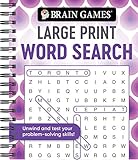
- Find hundreds of words in an easy to read format - Some words you'll spot easily, but you'll have to search hard for others.
- A wide range of puzzle topics, including movies, actors, sports, cars, and more!
- Variations on the standard word search puzzles are included for extra challenge.
- Answer key in the back of the book.
- Spiral bound, 192 pages.
The NFL-themed version covers all 32 NFL franchises. The Help Center notes that Sports Edition does not have an archive, so it should not be assumed to offer the same historical-puzzle access as the regular game.
A compact solving checklist
- Read all 16 tiles before submitting.
- Mark possible phrase completions, proper names, specialized terms, and unusual meanings.
- Start with the most specific candidate group, not the broadest one.
- Find four members—not merely two or three.
- Check whether any selected tile has a stronger alternative home.
- Perform the remainder test on the other 12 tiles.
- Submit only when the group is coherent and the board still looks solvable.
- After a correct group, reassess the remaining tiles from scratch.
- Shuffle if rows, columns, or visual placement are creating false patterns.
- Reserve your final mistake for a test that distinguishes between meaningful alternatives.
Does playing Connections improve intelligence or memory?
It is reasonable to describe Connections as an activity involving vocabulary, semantic associations, distractor evaluation, and lateral or abstract reasoning. However, the existence of the game does not establish a medical or guaranteed benefit for intelligence, memory, or clinical cognitive health. Enjoy it as a puzzle and a reasoning challenge rather than as a proven treatment or cognitive program.
Quick wins for a faster PC:
Fix the driver behind crashes, sound loss and screen glitchesFind Drivers →Repair Windows errors before they cause bigger problemsFix Now →Scan for outdated or missing drivers - takes under a minuteDriver Scan →Frequently Asked Questions
How many words are in NYT Connections?
Each puzzle has 16 words or short phrases. You must arrange them into four groups of four.
How many mistakes can you make in Connections?
You can make four incorrect submissions. Each incorrect group uses one mistake; the puzzle ends when all four are used.
Do the Connections colors give extra points?
No. Yellow, green, blue, and purple indicate increasing difficulty. They are not score multipliers.
Can I play Connections for free?
The regular daily Connections game is available free through the New York Times Games website and supported apps. An account is recommended for retaining progress across devices. Subscriber features such as the archive and Connections Bot require eligible access.
Free tools Windows power users keep installed
One-click scans. No signup required.
Does the Connections archive affect my streak?
No. Archived puzzles can affect several statistics, but they do not affect your current or maximum daily streak.
What should I do if five words seem to fit one category?
Treat that as a warning. Compare the possible groups, look for alternate meanings, and use the remainder test to determine which four leave three coherent groups among the other 12 tiles.
The Bottom Line
The key to NYT Connections is not finding any relationship—it is finding the intended relationship. Scan all 16 tiles, favor precise categories, consider alternate meanings, and submit only when the four selected words also leave a believable solution for the rest of the board.