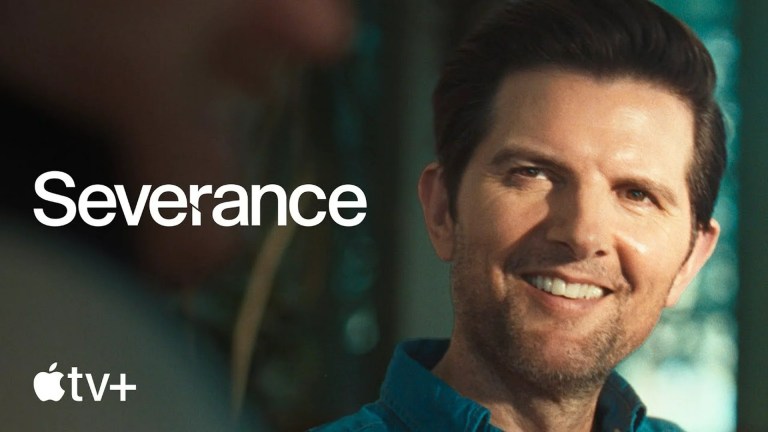
Short answer: Pluribus is about the cost of forced happiness. Vince Gilligan’s science-fiction drama follows Carol Sturka, one of the few people who remains psychologically separate after an extraterrestrial event unites most of humanity into a benevolent collective. The Others offer safety, cooperation, companionship, and relief from suffering—but only by removing the individual’s ability to remain separate.
Spoiler warning: The explanation below covers major season-one developments, including the finale of Pluribus, “La Chica o El Mundo.”
| # | Preview | Product | Price | |
|---|---|---|---|---|
| 1 |

|
Project Hail Mary: A Novel | $13.88 | Buy on Amazon |
| 2 |

|
Dark Matter: A Novel | $11.65 | Buy on Amazon |
| 3 |

|
Fahrenheit 451 | $11.53 | Buy on Amazon |
| 4 |

|
Station Eleven: A Novel (National Book Award Finalist) | $8.98 | Buy on Amazon |
| 5 |

|
Red Rising | $9.97 | Buy on Amazon |
The central idea of Pluribus
The show’s premise can be summarized by Apple’s striking description: the most miserable person on Earth must save the world from happiness. That paradox is the key to understanding the series.
Pluribus is not simply a story about aliens invading Earth, nor is it a conventional zombie or robot apocalypse. It is a drama about what happens when humanity’s worst problems—loneliness, conflict, grief, selfishness, and emotional pain—appear to have been solved by eliminating the conditions that make people separate individuals.
What’s actually slowing this PC down?
Pick the symptom - the matching free tool is one click away.
#1 Best Overall
Carol’s resistance is morally necessary because the transformation is imposed on people without their consent. But the series does not portray her as an uncomplicated hero or the pre-Joining world as an ideal society. Carol is lonely, angry, difficult, and unhappy. The Others are frightening because they are also kind, attentive, and capable of genuine affection. The show’s real question is therefore not simply whether a hive mind is good or bad. It is whether happiness and unity remain desirable when they require people to surrender privacy, disagreement, negative emotion, and the right to say no.
What happens in the series?
The story begins with an astronomer’s discovery and an extraterrestrial signal associated with a worldwide biological transformation. Most people become part of a collective consciousness known as the Others. The process is called the Joining.
After the Joining, the Others share information and an emotional orientation that makes them extraordinarily cooperative. They are helpful, calm, and apparently content. They retain memories, abilities, affection, and practical intelligence, so they are not empty bodies or mechanical copies. Their individuality, however, is subordinated to the shared consciousness.
Carol Sturka, a successful romance novelist living in Albuquerque, New Mexico, is unusually resistant to the transformation. She wakes in a world where familiar human behavior has become strange. People who once argued, lied, competed, or suffered now respond with coordinated politeness and a near-universal desire to help.
Free tools Windows power users keep installed
One-click scans. No signup required.
That helpfulness is more disturbing than open violence. The Others feed Carol, protect her, answer her questions, and try to meet her demands. They do not initially behave like conventional conquerors seeking to punish or imprison her. Their objective is closer to persuasion—or conversion. They sincerely believe they are improving her life, which makes their treatment of her a particularly unsettling form of coercion.
Who are the Others?
The Others are the people who have undergone the Joining. Calling them “zombies” misses the central point of the show. They are conscious, functioning human beings whose minds have become connected and whose personal autonomy has been absorbed into a larger system.
The collective appears to have solved many sources of human suffering. Information can be shared quickly. Cooperation replaces competition. Emotional needs can be recognized and addressed. The Others are not motivated by ordinary hatred or greed, and they do not seem to understand why anyone would reject a state that promises security and happiness.
But the same qualities that make the collective appealing also make it oppressive. Privacy becomes unnecessary or incomprehensible. Disagreement becomes a problem to be resolved. Negative emotions are treated as defects rather than experiences that may have meaning. The right to remain contradictory, selfish, angry, grief-stricken, or alone is no longer treated as a legitimate human choice.
Recommended Free Tools
That is why Carol’s objection goes beyond a fear of physical survival. She is defending the right to be difficult. She is defending the idea that a person can be unhappy and still have the right to remain fully themselves.
Why Carol is the right—and wrong—person to resist
Carol’s misery initially appears to make her uniquely suited to resisting universal happiness. If the Others have transformed most of humanity into contented members of a collective, perhaps the person least satisfied with ordinary life is the one person capable of recognizing the danger.
As the season progresses, that idea becomes more complicated. Carol’s unhappiness is not a superpower. It is also a source of isolation, resentment, grief, and difficulty connecting with other people. Her resistance protects her autonomy, but it does not automatically make her generous, emotionally healthy, or morally superior.
Rank #2
Her career as a romance novelist adds another layer to the conflict. Carol makes her living writing about desire, attachment, private fantasy, conflict, and the emotional distinctions between individuals. Romance depends on people wanting specific people, not merely experiencing generalized contentment. It depends on uncertainty, longing, rejection, jealousy, and the possibility that one person’s feelings will not align with another’s.
The Others represent a world in which much of that friction has disappeared. Carol’s work therefore becomes a thematic counterpoint to the collective: she creates stories out of the private emotional differences that the Joining threatens to erase.
Zosia shows why the Others are persuasive
Karolina Wydra’s Zosia is central to the show because she prevents the conflict from becoming a simple battle between a human protagonist and emotionless villains.
Carol’s relationship with Zosia changes over the course of the season. Their early interactions are shaped by suspicion, questioning, and the fear that Zosia is carrying out the collective’s agenda. Gradually, however, their relationship becomes more intimate. They develop a sexual and emotional connection, and Zosia provides Carol with something the old world often failed to provide: companionship.
That relationship creates the series’ most painful dilemma. Carol’s feelings are real, even though Zosia is connected to the collective project that threatens Carol’s independence. Zosia’s affection should not be reduced to a performance or dismissed as a simple manipulation. The story supports the idea that the collective genuinely cares for Carol while also intending to remove her autonomy.
This is the moral danger at the heart of Pluribus: coercion does not always present itself as cruelty. Sometimes it arrives as care. The Others’ argument is not “we hate you, so we will destroy you.” It is “we love you, so we must change you.” The fact that they may sincerely believe this does not make the violation less serious.
Manousos represents a harsher form of resistance
Manousos, played by Carlos-Manuel Vesga, is another human who remains immune to the Joining. He contrasts sharply with Carol.
Carol spends much of the season investigating the Others and discovering that they are capable of tenderness. Manousos remains more suspicious, aggressive, and focused on reversing the transformation. He is prepared to experiment on members of the collective even when those experiments may seriously harm or kill them.
His position exposes an important complication: opposing the Joining does not automatically make someone humane. Manousos may be correct that the collective must be resisted, but his methods raise their own questions about consent and the value of individual life.
Carol and Manousos are therefore not a united resistance movement. They agree that forced transformation is unacceptable, but they do not share a strategy or the same ethical limits. Their communication problems—including their reliance on a translation application—reinforce the point. Preserving humanity does not automatically create solidarity. The remaining independent humans are still divided by language, temperament, trauma, and competing ideas about what it means to save the world.
What does the title Pluribus mean?
The title invokes the Latin phrase E pluribus unum, commonly translated as “out of many, one.” The phrase is associated with the historical motto of the United States and with the idea that separate people or states can form a larger union.
Rank #3
Pluribus darkens that ideal. In the series, the many really do become one—but the process threatens to erase the differences that made them many in the first place. Unity can mean cooperation, mutual support, and shared purpose. It can also mean assimilation.
The show’s stylized title, PLUR1BUS, places the numeral “1” inside the word. That visual substitution reinforces the tension between plurality and oneness. The title asks whether a society can remain meaningfully plural after everyone has been absorbed into the same mental and emotional system.
The question is not whether people should ever live together. It is whether “togetherness” is still ethical when nobody is allowed to remain separate.
Is Pluribus an allegory for AI, social media, or political conformity?
The series invites all of those comparisons, but it should not be reduced to any one of them.
The Others resemble an idealized algorithmic network: they share information, coordinate behavior, and optimize for cooperation while eliminating friction. They can also evoke social media systems that reward consensus, discourage dissent, and make constant connection feel preferable to solitude.
There is a political dimension as well. The collective presents its consensus as moral truth, and disagreement becomes evidence that something is wrong with the dissenter. That resembles the pressure exerted by political movements or institutions that treat conformity as proof of virtue.
Crashes, No Sound, or Screen Glitches?
Random freezes, missing sound and display glitches usually trace back to one bad driver. Find and replace yours safely.Free scan · under a minuteWindows Errors? Fix Them Before They Spread
Repair common Windows errors and clear accumulated junk for a smoother, more stable PC - no reinstall needed.Free scan · no reinstallHowever, the show’s biological transformation makes the allegory broader than a warning about one technology or one ideology. Pluribus is asking why people might willingly—or gratefully—surrender independence. The Others offer relief from alienation and uncertainty. The danger is not only that someone will force people into conformity. It is that people may accept conformity because the alternative is painful.
It is fair to describe Pluribus as a science-fiction examination of enforced consensus, the emotional appeal of conformity, and the human need for connection. It is less accurate to call it a literal prediction about artificial intelligence or a confirmed allegory for a particular current political movement. Those are interpretations, not established facts within season one.
Spoilers: what the finale reveals
The season-one finale, “La Chica o El Mundo,” makes the personal and philosophical conflict explicit.
The Others plan to Join Carol
Zosia tells Carol that the Others still intend to transform her. They possess Carol’s frozen eggs, which can be used to create stem cells for that purpose. This revelation changes the meaning of the relationship between them.
Do these 3 things before closing this tab:
1Scan for outdated or missing drivers - takes under a minute2Repair Windows errors before they cause bigger problems3Fix the driver behind crashes, sound loss and screen glitchesThe Others’ affection for Carol is not cancelled out by their plan. In fact, the two things exist together: they care about her, and they believe caring about her requires changing her into one of them. Carol is forced to confront a form of love that refuses to respect the beloved person’s refusal.
That is why the finale’s conflict is not simply romantic betrayal. Carol must decide whether the companionship she has found with Zosia is worth accepting the loss of her independent mind and identity. The answer is no—not because the relationship was fake, but because affection cannot substitute for consent.
Carol chooses the larger fight
Carol returns to Manousos and effectively acknowledges that the personal compromise has failed. She will resume the struggle against the Joining.
This is not a declaration that Carol has stopped caring about Zosia. It is a recognition that her emotional attachment cannot justify surrendering the right to choose. The finale makes the intimate and political stakes inseparable: Carol’s private relationship has become part of humanity’s larger fight over whether individuality should survive.
Quick wins for a faster PC:
Repair Windows errors before they cause bigger problemsFix Now →Scan for outdated or missing drivers - takes under a minuteDriver Scan →Clear out junk files and repair common Windows errorsFree Scan →The nuclear weapon is a threat, not a cure
The finale also reveals a nuclear weapon. It is best understood as a bargaining instrument and a cliffhanger, not as a completed solution to the Joining.
The season does not establish that the weapon can reverse the transformation, restore people who have been changed, or defeat the Others without catastrophic casualties. Carol and Manousos now possess a means of threatening mass destruction, but having that threat does not mean they have a humane or workable plan.
The ending therefore expands the story from an intimate conflict into a geopolitical and existential one. Carol and Manousos may be trying to save individual freedom, but they now face the danger of becoming a destructive force themselves. The unresolved question is whether humanity can be saved without using the same kind of totalizing power it fears.
Independent reader supportYour contribution helps us test, update, and keep practical guides available for everyone.What season one leaves unanswered
The season deliberately withholds a complete scientific explanation of the extraterrestrial signal, the biological mechanism of the Joining, and the ultimate origin or purpose of the transformation.
The Tool Desk
Outbyte Driver Updater FREEScan for outdated or missing drivers - takes under a minuteDriver Scan →Outbyte PC Repair FREEClear out junk files and repair common Windows errorsFree Scan →There is no established cure by the end of season one. The story does not confirm that the Joining can be reversed, that the Others can be separated back into individuals, or that every transformed person can be restored. The nuclear reveal should not be interpreted as proof that any of those outcomes is possible.
This uncertainty appears deliberate rather than accidental. The mystery keeps the plot from becoming only a search for a technical fix. The more immediate issue is Carol’s changing understanding of the Others and the moral question of whether consent survives a transformation that is presented as beneficial.
Where to watch Pluribus and what comes next
Pluribus is an Apple Original created by Vince Gilligan and produced by Sony Pictures Television. The first season contains nine episodes. It premiered globally on November 7, 2025, and concluded on December 24, 2025, after Apple adjusted the release schedule.
In the United States, the series streams on Apple TV. Readers can watch Pluribus on Apple TV through the service on supported screens and devices. A dedicated Apple TV 4K is optional rather than required; Apple lists it among the devices that can be used for Apple TV content.
Recommended Free Tools
For additional context after watching, the Pluribus official podcast offers companion discussion and behind-the-scenes material involving the creator, cast, writers, and crew. It is best used as a supplement to the episodes, not as a substitute for the show’s deliberately unresolved answers.
Best Value
Apple renewed Pluribus for a second season before the series premiered. As of the latest official information covered here, dated August 11, 2026, no verified season-two release date has been announced. The first season is listed as a drama and science-fiction series with a TV-MA rating and advisories for language and violence.
Why Pluribus is really about surrender
The extraterrestrial event gives the series its science-fiction machinery, but the show’s deepest subject is surrender—not necessarily surrender under direct physical force, but surrender that feels emotionally reasonable.
The Others offer a persuasive bargain. Give up conflict and you may lose privacy. Give up grief and you may lose part of your emotional identity. Give up the burden of making difficult choices and someone—or something—will make them for you. Give up separateness and you will never be lonely again.
Free tools Windows power users keep installed
One-click scans. No signup required.
Carol’s resistance is important because a society without consent cannot be called genuinely happy, no matter how content its members appear. But the show also refuses to pretend that independent human beings are naturally fulfilled. Freedom permits love and creativity, but it also permits cruelty, isolation, resentment, and pain.
That tension is what makes Pluribus more than a standard “individual versus hive mind” story. It asks whether a painless society is worth having if the price is the loss of the self—and whether people can preserve individuality without romanticizing all the suffering that comes with it.
Frequently Asked Questions
Are the Others in Pluribus zombies?
No. The Others are transformed, conscious people connected through a collective consciousness. They retain memories, skills, and affection, but their individual autonomy is subordinated to the shared system.
Does season one reveal a cure for the Joining?
No. Season one does not establish a cure or show that the Joining can be reversed. The science behind the signal and biological transformation also remains incomplete.
Is Pluribus literally about artificial intelligence?
Not specifically. The Others can evoke AI networks, social media, and political conformity, but the show uses a biological science-fiction premise to explore enforced consensus, connection, and the temptation to surrender autonomy.
What does the Pluribus title mean?
It refers to E pluribus unum, or “out of many, one.” The series gives that ideal a darker meaning by asking whether unity becomes assimilation when people are no longer allowed to remain separate.
When will season two of Pluribus be released?
A second season has been confirmed, but the official information covered here does not provide a verified premiere date.
The Bottom Line
Pluribus is really about whether happiness is still worth pursuing when it requires the destruction of consent and individuality. Carol is not fighting to preserve every flaw in humanity; she is fighting for the right to choose, even when choosing means remaining lonely, angry, conflicted, and unhappy. The Others may offer a better-feeling world, but the series argues that a life without the freedom to refuse is not fully one’s own.
Quick Recap
Product prices and availability are accurate as of the date/time indicated and are subject to change. Any price and availability information displayed on Amazon at the time of purchase will apply.