Archive note: The March 13–14, 2025 total lunar eclipse has already taken place. This guide preserves the viewing times, safety advice, photography workflow, equipment checklist, and replay options that viewers needed for that event; it is not a notice of a live 2025 broadcast.
The eclipse was visible across much of the Western Hemisphere when the Moon was above the local horizon. No special eye protection was required: a lunar eclipse is safe to watch with the naked eye, binoculars, or a telescope. For a recording, look for NASA Goddard’s official video, See the March 13-14, 2025 Total Lunar Eclipse.
Short answer: The Blood Moon was the total lunar eclipse that reached greatest eclipse at approximately 06:59:56 UTC on March 14, 2025. Totality lasted about 1 hour 5 minutes, while the complete penumbral-to-penumbral event lasted about 3 hours 38 minutes. In the United States, the eclipse unfolded on the night of March 13 and early morning of March 14, with totality occurring from 2:26 to 3:31 a.m. Eastern, 1:26 to 2:31 a.m. Central, 12:26 to 1:31 a.m. Mountain, and 11:26 p.m. to 12:31 a.m. Pacific.
The exact amount visible depended on local circumstances. Viewers near the eastern edge of the visibility region could see the Moon set before the eclipse ended, while others could miss the beginning if moonrise occurred after the event had started. A city-level eclipse calculator and local horizon forecast were more reliable than a time-zone table alone.
#1 Best Overall

- 🎯 𝐀𝐑𝐄 𝐘𝐎𝐔 𝐑𝐄𝐀𝐃𝐘?! If you're reading this, then congratulations: you are one of the smart ones planning ahead of the upcoming eclipse on 12 Aug 2026 that won't be scrambling when they're sold out everywhere. We respect that. As the saying goes: "the future belongs to those who prepare for it today
- 🛡️ 𝟏𝟎𝟎% 𝐒𝐀𝐅𝐄 & 𝐅𝐔𝐋𝐋𝐘 𝐈𝐒𝐎 𝟏𝟐𝟑𝟏𝟐-𝟐 𝐂𝐎𝐌𝐏𝐋𝐈𝐀𝐍𝐓: Every pair meets the international solar viewing safety standard required for direct sun observation. A typo on a small early batch displayed "12312-1" by mistake - this was a print error only, never a safety issue, and all current inventory prints the correct ISO 12312-2 standard
- 🔗 𝐍𝐄𝐕𝐄𝐑 𝐋𝐎𝐒𝐄 𝐎𝐑 𝐃𝐀𝐌𝐀𝐆𝐄 𝐘𝐎𝐔𝐑 𝐆𝐋𝐀𝐒𝐒𝐄𝐒: Every pair arrives individually wrapped to stay clean, scratch-free, and ready to share, plus an attached lanyard keeps them securely around your neck between viewing moments. No more lost glasses, no more crushed pairs in your back pocket (yes, we've all done it).
- 🌒𝐂𝐀𝐏𝐓𝐔𝐑𝐄 𝐓𝐇𝐄 𝐄𝐂𝐋𝐈𝐏?𝐄 𝐎𝐍 𝐘𝐎𝐔𝐑 𝐏𝐇𝐎𝐍𝐄: Includes bonus solar camera filters that you hold over your phone lens while filming, so you can safely capture totality, the diamond ring, and partial phases without burning out your camera sensor.
- 💯 𝐁𝐀𝐂𝐊𝐄𝐃 𝐁𝐘 𝐎𝐔𝐑 𝐄𝐂𝐋𝐈𝐏𝐒𝐄 𝐆𝐔𝐀𝐑𝐀𝐍𝐓𝐄𝐄: If you're not 100% satisfied, we'll make it right. Tens of thousands of customers have trusted HELIOCLIPSE for safe solar viewing across previous eclipses. We've done this before, and we'll be doing it again on August 12, 2026, with you.
What made the Moon turn red?
A lunar eclipse occurs when the Moon passes through Earth’s shadow. During a total lunar eclipse, the entire lunar disk enters the darkest central portion of that shadow, called the umbra.
The Moon does not usually disappear completely during totality. Sunlight passing through Earth’s atmosphere is filtered and bent toward the Moon. Shorter blue wavelengths are scattered more readily, leaving more reddish and orange light to illuminate the lunar surface. NASA compares the effect to the combined light of sunsets and sunrises occurring around Earth at the same time.
The appearance can vary from copper to deep red or orange depending on atmospheric conditions, dust, clouds, and the amount of light reaching the Moon. The informal term Blood Moon describes this color; it does not indicate anything unusual or dangerous.
When the 2025 eclipse happened
NASA’s eclipse catalog placed the event in March 14, 2025 UTC. Because the eclipse began during the evening in North America, most U.S. viewers experienced it as a March 13 night event continuing into March 14.
Free tools Windows power users keep installed
One-click scans. No signup required.
| Stage | UTC | Eastern | Central | Mountain | Pacific |
|---|---|---|---|---|---|
| Penumbral eclipse begins | 03:57, Mar 14 | 11:57 p.m., Mar 13 | 10:57 p.m., Mar 13 | 9:57 p.m., Mar 13 | 8:57 p.m., Mar 13 |
| Partial eclipse begins | 05:09, Mar 14 | 1:09 a.m., Mar 14 | 12:09 a.m., Mar 14 | 11:09 p.m., Mar 13 | 10:09 p.m., Mar 13 |
| Totality begins | 06:26, Mar 14 | 2:26 a.m., Mar 14 | 1:26 a.m., Mar 14 | 12:26 a.m., Mar 14 | 11:26 p.m., Mar 13 |
| Greatest eclipse | 06:59:56, Mar 14 | 2:59:56 a.m., Mar 14 | 1:59:56 a.m., Mar 14 | 12:59:56 a.m., Mar 14 | 11:59:56 p.m., Mar 13 |
| Totality ends | 07:31, Mar 14 | 3:31 a.m., Mar 14 | 2:31 a.m., Mar 14 | 1:31 a.m., Mar 14 | 12:31 a.m., Mar 14 |
| Partial eclipse ends | 08:47, Mar 14 | 4:47 a.m., Mar 14 | 3:47 a.m., Mar 14 | 2:47 a.m., Mar 14 | 1:47 a.m., Mar 14 |
| Penumbral eclipse ends | 10:00, Mar 14 | 6:00 a.m., Mar 14 | 5:00 a.m., Mar 14 | 4:00 a.m., Mar 14 | 3:00 a.m., Mar 14 |
Important: These are event-wide time-zone conversions, not city-specific predictions. The Moon had to be above the horizon for a viewer to see a given stage. This was especially important in parts of the eastern United States, where the Moon was low or setting during portions of the eclipse. The NASA visibility map and a local horizon check were the appropriate final checks.
What viewers could actually see
- Penumbral phase: The Moon passed through the lighter outer shadow of Earth. The change was subtle and easy to miss, particularly under light pollution.
- Partial phase: As the Moon entered the umbra, a dark curved “bite” gradually moved across the lunar disk. This was the first unmistakable visual sign of the main eclipse.
- Totality: The entire Moon entered the umbra and took on a coppery, reddish, or orange appearance. Binoculars or a telescope revealed more texture in the darkened lunar surface, but the color change was visible without optical equipment.
- Exit from totality: The bright edge returned as the Moon left the umbra, reversing the progression of the partial phase.
What you actually needed
For visual observing, the minimum setup was simple:
- Your eyes—the eclipse was safe to view without special filters.
- A location with a clear view of the Moon.
- A darker location away from bright outdoor lighting, if available.
- A chair, blanket, or other comfortable support for an event lasting several hours.
Binoculars and telescopes were enhancements, not requirements. NASA recommends at least 7× binoculars for lunar observing and notes that 10× or 15× magnification can show more detail, although the higher magnification makes hand shake more noticeable.
Disclosure: Product references in this guide may be connected to affiliate links when the page is rendered with approved retailer links. Recommendations are optional; check current prices, compatibility, availability, and return terms before buying.
The Tool Desk
Outbyte PC Repair FREEClear out junk files and repair common Windows errorsFree Scan →Outbyte Driver Updater FREEFix the driver behind crashes, sound loss and screen glitchesFind Drivers →Rank #2

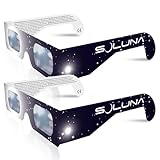
- Solar eclipse glasses Approved 2024 Safe Solar Observation - These certified safe shades are designed for direct solar viewing. Our solar eclipse glasses are perfect for observing eclipses, sunspots, and planetary transits.
- Meets Industry Standards - Our CE and ISO certified safe shades for direct sun viewing are made while adhering to stringent safety and quality regulations set by the American Astronomical Society.
- A Comfy Fit - These certified sunglasses for eclipse are suitable for teens and adults. Featuring crease lines on both sides, these optical quality safe shades may be worn over prescription glasses.
- Filters Out Harmful Light - View eclipses safely with our paper glasses. Our solar viewers use solar safe filter technology, which helps shield your eyes from IR, UV, and 99.99% of visible light.
- Excellent Value - Each pack contains 5 non-polarized solar eclipse glasses for viewing the sun. Share them with friends and loved ones so you can all enjoy viewing solar eclipses in complete safety.
The most sensible optional upgrade: 10×50 binoculars
For a viewer who wanted a clearer and more textured Moon without committing to a telescope, 10×50 astronomy binoculars were a practical middle ground. The 10× magnification provided more detail than the naked-eye view, while 50 mm objective lenses helped gather light. They were also reusable for ordinary Moon watching, star fields, wildlife, and daytime viewing after the eclipse.
Do not buy binoculars because they are necessary for safety or visibility. Buy them if the goal is to see lunar features more clearly and continue using the equipment later. A binocular tripod adapter became useful for long observing sessions, particularly with 10× or 15× models.
Stabilization accessories
A stable support often improved results more than a small increase in magnification. A smartphone tripod and smartphone telescope adapter could serve two different purposes: the tripod reduced blur in ordinary phone photographs, while the adapter held a phone camera in position over a telescope or binocular eyepiece.
For a dedicated camera, a sturdy camera tripod and a timer or remote shutter release reduced vibration caused by pressing the shutter. A phone tripod or firm improvised support was sufficient for casual snapshots.
Do these 3 things before closing this tab:
1Repair Windows errors before they cause bigger problems2Scan for outdated or missing drivers - takes under a minute3Clear out junk files and repair common Windows errorsWhen a telescope made sense
A beginner telescope could reveal substantially more lunar terrain, but it was an optional upgrade rather than a last-minute requirement. First-time users had to assemble, focus, and aim the instrument, and a cloudy or obstructed sky could make an expensive purchase disappointing. A telescope made most sense for someone beginning a continuing astronomy hobby, not someone who simply wanted to see the 2025 Blood Moon.
Manufacturers such as Celestron offer several telescope, binocular, Moon-observing, and phone-adapter designs. Compatibility matters more than the brand name: check the eyepiece size, adapter range, mounting thread, and phone dimensions before ordering.
Lunar-eclipse safety: no solar glasses required
This was a lunar eclipse, not a solar eclipse. NASA states that it was safe to view the Moon with the naked eye or through binoculars and telescopes during every stage, including totality.
Solar-eclipse glasses were therefore not necessary. Recommending them as required equipment would confuse two very different events. During a solar eclipse, the Sun’s bright disk can damage eyesight and requires specialized, properly rated protection whenever direct solar viewing is taking place; ordinary sunglasses are not safe for that purpose. Those solar-viewing rules do not apply to looking at the eclipsed Moon.
What’s actually slowing this PC down?
Pick the symptom - the matching free tool is one click away.
Do not attach a solar filter to a telescope or binoculars for the purpose of viewing this lunar event. Use the optical equipment as intended for lunar observation, following the manufacturer’s instructions.
How to photograph the Blood Moon with a phone
A phone could record the event, but a phone held in the hand usually produced a small, shaky, overexposed Moon. The following workflow was more reliable:
- Stabilize the phone. Put it on a tripod or another firm support. If photographing through an eyepiece, use a compatible phone-to-eyepiece adapter instead of trying to hold the camera by hand.
- Turn off the flash. The flash does nothing for the distant Moon and can distract nearby viewers.
- Tap the Moon to focus. Lock focus if the phone offers that option, then check the image before recording a long sequence.
- Reduce exposure. Lower the exposure control or screen brightness so the Moon is not rendered as a featureless white disk. The correct adjustment changes as the Moon darkens.
- Use a timer. A two- or ten-second timer helps prevent movement from touching the phone at the moment of capture.
- Try two compositions. Make one close Moon image and one wider image that includes trees, buildings, a roofline, or another recognizable foreground object. A landscape composition often communicates scale better than an isolated bright circle.
- Test before totality. Take several trial images during the partial phase, then change exposure again as totality begins.
Digital zoom may simply crop the original image rather than add detail. If the phone provides manual controls, experiment with shutter speed, ISO, and focus instead of relying on one universal setting. The best settings vary by phone, lens, sky brightness, and whether the goal is a detailed Moon or a wider scene.
Camera workflow for DSLR and mirrorless photographers
A DSLR or mirrorless camera with a telephoto lens offered more control than a phone, but an expensive camera was not required. NASA’s lunar photography guidance recommends using whatever camera is available, stabilizing it, and shooting RAW when possible so exposure and color can be adjusted later.
Quick wins for a faster PC:
Clear out junk files and repair common Windows errorsFree Scan →Scan for outdated or missing drivers - takes under a minuteDriver Scan →Repair Windows errors before they cause bigger problemsFix Now →- Mount the camera on a tripod.
- Use a timer or remote shutter release to avoid shake.
- Focus carefully, preferably after checking the Moon at high magnification on the camera’s screen.
- Take a sequence of exposures rather than trusting one setting.
- Bracket around the changing brightness before, during, and after totality.
- Photograph both detailed lunar frames and wider compositions with a foreground subject.
Totality was dramatically darker than an ordinary full Moon—NASA’s photography guide notes that it can be a thousand or more times dimmer. As a result, settings that worked for the bright partial Moon could produce an unusably dark frame during totality, while settings for totality could overexpose the bright Moon before or after it. There is no single shutter speed, aperture, or ISO combination that works for every camera, lens, sky, and composition.
Rank #3

- 🎯 𝐀𝐑𝐄 𝐘𝐎𝐔 𝐑𝐄𝐀𝐃𝐘?! If you're reading this, then congratulations: you are one of the smart ones planning ahead of the upcoming eclipse on 12 Aug 2026 that won't be scrambling when they're sold out everywhere. We respect that. As the saying goes: "the future belongs to those who prepare for it today
- 🛡️ 𝟏𝟎𝟎% 𝐒𝐀𝐅𝐄 & 𝐅𝐔𝐋𝐋𝐘 𝐈𝐒𝐎 𝟏𝟐𝟑𝟏𝟐-𝟐 𝐂𝐎𝐌𝐏𝐋𝐈𝐀𝐍𝐓: Every pair meets the international solar viewing safety standard required for direct sun observation. A typo on a small early batch displayed "12312-1" by mistake - this was a print error only, never a safety issue, and all current inventory prints the correct ISO 12312-2 standard
- 🔗 𝐍𝐄𝐕𝐄𝐑 𝐋𝐎𝐒𝐄 𝐎𝐑 𝐃𝐀𝐌𝐀𝐆𝐄 𝐘𝐎𝐔𝐑 𝐆𝐋𝐀𝐒𝐒𝐄𝐒: Every pair arrives individually wrapped to stay clean, scratch-free, and ready to share, plus an attached lanyard keeps them securely around your neck between viewing moments. No more lost glasses, no more crushed pairs in your back pocket (yes, we've all done it).
- 🌒𝐂𝐀𝐏𝐓𝐔𝐑𝐄 𝐓𝐇𝐄 𝐄𝐂𝐋𝐈𝐏?𝐄 𝐎𝐍 𝐘𝐎𝐔𝐑 𝐏𝐇𝐎𝐍𝐄: Includes bonus solar camera filters that you hold over your phone lens while filming, so you can safely capture totality, the diamond ring, and partial phases without burning out your camera sensor.
- 💯 𝐁𝐀𝐂𝐊𝐄𝐃 𝐁𝐘 𝐎𝐔𝐑 𝐄𝐂𝐋𝐈𝐏𝐒𝐄 𝐆𝐔𝐀𝐑𝐀𝐍𝐓𝐄𝐄: If you're not 100% satisfied, we'll make it right. Tens of thousands of customers have trusted HELIOCLIPSE for safe solar viewing across previous eclipses. We've done this before, and we'll be doing it again on August 12, 2026, with you.
Readers buying specifically for this kind of work may compare telephoto lens for Moon photography options, but the lens should be treated as a long-term photography purchase rather than an eclipse essential. Specialist retailers such as B&H Photo and Adorama are more relevant when comparing camera bodies, lenses, tripods, optics, and other higher-consideration equipment than when buying a simple pair of binoculars.
Photographing through a telescope
Eyepiece photography was accessible but fiddly. A phone or lightweight camera could be held to an eyepiece, but a dedicated adapter kept it centered and reduced accidental movement. The exact adapter had to match both the device and the eyepiece; products marketed as a universal solution still needed a compatibility check.
At high magnification, the Moon could move out of the field of view quickly if the telescope lacked a motorized tracking mount. This was normal as Earth rotated, not necessarily a focusing or equipment failure. A tracking mount made extended sequences easier, while a manual telescope required frequent repositioning.
PC Slower Than It Used to Be?
A free scan shows the junk files, broken settings and background clutter dragging Windows down - then fixes them in one click.Free scan · Windows 10 & 11Outdated Drivers Are Slowing You Down
One free scan finds every outdated or missing driver and matches the right update for your exact hardware.Free scan · exact hardware matchPrime-focus photography used a different arrangement from holding a phone over the eyepiece. It typically required a camera-specific T-ring telescope adapter and a telescope-specific prime-focus adapter. Before buying, confirm the camera mount, telescope focuser, back-focus requirements, and whether the setup can reach focus.
Where to watch the 2025 eclipse now
The original event should now be treated as an archive, not an active live stream. NASA Goddard published an official YouTube video titled See the March 13-14, 2025 Total Lunar Eclipse on March 13, 2025. Search for that exact title on NASA Goddard’s official channel and confirm that the video is still available under the platform’s current rules.
Keep Your Eclipse Replay Running on YouTube
StreamNeo lets a creator upload a rights-cleared eclipse recording and paste a YouTube stream key so the replay runs in the cloud while the PC stays off.
StreamNeo checks stream health every 30 seconds and restarts a dropped stream automatically, which suits an always-on replay of footage you own or are authorized to broadcast.
A 24-hour 720p/30fps trial is free with no card at signup, making it practical to test the recording and YouTube destination before choosing a longer replay workflow.
A recording cannot reproduce the experience of standing under the real sky, but it can show the complete progression, provide a useful reference for photography, and help viewers who were in cloud, daylight, or a location where the Moon had already set.
Do not confuse three types of eclipse streaming
- Official broadcast replay: This is the appropriate current option for the completed 2025 event. It is a recording made available by an astronomy organization or broadcaster.
- Live remote viewing: This applies only while a future eclipse is actually occurring and only if a broadcaster has scheduled a live feed. A page about the 2025 event should not promise one.
- Your own stream: A viewer can record or broadcast their own footage, but they remain responsible for platform rules, music and other copyrighted material, privacy, permissions, connectivity, and the rights to everything uploaded.
For creators with original footage: cloud replay streaming
If the streaming computer was the problem
A practical equipment decision guide
| Your goal | Enough equipment | Worth adding | Usually unnecessary |
|---|---|---|---|
| Simply see the eclipse | Eyes and a clear horizon | Dark location, chair, blanket | Solar glasses, telescope |
| See more lunar texture | Binoculars, ideally around 7× or higher | 10×50 binoculars and a support | Buying a dedicated camera |
| Take casual phone photos | Phone and stable surface | Smartphone tripod, timer, lower exposure | Expensive telephoto lens |
| Photograph a detailed Moon | Camera, suitable lens, tripod | RAW capture, remote release, exposure bracketing | One supposedly universal setting |
| Photograph through optics | Compatible telescope or binoculars | Phone eyepiece adapter or camera T-ring setup | Assuming every adapter fits every eyepiece |
| Maintain a replay stream | Rights-cleared recording, platform account, reliable upload | Cloud replay service and a tested RTMP workflow | Calling a recording a live 2025 broadcast |
Final checklist for a future lunar eclipse
- Check the date and time in UTC, then convert it for your location.
- Confirm that the Moon is above your local horizon during the stages you want to see.
- Check cloud cover, precipitation, wind, and nearby obstructions.
- Use a dark location if convenient, but do not sacrifice a clear horizon unnecessarily.
- Remember that lunar viewing is safe without solar-eclipse glasses.
- Set up a phone or camera tripod before the Moon becomes interesting.
- Take test photographs during the partial phase.
- Change exposure as the Moon dims; do not rely on one setting throughout the event.
- If streaming, test the camera, audio, upload connection, storage, and power first.
- For a replay, use only footage you own or are licensed to broadcast.
Research basis: The dates and stage times come from NASA’s eclipse catalog and visibility material; the viewing and safety guidance follows NASA’s lunar-eclipse and lunar-photography guidance. The official replay referenced above is NASA Goddard’s March 13, 2025 YouTube recording.
Frequently Asked Questions
Was it safe to look at the 2025 Blood Moon without eclipse glasses?
Yes. It was a lunar eclipse, so the Moon could be viewed safely with the naked eye, binoculars, or a telescope during every stage. Solar-eclipse glasses were not required. The special eye-protection rules for directly viewing the Sun apply to solar eclipses, not lunar eclipses.
Recommended Free Tools
Why was the Moon red during totality?
Earth’s atmosphere filtered and bent sunlight toward the Moon. More reddish and orange light remained after blue light was scattered, producing the copper, red, or orange appearance commonly called a Blood Moon.
Can I still watch the 2025 eclipse?
Yes, if the recording remains available. Search NASA Goddard’s official YouTube channel for the exact title See the March 13-14, 2025 Total Lunar Eclipse. It should be treated as an official replay, not a live 2025 broadcast.
Did I need binoculars or a telescope?
No. The eclipse was visible with the naked eye wherever the Moon was above the horizon. Binoculars showed more lunar texture, while a telescope provided a larger view, but neither was essential.
The Bottom Line
The 2025 Blood Moon required less equipment than its dramatic name suggested: a clear horizon and your eyes were enough, and no solar glasses were needed. Binoculars, a tripod, and a phone adapter were optional improvements; a telescope and dedicated camera were advanced choices. Because the event has passed, use NASA Goddard’s official recording for a replay, and use a cloud replay service only for footage you own or are authorized to stream.
Quick Recap
Product prices and availability are accurate as of the date/time indicated and are subject to change. Any price and availability information displayed on Amazon at the time of purchase will apply.