Do these 3 things before closing this tab:
1Scan for outdated or missing drivers - takes under a minute2Clear out junk files and repair common Windows errors3Fix the driver behind crashes, sound loss and screen glitchesFrom its opening moments, Downton Abbey announces itself as a story powered not by a single hero, but by an intricately balanced ensemble. Set within the grand Crawley estate, the series moves fluidly between the aristocratic family upstairs and the hardworking servants downstairs, treating both worlds with equal narrative weight and emotional seriousness. This dual structure, rooted in historical reality yet alive with modern storytelling instincts, is what gives the show its distinctive rhythm and lasting appeal.
What makes Downton Abbey endure is how carefully each character is positioned within this ecosystem. Every lord, lady, valet, and housemaid exists in relationship to someone else, their personal ambitions shaped by class, tradition, and the shifting social order of early 20th-century Britain. Over six seasons and two feature films, the ensemble evolves organically, allowing viewers to grow alongside the characters rather than simply observe them.
| # | Preview | Product | Price | |
|---|---|---|---|---|
| 1 |
|
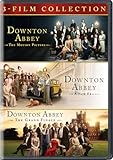
Downton Abbey: 3-Film Collection | $20.39 | Buy on Amazon |
| 2 |
![Downton Abbey: The Complete Series [DVD]](https://m.media-amazon.com/images/I/41Kq5XapFeL._SL160_.jpg)
|
Downton Abbey: The Complete Series [DVD] | $25.99 | Buy on Amazon |
| 3 |

|
Downton Abbey: The Grand Finale | $12.00 | Buy on Amazon |
| 4 |
![Downton Abbey: A New Era - Collector's Edition [DVD]](https://m.media-amazon.com/images/I/51Sr-FilmWL._SL160_.jpg)
|
Downton Abbey: A New Era - Collector's Edition [DVD] | $7.56 | Buy on Amazon |
This guide is designed to make that rich tapestry approachable, whether you are stepping into Downton for the first time or returning with fresh eyes. Each major character will be broken down clearly, identifying who they are, which actor brings them to life, where they fit within the Crawley household, and how their journey unfolds across the series and films. By understanding how the ensemble functions as a whole, the true craftsmanship behind Downton Abbey comes sharply into focus.
The Crawley Family Upstairs: Earls, Heiresses, and the Heart of Downton
At the center of Downton Abbey stands the Crawley family, custodians of both a great house and a fading way of life. Their world is governed by titles, inheritance laws, and social expectation, yet the series’ genius lies in revealing how deeply human their private struggles remain. Through love, loss, and adaptation, the Crawleys become the emotional anchor of the entire narrative.
What’s actually slowing this PC down?
Pick the symptom - the matching free tool is one click away.
#1 Best Overall
- Runtime: 371 minutes
Robert Crawley, Earl of Grantham (Hugh Bonneville)
As master of Downton Abbey, Robert Crawley embodies Edwardian aristocratic duty, tradition, and paternal authority. Played with warmth and vulnerability by Hugh Bonneville, Robert is a man torn between preserving the estate and recognizing that the old rules no longer fully apply. His journey across the series charts the slow erosion of unquestioned male authority, particularly as financial realities and the changing roles of women challenge his worldview.
Though often resistant to change, Robert is never cruel, and his genuine love for his family grounds his character. In the later seasons and films, he becomes a symbol of adaptation, learning to share control of Downton rather than rule it outright.
Cora Crawley, Countess of Grantham (Elizabeth McGovern)
Elizabeth McGovern’s Cora Crawley brings American directness and emotional intelligence into the heart of British aristocracy. As Robert’s wife and the estate’s practical counterbalance, Cora frequently acts as the bridge between tradition and progress. Her outsider status, as a wealthy American heiress, allows her to question customs others accept without thought.
Across the series, Cora grows from gracious hostess into a decisive force within the household. Whether navigating marital strain, illness, or Downton’s future, she consistently proves herself the emotional and moral backbone of the family.
Violet Crawley, Dowager Countess of Grantham (Maggie Smith)
No character defines Downton Abbey’s wit and wisdom more sharply than Maggie Smith’s Dowager Countess. Violet Crawley is tradition personified, armed with razor-sharp dialogue and an unshakable belief in the old order. Yet beneath her formidable presence lies surprising compassion and adaptability.
Over time, Violet evolves from an immovable object into a guardian of continuity who understands when to step aside. Her role in mentoring both Mary and Edith, as well as her rivalry-turned-respect with Isobel Crawley, gives the series some of its most memorable moments.
Lady Mary Crawley (Michelle Dockery)
Lady Mary Crawley begins the series as Downton’s proud, sharp-tongued eldest daughter, acutely aware that inheritance laws deny her control of her own home. Michelle Dockery plays Mary as fiercely intelligent and emotionally guarded, a woman shaped by privilege yet constrained by it. Her early storylines explore reputation, desire, and the suffocating weight of expectation.
Mary’s evolution into Downton’s de facto steward marks one of the show’s most satisfying arcs. Across the later seasons and films, she becomes a modern aristocrat, pragmatic, romantic, and fully aware that survival means adaptation.
Lady Edith Crawley (Laura Carmichael)
Often overlooked and underestimated, Lady Edith Crawley experiences the most dramatic transformation of any Crawley sibling. Laura Carmichael charts Edith’s growth from insecure middle daughter to independent, accomplished woman with quiet sensitivity. Early seasons position her as a foil to Mary, defined by rivalry and emotional wounds.
As the series progresses, Edith finds purpose through writing, publishing, and ultimately love on her own terms. Her rise reflects Downton Abbey’s broader themes of self-determination and the expanding possibilities for women beyond marriage alone.
Lady Sybil Crawley (Jessica Brown Findlay)
Jessica Brown Findlay’s Lady Sybil represents the future knocking at Downton’s doors. Spirited, politically engaged, and socially conscious, Sybil rejects the limitations placed upon her class and gender. Her romance with chauffeur Tom Branson challenges both family hierarchy and social norms.
Though her time on the series is tragically brief, Sybil’s impact reverberates long after her departure. She serves as a moral compass for the family and a catalyst for lasting change within Downton’s walls.
PC Slower Than It Used to Be?
A free scan shows the junk files, broken settings and background clutter dragging Windows down - then fixes them in one click.Free scan · Windows 10 & 11Outdated Drivers Are Slowing You Down
One free scan finds every outdated or missing driver and matches the right update for your exact hardware.Free scan · exact hardware matchMatthew Crawley (Dan Stevens)
Introduced as the unexpected heir to Downton, Matthew Crawley enters the family as both insider and outsider. Dan Stevens portrays Matthew as principled, modern, and quietly radical in his views on class and work. His initial discomfort with aristocratic privilege allows viewers to question the system alongside him.
Matthew’s partnership with Mary becomes central to the show’s emotional core. Together, they represent the possibility of renewal, blending respect for tradition with a forward-looking vision for Downton’s survival.
Tom Branson (Allen Leech)
Though he begins downstairs as the Crawley family chauffeur, Tom Branson ultimately earns his place upstairs through conviction, love, and growth. Allen Leech plays Tom as idealistic yet deeply human, navigating socialism, grief, and belonging with nuance. His marriage to Sybil irrevocably alters the family’s dynamics.
In the later seasons and films, Tom evolves into a trusted advisor and family member, embodying Downton Abbey’s belief that identity is shaped by character rather than birth.
The Tool Desk
Outbyte PC Repair FREEClear out junk files and repair common Windows errorsFree Scan →Outbyte Driver Updater FREEFix the driver behind crashes, sound loss and screen glitchesFind Drivers →Marriage, Romance, and Scandal: Spouses, Suitors, and Love Interests
Romance in Downton Abbey is never merely personal. Marriages, courtships, and scandals ripple outward, reshaping family alliances, social standing, and the future of the estate itself. Julian Fellowes uses love as both reward and reckoning, revealing how desire collides with duty in a world governed by appearances.
Mary Crawley and Her Suitors
Lady Mary’s romantic life is the series’ most scrutinized battlefield. From the ill-fated Pamuk scandal in the first season to her slow-burning love with Matthew Crawley, Mary’s relationships are inseparable from inheritance politics and social expectation. Michelle Dockery plays Mary as a woman keenly aware that marriage is both an emotional gamble and a strategic necessity.
After Matthew’s death, Mary’s later suitors reflect a changing world. Characters like Lord Gillingham and Charles Blake offer competing visions of modern masculinity, while Henry Talbot ultimately represents Mary choosing love over pure pragmatism. Her arc charts a gradual shift from defensive calculation to emotional risk.
Matthew Crawley and the Marriage That Defined the Series
Matthew Crawley’s romance with Mary anchors the show’s early seasons. Their courtship is marked by pride, misunderstanding, and external pressures, but it also models a marriage of equals rare for the period. Dan Stevens and Michelle Dockery’s chemistry makes their eventual union feel both hard-won and transformative.
Recommended Free Tools
Their marriage symbolizes Downton’s potential evolution, blending tradition with reform. Matthew’s death abruptly ends this vision, but its emotional consequences linger, shaping Mary’s choices and the estate’s future long after.
Edith Crawley, Michael Gregson, and Bertie Pelham
Edith’s romantic journey is defined by longing and delayed fulfillment. Her relationship with newspaper editor Michael Gregson offers genuine intellectual and emotional connection, but it is shadowed by secrecy and loss. Gregson’s disappearance and presumed death deepen Edith’s sense of invisibility within her own family.
Her eventual marriage to Bertie Pelham, portrayed by Harry Hadden-Paton, marks one of the series’ most satisfying reversals. Edith not only finds love but rises to a higher social rank than her siblings, turning years of romantic disappointment into quiet vindication.
Tom Branson and Lady Sybil
The love story between Tom Branson and Lady Sybil is Downton Abbey’s boldest act of romantic rebellion. Crossing class lines, their marriage forces the Crawleys to confront their own values. Allen Leech and Jessica Brown Findlay portray a partnership rooted in shared ideals rather than status.
Free tools Windows power users keep installed
One-click scans. No signup required.
Sybil’s death transforms Tom’s role within the family. Widowed and politically tempered, he remains emotionally tied to her legacy, and every later relationship is shaped by the profound loss of his first love.
Rank #2
- Duration: 50.75 hours
- Soundtrack: English
- Widescreen
- Genre: Drama; TV Shows
Robert and Cora Crawley
At the head of the household, Robert and Cora’s marriage offers a quieter but enduring portrait of companionship. Hugh Bonneville and Elizabeth McGovern depict a union that has matured into mutual respect, even when tested by secrets, financial strain, and differing worldviews.
Their relationship reveals the series’ belief in marriage as an evolving institution. Though rooted in tradition, Robert and Cora adapt together, modeling stability amid generational change.
Downstairs Romance: Love Below Stairs
Romance among the servants is no less complex or consequential. Anna Smith and John Bates’ marriage stands as the show’s most steadfast love story, forged through adversity, legal peril, and personal trauma. Joanne Froggatt and Brendan Coyle ground their relationship in loyalty rather than idealism.
Other downstairs relationships, from Daisy’s hesitant courtships to Thomas Barrow’s unrequited longings, expose the emotional costs of rigid social structures. These stories remind viewers that love at Downton is shaped as much by class constraint as by personal choice.
Scandal, Secrets, and Social Consequences
Scandal looms over nearly every romance in Downton Abbey. Whether it is Mary’s early indiscretion, Edith’s secret child, or whispered rumors threatening reputations, the series treats scandal as both moral judgment and narrative engine.
What distinguishes Downton is its belief in survival through discretion and forgiveness. Love may court ruin, but it also offers redemption, allowing characters to outgrow the very scandals that once defined them.
Extended Family and Aristocratic Allies: Cousins, In-Laws, and Rivals
Beyond the immediate household, Downton Abbey’s world expands through a carefully drawn circle of relatives and titled acquaintances. These characters test the Crawleys’ values, complicate inheritance and romance, and reflect the shifting power dynamics of the British aristocracy. Their arrivals often coincide with moments of transition, forcing the family to define who truly belongs at Downton.
Lady Rosamund Painswick: The Pragmatic Outsider
Lady Rosamund Painswick, portrayed by Samantha Bond, is Robert Crawley’s widowed sister and one of the family’s most pragmatic voices. Living independently in London, she offers advice rooted less in sentiment and more in social survival, particularly where Mary and Edith are concerned. Her guidance is often sharp, occasionally self-serving, but consistently grounded in experience.
Rosamund represents a version of aristocratic womanhood shaped by widowhood and autonomy. She understands the costs of scandal and the necessity of discretion, even when her counsel clashes with the family’s moral instincts.
The Levinson Influence: American Wealth Meets Old England
Cora’s mother, Martha Levinson, played with gleeful bluntness by Shirley MacLaine, embodies the unapologetic confidence of American new money. Her presence disrupts Downton’s rituals, challenging British reserve with candor and modernity. Beneath the culture clash lies a shrewd understanding of power, particularly where finances and female independence are concerned.
Her son Harold Levinson, portrayed by Paul Giamatti, offers a gentler counterpoint. Socially awkward yet kind-hearted, Harold highlights the transatlantic divide while forming genuine connections that transcend class rigidity, especially during the family’s London and American storylines.
Suitors, Husbands, and Aristocratic Matches
Mary Crawley’s romantic orbit introduces several pivotal figures from outside the estate. Sir Richard Carlisle, played by Iain Glen, is a self-made newspaper magnate whose ambition and controlling nature make him an uneasy fit for Downton. His relationship with Mary underscores the danger of trading emotional freedom for security and influence.
Later, Henry Talbot, portrayed by Matthew Goode, emerges as Mary’s eventual husband. A race car driver navigating the decline of inherited privilege, Henry represents a modern masculinity that aligns with Mary’s independence while challenging her fear of loss. Their marriage in the later seasons and films signals Downton’s cautious embrace of change.
Edith’s Unexpected Ascent: Bertie Pelham
Edith Crawley’s transformation is mirrored by her relationship with Bertie Pelham, played by Harry Hadden-Paton. Initially introduced as a modest land agent, Bertie’s sudden inheritance of the Marquess of Hexham elevates Edith to a position of unexpected prominence. Their romance is marked by sincerity rather than strategy, a rarity in aristocratic matchmaking.
Bertie’s quiet decency allows Edith to step out from her family’s shadow. Together, they embody the series’ belief that personal worth can outweigh social rank, even within the rigid hierarchy of the peerage.
Quick wins for a faster PC:
Scan for outdated or missing drivers - takes under a minuteDriver Scan →Clear out junk files and repair common Windows errorsFree Scan →Fix the driver behind crashes, sound loss and screen glitchesFind Drivers →Rose MacClare and the Younger Generation
Lady Rose MacClare, portrayed by Lily James, injects youthful energy into the later seasons. The daughter of Susan Flintshire and Shrimpie MacClare, Rose arrives amid her parents’ failing marriage, symbolizing a generation less willing to endure unhappiness for appearances. Her warmth and openness quickly endear her to both upstairs and downstairs.
Rose’s marriage to Atticus Aldridge, played by Matt Barber, further broadens Downton’s social scope. Their union, crossing religious and cultural lines, reflects a post-war aristocracy slowly redefining itself, even as it clings to tradition.
Rivals and Foils Within the Aristocracy
Not all extended relations arrive with goodwill. Figures like Larry Grey, portrayed by Charlie Anson, and his scheming wife Amelia introduce hostility masked by breeding. Their cruelty toward Tom Branson and others reveals how privilege can calcify into entitlement.
These rivals serve an important narrative function. By contrast, they sharpen the Crawleys’ own moral evolution, illustrating that nobility at Downton is increasingly defined by character rather than title alone.
The Power Below Stairs: Senior Servants Who Run the House
If the Crawleys represent Downton’s public face, its senior servants are the unseen engine that keeps the estate functioning. Bound by tradition yet deeply human, they navigate loyalty, ambition, and survival as the old world they serve slowly recedes. Their authority may stop at the green baize door, but within it, they rule with precision and pride.
Charles Carson: The Butler as Moral Compass
Jim Carter’s Charles Carson is Downton Abbey’s immovable anchor. As butler, Carson embodies Edwardian values of duty, decorum, and unwavering loyalty to the Crawley family. His authority below stairs is absolute, and his reverence for the house borders on the devotional.
Yet Carson’s rigidity is also his flaw. Across the series, he struggles to adapt to social change, from women’s independence to the erosion of class barriers. His marriage to Mrs. Hughes in the final season softens him, offering a rare glimpse of vulnerability beneath the starched shirtfront.
Elsie Hughes: The Housekeeper Who Holds It Together
Phyllis Logan’s Elsie Hughes serves as Downton’s emotional backbone. As housekeeper, she balances Carson’s formality with empathy, acting as confidante, mediator, and quiet protector of the staff. Her authority is earned through trust rather than fear.
Mrs. Hughes’ arc is defined by resilience. Whether facing health scares or navigating her late-in-life marriage, she represents the endurance of working women whose lives were shaped by service but not diminished by it. Her humanity grounds the entire downstairs world.
Mrs. Patmore: The Kitchen’s Commanding Presence
Lesley Nicol’s Mrs. Patmore rules the kitchens with theatrical ferocity and genuine warmth. As cook, her role is both practical and symbolic, sustaining the household through daily ritual and grand occasion alike. Her sharp tongue masks a deep loyalty to her fellow servants.
Rank #3
- Runtime: 124 minutes
Over time, Mrs. Patmore evolves from comic relief into a figure of surprising independence. Her decision to open a bed-and-breakfast reflects the series’ broader acknowledgment that servants, too, must plan for a future beyond service.
John Bates and Anna Bates: Loyalty Tested by Adversity
Brendan Coyle’s John Bates arrives at Downton carrying both physical disability and a shadowed past. As Lord Grantham’s valet, his integrity and quiet strength earn respect, though his presence disrupts the established order. Bates’ storylines often plunge into melodrama, testing the limits of loyalty and justice.
Do these 3 things before closing this tab:
1Repair Windows errors before they cause bigger problems2Fix the driver behind crashes, sound loss and screen glitches3Clear out junk files and repair common Windows errorsJoanne Froggatt’s Anna Bates emerges as one of the series’ most beloved figures. Beginning as Lady Mary’s maid, Anna’s compassion and resilience anchor the downstairs narrative. Her marriage to Bates is marked by hardship, yet it stands as Downton’s most enduring love story, defined by mutual devotion rather than social advancement.
Thomas Barrow: Ambition, Isolation, and Redemption
Robert James-Collier’s Thomas Barrow is Downton’s most complex servant. Initially introduced as a schemer, Thomas’ ambition is fueled by insecurity and the suffocating realities of being a gay man in early 20th-century Britain. His sharp intelligence often curdles into cruelty, alienating those around him.
In the later seasons and films, Thomas’ evolution is one of the show’s most significant acts of grace. His eventual promotion to butler signals not just professional redemption, but a recognition that survival at Downton requires adaptation. Through Thomas, the series confronts the cost of exclusion and the possibility of belonging.
Together, these senior servants form the true governance of Downton Abbey. Their lives unfold in parallel to the Crawleys’, shaped by different constraints but driven by the same desires for dignity, love, and purpose.
Windows Errors? Fix Them Before They Spread
Repair common Windows errors and clear accumulated junk for a smoother, more stable PC - no reinstall needed.Free scan · no reinstallOutdated Drivers Are Slowing You Down
One free scan finds every outdated or missing driver and matches the right update for your exact hardware.Free scan · exact hardware matchLife in Service: Junior Staff and the Next Generation of Downton
Beneath the authority of Downton’s senior servants lies a constantly shifting world of junior staff, where ambition, insecurity, and generational change play out in quieter but no less meaningful ways. These characters represent the future of service, shaped by a society slowly loosening its rigid hierarchies. Their journeys often mirror the broader transformation of Britain itself, as education and opportunity begin to challenge tradition.
Daisy Mason: From Scullery Maid to Self-Determination
Sophie McShera’s Daisy begins the series as Downton’s most timid figure, a scullery maid overwhelmed by both work and the complexity of adult life. Initially defined by her insecurity and a misguided marriage to William Mason, Daisy grows through grief, education, and hard-earned self-awareness. Her pursuit of learning, encouraged by Mrs. Patmore and later Mr. Mason, marks one of the series’ clearest endorsements of social mobility.
By the later seasons and films, Daisy’s restlessness reflects a generation unwilling to accept service as a lifelong destiny. Her questioning of authority and desire for more signal the changing expectations of young working-class women in the post-war era.
Molesley and Baxter: Second Chances Downstairs
Kevin Doyle’s Joseph Molesley occupies an unusual space between comedy and quiet tragedy. Once a valet, his fall in status humbles him, yet never extinguishes his decency or pride. Molesley’s eventual transformation into a schoolteacher is one of Downton’s most optimistic arcs, affirming that worth is not defined by one’s place in the household hierarchy.
Recommended Free Tools
Raquel Cassidy’s Phyllis Baxter arrives as Cora’s lady’s maid with a guarded demeanor and a painful past. Her gentle friendship with Molesley allows both characters to heal, offering a mature depiction of companionship forged through shared disappointment. Together, they embody the series’ belief in late-blooming fulfillment.
Alfred, Ivy, and Jimmy: Youthful Ambition and Uncertainty
The mid-series influx of younger servants brings fresh energy and friction to the downstairs dynamic. Matt Milne’s Alfred Nugent is earnest and hardworking, his culinary ambitions reflecting a new world beyond domestic service. His success as a chef contrasts sharply with the aimlessness felt by others his age.
Cara Theobold’s Ivy Stuart and Ed Speleers’ Jimmy Kent represent a more restless youth, drawn to glamour and quick escape. Their flirtations, rivalries, and misjudgments highlight how limited opportunity can distort aspiration, particularly for those without mentorship or clear direction.
Andy Parker: The Modern Footman
Michael Fox’s Andy Parker arrives late in the series, but his impact is significant. Initially illiterate and defensive, Andy’s growth is guided by patience rather than discipline, especially through his bond with Thomas Barrow and Daisy. His willingness to learn reflects a quieter, more hopeful vision of service evolving rather than disappearing.
Andy’s relationship with Daisy suggests partnership rather than dependency, reinforcing the series’ shift toward mutual respect across gender and class lines. In the films, he stands as evidence that Downton can adapt without abandoning its core identity.
The Children of Downton: A World Inherited, Not Earned
Though largely in the background, the Crawley children represent the future shaped by all that has come before. George Crawley, Sybbie Branson, and Marigold quietly observe a household already in transition. Their upbringing, less rigid and more emotionally open, hints at a gentler aristocracy shaped by the sacrifices of both upstairs and downstairs.
In their presence, Downton Abbey feels less like a monument to the past and more like a living institution, preparing for a world that no longer revolves around rigid service and unquestioned authority.
Independent reader supportYour contribution helps us test, update, and keep practical guides available for everyone.Outsiders and Game-Changers: Recurring Characters Who Reshape the Story
Not every force of change at Downton arrives to stay. Some characters pass through briefly yet leave lasting consequences, challenging the Crawleys’ values, exposing fault lines in the social order, or accelerating transformations already underway. These outsiders often arrive with modern ideas, emotional leverage, or inconvenient truths, reshaping the story precisely because they do not belong.
The Tool Desk
Outbyte PC Repair FREEClear out junk files and repair common Windows errorsFree Scan →Outbyte Driver Updater FREEScan for outdated or missing drivers - takes under a minuteDriver Scan →Sir Richard Carlisle: Power Without Tradition
Iain Glen’s Sir Richard Carlisle is one of the series’ most disruptive presences, a self-made newspaper magnate who views Downton less as a home than as an acquisition. As Mary Crawley’s fiancé, he represents a future built on influence and intimidation rather than lineage, exposing Mary’s fear of vulnerability after Matthew’s presumed death.
Carlisle’s willingness to weaponize scandal places him in stark contrast to the Crawleys’ code of restraint. His eventual rejection underscores the series’ belief that modernity without conscience is as dangerous as tradition without compassion.
Vera Bates: The Past That Refuses to Stay Buried
Maria Doyle Kennedy’s Vera Bates looms large despite limited screen time. As John Bates’ estranged wife, she brings legal, moral, and emotional chaos into the Crawley household, weaponizing the rigidity of Edwardian law to punish her husband and destabilize Anna.
Vera’s manipulations ultimately expose how vulnerable the servants are to forces beyond Downton’s protection. Her death, and the consequences that follow, mark one of the series’ darkest chapters, reminding viewers that justice in this world is often imperfect and slow.
Miss Sarah Bunting: Ideology at the Dinner Table
Daisy Lewis’ Miss Bunting is a schoolteacher whose sharp intellect and sharper politics challenge the Crawleys head-on. Her relationship with Tom Branson brings class conflict out of the servants’ hall and directly into the dining room, where civility strains under ideological pressure.
Unlike earlier reform-minded characters, Miss Bunting shows little interest in compromise, forcing Tom to confront the difference between principled dissent and relentless antagonism. Her exit clarifies Tom’s evolution: he seeks progress, but not at the cost of empathy or belonging.
Dr. Clarkson: Authority Beyond the Estate
David Robb’s Dr. Richard Clarkson serves as Downton’s moral and medical compass across the series. Neither upstairs nor downstairs, he operates as an external authority whose decisions repeatedly alter the Crawleys’ fate, from inheritance crises to wartime trauma.
Rank #4
Clarkson’s evolving relationship with the family mirrors the broader shift toward professional expertise over aristocratic assumption. His quiet integrity reinforces the idea that respect must be earned through service, not status.
Edna Braithwaite: Ambition Without Loyalty
MyAnna Buring’s Edna Braithwaite arrives as a maid with a sharp eye for opportunity and little patience for hierarchy. Her calculated pursuit of Tom Branson exploits his vulnerability as a widower and tests the household’s faith in trust and second chances.
Edna’s actions force Downton to confront uncomfortable truths about power dynamics and consent. Her removal reasserts the estate’s moral boundaries, even as it acknowledges how easily those boundaries can be crossed.
Atticus Aldridge and Lord Sinderby: Outsiders in the Jewish Aristocracy
Matt Barber’s Atticus Aldridge introduces Rose Crawley, and the audience, to a world adjacent to but distinct from the British peerage. His gentle humor and emotional openness make him an ideal match for Rose, while his father, Lord Sinderby, portrayed by Simon Russell Beale, brings tension rooted in tradition, faith, and expectation.
Their presence broadens Downton’s social lens, confronting subtle prejudice and highlighting the universality of generational conflict. By the films, this extended family reflects a more pluralistic aristocracy, adapting without erasing its identity.
Quick wins for a faster PC:
Scan for outdated or missing drivers - takes under a minuteDriver Scan →Repair Windows errors before they cause bigger problemsFix Now →Maud Bagshaw and Prince Kuragin: Secrets of the Past in the Films
In the later films, Imelda Staunton’s Maud Bagshaw and Rade Šerbedžija’s Prince Kuragin embody history’s long shadow. Their long-buried romance reveals that even the most decorous lives contain acts of quiet rebellion and sacrifice.
Maud’s true identity, and Violet Crawley’s role in protecting it, reframes the Dowager’s legacy with added poignancy. These late-arriving figures do not disrupt Downton’s future so much as deepen its past, enriching the emotional texture of the entire saga.
From Series to Silver Screen: How the Characters Evolve in the Films
The Downton Abbey films do not simply extend the television series; they refine it. Freed from the rhythms of episodic storytelling, the characters are allowed to arrive at emotional destinations long in the making, shaped by time, loss, and a changing England.
Robert and Cora Crawley: Guardians of a Changing Legacy
Hugh Bonneville’s Robert Crawley enters the films more reflective than reactive, no longer fighting modernity so much as negotiating with it. The burden of Downton’s future weighs heavily on him, particularly as questions of inheritance and relevance resurface.
Free tools Windows power users keep installed
One-click scans. No signup required.
Elizabeth McGovern’s Cora, meanwhile, emerges as the steadier force. Her pragmatism and emotional intelligence position her as the true architect of Downton’s survival, bridging old values with new realities in a way Robert is only just learning to accept.
Lady Mary Talbot: Authority Without Apology
Michelle Dockery’s Lady Mary transitions seamlessly from formidable heiress to unquestioned leader. In the films, she no longer seeks permission to command; her authority is assumed, earned through years of difficult choices.
Mary’s arc centers on stewardship rather than romance, with the estate’s future testing her resolve. The films confirm her as Downton’s natural successor, blending emotional restraint with modern decisiveness.
Tom Branson: From Revolutionary to Establishment Reformer
Allen Leech’s Tom Branson reaches the films as a man at peace with contradiction. Once an outsider defined by ideology, he now operates comfortably within the aristocracy while retaining his moral compass.
What’s actually slowing this PC down?
Pick the symptom - the matching free tool is one click away.
His romantic renewal in the second film symbolizes personal healing rather than rebellion. Tom becomes Downton’s conscience, advocating progress from within rather than tearing the system down.
Edith Pelham: Fulfillment Beyond Downton
Laura Carmichael’s Edith arrives in the films having achieved what once seemed impossible: confidence, love, and professional independence. As a marchioness and magazine editor, she no longer exists in Mary’s shadow.
The films allow Edith stability rather than struggle, reframing her arc as one of delayed reward. Her success affirms Downton’s broader message that fulfillment does not follow a single prescribed path.
Violet Crawley: The Final Word on Tradition
Maggie Smith’s Dowager Countess remains the films’ sharpest wit and emotional anchor. Her confrontation with mortality in A New Era transforms her from commentator to custodian of memory.
Quick wins for a faster PC:
Clear out junk files and repair common Windows errorsFree Scan →Fix the driver behind crashes, sound loss and screen glitchesFind Drivers →Repair Windows errors before they cause bigger problemsFix Now →Violet’s farewell is less about death than transmission, passing authority, wisdom, and narrative control to the next generation. Her exit gives Downton emotional closure without diminishing its future.
Carson and Mrs. Hughes: Partnership in a New Phase of Life
Jim Carter’s Carson struggles most visibly with change, and the films gently confront his limitations. No longer the unquestioned arbiter of tradition, he must reckon with age and adaptation.
Phyllis Logan’s Mrs. Hughes continues to balance compassion with practicality, grounding their marriage in realism. Together, they embody loyalty tempered by acceptance of life’s inevitable transitions.
The Downstairs Staff: Continuity Amid Change
Characters like Anna Bates, portrayed by Joanne Froggatt, and John Bates, played by Brendan Coyle, find stability in the films rather than turmoil. Their stories emphasize endurance and earned peace.
Thomas Barrow, portrayed by Robert James-Collier, receives one of the films’ most meaningful evolutions. His romantic fulfillment and professional validation offer a long-overdue acknowledgment of his resilience and worth.
A Cinematic Coda Worthy of Downton
The Downton Abbey films serve as a graceful epilogue, allowing each character to arrive where the series was always guiding them. Growth replaces conflict, and legacy takes precedence over survival.
Rather than rewriting its past, Downton’s leap to the silver screen honors it, proving that even in a world defined by change, continuity can still feel profoundly satisfying.
Quick Recap
Product prices and availability are accurate as of the date/time indicated and are subject to change. Any price and availability information displayed on Amazon at the time of purchase will apply.
Free tools Windows power users keep installed
One-click scans. No signup required.