Recommended Free Tools
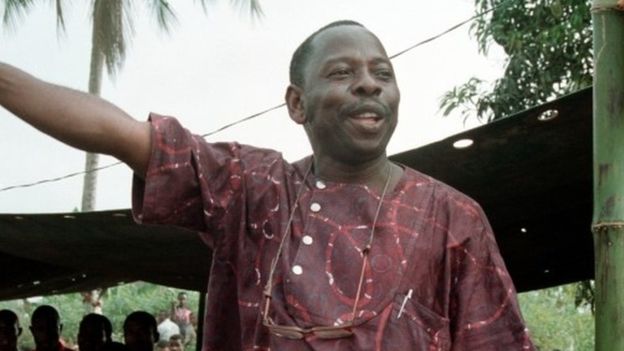
Kenule Beeson Saro-Wiwa was a Nigerian writer and organizer who helped lead the Ogoni campaign for political rights, environmental repair, and a fair share of oil revenues. “The Gandhi of Nigeria” is best understood as a limited comparison to his public commitment to nonviolent organizing and moral argument—not as proof that he followed Gandhi’s entire philosophy or faced identical circumstances.
Who was Ken Saro-Wiwa?
Born in Bori in 1941, Saro-Wiwa worked as a novelist, essayist, and television producer as well as an environmental and human-rights activist. He studied English at the University of Ibadan. PEN International identifies Sozaboy: A Novel in Rotten English (1985), an anti-war satire, as his best-known novel. He also wrote On a Darkling Plain, drawing on his Nigerian Civil War experiences, and wrote more than 150 episodes of the television sitcom Basi and Company.
| # | Preview | Product | Price | |
|---|---|---|---|---|
| 1 |

|
A Month and A Day & Letters | $17.50 | Buy on Amazon |
| 2 |

|
Ken Saro-Wiwa (Ohio Short Histories of Africa) | $16.90 | Buy on Amazon |
| 3 |

|
Ken Saro-Wiwa : A Concise Biography (CONCISE AFRICAN HISTORY: AFRICA'S PAST IN AN HOUR) | $2.99 | Buy on Amazon |
| 4 |

|
A Month and a Day: A Detention Diary | $16.00 | Buy on Amazon |
| 5 |
|
Ken Saro-Wiwa: Triumph Of A Vision | $8.01 | Buy on Amazon |
His writing and public speech became part of his political work: he sought to make the Ogoni people’s experiences and demands visible. His essays written during incarceration were later collected in A Month and a Day: A Detention Diary, published after his death in 1996, according to PEN International.
MOSOP and the Ogoni campaign
Saro-Wiwa joined the Movement for the Survival of the Ogoni People (MOSOP) in 1990 and became its president. He helped write the Ogoni Bill of Rights. MOSOP called for Ogoni political rights and autonomy, environmental cleanup and compensation, and a fairer share of revenues from oil extracted on Ogoni land.
#1 Best Overall
The movement’s public campaign emphasized mass nonviolent action, and Saro-Wiwa was an advocate of nonviolence. That does not mean every participant or faction acted nonviolently: South African History Online describes competing currents within MOSOP, including participants who took or advocated violence and traditional leaders who favored negotiation with oil companies.
Goldman Environmental Prize describes a peaceful Ogoni march in January 1993 involving about 300,000 people. That figure is the prize organization’s historical account, not a new or independently verified count. The march brought international attention to MOSOP’s demands.
Arrest, trial, and execution
In May 1994, four Ogoni chiefs were killed amid factional tension. PEN International reports that Saro-Wiwa had earlier been prevented from attending the meeting with the chiefs; he was later arrested with other MOSOP leaders and charged with inciting the murders. A military tribunal sentenced him and eight co-defendants, known as the Ogoni Nine. They were hanged on 10 November 1995.
Rank #2
The distinction matters: the tribunal convicted and sentenced them, but governments and civil-society organizations worldwide condemned the proceedings and urged clemency. The African Commission on Human and Peoples’ Rights’ case record documents communications about the arrests and proceedings, as well as requests to delay the executions while it considered the case. These criticisms of the trial should not be confused with a later acquittal.
The Tool Desk
Outbyte Driver Updater FREEScan for outdated or missing drivers - takes under a minuteDriver Scan →Outbyte PC Repair FREERepair Windows errors before they cause bigger problemsFix Now →In a statement to the military-appointed tribunal, reproduced by Journal of Democracy, Saro-Wiwa said, “I am a man of peace, of ideas.” The same source reproduces his words: “My colleagues and I are not the only ones on trial. Shell [Oil Company] is here on trial.”
Why “the Gandhi of Nigeria”?
The comparison points to Saro-Wiwa’s commitment to nonviolent organizing and public moral argument. His courtroom statement supports that broad analogy, but the sources consulted do not establish who first used the exact phrase “Gandhi of Nigeria.” Nor do they establish that Saro-Wiwa adopted Gandhi’s full political philosophy or that their historical circumstances were equivalent. The title is a shorthand, not a complete account of either man.
Environmental legacy and the Ogoni Nine pardon
In 2006, Nigeria invited the United Nations Environment Programme to assess oil contamination and its effects on the environment and public health in Ogoniland. Its report, delivered in August 2011, estimated that restoring the region could take 25 to 30 years. The report remains an important assessment of the contamination and the scale of the remediation challenge.
In June 2025, President Bola Tinubu posthumously pardoned the Ogoni Nine. The pardon renewed debate over justice: the Associated Press reported that rights advocates argued it was inadequate without formal exoneration and wider accountability for harms to Niger Delta communities. The pardon is an official act, but whether it provides meaningful justice remains contested.
Further reading
For Saro-Wiwa’s literary work, PEN International describes Sozaboy: A Novel in Rotten English as an anti-war satire and his best-known novel. His other works include On a Darkling Plain and the posthumous essay collection A Month and a Day: A Detention Diary.
Independent reader supportYour contribution helps us test, update, and keep practical guides available for everyone.FAQ
Who was Ken Saro-Wiwa?
Kenule Beeson Saro-Wiwa was a Nigerian novelist, essayist, television producer, and Ogoni activist. He joined MOSOP in 1990 and became its president.
What did MOSOP demand?
MOSOP sought Ogoni political rights and autonomy, environmental remediation and compensation, and a fairer share of revenues from oil extracted on Ogoni land.
Why was Ken Saro-Wiwa executed?
After four Ogoni chiefs were killed in May 1994, Saro-Wiwa and other MOSOP leaders were arrested and charged with inciting the murders. A military tribunal sentenced Saro-Wiwa and eight co-defendants, and the Ogoni Nine were hanged in November 1995. International observers and organizations condemned the tribunal proceedings.
Quick wins for a faster PC:
Scan for outdated or missing drivers - takes under a minuteDriver Scan →Repair Windows errors before they cause bigger problemsFix Now →Best Value
Was Ken Saro-Wiwa really called the Gandhi of Nigeria?
The phrase is used as a comparison for his nonviolent organizing and moral resistance. The research sources do not establish who coined it, and it should not be taken to mean that his beliefs or circumstances were identical to Gandhi’s.
What happened to the Ogoni Nine in 2025?
Nigeria posthumously pardoned the Ogoni Nine in June 2025. Rights advocates criticized the pardon as insufficient without formal exoneration and further justice.
Quick Recap
Product prices and availability are accurate as of the date/time indicated and are subject to change. Any price and availability information displayed on Amazon at the time of purchase will apply.