Music matters because it can give people a way to express and regulate emotion, connect sound with memory and movement, share an experience with others, and carry meaning across cultures. It engages more than hearing: brain systems involved in thinking, sensation, movement, and emotion are also implicated. Research suggests some music-based activities may support health and well-being, but effects depend on the activity, outcome, and population studied; music is not a universal treatment.
How music affects personal experience
Music can make an emotion easier to recognize, express, or share. A song may also become linked with a particular person, place, or period of life, so hearing it later can bring those memories to mind. The experience is personal: a sound that feels comforting to one listener may feel irritating or emotionally intense to another.


Music also connects sound with movement. People tap, dance, march, or play along, engaging the body as well as the ear. The National Institutes of Health describes music listening and creation as involving brain systems associated with thinking, sensation, movement, and emotion. Neuroscientist Dr. Robert Finkelstein, co-leader of NIH’s music and health initiative, says, “When you listen to or create music, it affects how you think, feel, move, and more,” (NIH News in Health, “Sound Health”).
Why making music together can build connection
Singing, dancing, playing instruments, and keeping a shared rhythm turn music into a group activity. People can participate at once, even when they do not have the same role or musical skill. University of California, Davis neuroscientist Dr. Petr Janata describes music as “a way of synchronizing groups of people and engaging in a common activity that everyone can do at the same time,” (NIH News in Health, “Sound Health”).
#1 Best Overall
This shared timing can make a group experience feel coordinated: participants listen and respond to one another, or move and sing in a common pattern. That does not mean every musical activity automatically creates closeness; the people involved and the setting matter. It does help explain why music can serve both as individual expression and as a social practice.
Music’s place in culture and communication
Music is part of every known culture, according to NIH. Communities use it to mark events, pass on traditions, express identity, and bring people together. Its meaning is not limited to lyrics: rhythm, melody, instruments, performance, and the context in which music is heard can all carry significance.
Rank #2
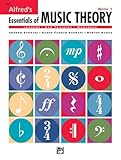
- An all-in-one music theory course designed for students of any age — whether listeners or performers — who want a solid understanding of the language of music
- Covers foundational concepts including staff, notes, pitches, clefs, time signatures, note values, dynamics, flats, sharps, and whole and half steps across 25 concise lessons
- Combines reading and writing exercises with ear-training support (CDs sold separately) and unit reviews to reinforce learning and test knowledge retention
- Compatible with optional computer software featuring randomized drilling and scorekeeping for interactive, self-paced study
- Part of a complete product line including Teacher's Answer Keys, Flash Cards, Double Bingo games, and Reproducible Teacher's Activity Kits for studio and classroom use
The World Health Organization’s overview of the arts describes art more broadly as part of teaching, learning, communication, and healing. That is arts-wide context, not evidence that every claim applies specifically to music. Read more in the WHO overview of arts and health.
What research says about music and health
Health effects are best understood by asking what kind of music activity was studied, who took part, and which outcome was measured. Everyday listening, active music-making, and a structured music-based intervention are not interchangeable. The National Center for Complementary and Integrative Health (NCCIH) says research suggests possible usefulness for some health conditions, while noting that much intervention research is preliminary and that firm conclusions cannot be drawn for many specific effects. Its music and health overview also cautions against treating music as a proven remedy for everyone.
Stress-related measures
A systematic review published in 2020, summarized by NCCIH in April 2022, included 104 studies and 9,617 participants. Across the music-based interventions and stress-related measures reviewed, it reported small-to-medium beneficial effects on physiological measures and medium-to-large effects on psychological measures. These findings describe the reviewed interventions and outcomes; they do not establish that casual listening will reliably reduce stress or treat a condition. NCCIH’s 2022 evidence digest notes that results for music-based interventions for sleep problems were mixed.
Listening compared with active participation
A 2023 systematic review and meta-analysis examined 11 randomized controlled trials involving healthy adults aged 40 and older. It found that active musical participation may benefit cognitive and psychosocial functioning, while the positive impact of listening appeared more restricted to cognition. The authors also pointed to differences among studies and called for more uniform trials and sensitive measures. These findings apply to the population and activities reviewed, not automatically to people of every age or health status. See the European Journal of Public Health review.
Rank #4

- Format: Book & 2 CDs
- Category: Textbook - General
- Contributors: By Andrew Surmani, Karen Farnum Surmani, and Morton Manus
- Pub Date: 8/2004
- Series: Essentials of Music Theory
What the evidence can—and cannot—tell us
The evidence supports taking music seriously as a human activity with emotional, social, cultural, and potentially health-related value. It does not show that one song, genre, or way of participating will have the same effect for every person. The World Health Organization’s 2019 review considered more than 3,000 studies on arts and health; that figure covers the arts broadly, not music research alone. Its findings provide context for the wider role of arts in health and well-being, rather than a music-specific count or guarantee. See the WHO Regional Office for Europe scoping review.
Music’s importance, then, is not dependent on proving a clinical benefit. It can help people feel, remember, move, communicate, and take part in shared cultural life. Where health benefits are discussed, the responsible question is not whether music is simply “good for you,” but what activity may help which people, with which outcome, and how strong the evidence is.
PC Slower Than It Used to Be?
A free scan shows the junk files, broken settings and background clutter dragging Windows down - then fixes them in one click.Free scan · Windows 10 & 11Crashes, No Sound, or Screen Glitches?
Random freezes, missing sound and display glitches usually trace back to one bad driver. Find and replace yours safely.Free scan · under a minuteQuick Recap
Product prices and availability are accurate as of the date/time indicated and are subject to change. Any price and availability information displayed on Amazon at the time of purchase will apply.




