The Tool Desk
Outbyte Driver Updater FREEScan for outdated or missing drivers - takes under a minuteDriver Scan →Outbyte PC Repair FREERepair Windows errors before they cause bigger problemsFix Now →J.D. Vance’s Hillbilly Elegy: A Memoir of a Family and Culture in Crisis (2016) is controversial because it works on two levels at once. It is a personal account of one family’s hardship, and it is also widely read as an explanation of Appalachia and white working-class America. Critics argue that the second role outruns the first: that a single childhood is being used to describe a large, diverse region, that cultural explanations for poverty are given too much weight, and that structural causes are underexamined. Admirers credit the book with a candid picture of family instability, social mobility, and cultural conflict. Much of the dispute concerns what the story is taken to prove, not only whether its events are accurate.
Why a memoir became a theory of a region
A memoir makes a claim about its author’s life. Hillbilly Elegy makes a second claim, in its title and throughout its interpretation, about what that life says about “a culture in crisis.” Vance writes from the vantage of a young man raised partly in Middletown, Ohio, with roots in eastern Kentucky, and he frames family dysfunction, violence, and economic insecurity as signs of wider cultural problems. Readers who take the book as an explanation of a place, rather than a portrait of a family, are the readers whose reactions drive most of the controversy.
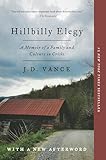


Academic discussion of the book cautions that Appalachian life is more varied than one memoir can represent. That caution is the core of the critical case, and it applies whatever one thinks of Vance’s personal account.
Which accuracy question you are asking
“Is the book accurate?” can mean several different things, and the answers differ. Separating them is the most useful step for any reader.
#1 Best Overall
| Question | What it tests | What critics say |
|---|---|---|
| Is Vance’s account of his own upbringing truthful? | Autobiographical events, relationships, and experiences | Few of the sources discussed here independently check the family episodes he recounts. Most published criticism does not contest them as its main point. |
| Does his family explain Appalachia? | Whether one family’s story represents a region | Strongly contested. Critics say a single author cannot stand for many communities, identities, and economic circumstances. |
| Does cultural explanation fit poverty in the region? | The weight given to behavior, family norms, and culture | W. Carson Byrd’s 2019 peer-reviewed article argues the book repackages culture-of-poverty arguments and reproduces stereotypes about poor white Appalachians. |
| Does the book explain the 2016 election? | Whether a memoir can account for voting behavior | Widely disputed. Its popularity and political use are part of the story, not evidence of its explanatory power. |
The first question is the one most readers picture when they hear “accuracy.” The later questions are where the sharpest disagreements sit.
Culture versus structure
The book’s most-cited dispute is about explanation. Vance emphasizes behavior, family dynamics, and cultural norms as drivers of his community’s problems. Critics contend that this framing understates economic and institutional forces such as the loss of manufacturing work, the weakness of local labor markets, and the policy choices that shape poverty.
Rank #2
Byrd’s 2019 article reads the book as a modern version of culture-of-poverty thinking, one that treats poor white Appalachians as a stereotype rather than as people shaped by a set of economic conditions. Anthony Harkins, co-editor of the regional response collection Appalachian Reckoning, made a related objection in Washington Post reporting in 2024. He argued that the book frames poverty as individual choice rather than larger socioeconomic forces. These are critics’ interpretations, and they are contested: defenders argue the book describes real dysfunction that policy debates often ignore.
Who gets to speak for a region
The argument here is not whether Vance may write about his own life. Harkins, in the same 2024 coverage, objected to the idea that Vance should serve as a voice for an entire multi-state region and that his own story indicates a broader society. The useful question for readers is when a personal story is treated as representative, and by whom.
Quick wins for a faster PC:
Clear out junk files and repair common Windows errorsFree Scan →Scan for outdated or missing drivers - takes under a minuteDriver Scan →Repair Windows errors before they cause bigger problemsFix Now →The regional response literature offers a direct answer to that question. Appalachian Reckoning: A Region Responds to Hillbilly Elegy assembles scholars and writers who test the book’s claims against the region’s diversity, and it makes the representational disagreement explicit. Elizabeth Catte’s What You Are Getting Wrong About Appalachia is another work the Washington Post cited in its discussion of criticism.
Political timing and later reception
The book appeared in 2016, when national media were trying to explain Donald Trump’s appeal to working-class voters. It was read in that light, and TIME’s 2020 explainer, “Why J.D. Vance’s Hillbilly Elegy Is So Controversial,” describes how its political resonance grew. The book became a New York Times bestseller, according to TIME and the regional response collection. Its sales do not show that its account is correct.
Rank #4
Reception shifted as Vance became a political figure. Later coverage, including the 2024 Washington Post reporting, shows that the book is now read partly through his career. That shift is one reason the controversy has outlasted the original publication moment.
Independent reader supportYour contribution helps us test, update, and keep practical guides available for everyone.Attributed criticism and partisan attacks
Scholarly criticism and partisan criticism are not the same thing, and they should be read separately. In 2026 reporting by the Associated Press, Kentucky Governor Andy Beshear, speaking at a Democratic fundraiser, said of the book, “His book ‘Hillbilly Elegy’ was really hillbilly hate,” and called it “poverty tourism.” These remarks are political criticism by a partisan figure, not a neutral description of the book’s contents, and they belong to a different category from the academic arguments above.
Best Value
The strongest positions on each side
What admirers value
- Its candid account of family violence, instability, and addiction, which many readers found vivid and affecting.
- Its challenge to assumptions about white working-class life, especially for readers outside the region.
- Its focus on upward mobility and the difficulty of leaving a difficult home environment.
What critics object to
- Generalizing from one family to a region of many states, communities, and identities.
- Explaining poverty mainly through culture and individual behavior.
- Reproducing stereotypes of poor white Appalachians that scholars have long worked against.
- Leaving out structural causes that shape the economic conditions the book describes.
Where to read further
To test the book’s claims, read Appalachian Reckoning alongside the memoir. Compare the works on four axes: genre and evidence (memoir, journalism, or social research); who is represented and who is missing; how much explanatory weight each gives to individual choice, culture, institutions, and economic structure; and whether Appalachia is treated as diverse or as a single cultural type.
A 2020 film adaptation of the memoir exists. This article does not confirm its current streaming or physical-media availability.
Quick Recap
Product prices and availability are accurate as of the date/time indicated and are subject to change. Any price and availability information displayed on Amazon at the time of purchase will apply.




