ChatGPT did not literally turn everything into official Studio Ghibli art, but it did make Ghibli-like image transformations the defining viral use of its new image generator in March 2025. OpenAI launched native GPT-4o image generation on March 25, 2025. Within roughly a day, users were turning portraits, family photographs, memes, and political images into scenes that evoked Studio Ghibli’s hand-drawn animation, warm palettes, expressive faces, and richly detailed environments.
The sudden popularity was a product story and a cultural controversy at once. The same conversational feature that made image editing accessible also raised unresolved questions about copyright, training data, consent, attribution, and the value of human creative labor.
Yes—but the headline is shorthand, not a literal description of ChatGPT. On March 25, 2025, OpenAI launched native GPT-4o image generation inside ChatGPT. Within about a day, users were uploading portraits, family photographs, memes, and political images and asking for transformations that evoked the recognizable visual language associated with Studio Ghibli.
The result was more than a viral filter. It was a collision between conversational AI, internet meme culture, fandom, copyright uncertainty, and anxiety about the value of creative labor. The images looked familiar enough to be instantly legible, while the tool made participation unusually easy: upload a picture, describe a change in ordinary language, and keep refining the result in the same conversation.
Quick wins for a faster PC:
Repair Windows errors before they cause bigger problemsFix Now →Fix the driver behind crashes, sound loss and screen glitchesFind Drivers →#1 Best Overall
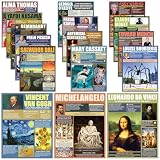
- 【16 FAMOUS ART POSTERS · 5 CENTURIES · MASTERPIECES】 Da Vinci, Michelangelo, Rembrandt, Van Gogh, Monet, Munch, Picasso, Dalí, Warhol, Cassatt, Gentileschi, Kahlo, Alma Thomas, Kusama, Bourgeois — 16 masterpieces from Renaissance to contemporary art
- 【PREMIUM MATTE-LAMINATED 250 GSM】 Matte-laminated art classroom posters kill projector glare during art history lessons and resist tearing unlike thin flimsy prints — 250 gsm cardstock stays flat year after year, no curled corners or bent edges
- 【INCLUSIVE ART HISTORY · 6 WOMEN + DIVERSE】 A classroom set beyond the Euro-male canon — 6 women artists (Cassatt, Gentileschi, Kahlo, Alma Thomas, Kusama, Bourgeois) + Mexican · African American · Japanese · European voices your K-12 art class deserves
- 【SHIPS FLAT IN OPP BAG · READY TO HANG】 Packed flat in a protective OPP sleeve so famous art prints arrive crease-free — solves the #1 hanging complaint in competitor art poster listings — use poster putty, washi tape, or slide into 11x14 frames
- 【ART TEACHER GIFT · BACK-TO-SCHOOL 2026】 Thoughtful gift for art teachers, homeschool art starter kit, or B2S 2026 classroom wall decor — pair with KING PRINT History Posters to build a complete curriculum wall that inspires students every morning
What actually happened in March 2025
OpenAI introduced GPT-4o image generation as part of ChatGPT rather than as a separate specialist application. The company highlighted several capabilities: following detailed instructions, understanding an uploaded image in context, transforming that image, rendering text more reliably, and using conversational context for iterative edits. OpenAI also said generated images included C2PA provenance metadata identifying them as generated by GPT-4o.
That combination removed much of the friction that had surrounded earlier image-generation tools. A user did not need a dedicated image editor, a custom model, or a carefully engineered prompt syntax. The interaction could be as simple as asking ChatGPT to reinterpret a photograph as a hand-drawn animated scene with warm colors, expressive faces, and a gentle fantasy atmosphere.
Social platforms quickly filled with the results. Users commonly described them as Studio Ghibli-style or Ghibli-inspired, although those labels describe a cultural association rather than a precise technical setting. The trend moved from personal portraits to jokes, advertisements, political images, and reinterpretations of familiar photographs. Sam Altman used a Ghibli-like profile image during the viral moment, and the White House posted a politically charged image in a similar visual treatment. Those high-profile examples made the trend feel larger than ordinary experimentation and intensified the debate about what the technology should be used for.
Why the Ghibli-like transformation spread so quickly
1. The tool was conversational
Earlier image generators often required users to learn the system’s preferred prompt language and accept a one-shot result. GPT-4o image generation was presented as an ongoing conversation. If a face looked wrong, a user could ask for a correction. If the background was too plain, the user could request more detail. If the text was unreadable, the user could try again.
Windows Errors? Fix Them Before They Spread
Repair common Windows errors and clear accumulated junk for a smoother, more stable PC - no reinstall needed.Free scan · no reinstallCrashes, No Sound, or Screen Glitches?
Random freezes, missing sound and display glitches usually trace back to one bad driver. Find and replace yours safely.Free scan · under a minuteThat iterative workflow matters because it turns image creation into a low-friction social activity. The user does not have to understand how the model works in order to participate. The model handles much of the translation from an informal request into an image-editing operation.
2. The source images were personal and instantly recognizable
A transformed family photograph carries its original meaning into the new image. Viewers can compare the real photograph with the generated version and immediately understand what changed. That before-and-after structure is especially effective on social media because the joke or emotional premise survives the transformation.
The same was true of memes and political photographs. A recognizable image supplied the context; the Ghibli-like treatment supplied the novelty. Users could apply a familiar visual treatment to an almost limitless range of subjects, which created a feedback loop: every new example suggested another photograph or meme to transform.
3. The visual references were unusually legible
Studio Ghibli is associated with a broad cluster of visual features: hand-drawn animation, soft or painterly backgrounds, warm and pastoral colors, expressive faces, richly detailed environments, and an atmosphere that can feel gentle, wistful, mysterious, or fantastical. A viewer does not need to identify a particular film frame to recognize the association.
Rank #2

- Size Options: Yayoi kusama wall art–Choose from a range of sizes to suit your specific space. Whether you're decorating a cozy corner or a large wall, this japanese poster is available in multiple sizes to perfectly match your needs and enhance any room or location
- High-Quality Materials: Nature wall art printed on premium, fade-resistant paper, are made to last. The high-resolution artwork ensures vibrant colors and crisp details, green wall art providing a stunning visual experience that adorn any wall
- Versatile Decor Solution: This botanical print by Yayoi Kusama is a modern Japanese floral poster that perfectly showcases her unique artistic style. Suitable for home décor, whether hung in the living room, bedroom, or art studio, it adds endless charm and personality to any space
- A THOUGHTFUL GIFT: This botanical print is more than just a decorative piece; it embodies a lifestyle. Give your loved ones, this floral wall art is perfect for Birthday, Housewarming, Graduation, Christmas, or any special occasion
- After Sale Service: We value your satisfaction! If you have any questions or issues with your purchase, please contact us and we will solve any questions you may have
That recognizability made the images easy to categorize and share. The same quality also created the controversy. The more immediately an output was understood as evoking a specific studio, the more people asked whether the result was simply an aesthetic influence or something closer to commercial imitation.
4. The trend crossed from fandom into public messaging
Personal experiments are one thing; political and institutional uses attract a different level of scrutiny. The White House example demonstrated that the visual treatment could function as a messaging layer, not merely as a playful portrait effect. Altman’s profile image similarly made the trend visible as part of the identity of the company that had released the tool.
That visibility compressed several debates into one viral moment. People were discussing the appeal of the images, the company’s business strategy, the use of recognizable creative traditions, the handling of political content, and the future of artists—all while the images were still spreading.
What people mean by Studio Ghibli art
Studio Ghibli art is not a single image-generation specification. It is shorthand for a family of associations connected with the studio’s films, including My Neighbor Totoro, Kiki’s Delivery Service, Princess Mononoke, Spirited Away, Howl’s Moving Castle, and The Boy and the Heron.
The Tool Desk
Outbyte PC Repair FREERepair Windows errors before they cause bigger problemsFix Now →Outbyte Driver Updater FREEFix the driver behind crashes, sound loss and screen glitchesFind Drivers →That distinction is important. A generated image can evoke a broad animation aesthetic without reproducing a particular authorized illustration. It is a different question if a prompt or output reproduces a recognizable character, logo, film scene, frame, poster, merchandising image, or other specific protected expression.
For that reason, this article uses terms such as Ghibli-like, Ghibli-inspired, and resembling Studio Ghibli’s visual language when describing the viral outputs. Calling every generated image an actual Studio Ghibli artwork would incorrectly imply that the studio made, authorized, or endorsed it.
The copyright questions are separate
The viral trend encouraged a simple question—whether the images were legal—but there is no single answer that resolves every issue. At least three different copyright questions must be kept apart.
| Question | What can responsibly be said | What should not be claimed |
|---|---|---|
| Is a broad visual style protected by copyright? | A broad style generally is not treated as a copyrightable work in the same way as a particular drawing, film frame, or character design. A general resemblance is therefore not automatically proof of infringement. | It is too broad to say that style imitation can never create legal risk. A particular output may copy protected expression, and other legal doctrines may matter depending on the facts and jurisdiction. |
| Can an AI-generated output receive copyright protection? | The U.S. Copyright Office’s January 29, 2025 report says an output may be protectable when a human author determines sufficient expressive elements. Human-authored material included in the result, creative arrangement, selection, or substantial human modifications may be relevant. | A person does not necessarily obtain copyright simply by typing a prompt. The Copyright Office said that prompting alone is not enough by itself to establish the required human authorship. |
| Was copyrighted material used to train the model? | That is a separate question about datasets, model development, licensing, and potential market effects. The Copyright Office’s later work discusses concerns including market harm and lost licensing opportunities, but it does not establish one universal rule for every model or dataset. | The existence of Ghibli-like outputs does not, by itself, prove that Studio Ghibli’s catalog was copied into the training process or that a particular image is unlawful. |
These distinctions are especially important in the United States, where the Copyright Office’s reports address copyrightability and training as related but separate issues. Laws and legal tests can differ in other countries. Whether an individual image creates legal exposure may depend on what the prompt requested, what the output contains, how closely it resembles a specific work, how it is distributed, whether a person’s likeness is involved, and whether it is used commercially.
Rank #3

- 【Size】3 wall prints in 8x10 Inch/4 wall prints in 5x7inch/5 wall prints in 4x6inch - total 12 Pieces in different size. Please measure your wall before purchase to make sure you pick the right size.
- 【Classic Claude Monet Art Prints】This Monet oil paintings collection is a unique opportunity to travel back to the 19th century and immerse yourself in Monet's gardens, with their vibrant green and blue hues and the lightness of the days. These famous art posters and prints of famous painting is ideal impressionist wall art decor for your home.
- 【Premium Quality】The vintage aesthetic art prints are made of high-quality canvas material to ensure durability, and we print with high-quality inks, never fade over time. All Process and Materials are created with only the highest standards. (Please note that our Monet artwork for walls do not contain picture frames!)
- 【Perfect Gift for Your Loved One】 The vintage gallery wall art set can be also as gift for the one who love Monet items, adore famous artwork and art reproduction posters, French country wall decor or eclectic wall art.
- AESTHETIC POSTERS to GIFT for COLLEGE GIRLS: KBKBART wall collage kit aesthetic pictures are great gifts for anyone who wants to create aesthetic room decor. You can gift this wall collage kit to teens, kids, girls, women. We pack these with double-sided tape and also put into specially designed box which is ready to gift. Also, we add some special gifts for every package!
There is no basis in the supplied reporting to say that Studio Ghibli approved the 2025 trend, that the studio sued OpenAI over the original viral wave, or that a court definitively ruled that the images were copyright infringement. The defensible conclusion is narrower: the trend exposed unresolved questions about training, substantial similarity, market substitution, licensing, and the boundary between a general aesthetic resemblance and copying protected expression.
Why the debate was about more than copyright
Copyright is only one way to evaluate what happened. Critics argued that generative systems could industrialize a visual language developed through the work of animators, background artists, illustrators, composers, and other creators. A user could obtain a surface resemblance in seconds without learning how those images were designed, painted, animated, composited, or revised.
That criticism does not require the claim that every individual generated image is unlawful. It is an argument about power and scale. A human artist may study, absorb, and transform influences over a long career. A generative system can produce thousands of imitations at commercial speed, potentially changing the bargaining position of creators and the market for commissioned work.
Artists and researchers raised concerns about:
- attribution and whether creators receive meaningful credit;
- consent and whether creative work was included in training without permission;
- labor displacement and the pressure to accept lower prices or faster production;
- environmental costs associated with large-scale model development and use; and
- the possible devaluation of human-made work when a recognizable look becomes an instant commodity.
Those are ethical, cultural, and policy concerns, not findings that the trend caused a measurable collapse in animators’ employment. The available reporting supports documenting the criticism; it does not justify inventing a precise economic impact that has not been established by a specific study.
Hayao Miyazaki had previously expressed strong criticism of AI-generated animation. His earlier remarks are relevant to the cultural context, but they were not a direct legal response to the March 2025 ChatGPT trend and should not be presented as one.
The source work still matters
There is a difference between using an AI system to obtain a quick approximation and studying the authorized work that made the visual tradition distinctive in the first place. For readers interested in how these films were actually made, an official Studio Ghibli art book is a more direct route to the source material than treating a generated imitation as a substitute for production art.
VIZ identifies The Art of Spirited Away as an English-language art book collecting color illustrations from the film. Simon & Schuster lists VIZ Media’s The Art of The Boy and the Heron, published May 27, 2025, as an official art book containing commentary and interviews. These books do not create AI images; their value is precisely that they preserve authorized artwork and offer insight into the visual development and craft behind the films.
A practical way to think about the images
For viewers, the most useful question is not simply whether an image looks attractive. Ask what kind of relationship it has to the source material.
Do these 3 things before closing this tab:
1Scan for outdated or missing drivers - takes under a minute2Repair Windows errors before they cause bigger problems3Fix the driver behind crashes, sound loss and screen glitchesRank #4

- Japanese Wall Art: Japanese poster size is 12X16 inch, not include frames. You to choose your preferred frames to showcase them. Assemble and install by yourself, Fully enjoy the fun of DIY
- Durable & High Quality Posters: Abstract painting use high quality environmentally protection ink, not easy to fade, vivid color, waterproof, Uv resistant, no odor. Unique wall art will add a touch of style and personality to your walls
- Blue Wall Art: This captivating poster features dynamic, swirling waves rendered in deep indigo and cerulean hues. Aesthetic posters provide decoration for kitchen, dining room, bar, dorm, living room, bedroom, apartment, hotel
- Christian Gift: The minimalist yet intricate design pays homage to ukiyo-e woodblock prints, blending classical artistry with modern decorative appeal. Whether given as a birthday, christmas, holiday gift, house warming or any other special occasion, blue canvas wall art will surprise and delight the recipient
- After-sales Service: We cherish your purchase experience very much, if you have any problems with this wabi sabi wall art. You can contact us by email at the first time. We hope to resolve any issues you may encounter quickly and efficiently
- Broad atmosphere: The image uses general features such as warm color, hand-drawn texture, soft lighting, or a pastoral setting. That is the least specific form of resemblance, although it is not automatically free from every legal or ethical concern.
- Recognizable character or setting: The image includes a named or clearly identifiable character, fictional world, logo, costume, or scene. This raises more specific intellectual-property questions than a broad mood or technique.
- Close recreation: The image appears designed to reproduce a particular frame, illustration, poster, or piece of merchandising art. That is materially different from asking for a general animated atmosphere.
- Commercial or political use: The image is used to sell something, represent an organization, influence an audience, or speak on behalf of a public figure. The stakes are higher than a private experiment and may involve additional rights or reputational concerns.
This is not a legal test, and it cannot replace advice about a specific use. It is a way to avoid treating all visual resemblance as identical.
Independent reader supportYour contribution helps us test, update, and keep practical guides available for everyone.What users should consider before transforming a photograph
The public debate focused on Studio Ghibli, but ordinary users also have practical responsibilities when uploading images to any AI service.
- Get consent where appropriate. A photograph may show children, friends, colleagues, or strangers who did not agree to have their likeness transformed and reposted.
- Think about context. A playful private image and a political advertisement can use the same generated technique but create very different consequences.
- Check current terms and settings. Product policies, retention options, access tiers, and image-generation behavior can change. Read the current information for the service and account you are using rather than relying on a 2025 description.
- Do not assume provenance metadata solves every problem. C2PA metadata can identify an image as generated by GPT-4o, according to OpenAI, but it is not a copyright license, proof of consent from people in the source photograph, or a complete record of every influence on the output.
- Label synthetic images when context makes it important. Audiences should not be led to believe that an AI-generated image is an original Studio Ghibli production image or an unaltered photograph.
What the later Sora 2 development does—and does not—prove
A later development brought the same underlying concerns back into the news, but it should not be confused with the original event.
In October 2025, the Content Overseas Distribution Association, or CODA, said it represented rights holders including Studio Ghibli and other Japanese media companies when it sent OpenAI a written request concerning Sora 2. CODA said it had observed large amounts of Sora 2 output closely resembling Japanese content or images and asked OpenAI to address concerns about unauthorized use and training.
What’s actually slowing this PC down?
Pick the symptom - the matching free tool is one click away.
On April 1, 2026, CODA reported that OpenAI had told it on March 27 that Sora 2 would be discontinued as a product, including its app and API. CODA described the discontinuation as a milestone following its earlier request and continuing discussions.
That is significant context, but it is not an adjudication of the March 2025 Ghibli-like image trend. Sora 2 was a video-generation product, while the original viral event concerned GPT-4o image generation in ChatGPT. CODA’s account also does not establish that the earlier still-image outputs were legally determined to infringe Studio Ghibli’s rights. The events are related because both involve the scale of generative imitation and Japanese media, but they are not the same case.
Why the phrase still matters
The phrase ChatGPT is turning everything into Studio Ghibli art captured a real perception: once the feature arrived, an enormous number of ordinary images could be given a coherent, recognizable animated treatment with very little technical effort. But “everything” describes the speed and ubiquity of the meme, not a literal product capability. ChatGPT did not transform every image, and access, model version, safety behavior, account tier, and prompt all affected what users could generate.
The deeper story is not that one company discovered a magical filter. It is that conversational image generation made aesthetic imitation social, immediate, and iterative. A look that once required years of artistic practice could be requested in a sentence, then applied to personal memories, memes, political communication, and commercial imagery.
Recommended Free Tools
Best Value

- 【Japanese Wall Art Poster】Available in a variety of sizes - 8x10" 11x14" 12x16" 16x24" 20x30" 24x36" - and in three formats: frameless wood frame and black aluminum frame, offering multiple options to match any decor.
- 【High-Quality Canvas Print】High quality canvas and high quality healthy pigment are used to make every hanging picture product. Clear colors and rich details. Waterproof, colorfast, non-toxic, harmless, healthy.
- 【The Perfect Gift for any Occasion】Housewarming, Birthday, Father's Day, Mother's day, Christmas, Valentines, Anniversary, Wedding, Halloween, Thanksgiving, New Year, etc
- 【Traditional Japanese Art Wall Decor】The Japanese contemporary art is ideal as Japanese decor for bedroom, living rooms, home office, etc.
- 【After-sales service】We cherish your purchase experience very much, if you have any problems with the purchased Japanese room decor poster, You can contact us by email at the first time. We hope to resolve any issues you may encounter quickly and efficiently.
That convenience is exactly why the trend became a cultural flashpoint. It showed the appeal of tools that let people reimagine their own photographs, while also making questions about consent, attribution, labor, training data, and creative ownership impossible to ignore.
Sources and scope
This article’s chronology and legal framing draw on OpenAI’s March 25, 2025 announcement of GPT-4o image generation; contemporary reporting from The Washington Post, TechCrunch, ABC News, and TIME; Studio Ghibli’s official filmography; U.S. Copyright Office reports dated January 29, 2025 and its later report on generative-AI training; and CODA’s October 2025 and April 2026 statements concerning Sora 2. The supplied reporting does not establish a court ruling on the original Ghibli-like image wave or an authorization from Studio Ghibli.
Frequently Asked Questions
Did ChatGPT really turn every image into Studio Ghibli art?
No. The phrase describes a viral trend, not a literal ChatGPT function. GPT-4o image generation made it easy for users to upload photographs and request transformations that evoked Studio Ghibli’s visual language, but results varied by model version, access, safety behavior, and prompt.
Is the Ghibli-like style itself copyrighted?
A broad visual style is generally not treated as a copyrightable work in the same way as a specific drawing, film frame, or character design. However, a particular output that reproduces protected expression can raise different questions. Commercial use, identifiable characters, close recreations, trademarks, and other rights may also matter.
Free tools Windows power users keep installed
One-click scans. No signup required.
Can users copyright an image generated by ChatGPT?
Not necessarily. The U.S. Copyright Office’s January 29, 2025 report says prompting alone is not enough by itself. Human-authored material, creative arrangement or selection, and substantial human modifications may support copyright protection, depending on the facts.
Did Studio Ghibli approve the ChatGPT trend?
The supplied reporting provides no basis to say that Studio Ghibli approved the original trend or sued OpenAI over it. The absence of a reported lawsuit is not the same as a legal ruling that every image was lawful.
Was the Sora 2 controversy the same as the 2025 Ghibli image trend?
CODA’s later intervention concerned Sora 2, a video-generation product. CODA said it asked OpenAI to address outputs resembling Japanese content and later reported that OpenAI said Sora 2 would be discontinued. That development is related context, not proof that the original GPT-4o image trend was adjudicated unlawful.
The Bottom Line
Bottom line: ChatGPT did not literally turn everything into official Studio Ghibli art. GPT-4o image generation made it remarkably easy for users to create images that evoked Ghibli’s recognizable visual language, and the trend spread because the results were personal, legible, and easy to refine and share. Its legal status cannot be reduced to either “style is always protected” or “style is never protected”: output copyright, protected expression, training data, consent, and commercial use are separate questions. The episode’s lasting significance is cultural as much as legal—it demonstrated how quickly conversational AI can industrialize aesthetic imitation.
Quick Recap
Product prices and availability are accurate as of the date/time indicated and are subject to change. Any price and availability information displayed on Amazon at the time of purchase will apply.