Some cinema screens curve to help manage how projected light reaches the audience, particularly when the screen surface has gain. But a curve is a design choice, not a guarantee of a brighter, sharper, or more immersive picture. Its success depends on the screen material, projector position, viewing angles, and auditorium layout working together.
Why are some cinema screens curved?
A cinema screen is part of the projection system, not just a surface for displaying an image. Its material affects how much light it reflects and where that light goes. With some higher-gain surfaces, a flat screen can make the center look brighter than the sides, creating a visible hotspot. A curved frame can redirect some reflected light toward seats at the sides, helping even out brightness in certain installations.
That is a conditional benefit, not a property of every curved screen. The result depends on the surface’s gain and light-spread characteristics, the projector’s position and angle, and the seats’ locations. A 1968 paper by J. S. Chandler and J. J. De Palma discussed screen material, gain, spread angle, and curvature as linked design factors. It reported approximately six times the brightness of the best then-existing screens for a specific specially developed material and curvature in the paper’s test context; that historical result is not a performance claim for modern cinema screens. SMPTE paper, October 1968
The European Digital Cinema Forum (EDCF) likewise describes curvature as a way to direct reflected light toward the seating area and reduce a hotspot in some gain-screen arrangements. It also cautions that projection geometry matters: projector lenses generally produce better geometry on flat screens. EDCF projection-screen guide, June 2019
What’s actually slowing this PC down?
Pick the symptom - the matching free tool is one click away.
#1 Best Overall
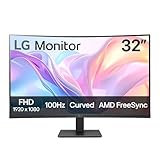
- Vivid Color with VA and FHD Resolution - At 1920x1080 resolution, LG's curved Full HD monitor features vibrant color and clarity. Work through your projects with ease and efficiency.
- 100Hz Refresh Rate - The quick 100Hz refresh rate assures streaming and even casual game play displays smoothly with reduced stuttering and motion blur.
- Easy Viewing, Comfortable Reading - Watch your monitor for longer periods of time. Reader Mode provides optimal conditions for reading by reducing blue light.
- Easier User Interface - You can customize the workspace by splitting the display or adjusting basic monitor options with just a few mouse clicks.
- AMD FreeSync - Gamers can experience seamless, fluid movement in high resolution and fast-paced games.
What are the tradeoffs of a curved screen?
Image geometry and cropping
A curved surface can make straight elements in the projected image appear bent. How noticeable the effect is depends on the curve and projection angle; deeper curves and larger angles can increase the risk of deformation or cropping. In the EDCF guide’s example, a straight projected line appears curved on a 5% curved, un-tilted screen under a specified projection angle. The figure is a demonstration of geometry, not evidence that every 5% screen visibly distorts every film.
EDCF defines curve percentage by comparing the depth of the curve with the straight chord between the screen’s edges. Its guide treats 5% as a useful compromise and warns of greater deformation or cropping risk above that. UNIC’s 2021 auditorium handbook also calls 5% a good compromise and advises against deep curves. These are design recommendations, not universal regulations or requirements for cinemas. UNIC auditorium design handbook, 2021 edition
Rank #2

- CURVED FOR ENHANCED ENGAGEMENT: An immersive viewing experience with a curved monitor that wraps more closely around your field of vision; It creates a wider view, enhancing depth perception and minimizing peripheral distraction
- SMOOTH PERFORMANCE FOR SEAMLESS CONTENT: Stay in the action when playing games, watching videos, or working on creative projects; The 100Hz refresh rate reduces lag and motion blur so you don't miss a thing in fast-paced moments¹
- MORE GAMING POWER: Gain the edge with optimizable game settings; Color and image contrast can be adjusted to see scenes more vividly and spot enemies hiding in the dark; Game Mode adjusts any game to fill the screen so you can view every detail²
- KEEP IT EASY ON THE EYES: Care for your eyes and stay comfortable, even during long sessions; Advanced eye comfort technology certified by TÜV reduces eye strain by minimizing blue light and reducing irritating screen flicker²
- INCREASED VERSATILITY: Connect to more; Plug devices straight into your monitor for increased flexibility, making your computing environment even more convenient
Off-axis seats and first-row viewing
The screen has to work for the whole seating area, not only the center seat. A design that redistributes light usefully for some viewing angles may not provide the best geometry or picture across all seats. UNIC notes that a flat matte-white screen can deliver the best picture quality for all seats in the context it discusses, though it may require a more powerful projector to reach the desired luminance.
Curvature also changes the apparent field of view. Viewers in the front row may find that a curved screen fills more of their view, especially when there is little room behind the screen’s center. Screen width, audience distance, sightlines, and the space available behind the screen therefore need to be considered together. Close seats can also make it harder to take in the whole image comfortably; subtitles and other details near the edges may require more eye or head movement.
Quick wins for a faster PC:
Scan for outdated or missing drivers - takes under a minuteDriver Scan →Clear out junk files and repair common Windows errorsFree Scan →Fix the driver behind crashes, sound loss and screen glitchesFind Drivers →Rank #3

- DO MORE ON ONE SCREEN: See every detail on the wider display featuring a 21:9 aspect ratio; Ultra WQHD provides the simplest way to maximize screen real estate and experience truly seamless multitasking on just one screen.Brightness (Typical) : 300 cd/㎡. Static Contrast Ratio 3000:1.
- ENJOY A BILLION COLORS W/ INCREDIBLE DEPTH: With HDR10 that displays over 1 billion colors compared to 16.7 million for typical SDR technology, dark colors are darker and the brightest are even brighter; Content is experienced as the creator intended
- CARE FOR YOUR EYES DAY and NIGHT: An ambient light sensor on the monitor detects lighting in your workstation and automatically adjusts brightness; Eye Saver Mode minimizes excessive blue light, and Flicker Free relieves eye strain
- SEE CONTENT SMOOTHER, EVEN GAMING: A faster than average refresh rate updates the image on screen more often every second; 100Hz refresh rate reduces lag and motion blur when playing games, watching videos, or working on design projects
- STAY IN SYNC WITH THE ACTION: AMD Radeon FreeSync keeps the refresh rate of your monitor and graphics card in sync to reduce image tearing for a superfluid entertainment experience; Watch movies and play games without interruptions
Installation and room constraints
Screen shape must fit the projector throw and angle, auditorium depth, seating arrangement, and available space behind the screen. A curve that suits one room may be a poor fit for another. The installation also has practical constraints, including access for equipment and the way the screen is supported. The EDCF and UNIC guides both treat screen shape as part of the wider projection and auditorium design rather than a stand-alone upgrade.
Curved versus flat cinema screens
| Design consideration | Curved screen | Flat screen |
|---|---|---|
| Brightness distribution | Can direct reflected light toward side seating and reduce a hotspot in some gain-screen arrangements; the outcome depends on the screen surface and geometry. (EDCF, 2019) | A matte-white surface may require a more powerful projector to reach the desired luminance in UNIC’s discussed context. (UNIC, 2021) |
| Image geometry | Can make straight image elements appear curved; deeper curves or larger projection angles raise the risk of deformation or cropping. (EDCF, 2019) | Projection lenses generally give better geometry on a non-curved surface. (EDCF, 2019) |
| Viewing across seats | May suit a particular gain-screen and seating arrangement, but does not guarantee the best picture for every seat. | UNIC says a flat matte-white surface can offer the best picture quality for all seats in its discussed context. (UNIC, 2021) |
| Front-row field of view | Can increase the field of view for front-row viewers, especially if space behind the screen’s center is limited. (UNIC, 2021) | Does not introduce that same curvature-driven change in field of view; audience distance and screen size still determine how much of the view it occupies. |
Does a curved movie screen make the picture better?
Not by itself. A curve can help solve a brightness-distribution problem with a particular screen surface, projector, and seating layout. It can also introduce image deformation, cropping, or less comfortable viewing for people close to the screen. A well-chosen flat screen may be the better design where projection geometry and consistent image quality across seats matter more than redirecting light from a gain surface.
Rank #4

- CURVED FOR ENHANCED ENGAGEMENT: An immersive viewing experience with a curved monitor that wraps more closely around your field of vision; It creates a wider view, enhancing depth perception and minimizing peripheral distraction
- SMOOTH PERFORMANCE FOR SEAMLESS CONTENT: Stay in the action when playing games, watching videos, or working on creative projects; The 100Hz refresh rate reduces lag and motion blur so you don't miss a thing in fast-paced moments¹
- MORE GAMING POWER: Gain the edge with optimizable game settings; Color and image contrast can be adjusted to see scenes more vividly and spot enemies hiding in the dark; Game Mode adjusts any game to fill the screen so you can view every detail²
- KEEP IT EASY ON THE EYES: Care for your eyes and stay comfortable, even during long sessions; Advanced eye comfort technology certified by TÜV reduces eye strain by minimizing blue light and reducing irritating screen flicker²
- INCREASED VERSATILITY: Connect to more; Plug devices straight into your monitor for increased flexibility, making your computing environment even more convenient
To judge a cinema, consider the entire system: screen material and size, image format, projector and lens, projection angle, viewing distance, and seating geometry. Screen curvature alone cannot tell you whether a presentation will look better or feel more immersive.
Independent reader supportYour contribution helps us test, update, and keep practical guides available for everyone.Are IMAX screens curved?
There is no single curve specification that can be applied to every IMAX auditorium based on the sources cited here. Screen shape is a venue-level design choice, while IMAX branding, screen size, projection equipment, and image format are separate considerations. IMAX Melbourne provides a useful example of why venue details should not be generalized: it describes its own screen as 32 metres wide by 23 metres tall, its dual 4K laser system, and presentations in 1.43:1 and 1.9:1 expanded aspect ratios. Those specifications describe that venue, not all IMAX cinemas. IMAX Melbourne, “The IMAX Difference”
Free tools Windows power users keep installed
One-click scans. No signup required.
Best Value

- 1800R curve monitor the curved display delivers a revolutionary visual experience with a leading 1800R screen curvature as the images appear to wrap around you for an in depth, immersive experience
- Hdmi, VGA & PC audio in ports
- High refresh rate 75Hz.Brightness (cd/m²):250 cd/m2
- Vesa wall mount ready; Lamp Life: 30,000+ Hours
- Windows 10 Sceptre Monitors are fully compatible with Windows 10, the most recent operating System available on PCs.Brightness: 220 cd/M2
IMAX Melbourne also describes its 1.43:1 presentations as showing 40% more picture and its 1.9:1 presentations as showing 26% more picture compared with 2.39:1. These are the venue’s descriptions of expanded aspect ratios, not independent measurements of every IMAX release. A film’s capture and presentation format do not, by themselves, establish whether the physical screen is curved.
Why screen size does not tell the whole immersion story
A very wide screen is not automatically an immersive auditorium. The Giant Screen Cinema Association’s 2009 technical report gives association criteria including a flat screen at least 70 feet (21.3 metres) wide or 3,100 square feet (288 square metres), or a dome at least 60 feet (18.3 metres) in diameter. Its criteria also place all seats within one screen width. These are GSCA criteria, not a universal industry definition of giant screen.
In the same report, the average width among 76 flat-screen theaters that responded to its survey was 75 feet (22.9 metres). The association emphasizes the role of theater architecture as well as screen dimensions in creating a giant-screen experience. GSCA, “Giant Screen Specifications”
Curvature is only one part of that larger experience. Perceptual effects can involve field of view, reflections, and image distortion, and depend on projection geometry. The University of California eScholarship record discusses these factors but does not establish a single quantitative rule for how much curvature improves immersion. University of California eScholarship, “The Perceptual Consequences of Curved Screens”
Recommended Free Tools
Quick Recap
Product prices and availability are accurate as of the date/time indicated and are subject to change. Any price and availability information displayed on Amazon at the time of purchase will apply.




