Gandhi’s autobiography does not set out a single daily timetable. It describes his life through recurring practices (shared meals, bread labour, spinning) and through specific episodes, each tied to a place and period where the text gives one. The book is An Autobiography or The Story of My Experiments with Truth, and it is best read as a record of moral experiments rather than a day planner.
What the book is and what Gandhi said it would do
The English title is An Autobiography or The Story of My Experiments with Truth. Gandhi first wrote it in Gujarati, and it was published serially in Navajivan from 1925 to 1929. The first English book version appeared in two volumes, in 1927 and 1929, translated by Mahadev Desai and issued by Navajivan Press. Desai’s preface states that Gandhi revised the meaning of the translation and that Mirabehn (Madeleine Slade) revised the language.


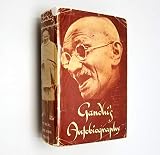

The introduction is dated 26 November 1925 and signed at the Sabarmati Ashram. In it Gandhi writes:
“I simply want to tell the story of my numerous experiments with truth, and as my life consists of nothing but those experiments, it is true that the story will take the shape of an autobiography.”
Outdated Drivers Are Slowing You Down
One free scan finds every outdated or missing driver and matches the right update for your exact hardware.Free scan · exact hardware matchPC Slower Than It Used to Be?
A free scan shows the junk files, broken settings and background clutter dragging Windows down - then fixes them in one click.Free scan · Windows 10 & 11#1 Best Overall
He frames the book as an account of moral and spiritual experiments, not a claim to perfection. He says he will describe his faults and errors, and he disclaims any finality or infallibility. For a reader asking about everyday life, this matters: the book is a retrospective, self-authored account, so its details reflect what Gandhi chose to record and how he interpreted it.
Why there is no single daily routine
Readers who expect a fixed schedule will be disappointed, and the text gives good reasons. Several points follow from how the book is built:
- It moves through episodes across different years, so a practice described in one period should not be assumed to hold in another.
- The arrangements of ashram life changed with circumstances, and the autobiography describes that change rather than one unchanging routine.
- Gandhi’s own framing is experimental. He presents practices as things he tried, tested and sometimes revised, not as rules he followed without variation.
The reliable approach is to take each practice with its date and setting, when the text supplies them, and to treat anything else as a general impression.
Recurring practices described in the text
Communal living and shared meals
Gandhi describes an ashram of more than forty people, including men, women and children, who ate in a common kitchen. This is one of the clearest pictures of everyday life in the book. It describes a particular ashram at a particular time, and it should not be read as the setting for his whole life.
Recommended Free Tools
Rank #3
Bread labour
An editor’s introduction to an edited edition describes bread labour as central to ashram life. That framing comes from the editor, not from Gandhi’s own narration, so it tells you how the editor understood the ashram rather than adding a separate first-person account.
Spinning
The same editorial introduction says spinning was an obligatory ashram observance and gives a figure: 140 threads, each four feet long, per member per day. The figure is attached to the ashram’s observance as described by the editor, Tridip Suhrud, in an edition hosted by Hansraj College. The publication year of that edition is not stated in the passage reviewed. Treat 140 threads as the observance’s stated quota, not as a verified count of Gandhi’s personal output.
Rank #4
What he ate
The text establishes shared meals in a common kitchen. It does not establish a standard diet that applied across his life, and this review found no single list of foods for a given period. Gandhi’s dietary experiments are part of his moral reasoning as he presents it. They are not medical evidence, and they should not be read as health advice or as proof of any physical effect.
Gandhi’s voice, the translator’s and the editor’s
Reading the book accurately means keeping three voices apart:
Do these 3 things before closing this tab:
1Fix the driver behind crashes, sound loss and screen glitches2Clear out junk files and repair common Windows errors3Scan for outdated or missing drivers - takes under a minuteBest Value
- Gandhi’s own narration: first-person, retrospective, and written to explain his experiments.
- The translator and preface: Mahadev Desai’s translation and preface, which describe how the English text was revised.
- Editorial introductions: later framing, such as the description of bread labour and the spinning figure, which should be attributed to the editor.
When a number or generalisation appears, check which of these voices it comes from before you repeat it.
Independent reader supportYour contribution helps us test, update, and keep practical guides available for everyone.Choosing an edition
The sources reviewed establish two English-language routes and one digital catalogue entry. They do not establish which currently sold edition is the most complete or best suited to a particular reader, so the table records only what each source states.
| Edition or source | Translator or editor | Volumes | Notes or introductions | Format |
|---|---|---|---|---|
| English volumes, Navajivan Press, 1927 and 1929 | Mahadev Desai (translation and preface); Gandhi revised the meaning and Mirabehn revised the language, per Desai’s preface | Two volumes (1927 and 1929) | Desai’s preface; completeness of later reprints not stated | Print; current format not stated |
| Edited edition hosted by Hansraj College | Tridip Suhrud (editorial introduction) | Not stated | Editorial introduction describing ashram life; publication year not stated | Online edition; print status not stated |
| Mahatma Gandhi Foundation eArchive ebook entry | Not stated | Not stated | Not stated | Ebook, with a PDF option listed; verify current access and format before relying on it |
If you are comparing current editions, check the translator, whether the edition is one or two volumes, whether it includes notes or an introduction, and whether the text is complete. Those points decide whether a passage you read is Gandhi’s own narration or someone else’s framing.
Quick Recap
Product prices and availability are accurate as of the date/time indicated and are subject to change. Any price and availability information displayed on Amazon at the time of purchase will apply.
What’s actually slowing this PC down?
Pick the symptom - the matching free tool is one click away.




