Quick wins for a faster PC:
Repair Windows errors before they cause bigger problemsFix Now →Fix the driver behind crashes, sound loss and screen glitchesFind Drivers →Clear out junk files and repair common Windows errorsFree Scan →The fourth wall is the imaginary boundary between performers and spectators. When actors maintain it, they behave as though the audience cannot see or hear them; when a production breaks it, performers or spectators acknowledge that boundary, shifting how the story is told. A break can create a joke, deliver information, invite participation, or deliberately disturb immersion—but speaking to the audience does not, by itself, give the audience control of the story.
What is the fourth wall in theater?
In a conventional stage arrangement, three walls may define the room occupied by the characters. The “fourth wall” is the imagined side facing the audience. It is not a literal wall: it is a performance convention that lets spectators watch a fictional world while characters behave as if the spectators are absent. The Tasmanian Assessment, Standards and Certification Drama Foundations curriculum defines it as “The imaginary wall which separates the actors from the audience, and the audience from the stage.” TASC’s Drama Foundations curriculum also frames dramatic space as physical, fictional, and emotional, helping explain why the boundary is a choice in stagecraft rather than a fixed rule.
What does breaking the fourth wall mean?
Breaking the fourth wall means that the performance calls attention to the audience, the performance itself, or the boundary between them. The clearest example is direct address: an actor turns outward and speaks to spectators rather than to another character. Other breaks may acknowledge the play, its performers, or the act of watching. Whether an aside counts depends on the staging and intended addressee: a character muttering something another character cannot hear may still be speaking within the fiction, while a line deliberately directed to spectators crosses the boundary.
A break changes the relationship between stage and audience, but not necessarily the audience’s power. A wink or a confidential comment can make spectators feel included without giving them any say in what happens next. Participation is a further step, and even a production that asks for audience responses does not necessarily let spectators determine the plot.
#1 Best Overall

- RGBW Wall Washer Light Bar:Stage lights bar adopts 9*4w RGBW 4IN1 high quality led beads, the beam angle is 35°, speed adjustable, the color is bright and vivid, to create a gorgeous and romantic stage effect.
- Multiple Operation Modes:DJ light bar with remote control (no batteries, need to buy extra batteries), auto mode, voice-activated mode, DMX512 (4/8 channels), jump mode, strobe mode, according to the needs of the stage lighting effect you want to get quickly.
- Intelligent Thermostat:Stage wall washer light bar is made of plastic material, sturdy and durable, built-in fan cooling, low noise and fast heat dissipation, prolonging the service life of the wall washer light bar.
- Wide Application:Bring this 50W led wash light bar to dj music show, wedding, stage, church, theater, party, club, KTV or anywhere indoor and outdoor, create a colorful and vibrant stage atmosphere for your family, friends, lover or yourself.
- Easy Installation:Can be mounted on the wall, truss, floor, connect the bracket and fix it with screws, plug and play, only 1 minute or less to use immediately! Great for indoor and outdoor, including birthday parties, barbecues, gardens.
Why do productions use the device?
The effect depends on what changes when the boundary is acknowledged. Direct address may pull the audience closer to a character, interrupt the illusion, or simply deliver material that would be awkward in dialogue between characters. Useful questions are who initiates the break, what it changes, and how the production has prepared spectators for it.
- Comedy: A performer can share a joke with spectators or comment on the absurdity of a situation.
- Intimacy: A confidential aside can give the audience privileged access to a character’s thoughts.
- Exposition and orientation: A speaker can provide information directly to spectators rather than forcing it into a conversation characters would not naturally have.
- Disruption and critical distance: A deliberate interruption can make spectators notice the theatrical construction instead of remaining absorbed in the fictional world. A 2025 article about contemporary Estonian theater distinguishes this alienating approach from other kinds of fourth-wall breach; it is an analytical framework, not a universal taxonomy. The article’s abstract also discusses performer-led breaks and cases where audience members cross the boundary.
- Participation: A production may ask spectators to answer, act, or otherwise take part. The degree of agency varies: acknowledging an audience is not the same as allowing audience choices to affect events.
A break can be planned or surprising. BYU’s theater lesson plan recommends that performers decide on a purpose for breaking the convention, while recognizing that an unexpected break may itself be intentional. BYU’s fourth-wall lesson plan offers a practical way to think about the choice: establish what the break is meant to do, rather than treating direct address as an effect with one automatic meaning.
Rank #2
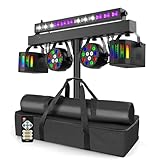
- All-in-One Professional DJ Lights - This versatile T-shaped DJ light stand combines 5 powerful lighting units: (2) 12x1W LED RGBW par lights, (2) 4x3W RGBW LED Derby lights, and a center bar light with 6 LEDs UV and 6 LEDs white strobe. Perfect for DJ gigs, house parties, weddings, and club events, it creates a immersive lighting experience with vibrant colors, UV effects, and sharp strobes—all in one compact setup.
- Adjustable & Sturdy Stand with Portability - Features a two-section stand including a triangular base and an extension pole, reaching up to 2.2 meters (7.2 feet) for optimal coverage. Weighing only 4lbs, it’s both stable and easy to transport. Includes carry bags for light and stand. Set up and break down in minutes!
- Multiple Control Options for Easy Operation - Enjoy full control via sound activation, IR remote, or the intuitive LED control panel. The built-in microphone captures sound to sync lights automatically with music. Whether you’re DJing or hosting an event, quickly adjust modes and effects without complicated setup.
- Professional DMX512 & Master-Slave Function - For advanced lighting programming, use DMX512 compatibility to integrate this system into larger professional setups. The master-slave mode allows multiple units to synchronize seamlessly—ideal for complex stage designs and automated performances.
- 6 Built-in Auto Programs + Energy-Efficient LEDs - Jump start your light show with six pre-programmed auto modes, offering instant atmospheric effects. The high-intensity RGBW LEDs deliver brilliant colors and effects while consuming less power and generating minimal heat. Durable, bright, and designed for lasting performance.
How did the convention change over time?
The phrase can make theatrical history sound simpler than it is. In discussing Shakespeare’s Henry IV, Part 1, the Folger Shakespeare Library cautions against treating every aside or address as a modern-style break. Shakespeare’s outdoor theaters were played in daylight, with actors and spectators in the same light; awareness of the audience could belong to the theatrical idiom rather than rupture an illusion of private space. Later darkened auditoriums and stronger separation between stage and spectators helped shape a different audience relationship. Folger’s discussion of Henry IV, Part 1 provides that historical context.
By the 1930s, many American plays used realistic staging: representative sets, characters focused on speaking to one another, and little acknowledgment of the audience or production. Thornton Wilder’s Our Town departed from that convention with a bare stage and a Stage Manager who addresses spectators and refers to the play and its performers. The contrast makes the production’s stagecraft part of its storytelling, not merely a background for it. The Thornton Wilder Society’s account of Our Town describes the play in relation to those realistic conventions.
Do these 3 things before closing this tab:
1Scan for outdated or missing drivers - takes under a minute2Clear out junk files and repair common Windows errors3Fix the driver behind crashes, sound loss and screen glitchesRank #3
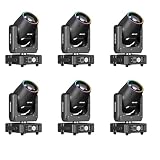
- Professional 350W Beam & RGB LED Effects: Experience ultra-bright 98,000lm output with 350W high-intensity light, 48 dynamic prism effects, and 14 customizable patterns. Features 27 RGB LEDs for vivid color mixing, rainbow effects, and precise electronic focus for immersive stage visuals.
- Advanced Control & Versatility: Supports DMX512/RDM protocols, 18-channel programming, and sound-activated modes. X/Y-axis auto-correction (540° horizontal, 270° vertical) ensures seamless performance for concerts, theaters, and events.
- Compact & Durable Design: IP20-rated rugged metal/plastic housing,lightweight and quick-lock brackets for easy transport. Power supports 4-6 units, reducing setup time and costs.
- Enhanced Safety & Longevity: Intelligent cooling system prevents overheating, with ERR fault alerts and 2000-hour bulb lifespan. Operates in -10°C~45°C environments for reliable indoor/outdoor use.
- All-in-One Lighting Solution: Includes 13 color filters, 48 prism effects, and 0.5°-8° zoom. Perfect for stage shows, DJ parties, TV productions, and weddings, delivering 230,000 Lux intensity at 10 meters.
How to recognize a fourth-wall break in a performance
- Identify the addressee. Is the performer speaking to another character, thinking aloud within the scene, or addressing spectators?
- Notice what the performance acknowledges. Does it recognize the audience, the play, the performers, or the fact that a performance is taking place?
- Ask what changes. Does the moment deliver information, create intimacy or comedy, disrupt immersion, or invite spectators to take part?
- Separate acknowledgment from agency. If the audience is addressed or asked to respond, check whether its actions actually affect the event. Do not assume they do.
These questions help distinguish a direct address from a more consequential audience interaction, while leaving room for productions that intentionally blur the categories.
Independent reader supportYour contribution helps us test, update, and keep practical guides available for everyone.Does the fourth wall apply to film and television?
Yes. In film and television, the camera can stand in for the audience. A character who looks into the lens or speaks to viewers makes the audience’s presence explicit, much as an actor addressing spectators does onstage. The medium changes the boundary’s form, but the central idea remains: the work can preserve the impression that its fictional world exists apart from its audience, or call attention to that relationship.
Quick Recap
Best Value

- Note: the stage lighting stand does not include stage lamps. You need to buy stage lamps by yourself.
- [Large Holding Capacity]: This light stand can hold up to 32 stage lights (Does not include stage lights), allowing you to create an impressive lighting setup that will light up the whole stage. With its adjustable angle T bar and 10 ft long center truss, you can achieve a stunning visual effect that will captivate your audience.
- [11 Position Height Adjustment]: With a total of 11 positions and two retractable poles offering 5 and 6 height positions respectively, you can easily adjust the height from 5.9 ft to 11.5 ft to meet your different needs. Find the optimal position with ease using the adjustable knob, while the safety pin serves to lock each position.
- [Stable Structure & Considerate Details]: This light stand is made from a premium metal tube, ensuring unbeatable stability and durability. The adjustable heavy-duty base with non-slip feet forms a stable triangular structure, which allows it can support up to 220 lbs.
- [Suitable for Various Occasions]: This perfect lighting truss features a detachable and portable design, making it incredibly convenient to transport. The retractable legs fold down to a compact size, allowing for easy storage and transportation. Whether it's a bar, party, or show, our versatile light stand is perfect for any occasion.
Rank #4

- Ultra Slim Low-Profile Design – Perfect for Tight Spaces:The BETOPPER Par Light(Corded Electric) features an ultra slim low-profile body that makes it ideal for uplighting, truss mounting, and installations where space is limited. Its thin and compact design allows the light to sit close to walls or stage floors, creating clean and professional lighting setups without bulky fixtures.
- Bright RGB Stage Lighting with 54 LEDs:Equipped with 54×1W RGB 3-in-1 LEDs and 30W system power, this LED par light delivers bright and evenly mixed colors for DJ lighting, stage effects, and decorative uplighting. Perfect for adding vibrant color washes to small and medium venues.
- Multiple Control Modes – DMX, Sound, Auto & Remote:This slim DJ par light supports DMX512 control (7CH modes), sound activated mode, auto programs, master-slave synchronization, and infrared remote control. Easily integrate it into professional lighting systems or operate it as a standalone fixture.
- Lightweight & Portable for Mobile DJs:With a compact slim design and only 0.6 kg weight, this stage light is easy to transport and install. The adjustable bracket allows floor uplighting or overhead mounting, making it ideal for mobile DJs, event lighting, and temporary setups.
- Reliable Indoor Lighting with Long LED Lifespan:Designed for indoor applications, this LED stage light supports AC100-240V worldwide voltage and provides up to 50,000 hours LED lifespan, making it a dependable lighting solution for weddings, parties, clubs, churches, and stage performances.
Product prices and availability are accurate as of the date/time indicated and are subject to change. Any price and availability information displayed on Amazon at the time of purchase will apply.




