Do these 3 things before closing this tab:
1Scan for outdated or missing drivers - takes under a minute2Repair Windows errors before they cause bigger problems3Fix the driver behind crashes, sound loss and screen glitchesRhythm is how music arranges sounds and silences over time. The beat is the pulse you may tap along to; tempo is how fast that pulse moves; and meter is how beats recur in groups. A melody, a rest, a drum pattern or several parts played together can all contribute to rhythm.
Rhythm, beat, tempo and meter: what is the difference?
These terms describe connected parts of musical time, but they answer different questions. The Victorian Curriculum and Assessment Authority (VCAA) describes rhythm through patterns of long sounds and silences, beat as a steady pulse, and metre as beats organized into groups. Its guide notes that beat varies with a faster or slower tempo: VCAA’s Music Education Guide.

| Term | What it describes | Listening question |
|---|---|---|
| Rhythm | The durations and placement of sounds and silences. | What pattern do the notes and rests make? |
| Beat | The pulse a listener may feel or tap along to. | What steady point could I tap? |
| Tempo | The rate at which the perceived pulse moves. | How quickly does that pulse go? |
| Meter | A recurring grouping of beats, often shaped by accents and stronger or weaker points. | How does the pulse cycle, and where does emphasis fall? |
Imagine tapping a steady pulse while clapping a separate pattern. Your taps mark the beat; the claps trace a rhythm that can land on, between or across those taps. Rhythm is therefore broader than a drum beat: a melody’s long and short notes, as well as its silences, have rhythmic shape.
How do you find the beat in a song?
Listen for a recurring pulse beneath the melody, then tap it without trying to match every note. A pulse may be clear, subtle or difficult to settle on; beat and meter perception can vary with the musical context, a listener’s experience and attention, as discussed in the Cambridge Companion to Rhythm’s chapter on perception (2020): “Perception of Rhythm”.
Quick wins for a faster PC:
Repair Windows errors before they cause bigger problemsFix Now →Fix the driver behind crashes, sound loss and screen glitchesFind Drivers →Clear out junk files and repair common Windows errorsFree Scan →#1 Best Overall

- Choose a familiar recording. Tap a steady pulse and let the melody continue independently.
- Listen for a recurring cycle. Notice whether accents suggest groups of two, three, four or another pattern. Do not assume every piece fits one of these familiar groupings.
- Keep the pulse and clap another pattern. The contrast helps separate the underlying beat from the rhythm played or sung around it.
- Try subdivisions. Divide a beat evenly into two parts, then into three, and listen for how the notes sit within the pulse.
- Compare examples thoughtfully. Describe specific features—pulse, accents, subdivisions and simultaneous parts—rather than ranking one tradition as more rhythmic than another.
A metronome can mark a steady pulse for tempo practice, but it does not by itself teach phrasing or meter. A drum practice pad is an optional way to work on percussion patterns; neither tool is needed to begin listening and clapping.
What do accents, subdivisions and syncopation do?
A pulse alone does not explain a rhythm’s character. The placement of notes, rests and emphasis gives a pattern its shape and can make a recurring cycle feel distinctive.
Rank #2
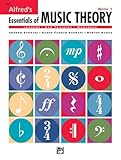
- An all-in-one music theory course designed for students of any age — whether listeners or performers — who want a solid understanding of the language of music
- Covers foundational concepts including staff, notes, pitches, clefs, time signatures, note values, dynamics, flats, sharps, and whole and half steps across 25 concise lessons
- Combines reading and writing exercises with ear-training support (CDs sold separately) and unit reviews to reinforce learning and test knowledge retention
- Compatible with optional computer software featuring randomized drilling and scorekeeping for interactive, self-paced study
- Part of a complete product line including Teacher's Answer Keys, Flash Cards, Double Bingo games, and Reproducible Teacher's Activity Kits for studio and classroom use
- Subdivision means dividing a beat into smaller units. A passage may divide beats into two or three parts, or use other groupings.
- Accent is emphasis that makes a note or event stand out. Accents can help listeners sense a pattern’s shape or grouping.
- Syncopation places emphasis or duration in a way that unsettles an expected strong-beat pattern, such as by stressing a weaker point or an offbeat.
For example, a waltz-like three-beat grouping and a four-beat grouping can feel different because their recurring cycles and accent patterns differ. A written time signature can describe a notated grouping, but it is not a complete account of everything a listener experiences as meter.
What are polyrhythm and polymeter?
Layered rhythms let different patterns coexist. The terms are related, but they do not mean the same thing.
Rank #3

- Designed For Students Of Any Age.
- Provides A Better Understanding Of The Language Of Music.
- Learn The Essentials With Lessons And Exercises.
- Offers A Review Section At Each Ending To Test Your Knowledge.
- Polyrhythm layers different rhythmic divisions or patterns at the same time. One part might organize subdivisions differently from another, creating an interlocking or cross-rhythmic effect.
- Polymeter means distinct meter groupings occur concurrently. It concerns simultaneous groupings, not simply different subdivisions within one shared grouping.
An open music textbook explains tuplets and cross-rhythms and also distinguishes polymeter from polytempo, in which different tempos occur at once: CUNY/BMCC, Understanding Music, Chapter 7. These ideas are easiest to hear as relationships between parts rather than as a list of definitions.
Why does rhythm sound different across musical traditions?
Rhythm is not one universal grid. The way a listener hears pulse, grouping and emphasis can depend on context, attention and musical experience. Western terms such as beat and meter can be useful for describing some features, but they should not be treated as a universal map for every musical tradition. A scholarly review also discusses rhythmic features across cultures and temporal predictability; its technical range of roughly 0.5–5 Hz (30–300 beats per minute) is a research context, not a universal boundary for music: Royal Society B review, “Biological principles for music and mental health” (2023).
The VCAA guide offers “Otea,” described as traditional Polynesian music from Tahiti and performed by Amadinda Percussion Group, as a listening example of drumming rhythm. It is one specific example, not a stand-in for all Polynesian music. When comparing music from different traditions, notice the particular pulse, accents, subdivisions, rests and relationships among parts—and attend to the music’s own context and terminology.
Independent reader supportYour contribution helps us test, update, and keep practical guides available for everyone.How can you practise hearing rhythm?
Start with listening, not notation. Tap the pulse, then clap a pattern that contrasts with it. Next, try two- and three-part subdivisions, and listen for accents that fall between expected strong beats. If a pattern has several layers, follow one part at a time before listening to how they fit together.
Recommended Free Tools
Best Value

- Format: Book & 2 CDs
- Category: Textbook - General
- Contributors: By Andrew Surmani, Karen Farnum Surmani, and Morton Manus
- Pub Date: 8/2004
- Series: Essentials of Music Theory
When comparing examples, ask what the pulse does, whether beats seem grouped, how notes divide the pulse, where accents land and how many patterns sound together. These observations build a more useful description than simply calling a piece fast, slow or complex.
Quick Recap
Product prices and availability are accurate as of the date/time indicated and are subject to change. Any price and availability information displayed on Amazon at the time of purchase will apply.