Free tools Windows power users keep installed
One-click scans. No signup required.
Music is an art organized around vocal and instrumental sound and its performance. There is no single classification that sorts all of it. People group music in three overlapping ways: by how it is performed (vocal, instrumental, or a combination), by the cultural tradition or region it belongs to, and by the setting or purpose it serves. Each lens answers a different question about the same piece, which is why one song can sit in several categories at once.
What counts as music
UNESCO’s Thesaurus places music within culture and the performing arts. Its entry for “Music” sits alongside related concepts such as musical instruments, musical performances, musicology, orchestras, and vocal music, and “instrumental music” appears as an entry term (UNESCO Thesaurus, “Music,” last modified 24 December 2019). The definition therefore covers the sound, the people who make it, the occasions where it is heard, and the scholarly study of it.


That breadth is why no single taxonomy works. A definition based only on sound would leave out the ritual and social roles music plays. A definition based only on performance would not explain why a lullaby and a symphony differ so much. The three lenses below handle these differences separately.
Three ways to classify music
The lenses are most useful together. The table summarizes what each one answers and the categories it produces.
Do these 3 things before closing this tab:
1Clear out junk files and repair common Windows errors2Scan for outdated or missing drivers - takes under a minute3Repair Windows errors before they cause bigger problems#1 Best Overall
| Lens | Question it answers | Typical categories |
|---|---|---|
| Performance form | How is the music sounded? | Vocal music, instrumental music, or voices combined with instruments |
| Cultural tradition or region | Which community or place does it come from? | Traditional music, folk music, regional or ethnic traditions |
| Setting and purpose | Where is it heard, and what is it for? | Sacred or secular; classical or popular; work or entertainment; ritual, festival, or oral tradition |
Performance form: vocal and instrumental
Vocal music is sung by human voices. Instrumental music is played on instruments without a sung text. UNESCO lists vocal music as a narrower concept under music, and instrumental music as an entry term. The two are not mutually exclusive: vocal music often combines voices with instruments, so a song with guitar or drum accompaniment is both vocal and instrumental in its makeup. Use performance form to describe how a piece is made, not to rank it.
Cultural tradition and region
Traditional music can be distinctive of a particular region or ethnic group. UNESCO’s Thesaurus entry for “Traditional music” (last modified 15 December 2019) describes it this way, and it lists “folk music” as an entry term under the same concept. This lens tells you where a piece comes from and which community carries it. It does not, on its own, say how the music is performed or what it is used for. Those questions belong to the other two lenses.
Rank #2
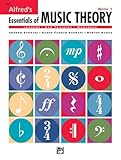
- An all-in-one music theory course designed for students of any age — whether listeners or performers — who want a solid understanding of the language of music
- Covers foundational concepts including staff, notes, pitches, clefs, time signatures, note values, dynamics, flats, sharps, and whole and half steps across 25 concise lessons
- Combines reading and writing exercises with ear-training support (CDs sold separately) and unit reviews to reinforce learning and test knowledge retention
- Compatible with optional computer software featuring randomized drilling and scorekeeping for interactive, self-paced study
- Part of a complete product line including Teacher's Answer Keys, Flash Cards, Double Bingo games, and Reproducible Teacher's Activity Kits for studio and classroom use
Setting and purpose
UNESCO describes music across several contexts. The main contrasts are:
- Sacred or secular. Music made for religious or devotional settings, compared with music made for non-religious occasions.
- Classical or popular. Two labels UNESCO places among its contexts. They describe conventions of style, training, and audience, and their boundaries vary between cultures.
- Work or entertainment. Music that accompanies labour or other tasks, compared with music made mainly for enjoyment.
- Ritual, festivals, and oral traditions. Music that is part of ceremonies or festive events, and music passed on by performance and memory rather than written notation.
Why the categories overlap
Take a sung ceremonial song accompanied by a drum, performed by a community as part of a festival. Each lens gives a correct label, and none of them excludes the others:
- Performance form: vocal, with percussion.
- Cultural tradition: traditional music, if it belongs to a particular region or ethnic group.
- Setting and purpose: ritual and festival music, and possibly sacred music depending on its function.
Listing every applicable label is more accurate than forcing one category onto the piece.
How to classify a piece of music
- Identify the sound sources. Decide whether the piece uses voices, instruments, or both. Record this as the performance form.
- Trace its community. Ask whether the music belongs to a specific region or ethnic group. If it does, it is a candidate for the traditional or folk music category.
- Note the occasion. Identify where the music is heard and what it does: worship, work, celebration, ritual, or entertainment.
- Keep all applicable labels. Do not choose a single category if the piece fits several. Describe the overlaps instead of hiding them.
Music as cultural practice
UNESCO’s Intangible Cultural Heritage material treats music as a social practice, not only as a sound or an entertainment product. The page states:
Rank #4

- Format: Book & 2 CDs
- Category: Textbook - General
- Contributors: By Andrew Surmani, Karen Farnum Surmani, and Morton Manus
- Pub Date: 8/2004
- Series: Essentials of Music Theory
“Music is perhaps the most universal of the performing arts and is found in every society, most often as an integral part of other performing art forms and other domains of intangible cultural heritage including rituals, festive events or oral traditions.”
Attribution: UNESCO Intangible Cultural Heritage, “Performing arts (such as traditional music, dance and theatre).” The page is an institutional statement and does not name an individual author. The same material notes that music can recount a community’s history and can have political or economic dimensions, which is why classification by setting matters: the same melody can carry different meanings in a ceremony, a protest, or a marketplace.
Recommended Free Tools
Quick Recap
What this framework does not settle
- It is not a complete genre list. The sources reviewed support broad organizing axes, not an exhaustive system. They do not rank genres or claim that these lenses cover every musical tradition.
- It gives no counts. This article does not state how many genres, instruments, or traditions exist, because the UNESCO entries cited here do not provide such figures.
- Some labels shift with context. Terms such as classical, popular, and folk are conventions that differ between cultures and periods. Apply them as descriptions of a specific piece in its setting, not as fixed boxes.
Product prices and availability are accurate as of the date/time indicated and are subject to change. Any price and availability information displayed on Amazon at the time of purchase will apply.




