What’s actually slowing this PC down?
Pick the symptom - the matching free tool is one click away.
A melisma is a group of several notes sung to one syllable of text. The syllable stays the same while the singer’s pitch moves through multiple notes.
How to recognize a melisma
Follow the words and pitches together: when one syllable is sustained across a sequence of different notes, that sequence is melismatic. AQA defines a melisma as “a melody of several notes sung to one syllable of text.” The Metropolitan Opera educator guide describes it as “a group of several notes sung to the same syllable of text.”

Melismatic versus syllabic singing
The distinction is how notes map to syllables. In melismatic singing, one syllable receives several notes. In syllabic singing, each syllable is sung to a single note. The Metropolitan Opera educator guide describes melismatic singing as the opposite of syllabic singing.
| Setting | Text-to-note relationship |
|---|---|
| Melismatic | Several notes for one syllable |
| Syllabic | One note for each syllable |
Does a melisma have a minimum number of notes?
There is no single note-count threshold stated across these definitions. AQA and Oxford Learner’s Dictionaries use broad wording such as “several notes” or a “group” of notes. OnMusic Dictionary says a melisma usually has at least five or six notes, but that is its particular formulation, not a universal rule.
Quick wins for a faster PC:
Scan for outdated or missing drivers - takes under a minuteDriver Scan →Repair Windows errors before they cause bigger problemsFix Now →Fix the driver behind crashes, sound loss and screen glitchesFind Drivers →#1 Best Overall
Where the term is used
Melisma describes a way of setting text to music; it is not a genre. OnMusic Dictionary notes that melismas are found especially in liturgical chant. The defining feature remains the same across contexts: multiple pitches are sung on one syllable.
What do you call one syllable sung on two different notes?
A melisma. The term applies when a single syllable is sung across multiple notes; the definitions cited do not require a larger fixed count.
Quick Recap
Rank #4
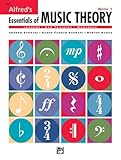
- An all-in-one music theory course designed for students of any age — whether listeners or performers — who want a solid understanding of the language of music
- Covers foundational concepts including staff, notes, pitches, clefs, time signatures, note values, dynamics, flats, sharps, and whole and half steps across 25 concise lessons
- Combines reading and writing exercises with ear-training support (CDs sold separately) and unit reviews to reinforce learning and test knowledge retention
- Compatible with optional computer software featuring randomized drilling and scorekeeping for interactive, self-paced study
- Part of a complete product line including Teacher's Answer Keys, Flash Cards, Double Bingo games, and Reproducible Teacher's Activity Kits for studio and classroom use
Rank #3

- Alfred Publishing Co. Model#0016486
Rank #2

- 176 Pages
- A Comprehensive and Convenient Source for All Musicians
- Packed with info from the Harmony & Theory course at Musicians Institute!
- Authors: Carl Schroeder and Keith Wyatt
- Softcover
Sources
- AQA, “Subject-specific vocabulary: Music”
- The Metropolitan Opera, “Ten Essential Musical Terms,” educator guide
- Oxford Learner’s Dictionaries, “Melisma”
- OnMusic Dictionary, “Melisma”
Product prices and availability are accurate as of the date/time indicated and are subject to change. Any price and availability information displayed on Amazon at the time of purchase will apply.




