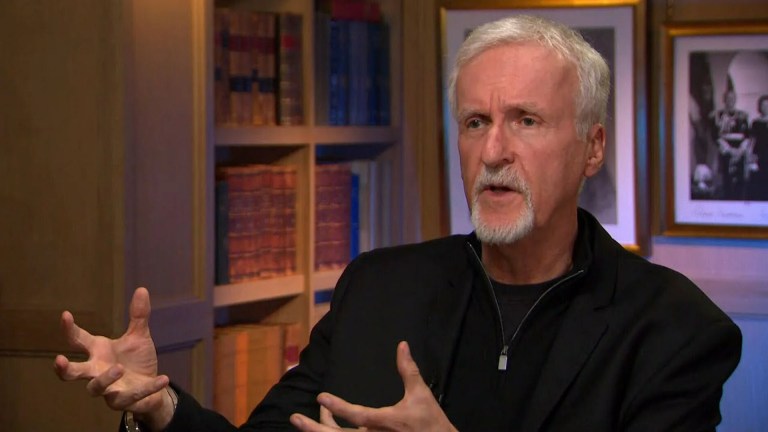
Darrin Bell was arrested in Sacramento, California, in January 2025 after investigators alleged they found computer-generated or AI-generated child-sexual-abuse material during a search of his home. The arrest came shortly after California expanded several child-exploitation statutes to expressly address digitally altered and AI-generated material. Bell’s arrest was a criminal accusation, not a conviction. A later secondary account reported that he pleaded not guilty and remained on supervised pretrial release, but the latest court status should be confirmed through Sacramento County Superior Court records.
What police allege happened
According to reporting based on police statements, the investigation began with a tip from the National Center for Missing and Exploited Children about files allegedly being shared online. Detectives with the Sacramento Valley Internet Crimes Against Children unit then investigated the account.





Police reportedly identified 18 files and later found evidence that the account was offering 134 videos. On January 15, 2025, investigators served a search warrant at Bell’s Sacramento-area home. Police said they recovered computers and other evidence, including computer-generated or AI-related material they considered illegal.
Bell was publicly reported arrested on January 16 and held on $1 million bail. The reported allegations involved both possession and the sharing or offering of illegal material. Those file counts, descriptions, and conclusions were police allegations reported by Ars Technica; they are not findings established at trial.
Quick wins for a faster PC:
Scan for outdated or missing drivers - takes under a minuteDriver Scan →Clear out junk files and repair common Windows errorsFree Scan →#1 Best Overall
“AI-generated” is also an evidentiary description, not proof that Bell created the files. Investigators and prosecutors would still need to establish what the files were, how they were made or obtained, who controlled the relevant account or devices, and whether Bell knowingly possessed or distributed them.
Who is Darrin Bell?
Bell is a professional editorial cartoonist who won the 2019 Pulitzer Prize for Editorial Cartooning. He is associated with the syndicated strips Candorville and Rudy Park. His public profile explains why the arrest attracted national attention, but his professional reputation does not establish either guilt or innocence.
What California changed on January 1, 2025
California’s relevant statutory amendments took effect on January 1, 2025. A legislative bulletin from the San Francisco Police Department identifies changes affecting Penal Code sections 311, 311.1, 311.2, 311.3, 311.4, 311.11, 311.12, and 312.3.
The amended provisions address specified depictions involving minors and, depending on the section and facts, include material that has been digitally altered, generated using artificial intelligence, or otherwise computer-generated. The bulletin also sets out California’s definition of artificial intelligence as an engineered or machine-based system capable of inferring from inputs how to generate outputs that influence physical or virtual environments.
Windows Errors? Fix Them Before They Spread
Repair common Windows errors and clear accumulated junk for a smoother, more stable PC - no reinstall needed.Free scan · no reinstallOutdated Drivers Are Slowing You Down
One free scan finds every outdated or missing driver and matches the right update for your exact hardware.Free scan · exact hardware matchThe change did not simply make every fictional image involving a young-looking person criminal. It expanded particular offenses, whose elements still matter. Depending on the charge, prosecutors may need to prove facts concerning the depiction, the person’s apparent age, sexual conduct, obscenity, possession or distribution, and the defendant’s knowledge.
Nor did California necessarily create the entire legal category from nothing. Federal law and earlier state provisions already addressed some virtual, computer-generated, animated, or obscene depictions involving minors. The 2025 amendments made California’s treatment of digitally altered and AI-generated material more explicit and broader in specified respects.
Why synthetic material can still create criminal exposure
The policy argument behind these laws is that the absence of a photographed victim does not automatically resolve the harm or the legal question. Lawmakers and law-enforcement agencies have cited several concerns:
- Synthetic material could normalize or encourage the sexualization and abuse of children, or be used in grooming.
- Generative systems may be trained on datasets containing real abuse imagery and may reproduce the likeness of actual victims.
- Artificial and real material can circulate together, increasing the volume investigators must examine and complicating efforts to identify real victims.
- Distribution of synthetic material may contribute to demand or create additional abuse when real children’s faces or identities are used in face swaps or “nudification” images.
These are legislative and law-enforcement rationales, not universally settled empirical conclusions. The statute reflects a legal judgment about specified depictions and conduct; it does not prove that every policy claim has been conclusively demonstrated by research.
Recommended Free Tools
California’s Attorney General has subsequently described state law as covering AI-generated matter involving or depicting a person under 18—or someone who appears to be under 18—engaging in or simulating sexual conduct. The Attorney General’s statement is useful policy guidance, but the exact statutory language and the specific charge control in a criminal case.
“AI-generated CSAM” is not a complete legal definition
CSAM ordinarily refers to material depicting the sexual abuse or exploitation of a child. “AI-generated CSAM” is common journalistic shorthand, but criminal statutes can use broader technical language, including depictions of a person who appears to be under 18 even when no identifiable child was photographed.
Rank #3
That distinction matters. A wholly synthetic character may still fall within a statute if the required sexual-conduct, appearance, and obscenity elements are met. Conversely, the mere use of an AI tool, an interest in the subject, a discussion about synthetic media, or possession of ordinary cartoons does not automatically establish a crime.
Drawings, animation, realistic synthetic images, face swaps, and digitally altered material may raise different legal and evidentiary questions. The law should not be reduced to the claim that it “bans cartoons” or that it criminalizes every image of a young-looking person.
The conduct prosecutors would have to prove
The reported case highlights several separate questions:
- Possession: Did Bell knowingly possess or control the material?
- Distribution: Was material uploaded, shared, transmitted, or offered to another person?
- Knowledge: Did he know the nature of the files?
- Appearance and age: Did the material depict, or appear to depict, a person under 18?
- Obscenity: Did the material satisfy the applicable statutory standard?
- Provenance: Was it a real photograph or video, a drawing, digitally altered, or generated by software?
- Authentication: Can prosecutors establish the files’ origin, integrity, and connection to the relevant devices or account?
These issues are especially important when a prosecution relies on a newly expanded statute. Finding an image on a computer does not, by itself, prove who created it, which model produced it, whether it was downloaded, whether it was edited, or whether the accused knowingly controlled it.
Constitutional and policy questions
Laws covering virtual or fictional depictions raise First Amendment questions. The U.S. Supreme Court has distinguished real-child-abuse material from some forms of virtual depiction, making statutory definitions, obscenity requirements, and the precise conduct prohibited especially significant.
Potential challenges could concern whether the law is vague about what “appears to be” a minor, whether possession and distribution should be treated differently, and whether investigators can reliably distinguish synthetic material from real abuse imagery. Courts may also have to consider search-and-seizure issues, digital-forensics methods, and whether prosecutors can prove the required mental state.
There is a broader unresolved policy debate as well. Some argue synthetic material could reduce demand for real abuse imagery; others argue it can normalize exploitation, increase circulation, reuse real children’s likenesses, or make investigative triage more difficult. Those competing claims should be attributed rather than presented as settled fact.
Independent reader supportYour contribution helps us test, update, and keep practical guides available for everyone.Where the case stood in 2026
A June 2026 secondary case summary reported that Bell pleaded not guilty, was released subject to supervised pretrial conditions, and had a settlement conference scheduled for August 19, 2026.
That report should not be treated as a definitive current disposition without checking the Sacramento County Superior Court docket. The available material does not establish that the conference occurred, was continued, or resolved the case. No conviction, acquittal, dismissal, or exoneration is supported by the supplied record.
The safest description, pending official court verification, is that Bell faced criminal charges arising from the January 2025 investigation and remained legally presumed innocent unless and until the case produced a final court judgment.
Free tools Windows power users keep installed
One-click scans. No signup required.
Best Value
What this arrest does—and does not—show
The case demonstrates that California’s amended statutes can be used in investigations involving alleged synthetic or digitally altered material. It does not establish that every AI-generated image involving a young-looking person is illegal, that Bell created the material, or that this was the first AI-related child-exploitation arrest anywhere.
Police reportedly described the matter as the first possession charge involving computer-generated or AI-generated material for the Sacramento Valley ICAC unit. That is a narrow agency-specific claim, not a nationwide or worldwide first.
For journalists and readers, the essential distinctions are possession versus distribution, creation versus control, real versus synthetic provenance, police allegation versus courtroom finding, and arrest versus conviction. Those distinctions are more important than the headline’s shorthand.
Frequently Asked Questions
Was Darrin Bell convicted?
The supplied reporting does not establish a conviction. A later secondary account reported that Bell pleaded not guilty and remained on supervised pretrial release; the current docket should be checked for the latest official status.
Do these 3 things before closing this tab:
1Fix the driver behind crashes, sound loss and screen glitches2Clear out junk files and repair common Windows errors3Scan for outdated or missing drivers - takes under a minuteDid California make every AI-generated cartoon illegal?
No. The 2025 amendments expanded specified offenses involving certain depictions and conduct. The precise statutory elements—including appearance, sexual conduct, obscenity, knowledge, possession, and distribution—still matter.
Does synthetic material require a real child to be involved?
Not necessarily. California provisions may reach specified depictions of someone who appears to be under 18, even when the image is wholly synthetic. Face swaps or altered images may also involve a real child’s likeness.
Was this the first AI-CSAM arrest?
Police reportedly characterized it as the first such possession charge for the Sacramento Valley ICAC unit. That does not mean it was the first AI-related arrest in California, the United States, or the world.
The Bottom Line
Bell’s arrest was an early high-profile test of California’s expanded treatment of AI-generated and digitally altered child-sexual-abuse material. The law can reach more than photographs of identifiable victims, but liability still depends on the precise files, conduct, mental state, and statutory elements proved in court. Until official court records show otherwise, this remains an unresolved criminal case—not proof of guilt.
What’s actually slowing this PC down?
Pick the symptom - the matching free tool is one click away.
Quick Recap
Product prices and availability are accurate as of the date/time indicated and are subject to change. Any price and availability information displayed on Amazon at the time of purchase will apply.