Do these 3 things before closing this tab:
1Clear out junk files and repair common Windows errors2Fix the driver behind crashes, sound loss and screen glitches3Repair Windows errors before they cause bigger problemsThe line “It’s wanting to know that makes us matter” is spoken by Hannah in Tom Stoppard’s 1993 play Arcadia, and it sums up a habit that runs through almost all of his work: his characters keep asking what happened, what words mean, how the world works, and what anyone can actually be sure of. Stoppard did not hand audiences settled philosophical answers. He made them sit inside the arguments, which is a more accurate way to describe what his plays did to their audiences than the claim that he made everyone a philosopher.
Where the line comes from
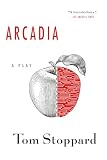
The exact wording, as printed on the Faber publisher page for the Arcadia playscript, is “It’s wanting to know that makes us matter.” The play is spoken by Hannah, a historian who spends much of the drama piecing together what happened at a country house across two time periods. Faber identifies Arcadia as a play about truth, time, sex and attraction, and records its premiere at the National Theatre in 1993.
| # | Preview | Product | Price | |
|---|---|---|---|---|
| 1 |
|
Arcadia | $11.30 | Buy on Amazon |
| 2 |

|
Rosencrantz and Guildenstern Are Dead | $8.99 | Buy on Amazon |
| 3 |

|
Travesties | $8.99 | Buy on Amazon |
| 4 |

|
The Real Inspector Hound and Other Plays (Tom Stoppard) | $12.97 | Buy on Amazon |
| 5 |

|
Tom Stoppard: Plays 5 : Arcadia, The Real Thing, Night & Day, Indian Ink, Hapgood | $30.12 | Buy on Amazon |
Michele Osherow, a dramaturg at the Folger Shakespeare Library, reads the line as a statement of something Rosencrantz and Guildenstern Are Dead had already set up. In that earlier play the search for knowledge, whether about the universe or about minor characters who never grasp the larger plot, is central. Osherow’s point is useful for readers because it shows the line is not a stray aphorism. It is a compressed version of a question Stoppard had been staging since the 1960s.
Who Stoppard was
- Birth and origins. He was born Tomáš Straussler in Zlín, Czechoslovakia, in 1937. His Jewish family fled the Nazi occupation, first to India and later to England.
- Route into theatre. He entered journalism rather than university and only later became known as a playwright.
- Breakthrough. Rosencrantz and Guildenstern Are Dead made his name. New Writing North reports that he was 29 when he became the youngest dramatist to have a play performed at the National Theatre.
- Awards. Carey Perloff’s memorial states that he won five Tony Awards for Best Play: Rosencrantz and Guildenstern Are Dead, Travesties, The Real Thing, The Coast of Utopia and Leopoldstadt.
- Death. According to the same memorial, he died on 29 November 2025, aged 88.
How the plays turn ideas into drama
The critic and lecturer in English Fergus Edwards, of the University of Tasmania, argues that questions about what people can know, and how they know it, matter even in plays where philosophy is not the apparent subject. His examples trace a range of fields, and they show why “philosophy” is too narrow a word for what Stoppard was doing.
What’s actually slowing this PC down?
Pick the symptom - the matching free tool is one click away.
#1 Best Overall
Ethics and censorship: Professional Foul
Edwards places Professional Foul in the territory of ethics and censorship. The play turns argument about rights and state power into a situation with real stakes for its characters, so the abstract question arrives as a dilemma people must act on.
Language and shared convention: Dogg’s Hamlet, Cahoot’s Macbeth
Here the subject is language and the conventions that let audiences understand a performance at all. Stoppard plays with the rules of communication, so the audience becomes aware of how much meaning depends on agreed patterns.
Rank #2
Physics: Hapgood
Edwards identifies quantum physics as the field here. Stoppard uses a scientific model of uncertainty and doubled identity as a structure for espionage and personal loyalty, so the physics shapes the drama instead of sitting beside it.
Chaos theory and history: Arcadia
Arcadia brings chaos theory and historical inquiry into one theatrical world. Its two periods are placed side by side, and the audience must work out connections that the characters themselves can only partly reconstruct. This is why the “wanting to know” line lands with weight: the play’s present-day scholars are chasing evidence that the past has already partly erased.
Rank #3
Later plays: history, politics, love and consciousness
Edwards notes that later plays take up European history, contemporary politics, consciousness and love. The examples include The Coast of Utopia, Rock ’n’ Roll, The Real Thing and The Hard Problem. Across these works, the questions are not solved in the final scene. They are argued until the audience has to decide what it thinks.
| Play | Field of inquiry (Edwards’s examples) | Dramatic device | Question left open or resolved |
|---|---|---|---|
| Professional Foul | Ethics and censorship | Not stated in the source | Characters debate without a single settled answer |
| Dogg’s Hamlet, Cahoot’s Macbeth | Language and shared conventions | Wordplay on theatrical convention | Meaning is shown as something the audience builds |
| Hapgood | Quantum physics | Not stated in the source | Uncertainty stays a structural feature of the plot |
| Arcadia | Chaos theory and historical inquiry | Two time periods placed side by side | Scholars’ reconstructions remain partial |
The device and resolution columns are an editorial reading of the examples above, not a formal classification by the critics quoted.
Independent reader supportYour contribution helps us test, update, and keep practical guides available for everyone.Did Stoppard make us all philosophers?
The title’s claim is attractive, but it needs qualifying. Stoppard’s plays do not teach a philosophy; they stage people reasoning badly, well, and sometimes not at all. Edwards’s summary is that his characters debate and question without necessarily reaching definite answers. That is closer to what happens in an audience: people leave a Stoppard play still arguing about the same point, which is a form of philosophical engagement without the apparatus of a seminar.
The plays also keep the ideas tied to people. Perloff’s memorial stresses the combination of intellectual argument, theatrical play and feeling in his work. The jokes and set pieces carry the arguments, and the arguments matter because the characters care about the outcome.
Crashes, No Sound, or Screen Glitches?
Random freezes, missing sound and display glitches usually trace back to one bad driver. Find and replace yours safely.Free scan · under a minutePC Slower Than It Used to Be?
A free scan shows the junk files, broken settings and background clutter dragging Windows down - then fixes them in one click.Free scan · Windows 10 & 11Best Value
- New
- Mint Condition
- Dispatch same day for order received before 12 noon
- Guaranteed packaging
- No quibbles returns
Stoppard on his own work
Perloff’s memorial quotes Stoppard recalling: “When I’m writing a play, that’s not a job,” he once said. “Writing a play is life.” This is a recollection quoted in the memorial rather than a text checked against an interview transcript, so it is best read as a description of his attitude to the work instead of a precise statement.
Where to start
For the quotation itself, read Arcadia. The Faber edition of the playscript carries ISBN 9780571169344. Rosencrantz and Guildenstern Are Dead is the natural companion, because Osherow’s reading connects the two plays directly. If you want a single play that shows the range of Stoppard’s questions, start with Arcadia and then move to Hapgood or Professional Foul, which demonstrate the ethical and scientific sides of the same method.
Quick Recap
Product prices and availability are accurate as of the date/time indicated and are subject to change. Any price and availability information displayed on Amazon at the time of purchase will apply.




