What’s actually slowing this PC down?
Pick the symptom - the matching free tool is one click away.
Nat King Cole’s fame opened doors, but it did not shield him from racism. In 1956, he was attacked in Birmingham, faced resistance from white neighbors in Beverly Hills, and launched a groundbreaking national television show that struggled to attract a major sponsor. His story shows both the reach of his achievement and the limits imposed on it.
What happened when Nat King Cole was attacked in Birmingham?
On April 10, 1956, Cole was attacked at Birmingham Auditorium, according to Oxford Academic’s account of his life and music (Oxford Academic). PBS also recounts the attack as part of Cole’s experience of racism (PBS American Masters). The available accounts establish the date and setting, but do not support adding further detail about the attackers or Cole’s injuries.
| # | Preview | Product | Price | |
|---|---|---|---|---|
| 1 |
|
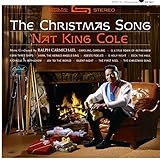
The Christmas Song | $25.98 | Buy on Amazon |
| 2 |
|
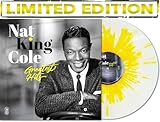
Nat King Cole Vinyl - Greatest Hits - Limited Color Edition - Yellow Splatter LР | $29.99 | Buy on Amazon |
| 3 |
![Unforgettable[LP]](https://m.media-amazon.com/images/I/61k2oebYG3L._SL160_.jpg)
|
Unforgettable[LP] | $27.49 | Buy on Amazon |
| 4 |
![Ultimate Nat King Cole[2 LP]](https://m.media-amazon.com/images/I/41PCTUfu4cL._SL160_.jpg)
|
Ultimate Nat King Cole[2 LP] | $34.43 | Buy on Amazon |
The episode is a stark counterpoint to Cole’s public stature. His success as a performer did not remove the racial barriers he encountered in ordinary life or in entertainment.
How groundbreaking was The Nat ‘King’ Cole Show?
The Nat ‘King’ Cole Show debuted on November 5, 1956. The National Museum of African American History and Culture describes it as “the first nationally broadcast television show hosted by an African American” (National Museum of African American History and Culture).
#1 Best Overall
- Nat King Cole - The Christmas Song
- Tracklist A1The Christmas Song3:08A2Deck The Hall1:06A3Adeste Fideles2:26A4O Tannenbaum3:00A5O, Little Town Of Bethlehem2:18A6I Saw Three Ships1:25A7O Holy Night2:55B1Hark, The He
- Pop, Jazz
A prime-time format with major guests
The show began as a 15-minute prime-time variety program and was later expanded to 30 minutes. Its guests included Pearl Bailey, Mahalia Jackson, Ella Fitzgerald, Peggy Lee, and Tony Bennett, according to the museum.
The sponsorship barrier
Despite its historic platform and high-profile performers, the program did not secure a major national sponsor. The museum says advertisers feared boycotts, particularly in the South, and that Cole put some of his own salary back into the show. PBS reports that it ended in 1957 after failing to secure national sponsorship (PBS American Masters).
Rank #2
- Nat King Cole Records
The sponsorship problem mattered beyond the show’s short run: national visibility did not guarantee commercial support. The evidence identifies advertiser fears and the absence of a national sponsor, but does not establish one simple cause for the cancellation.
Why did Cole refuse to leave his Beverly Hills home?
PBS reports that white neighbors objected to Cole’s Beverly Hills home and that he refused to move. His decision brought another racial barrier into view away from the stage: even a celebrated entertainer could face hostility over where he lived.
Rank #3
- Originally released in 1954, this title is a collection of some of Nat King Cole's earliest recordings, including a track from The Nat King Cole Trio
What did Cole’s resistance mean for integration?
A 2002 Congressional Record tribute later described Cole as a consistent force for integration and said he refused to play segregated clubs (Congressional Record, 2002). That is a retrospective assessment, not a contemporaneous record of each performance or decision.
Calling Cole’s fight “quiet” can capture the understated way his story is sometimes told, but it should not imply that his choices were passive or that he never took a stand. His refusal to move, the reported refusal to play segregated clubs, and his commitment to a national television program all complicate a portrait of a performer who simply stayed out of public conflict.
Rank #4
- Ultimate Nat King Cole is a collection showcasing the global entertainment legend's music
What Cole’s story reveals about racism in American entertainment
Cole became a historic television host, yet the platform he helped create remained vulnerable to commercial pressure. The contrast is not a contradiction: a breakthrough in representation could coexist with racism in neighborhoods, concert venues, and the advertising market.
The show’s sponsorship difficulties should not be framed as a problem caused by the South alone. Phoebe Bronstein’s 2022 scholarly article examines how television discourse could assign blame to the South, a framing that risks obscuring broader structures and national commercial decisions (Phoebe Bronstein, 2022). Cole’s story is therefore not only about being first; it is also about what a first could—and could not—change.
Quick Recap
Product prices and availability are accurate as of the date/time indicated and are subject to change. Any price and availability information displayed on Amazon at the time of purchase will apply.




