Windows Errors? Fix Them Before They Spread
Repair common Windows errors and clear accumulated junk for a smoother, more stable PC - no reinstall needed.Free scan · no reinstallCrashes, No Sound, or Screen Glitches?
Random freezes, missing sound and display glitches usually trace back to one bad driver. Find and replace yours safely.Free scan · under a minuteEarly critics broadly liked Twisters, but they did not regard it as an unquestioned classic. The 2024 standalone sequel earned its strongest notices for its tornado set pieces, Glen Powell’s charisma, Daisy Edgar-Jones’s grounded performance, and Lee Isaac Chung’s attention to Oklahoma communities. The main reservations centered on a predictable screenplay, underdeveloped supporting characters, a deliberately restrained romance, and science that is credible around the edges but highly speculative at its center.
That makes the film an easy recommendation for viewers seeking a large-screen disaster spectacle, especially those who enjoy old-fashioned summer blockbusters. It is a less certain recommendation for anyone expecting the novelty, ensemble chemistry, or scientific realism of Twister (1996). You do not need to watch the original first: Twisters is a new story with new characters, not a remake.
![Twister [4K Ultra HD] [1996] [Blu-ray] [Region Free]](https://m.media-amazon.com/images/I/41pGAgFYNkL._SL160_.jpg)
![Twister - Limited Mediabook Edition (4K Ultra HD) (+ remastered Blu-ray) [4K UHD]](https://m.media-amazon.com/images/I/416Lcp6PTOL._SL160_.jpg)
What is Twisters?
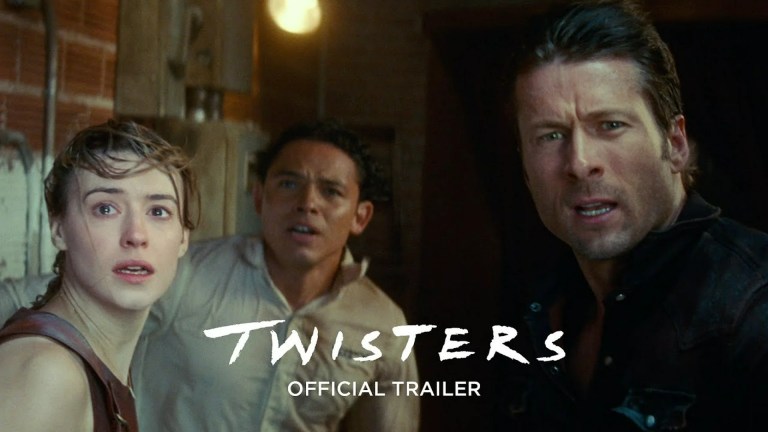
Directed by Lee Isaac Chung and written by Mark L. Smith from a story by Joseph Kosinski, Twisters follows Kate Cooper, played by Daisy Edgar-Jones, a former storm chaser whose college expedition ended in tragedy. Years later, her former colleague Javi, played by Anthony Ramos, brings her back to Oklahoma to help test a modern storm-tracking system.
Kate soon crosses paths with Tyler Owens, Glen Powell’s charismatic social-media storm chaser and self-styled “tornado wrangler.” Kate’s technical, cautious approach and Tyler’s more performative, risk-taking style put them on opposing sides of an unusually intense outbreak. As several storm systems converge over central Oklahoma, both groups must decide whether they are chasing tornadoes to collect data, generate attention, or save the people in their path.
The Tool Desk
Outbyte Driver Updater FREEScan for outdated or missing drivers - takes under a minuteDriver Scan →Outbyte PC Repair FREERepair Windows errors before they cause bigger problemsFix Now →#1 Best Overall

- Genre: Action / Adventure
- Number of Discs: 2
- Number of Tracks: 0
- Playback Duration: 123
- Rating: PG13
The official synopsis and production information are available from Universal Pictures. The film runs approximately two hours and two minutes, is rated PG-13 in the United States for intense action and peril, some language, and injury images, and received its wide U.S. release on July 19, 2024. It opened in the United Kingdom on July 17.
The early critical verdict at a glance
The first-reviews consensus was positive but qualified. Critics generally agreed that Twisters succeeds as a crowd-pleasing disaster movie. They were less united on whether it has enough character depth, originality, or visual impact to stand beside the 1996 film.
| Measure | Score or result | How to interpret it |
|---|---|---|
| Rotten Tomatoes first-reviews snapshot, July 11, 2024 | 75% Tomatometer | The percentage of positive critic reviews available when the first-reviews roundup was published. |
| Rotten Tomatoes, checked August 10, 2026 | 75% from 397 critics; 90% audience score from more than 10,000 verified ratings | A later, larger sample. The Tomatometer is not an average grade out of 100. |
| Metacritic, checked August 10, 2026 | 65/100 from 57 critics | A weighted average of review scores, categorized as “Generally Favorable.” |
| Opening response | $80.5 million in the U.S. and Canada; A- CinemaScore | Evidence that mainstream audiences responded strongly to the film’s accessible spectacle. |
The Rotten Tomatoes first-reviews article, published on July 11, 2024, selected many enthusiastic passages, so it should not be mistaken for a perfectly balanced statistical summary of every early review. The live Rotten Tomatoes listing and Metacritic’s review page offer a broader picture: favorable overall, but with meaningful disagreement.
What critics praised most
1. The tornado sequences are the film’s central success
The strongest area of agreement was the action. Twisters repeatedly puts wind, debris, water, vehicles, buildings, and civilians into the same moving environment rather than treating the tornadoes as distant digital backdrops.
Free tools Windows power users keep installed
One-click scans. No signup required.
Critics highlighted the tornado attack involving a motel and surrounding vehicles, the rodeo sequence, and the climactic disaster at a movie theater. The best scenes make the characters’ goals immediately understandable: they are not simply trying to get closer to a storm or record better footage; they are trying to reach people before the destruction does.
IndieWire treated the film as a strong argument for seeing a blockbuster in a theater. The Telegraph, in the reviews collected by Metacritic, praised the way the effects convey ordinary people confronting overwhelming physical danger. The Los Angeles Times similarly found the human-centered action more effective than a simple spectacle showcase.
This is what “thrilling” means in the Rotten Tomatoes headline. It is not a claim that every storm is equally inventive. It is a recognition that the film understands the basic theatrical appeal of a tornado movie: scale, motion, noise, and the feeling that shelter may fail at any moment.
2. Glen Powell gives the film its easiest source of energy
Tyler Owens is intentionally larger than life: a storm chaser, internet personality, entertainer, and action hero rolled into one. He arrives with a branded crew, a confident grin, and an instinct for turning dangerous weather into compelling content.
That performance could have made Tyler irritating, but Powell’s movie-star appeal keeps him likable. TheWrap argued that much of the film’s comic and romantic energy depends on Powell making Tyler’s swagger feel warm rather than obnoxious. Variety also praised Powell’s magnetism even while criticizing the film’s storm imagery.
Powell is not playing Tyler as a subtle realist. The character is a deliberate piece of blockbuster machinery, designed to turn tension into banter and to give the audience a confident guide through the chaos. For viewers already responsive to Powell’s screen persona, that is a major advantage. For viewers who find the “reckless but secretly caring” archetype familiar, it is also part of the film’s formula.
3. Daisy Edgar-Jones supplies the emotional anchor
Edgar-Jones plays Kate differently. Rather than matching Tyler’s constant showmanship, she makes Kate watchful, intelligent, and emotionally contained. Her caution comes from survivor’s guilt and fear, not from a lack of interest in storms.
Several critics considered Kate’s opening trauma the film’s most effective emotional material. The Los Angeles Times praised the force of that setup and saw Edgar-Jones’s quiet interiority as the element that gives the action personal stakes. The Rotten Tomatoes roundup included Collider’s praise for Edgar-Jones and its view that Powell reveals more beneath his familiar charm than expected.
The limitation is in the writing rather than the performance. Kate’s trauma is clear enough to motivate the plot, but some critics thought the screenplay did not explore her scientific guilt or recovery with the depth the premise promises.
Rank #2

- Genre: Action / Adventure
- Number of Discs: 2
- Number of Tracks: 0
- Playback Duration: 236
- Rating: PG13
4. Lee Isaac Chung gives the storms a sense of place
The “heart” argument comes partly from Chung’s treatment of Oklahoma. Towns, businesses, families, local traditions, and community relationships are presented as things worth protecting. The landscape is not merely an empty runway for visual effects.
That emphasis connects with Chung’s earlier work on Minari, although Twisters is a much more conventional studio action film. Both the Los Angeles Times and WBUR noted the film’s attention to small-town life and collective resilience.
This also distinguishes Twisters from a version of the genre in which anonymous crowds exist only to be evacuated. The film repeatedly returns to rescue, shelter, and rebuilding. Those ideas are not developed into a profound social drama, but they give the destruction a human scale.
5. The modern storm-chasing culture adds personality
The film updates the original’s scientific teams for an era in which storm chasers can become online celebrities. Tyler’s group turns its expeditions into content, while Kate and Javi approach storms through research and data. The contrast supplies comic friction and reflects the different reasons people might pursue extreme weather: science, spectacle, fame, or a desire to help.
That contemporary angle is one reason the film feels like a sequel rather than a simple replay of the 1996 formula. It also creates one of its more interesting tensions: the same cameras that make a storm look entertaining can also document the needs of the people caught in it.
What critics criticized
The plot repeats a familiar storm-to-storm cycle
The most consistent complaint is structural. The film often moves through the same pattern:
- A storm forms.
- The competing teams pursue it.
- Characters exchange technical information or banter.
- The storm destroys a location or forces a rescue.
- The survivors move on toward the next storm.
That rhythm is effective when the set pieces are escalating, but it can make the middle of the film feel like a series of variations on the same event. The Hollywood Reporter criticized the lack of sustained dramatic buildup. The BBC similarly saw a succession of dangerous-weather encounters rather than a fully developed plot. Radio Times found the film caught between disaster adventure, romance, scientific thriller, and social commentary without completely committing to any of them.
Recommended Free Tools
In other words, Twisters is more polished than surprising. Its story is easy to follow, but viewers looking for unpredictable character turns or an especially inventive disaster premise may find it mechanically familiar.
The romance is a restrained thread, not a fully developed love story
The marketing suggests a stronger romantic pairing between Kate and Tyler than the finished film necessarily provides. There is attraction, teasing, and a developing connection, but the relationship remains secondary to the storm plot.
The Los Angeles Times wanted more romance. WBUR described the connection as a spark that stays largely professional, while Radio Times called the relationship low-energy. The Guardian also questioned whether Edgar-Jones had been given a sufficiently well-written major film role.
That may be a feature rather than a flaw for viewers who prefer the film to prioritize disaster response. It is a weakness for anyone arriving because they expect Powell and Edgar-Jones to carry a large-scale screwball romance comparable to the original film’s central relationship.
Quick wins for a faster PC:
Scan for outdated or missing drivers - takes under a minuteDriver Scan →Clear out junk files and repair common Windows errorsFree Scan →Fix the driver behind crashes, sound loss and screen glitchesFind Drivers →Anthony Ramos and the supporting ensemble deserved more
Javi is important to Kate’s return, but Anthony Ramos’s character receives less development than the central premise suggests. Critics questioned his motivations, his changing professional role, and the history of his relationship with Kate. The Rotten Tomatoes roundup cited Collider’s concern that the character is misused, while The New Yorker found Javi’s personal history and motivations insufficiently clear.
The ensemble is colorful, including performers such as Brandon Perea, Sasha Lane, Katy O’Brian, Tunde Adebimpe, Harry Hadden-Paton, and David Corenswet. The cast gives the teams personality, but the screenplay often uses those characters as comic texture or visual identifiers rather than giving each one a substantial arc. TheWrap praised the performers’ ability to enliven thinly written roles; The New Yorker argued that many secondary figures function mainly as adornments around Kate and Tyler.
Rank #3
The film gestures toward bigger questions without fully pursuing them
Twisters raises questions about responsibility, disaster preparation, media spectacle, and whether scientific knowledge should be used primarily to observe storms or protect people. But it usually turns those questions back into action-movie momentum.
The Guardian criticized the film’s reluctance to address climate change directly. That does not make the movie incoherent: it is primarily a disaster adventure, not a climate-change documentary. Still, viewers expecting an explicit examination of why extreme weather is becoming a more urgent social concern may find the film noticeably cautious.
What’s actually slowing this PC down?
Pick the symptom - the matching free tool is one click away.
Is Twisters better than Twister?
There is no single answer because the two films are strongest in different areas. A useful comparison separates technology, character dynamics, novelty, and cultural impact.
| Category | Advantage | Why |
|---|---|---|
| Meteorological detail | Twisters | It uses more contemporary radar systems, storm-tracking language, equipment, and online storm-chasing culture. |
| Disaster-response emphasis | Twisters | Its heroes are more explicitly concerned with locating and saving civilians. |
| Visual scale and technical elaboration | Twisters, depending on the viewer | The newer film benefits from modern effects and large-scale set pieces, though some critics found them less uncanny than the original or less impressive than real tornado footage. |
| Romantic and comic chemistry | Twister, for many critics | The 1996 movie has a more immediately memorable screwball structure and ensemble dynamic. |
| Novelty | Twister | Its tornado imagery felt more unprecedented to audiences in 1996. Modern viewers can now watch real tornado footage online, raising the standard for fictional storms. |
| Standalone accessibility | Twisters | It introduces a new group of characters and does not depend on continuity from the original. |
Aggregator scores add useful context but do not settle the artistic question. As of the August 10, 2026 check, Rotten Tomatoes listed Twisters at 75% from 397 critics and Twister at 68% from 143 reviews. That suggests the newer film has been rated more favorably in aggregate, but it does not prove that it is more beloved, more influential, or more memorable.
Variety made the important opposing case: Twisters may be visually impressive while still failing to produce the same awe as the original or as real tornado footage. Other critics, including TheWrap, considered it a rare legacy sequel that recaptures the earlier film’s breezy character appeal. Both reactions are reasonable. The sequel is more contemporary and arguably more polished, while the original retains the advantage of discovery.
Is the film really “full of heart”?
That phrase is defensible, but it needs qualification. The emotional material comes from four main sources:
- Kate’s survivor’s guilt after the opening disaster.
- The shift from studying storms as abstract phenomena to preventing deaths in real communities.
- Tyler’s apparent movement away from spectacle for its own sake and toward helping people.
- Scenes of neighbors, families, and strangers protecting one another during a crisis.
The film’s emotional ambition is greater than that of a purely effects-driven disaster movie. Its Oklahoma settings are populated, and its action repeatedly asks who will be rescued, who will be left behind, and what recovery looks like after the storm passes. The Los Angeles Times found the opening trauma and rescue-oriented themes unusually effective, while WBUR praised the film’s sense of communal life.
But “full of heart” should not be confused with fully developed character drama. The New Yorker argued that Kate’s trauma and scientific guilt are not explored deeply enough. Radio Times found the emotional and romantic threads underwritten. The fairest conclusion is that Twisters has more feeling and communal focus than its franchise premise promises, even if it often gestures toward depth instead of fully earning it.
Independent reader supportYour contribution helps us test, update, and keep practical guides available for everyone.How scientifically accurate is Twisters?
The storm-chasing details are relatively well researched; the central tornado-taming idea is movie fantasy. Those two judgments are not contradictory.
What the production got credit for
Meteorological advisers and storm researchers contributed to the film. Scientific American reported that Sean Waugh of the National Severe Storms Laboratory and Kevin Kelleher advised the filmmakers, helped shape the equipment and radar imagery, and worked with actors seeking a better understanding of storm chasing. Waugh described the film’s core observational methods and technology as grounded in real practices, although dramatized.
The Washington Post’s weather team also credited the film’s use of concepts including wind shear, moisture, the cap, jet-stream strength, radar analysis, and different storm-chasing cultures. That gives the characters a more convincing professional vocabulary than many disaster movies receive.
Where the science becomes speculative
The film’s attempt to weaken a tornado using polyacrylate or another superabsorbent material is not a practical real-world solution. An Old Dominion University scientist explained that the quantity of chemical required to affect a tornado meaningfully would be enormous and that the movie presents an unrealistic mitigation strategy.
The Washington Post’s experts described tornado modification as conceivable in principle but untested and probably unrealistic at the scale shown. They also pointed to dramatized warning times, surprise tornadoes, exaggerated wind timing, frequent intentional driving into tornadoes, and the film’s concentration of violent storms.
So the right verdict is not that Twisters is scientifically accurate or scientifically ignorant. It is meteorologically informed but physically fanciful. It respects the language and culture of storm research while asking the audience to accept a “tame the tornado” premise that cannot currently be treated as a viable public-safety solution.
Do these 3 things before closing this tab:
1Clear out junk files and repair common Windows errors2Fix the driver behind crashes, sound loss and screen glitches3Repair Windows errors before they cause bigger problemsDo you need to watch Twister first?
No. Twisters is designed to work as a standalone sequel. It has new protagonists, a new ensemble, and its own explanation of the storm outbreak. The original cast is not required for the story to make sense.
There are limited connections to the earlier film, including the return of the “Dorothy” storm-research concept, but prior knowledge is optional. TheWrap specifically argued that viewers can understand and enjoy the film without seeing Twister.
Watching the 1996 film first may still affect expectations. Fans attached to its score, humor, ensemble, romance, or historical novelty may find the newer film less distinctive. Newcomers may have an easier time appreciating Twisters on its own terms: a contemporary, character-led disaster movie with a strong emphasis on spectacle and rescue.
What the review split means for viewers
See it if you want:
- Tornado action designed for a theater or large screen.
- A charismatic Glen Powell performance.
- A grounded Daisy Edgar-Jones performance amid exaggerated spectacle.
- A standalone blockbuster that does not require franchise homework.
- Americana, storm-chasing culture, and stories about communities protecting one another.
- Scientific hand-waving in exchange for speed and visual excitement.
Temper expectations if you want:
- A romance as substantial as the marketing suggests.
- Fully developed arcs for Anthony Ramos and the supporting ensemble.
- Hard scientific realism or a plausible way to weaken a tornado.
- The cultural novelty and instantly iconic ensemble chemistry of Twister.
- A sustained climate-change drama.
- A plot that moves beyond the familiar cycle of chasing, surviving, and chasing again.
The strong audience response supports the film’s crowd-pleasing credentials. It opened to $80.5 million in the United States and Canada for July 19–21, 2024, and contemporary reporting gave it an A- CinemaScore. Rotten Tomatoes’ 90% audience score, recorded from more than 10,000 verified ratings in the August 10, 2026 check, also indicates that general viewers connected with it more directly than the lower critic averages might suggest. That is evidence of broad appeal, not proof that every audience member preferred it to the original.
Final review consensus
Twisters is a successful, crowd-friendly disaster movie whose best qualities are easy to identify: the tornado sequences are exciting, Powell brings movie-star lift, Edgar-Jones gives the story emotional grounding, and Chung makes the threatened communities feel like more than disposable scenery.
Its limitations are equally clear. The screenplay is repetitive, the romance is more implied than developed, Javi and the supporting players are underused, and the tornado-disruption premise is far less plausible than the film’s meteorological vocabulary. It also lacks the original’s novelty and may not leave the same cultural footprint.
The early reviewers were therefore right to call it thrilling and immersive, while “surprisingly full of heart” is best understood as a qualified compliment. Twisters brings more emotional and communal material to a modern effects blockbuster than many viewers may expect. It does not always turn that material into deep drama, but it delivers enough personality, peril, and feeling to make the film worth seeing—preferably on the biggest screen available.
Frequently Asked Questions
Is Twisters a remake of Twister?
No. It is a standalone sequel set in the same broad storm-chasing world, with new characters and a new story. It is not a direct continuation featuring the original film’s protagonists.
Recommended Free Tools
Was Twisters more popular with audiences than critics?
The available indicators suggest a particularly strong mainstream response: Rotten Tomatoes listed a 90% audience score from more than 10,000 verified ratings in the August 10, 2026 check, compared with a 75% Tomatometer score. Its opening weekend also produced an A- CinemaScore. Those figures indicate strong audience approval, but they do not mean every viewer preferred it to the 1996 film.
Is the science in Twisters realistic?
The film received credit for its storm-chasing terminology, radar imagery, equipment, and consultation with meteorological experts. Its idea of weakening a tornado with absorbent chemicals is highly speculative and impractical at the scale shown, so the movie is better described as meteorologically informed disaster fiction than hard science.
The Bottom Line
Bottom line: Twisters is worth watching for its large-screen tornado spectacle, Glen Powell’s charisma, Daisy Edgar-Jones’s emotional restraint, and its emphasis on community rescue. Go in expecting a polished, formulaic summer blockbuster—not a scientifically realistic thriller, a fully developed romance, or a replacement for the singular novelty of Twister.
Quick Recap
Product prices and availability are accurate as of the date/time indicated and are subject to change. Any price and availability information displayed on Amazon at the time of purchase will apply.