PC Slower Than It Used to Be?
A free scan shows the junk files, broken settings and background clutter dragging Windows down - then fixes them in one click.Free scan · Windows 10 & 11Outdated Drivers Are Slowing You Down
One free scan finds every outdated or missing driver and matches the right update for your exact hardware.Free scan · exact hardware matchDonald Trump shared fabricated images implying that Taylor Swift and her fans supported his 2024 presidential campaign, then said he did not know who had made them. The August 18, 2024 post illustrates a central problem in political misinformation: a public figure does not need to create synthetic media for a repost to give it greater reach, credibility, and political significance.
The post and the explanation
On August 18, 2024, Trump posted a collection of images on Truth Social that appeared to show support for his campaign among Swift fans. One image depicted women wearing “Swifties for Trump” shirts. Another showed an AI-generated version of Taylor Swift dressed as Uncle Sam beside the message, “Taylor wants YOU to vote for Donald Trump.” Trump added the caption: “I accept!”
The images did not establish a real endorsement. Some of the material was based on real photographs or was labeled as satire, but the central suggestion—that Swift and her fan base had publicly joined Trump’s campaign—was fabricated. The post presented a mixture of genuine-looking, altered, and synthetic material in a way that made the overall claim appear more credible than the evidence warranted.
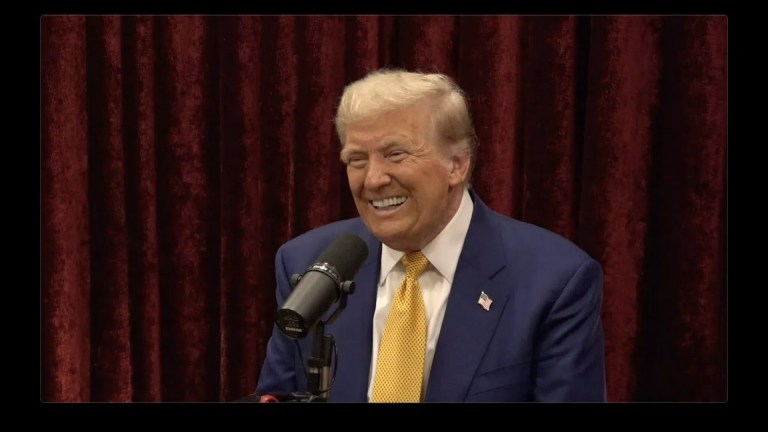
Several days later, on August 21 or 22, Trump told Fox Business that he knew nothing about the images beyond the fact that somebody else had generated them. He said he had not created them himself. Trump also described artificial intelligence as dangerous because fabricated material can make people appear to say or endorse things they never said or endorsed. Rolling Stone’s reporting documented both the original post and Trump’s subsequent explanation.
Free tools Windows power users keep installed
One-click scans. No signup required.
#1 Best Overall
- Premium Quality Prints: Printed on high-grade satin luster photo paper with high-quality ink for sharp details and vibrant colors, carefully packaged in durable tubes for protection during shipping.
- Enhanced Image Quality: Printed using advanced technology to improve clarity, optimize color and contrast, and reduce distortions for high-quality, vibrant prints.
- Easy and Fast Customization: Simply upload your image to create a high-quality personalized poster, ideal for décor, memories, or signage. Ready for framing or mounting.
- Perfect for Any Occasion: Suitable for home decor, gifts, events, or milestones, these custom prints are designed to add a personal touch with quality craftsmanship and style.
- Made in the USA
What was fabricated—and what was not
The most precise description of the material is AI-generated political imagery or fabricated endorsement imagery. “Deepfake” is often used as a general label for deceptive synthetic media, but in its narrower sense it commonly refers to manipulated audio or video. The reporting on this incident concerns images, and it does not establish that every image in the post was made with the same tool, by the same person, or even entirely through generative AI.
The important issue was not simply whether an image had been edited. It was the false political meaning attached to it. A shirt, poster, or celebrity portrait can be presented as a joke while still encouraging viewers to believe that a real movement or endorsement exists. A disclaimer such as “satire” may not travel with a screenshot when the image is reposted, and it does not automatically neutralize the impression created by the surrounding caption.
Nor does Trump’s statement prove that he knew the images were fabricated when he shared them. The documented facts support a narrower conclusion: he amplified material that falsely implied Swift’s support, and he later said he had not made the images or known their origin.
Where the images circulated
Before Trump shared them, several of the images had circulated through conservative online networks. The Guardian reported that multiple images carried a watermark associated with the John Milton Freedom Foundation and had first circulated through the conservative @amuse account on X.
The Guardian described the John Milton Freedom Foundation as a Texas nonprofit that presented itself as a press-freedom organization while promoting a proposed fellowship program for right-wing media personalities. That provenance should be stated carefully: reporting connected several images to that network, not necessarily every item in Trump’s post. Identifying a circulation path is not the same as proving who generated each image.
Rank #2

- CUSTOMIZATION: Transform your favorite photos and images into stunning wall art with our personalized poster printing service
- VERSATILE DISPLAY: Perfect for decorating living rooms, bedrooms, offices, or any space that needs a personal touch with your memories
- SIMPLE PROCESS: Easy upload system lets you submit your chosen images and customize the final appearance of your poster
- QUALITY PRINTING: High-resolution printing technology ensures sharp, vivid reproduction of your photos with excellent color accuracy
- PERSONAL MEMORIES: Create meaningful wall decor from wedding photos, family portraits, vacation snapshots, or artistic images
The sequence matters because political influence can come from amplification as well as authorship. Trump did not need to generate the images for his account to change their status in the information ecosystem. Material circulating among online political influencers reached a much larger audience when it was reposted by a major presidential candidate. That observation concerns the effect of distribution, not Trump’s subjective knowledge or intent.
Swift’s documented political position
Taylor Swift did not endorse Trump in the post. On September 10, 2024, after the presidential debate, she publicly endorsed Kamala Harris and Tim Walz. In a statement reported by Time, Swift said she would vote for Harris and described her as a “steady-handed, gifted leader.” Swift had also endorsed Joe Biden and Harris in 2020.
Her later endorsement should not be used to claim that every aspect of her political thinking on August 18 was already known. It does, however, provide a clear documented contrast with the images shared by Trump. The synthetic Trump-supporting material was not an authentic statement from Swift, while her Harris-Walz endorsement was published directly by Swift in her own words.
Quick wins for a faster PC:
Clear out junk files and repair common Windows errorsFree Scan →Scan for outdated or missing drivers - takes under a minuteDriver Scan →Repair Windows errors before they cause bigger problemsFix Now →That distinction is central to evaluating celebrity political claims: a real endorsement has a traceable source, such as a verified statement, interview, campaign appearance, or official account. A generated portrait or group photograph is not evidence merely because it looks plausible.
What the law did—and did not—say
When the images circulated, federal law did not contain a blanket prohibition covering every political deepfake or AI-generated campaign image. The legal framework was unsettled, and the existence of synthetic media alone did not automatically determine whether a post was unlawful.
Rank #3

- CUSTOMIZATION: Transform your favorite photos and images into stunning wall art with our personalized poster printing service
- VERSATILE DISPLAY: Perfect for decorating living rooms, bedrooms, offices, or any space that needs a personal touch with your memories
- SIMPLE PROCESS: Easy upload system lets you submit your chosen images and customize the final appearance of your poster
- QUALITY PRINTING: High-resolution printing technology ensures sharp, vivid reproduction of your photos with excellent color accuracy
- PERSONAL MEMORIES: Create meaningful wall decor from wedding photos, family portraits, vacation snapshots, or artistic images
On September 19, 2024, the Federal Election Commission voted not to begin a new rulemaking specifically devoted to AI in campaign advertising. Instead, it adopted an interpretive rule explaining that the existing Federal Election Campaign Act prohibition on fraudulent misrepresentation is technology-neutral and can apply to AI-assisted media on a case-by-case basis. The FEC’s explanation addressed circumstances including falsely purporting to speak, write, or act for another candidate or political party, and falsely claiming to speak on behalf of a candidate or party while soliciting contributions.
This was regulatory context, not a finding that Trump’s Taylor Swift post violated federal law. The cited material does not establish an FEC adjudication or legal ruling against Trump concerning the post. It would therefore be inaccurate to summarize the 2024 FEC action as a federal ban on political AI images or as a determination that this specific post was illegal.
Why a “joke” can still function as misinformation
Political memes often operate in two registers at once. Supporters may regard an image as obvious parody, while undecided or less attentive viewers encounter it as a claim about what a celebrity, organization, or voting bloc supports. Once a screenshot is detached from its original account, the intended joke, label, or context can disappear.
This makes the source and framing more important than visual polish alone. A viewer should ask:
- Who originally published the image?
- Was it posted by the person or group depicted?
- Does the supposed endorsement appear anywhere on an official account or in a verifiable statement?
- Is the image labeled as satire, parody, or AI-generated—and is that label still present in the repost?
- Are there independent reports confirming the claim?
- Does the image contain visual signs of generation or editing, such as distorted text, inconsistent hands, implausible logos, or mismatched lighting?
These checks are useful but not infallible. AI detectors can produce false positives and false negatives, and visual inspection alone cannot establish provenance. The strongest verification usually comes from finding the earliest available source and comparing the claim with a direct statement from the person or organization supposedly represented.
Rank #4

- Print Quality that Stuns – Our premium 12-color high-resolution inks combined with fade-resistant technology ensure every pixel prints in lifelike vibrancy. Unlike cheap personalized poster prints, these won’t fade or discolor over time.
- Upload. Customize. Create. – Upload your JPEG or PNG image, using the customize tool to crop & position your posters and prints. Choose between gloss or matte, portrait or landscape to turn your vision into a custom print that commands attention.
- Industry-Leading Photo Paper – Our heavyweight 250gsm 10 mil gloss and matte photo paper feels premium, looks premium and outperforms anything you’ll find in mass-market print shops. Make your own poster with professional, gallery-worthy results.
- No Creases. No Rolled Edges. No Stress – Shipped in a heavy-duty poster tube, your custom prints arrive safe, unbent and ready to frame, hang or clip in no time. The reinforced tube packaging is designed to prevent rolls, folds and tears in transit.
- Trusted For 25+ Years – Posterprintshop has been printing for families, professionals & corporations since 2000. We’re USA-owned & operated with friendly local support. Now with same day printing so your customized poster is at your door fast.
The wider trust problem
The Taylor Swift images were part of a broader shift in political communication in which synthetic or altered images can be produced quickly, presented as humor, and redistributed by accounts with substantial authority or reach. Later Associated Press reporting on AI-edited political imagery cited misinformation and media-literacy researchers who warned that repeated circulation by credible or official accounts can blur the boundary between evidence and assertion.
That broader research does not prove that this particular episode caused a measurable change in public trust, changed voter behavior, or affected the election outcome. The defensible lesson is more limited and more practical: repetition can make an unsupported claim feel familiar, while an authoritative repost can make it seem newly validated. The audience may remember the apparent endorsement even after the original image is corrected.
The incident also demonstrates why responsibility cannot be reduced to the question “Who made the image?” Creation is one point in the chain. Discovery, labeling, reposting, captioning, and correction are other points. A person with a large political audience can materially increase the reach of deceptive content without having generated it.
Independent reader supportYour contribution helps us test, update, and keep practical guides available for everyone.How to evaluate a viral political image
- Pause before sharing. Emotional or unusually convenient political content is precisely what benefits from rapid redistribution.
- Locate the original post. Do not rely on a cropped screenshot. Check the account, date, caption, replies, and any satire or AI disclosure.
- Look for a direct source. Search the depicted person’s verified website and social accounts, and consult reputable reporting. A celebrity endorsement should be traceable to the celebrity or an authorized representative.
- Separate the image from the claim. A real photograph may be paired with a false caption; a synthetic photograph may be used to imply a real event.
- Check the date. Old images, altered campaign materials, and events from another country or election are frequently recirculated as current news.
- Preserve uncertainty. If provenance cannot be established, describe the image as unverified rather than declaring who created it or what legal rule it violated.
The clearest contrast
Trump’s “I accept!” caption treated the images as if they represented a welcome political endorsement. His later claim that he knew nothing about their creation highlighted the gap between posting content and producing it. Swift’s later Harris-Walz statement supplied the kind of direct, attributable evidence that the earlier images lacked.
The episode is therefore best understood neither as proof that Trump personally generated the images nor as a settled legal case. It is a documented example of synthetic political imagery being used to suggest a celebrity endorsement, traced through online political networks, and amplified by a prominent candidate before the supposed endorsement was contradicted by the celebrity’s own public statement.
The Tool Desk
Outbyte PC Repair FREEClear out junk files and repair common Windows errorsFree Scan →Outbyte Driver Updater FREEFix the driver behind crashes, sound loss and screen glitchesFind Drivers →Best Value

- Customizable Canvas Art: Personalize your space with a unique, high-quality 24"x36" canvas print that can be customized with your chosen image, making it a perfect fit for any room or decor style
- Unframed & Versatile: This 24"x36" artwork comes as a pure canvas (no frame), giving you the freedom to frame it according to your preference and seamlessly integrate it into your home or office decor
- Vibrant Colors & High-Quality Printing: Each canvas is printed using advanced ink technology to ensure vibrant, long-lasting colors that will not fade over time, delivering stunning visual impact for years to come
- Perfect for Any Room: Whether it's your living room, bedroom, or office, this unframed canvas art offers a timeless design that adds an elegant and personal touch to any space
- Easy to Hang: The unframed canvas is lightweight and easy to mount, allowing for a hassle-free installation with your choice of frame or hanging method
Frequently Asked Questions
Did Donald Trump create the AI-generated Taylor Swift images?
The cited reporting does not establish that Trump created them. It establishes that he shared the images and later said somebody else had generated them.
Did Taylor Swift endorse Donald Trump in 2024?
No authentic Trump endorsement from Swift is established by the cited sources. On September 10, 2024, Swift publicly endorsed Kamala Harris and Tim Walz.
Did the FEC rule that Trump’s post was illegal?
No. In September 2024, the FEC explained that existing fraudulent-misrepresentation rules could apply to AI-assisted media on a case-by-case basis. The cited materials do not establish an FEC finding that Trump’s specific post violated federal law.
Were all of the images in Trump’s post made by AI?
That has not been established. Reporting described a mixture of real, satirical, altered, and AI-generated material. The safest description is that the post included fabricated endorsement imagery.
The Bottom Line
Bottom line: Trump amplified images that falsely implied Taylor Swift and her fans supported his campaign. The available reporting does not show that he created them or that the FEC found his post illegal. What it does show is how a synthetic image can gain political force when a prominent account reposts it—and why a direct, attributable statement matters more than a convincing picture.
Quick Recap
Product prices and availability are accurate as of the date/time indicated and are subject to change. Any price and availability information displayed on Amazon at the time of purchase will apply.