Quick wins for a faster PC:
Clear out junk files and repair common Windows errorsFree Scan →Scan for outdated or missing drivers - takes under a minuteDriver Scan →Repair Windows errors before they cause bigger problemsFix Now →The greatest wrestling faction is not simply the group with the most championships. The strongest stables changed how wrestling stories were told, created lasting rivalries, helped define careers, and developed identities that audiences could recognize across eras. This ranking spans WWE, WCW, and international wrestling; it is an editorial judgment, not an official consensus.
The list weighs influence on faction storytelling and later groups, sustained story and audience impact, career-defining roles, recognizable identity and cultural reach, and accomplishments at major events and across important titles. Those measures favor groups that mattered beyond a title tally. Lineups changed frequently, so each entry identifies the incarnation or period that makes its case strongest.
20. The Main Event Mafia
TNA’s veteran power bloc
In TNA, the Main Event Mafia drew its identity from established stars presenting themselves as the promotion’s ruling class. Its central appeal was the contrast between veteran status and the younger wrestlers challenging that hierarchy. The group earns a place for making that generational conflict the story, though its influence and cultural reach were narrower than those of the factions above it.
19. The Flock
Raven’s outsiders in WCW
Raven’s Flock brought a loose, outsider collective into WCW’s late-1990s landscape. Rather than relying on a polished team identity, the group’s appeal came from a leader surrounded by alienated followers. It made faction membership part of the character story, but its legacy is more specific to its era than that of the groups ranked higher.
#1 Best Overall
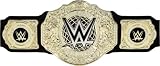
- Kids can be a champ with WWE Championships!
- The leather-like belt measures more than 3 feet long.
- The kid-sized titles feature an authentic style replicating real titles for immersive role-play!
- Play out championships seen on RAW, SmackDown and NXT!
- Fans can collect every championship and rule the WWE Universe (each sold separately, subject to availability).
18. The Heenan Family
A manager-led alliance
Bobby “The Brain” Heenan’s changing roster of clients is a different kind of stable: its unifying force was a manager, not one fixed lineup or a single long-running team. Across versions, the family gave Heenan a ready-made corner presence and helped connect individual rivalries to a broader group identity. Its long-lived concept matters, even though treating every client as part of one stable would overstate the continuity.
17. The Von Erich family faction
Family identity in regional wrestling
The Von Erich family’s wrestling legacy shows how a real family identity can give a group an emotional reach beyond ordinary alliances. In Texas wrestling, the family connection helped make its members’ stories feel tied to one another and to a regional audience. It belongs in a history of influential factions, but a family legacy is not the same thing as a consistently defined stable with one roster and one run.
16. Raven’s Nest
A shifting faction across promotions
Raven’s Nest is associated with the shifting network of followers around Raven, with versions appearing in different wrestling contexts. Its place here reflects the enduring appeal of the leader-and-collective format and Raven’s ability to make allegiance itself a character trait. Its changing membership makes it harder to rank as one clearly bounded unit.
15. The Corporation
Corporate power as an antagonist
WWE’s Corporation turned institutional authority into a faction: its members could use their status and influence as obstacles for the wrestlers outside the group. That premise gave major rivalries a clear power imbalance and made the stable more than a collection of allies. It was an effective story device, though less influential as a lasting model than the highest-ranked groups.
Recommended Free Tools
14. The Dangerous Alliance
A WCW group built around control
The Dangerous Alliance gave WCW a recognizable coalition of wrestlers with a shared antagonist role and a manager at its center. Its appeal lay in the sense that opposition came from an organized group rather than one isolated rival. It earns a place for its focused faction storytelling, while its reach beyond its own period remains more limited than the legacies above it.
Rank #2

- 2 POUNDS OF CHROME DOMINANCE – Command attention with a true champion’s belt! This 35" masterpiece features premium stitched leather and three heavyweight (4mm) chrome plates, including a customizable 6" x 8" main plate with beveled edges for razor-sharp detail. While cheap knockoffs flood the web, this 2lb powerhouse delivers real weight, legendary shine, and effortless display appeal—hoist it high, drape it over your shoulder, or showcase it with pride.
- CELEBRATE VICTORY LIKE A LEGEND – Hoist the ultimate symbol of greatness with TrophySmack’s 2LB Custom Championship Belt. Built for fantasy football champions, elite sales performers, or beer pong gods—this belt is your boldest flex yet. Fully customizable with your own logo or art for maximum impact.
- CUSTOMIZE INSTANTLY PREVIEW BEFORE YOU BUY – Use Amazon’s ‘Customize Now’ tool to ensure every detail is spot-on and preview your championship belt before you buy —no surprises, just precision.
- THE ULTIMATE TROPHY FOR EVERY CHAMPION MOMENT – Whether you're dominating a fantasy league, winning a sports showdown, or crowning a corporate MVP, this custom championship belt transforms any victory into a statement piece. Perfect for wrestling triumphs, office bragging rights, charity tournaments, gaming legends, retirement honors, and unforgettable gifts—because true champions deserve more than a trophy.
- WHAT TO EXPECT – After placing your order, you will receive an email and an Amazon message with a link to customize your belt in real-time. You will see a preview of your final belt design to ensure every detail is spot-on. Fast turnaround and handled with care from start to finish.
13. The Fabulous Freebirds
A team whose identity traveled with it
The Fabulous Freebirds made the group itself the attraction: a recognizable team identity could carry across different pairings and opponents. That flexibility helped establish the appeal of factions and tag-team units whose significance was not confined to one fixed lineup. Their influence on wrestling’s group-based storytelling gives them a stronger historical case than a short-lived stable, even if their format differed from a large, manager-led faction.
12. The Hart Foundation
From tag-team force to faction
The Hart Foundation’s most compelling faction incarnation brought together members of the Hart wrestling family and allies in a group positioned against WWE’s American heroes. The contrast made national identity and family loyalty part of the conflict, while Bret Hart’s evolution into a central antagonist helped define the story. Its place reflects that memorable faction period, not the assumption that every Hart Foundation lineup was equally consequential.
11. The Elite
A modern group with a promotion-shaping role
The Elite grew out of a modern wrestling era in which performers could build an audience and a shared identity beyond one promotion. Its importance lies in the way the group became associated with a distinct period of change in North American wrestling and with the creation of a new major platform. It ranks below older giants because its full historical influence is still developing.
Do these 3 things before closing this tab:
1Clear out junk files and repair common Windows errors2Scan for outdated or missing drivers - takes under a minute3Repair Windows errors before they cause bigger problems10. Los Ingobernables de Japón
A distinct identity in New Japan Pro-Wrestling
Los Ingobernables de Japón established a strong faction identity in New Japan Pro-Wrestling, giving its members a shared presentation that could support individual rivalries as well as group stories. Its place in this ranking recognizes the importance of faction culture outside WWE and WCW. The list’s English-language evidence is less detailed for this group than for the North American examples, so its position is an editorial comparison rather than a claim of an agreed ranking.
9. The Bloodline
Family saga as a long-form wrestling story
The Bloodline made family power and inheritance the core of a major WWE story, with its central relationships driving both alliances and fractures. Its extended narrative gave individual turns and betrayals weight because they changed the group’s internal balance. It ranks among the top ten for the scale and sustained attention of that story, while its longer-term influence is not yet as settled as that of older factions.
Rank #3

- Part of the special-edition WWE x Igloo Cooler Collection
- WWE Championship Belt-inspired wearable cooler, including a heptagonal shape and three-panel design
- Large main compartment zips closed to keep things safely under wraps
- Slip pocket on back holds small accessories
- Put the size into perspective: Holds 4 cans
8. The New Day
A group that grew beyond its original premise
The New Day developed from a shared WWE identity into a durable act whose members could be compelling together and individually. Its longevity and distinctive presentation helped it stand apart from factions defined mainly by domination or betrayal. That combination of audience connection and career-defining teamwork places it high, even without the same role in reshaping wrestling’s faction template as the top-ranked groups.
7. The Nation of Domination
A consequential Attitude Era faction
WWE’s retrospective identifies the Nation of Domination as an important part of the Attitude Era. The group’s changing membership matters: its most remembered period was not interchangeable with every version of the Nation. Its strongest historical claim is the role it played in major WWE stories and in the development of performers who became central stars. WWE’s history of the group is one reason it belongs in a ranking that looks beyond championship counts [WWE’s Nation of Domination history].
Free tools Windows power users keep installed
One-click scans. No signup required.
6. The Shield
A unified debut that launched three major careers
The Shield arrived in WWE as a coordinated unit, making its members’ shared identity central from the start. Its run helped establish three performers who would go on to headline major stories in their own right, giving the group an unusually clear star-making legacy. It ranks just outside the top five because its influence was powerful but concentrated in a shorter period than the longest-lasting faction institutions.
5. Evolution
A faction built around generations of stardom
Evolution linked established WWE star power with a younger member being positioned for a future at the top. That generational design gave the group a built-in story of mentorship, hierarchy, and succession. Its members’ high-profile roles and the careers it helped shape make it one of WWE’s strongest faction examples, though its overall cultural reach falls short of the top four.
Independent reader supportYour contribution helps us test, update, and keep practical guides available for everyone.4. D-Generation X
WWE’s rule-breaking cultural force
D-Generation X became one of WWE’s most recognizable groups by turning irreverence into a defining identity. Its influence extended beyond faction rivalries: it helped set the tone for WWE’s Attitude Era presentation and left a cultural imprint that WWE itself emphasizes in its historical treatment [WWE’s D-Generation X history]. Its place at number four reflects that reach, while the groups above it had either a broader effect on wrestling’s faction model or a larger role in a defining promotion-wide conflict.
Rank #4

- Heavy-Duty Championship Belt: Built with thick Die-cast metal plates and a real leather strap for unmatched durability, weight, and a true champion's feel.
- Versatile Champion Belt: Celebrate achievements in sports, events, or competitions with this versatile champion belt that fits every occasion.
- Ideal for Wrestling Enthusiasts: Inspired by iconic wrestling belts, this title belt is perfect for fans, collectors, and competitors alike.
- Stylish Trophy Belt: A trophy belt that serves as a remarkable prize, adding prestige to any award ceremony or celebration.
- Memorable Gift Option: This championship belt doubles as a unique and thoughtful gift for sports lovers and event participants.
3. Bullet Club
An international stable with a recognizable brand
Bullet Club became one of the most recognizable modern faction identities in wrestling, with a reach that extended well beyond a single promotion or a fixed lineup. Its members and changing versions helped make the stable itself a durable brand, and its influence on contemporary faction presentation is central to its ranking. It sits below the top two because its legacy is still unfolding, even as its international visibility already makes it one of the era’s defining groups.
The Tool Desk
Outbyte Driver Updater FREEFix the driver behind crashes, sound loss and screen glitchesFind Drivers →Outbyte PC Repair FREERepair Windows errors before they cause bigger problemsFix Now →2. The New World Order
WCW’s invasion story became a defining rivalry
The nWo began in WCW in summer 1996 with Kevin Nash and Scott Hall appearing as outsiders, then Hulk Hogan joined them and gave the group a shocking new center. The invasion premise expanded into a much wider faction and became a central conflict in WCW. WWE’s retrospective captures the group’s declared identity: “Together, Hogan and The Outsiders made one thing abundantly clear, they were ‘the New World Order of professional wrestling.’” The line is WWE’s editorial narration, not a quotation attributed to a wrestler [WWE’s retrospective, “The ‘too sweet’ history of The New World Order”].
The nWo’s black-and-white look, including its iconic T-shirt, made the group instantly legible as an identity as well as a story. Its rise coincided with a major ratings era: WWE says WCW and Monday Nitro dominated Raw for 84 consecutive weeks, from May 1996 through March 1998. That figure describes the competition between the shows; it does not establish that the nWo alone caused the ratings result [WWE’s WCW and Nitro retrospective]. The nWo ranks second because its invasion angle and imagery reshaped the scale of faction storytelling, while the Horsemen’s longer foundational influence narrowly wins the top spot.
1. The Four Horsemen
The blueprint for the modern wrestling stable
The Four Horsemen are the strongest overall choice because their importance is not limited to one celebrated run: they helped establish what a high-status wrestling faction could be. WWE dates the group’s formation to January 1986 and describes it as a blueprint for later team warfare [WWE’s Four Horsemen history].
One prominent lineup named in WWE’s history includes Ric Flair, Arn Anderson, Tully Blanchard, Barry Windham, and manager JJ Dillon. The Horsemen changed members over time, so that lineup should not be mistaken for a permanent roster. Their identity as a unit—championship ambition, coordinated opposition, and a leader surrounded by formidable allies—made them a model later wrestling factions could adapt. WWE’s account of WarGames places the first event on July 4, 1987, at Atlanta’s Omni Coliseum and documents later involvement by both the Horsemen and the nWo, underscoring how group conflict could become a major event format [WWE’s WarGames history]. Their foundational influence gives them the edge over the nWo’s extraordinary but more era-specific impact.
Quick Recap
Product prices and availability are accurate as of the date/time indicated and are subject to change. Any price and availability information displayed on Amazon at the time of purchase will apply.




