Quick wins for a faster PC:
Repair Windows errors before they cause bigger problemsFix Now →Scan for outdated or missing drivers - takes under a minuteDriver Scan →For generations of horror fans, Tim Curry’s voice has been a gateway to unease, mischief, and theatrical terror, whether emerging from the sewer grates of Derry or the candlelit corridors of cult midnight movies. His return to a feature-length horror project, even in a carefully chosen capacity, carries the weight of history and affection that few performers can command. This is not nostalgia bait; it’s a moment that reminds audiences how deeply Curry’s presence is woven into the genre’s DNA.
In the new horror film now making its debut via streaming, Curry lends his unmistakable voice to a pivotal role that leans into atmosphere and psychological menace rather than physicality. The performance is designed around vocal control and character gravitas, allowing him to dominate scenes without appearing on screen, a creative choice that feels both respectful and inspired. It’s a reminder that Curry’s greatest weapon has always been his ability to suggest darkness with a single line delivery.
| # | Preview | Product | Price | |
|---|---|---|---|---|
| 1 |
![Stream [Blu-ray]](https://m.media-amazon.com/images/I/61RE2LWTCpL._SL160_.jpg)
|
Stream [Blu-ray] | $26.99 | Buy on Amazon |
| 2 |
|
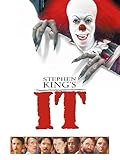
Stephen King, IT! | Buy on Amazon | |
| 3 |
![The Shout (1978) [ Blu-Ray, Reg.A/B/C Import - Spain ]](https://m.media-amazon.com/images/I/31uKYF-M+kL._SL160_.jpg)
|
The Shout (1978) [ Blu-Ray, Reg.A/B/C Import - Spain ] | $38.98 | Buy on Amazon |
| 4 |

|
The Rocky Horror Picture Show | Buy on Amazon | |
| 5 |
![Ritual (2002) [ Blu-Ray, Reg.A/B/C Import - Spain ]](https://m.media-amazon.com/images/I/41o5TYZA1lL._SL160_.jpg)
|
Ritual (2002) [ Blu-Ray, Reg.A/B/C Import - Spain ] | $34.98 | Buy on Amazon |
For viewers eager to experience this return, the film is currently available through standard digital streaming outlets, accessible on demand for home viewing. That accessibility matters, because Curry’s comeback isn’t positioned as a limited curiosity; it’s an invitation for longtime fans and new audiences alike to reconnect with a voice that helped define modern horror. In a genre obsessed with reboots and legacy sequels, Tim Curry’s reemergence feels less like a revival and more like a homecoming.
From Pennywise to Cult Icons: Revisiting Tim Curry’s Enduring Horror Legacy
The Performance That Rewrote Pennywise
For many viewers, Tim Curry’s place in horror history begins, and arguably peaks, with Pennywise the Dancing Clown in the 1990 adaptation of It. Long before jump-scare economics dominated the genre, Curry delivered a performance rooted in character work and theatrical menace. His Pennywise was playful, intimate, and deeply unsettling, the kind of villain who didn’t need gore to feel dangerous.
#1 Best Overall
- Blu-ray
What made Curry’s interpretation so enduring was its elasticity. He could pivot from childlike warmth to predatory threat in a single breath, often within the same line reading. That vocal unpredictability is precisely why his return to horror via voice performance feels so spiritually aligned with his legacy.
Rocky Horror and the Birth of Cult Immortality
Outside of Pennywise, Curry’s horror credentials are inseparable from The Rocky Horror Picture Show, a film that redefined midnight movie culture. As Dr. Frank-N-Furter, Curry fused camp, seduction, and genre subversion into a character that still defies categorization. Horror fans didn’t just watch Rocky Horror; they participated in it, and Curry was the gravitational center.
That sense of communal reverence carries into the present. His involvement in any horror project, even in a supporting or vocal role, signals legitimacy to audiences raised on cult cinema. It’s a reminder that horror has always thrived on personality as much as spectacle.
Villains, Voices, and the Power of Presence
Curry’s impact extends far beyond his most famous roles. From the satanic elegance of Darkness in Legend to decades of voice work in animation and games, he has consistently elevated genre material through performance alone. His villains linger not because of their designs, but because of how he inhabits them.
The Tool Desk
Outbyte Driver Updater FREEScan for outdated or missing drivers - takes under a minuteDriver Scan →Outbyte PC Repair FREEClear out junk files and repair common Windows errorsFree Scan →The new streaming horror film smartly taps into this history by centering Curry’s contribution on voice and psychological weight. Rather than asking him to replicate past physical performances, the film uses what has always set him apart: command, timing, and an instinct for theatrical dread. It’s a modern application of an old-school skill set.
Why Tim Curry Still Matters to Horror Fans
In an era where horror often chases trends, Tim Curry represents something rarer: continuity. His career bridges prestige adaptations, cult phenomena, and mainstream genre hits, creating a shared reference point for Gen X, Millennials, and now younger streaming audiences discovering him for the first time.
His return, accessible through major digital streaming platforms, isn’t just about availability. It’s about preservation of a performance tradition that values voice, character, and mood over excess. Curry’s presence still reframes a project, reminding viewers that true horror often begins with how a story is told, and who is trusted to tell it.
Inside the New Horror Film: Premise, Tone, and the Kind of Fear It Delivers
The new horror film doesn’t announce itself with spectacle. Instead, it opens with a deceptively simple premise: a contained story built around isolation, buried guilt, and the unsettling idea that some places remember what was done inside them. It’s the kind of setup that recalls classic psychological chillers, where dread accumulates quietly rather than exploding all at once.
Free tools Windows power users keep installed
One-click scans. No signup required.
What makes the premise resonate is its patience. The film allows unease to seep in through suggestion, implication, and sound design, trusting the audience to lean forward rather than brace for impact. That approach creates the ideal environment for Tim Curry’s return, using presence rather than prominence to deepen the experience.
A Psychological Horror Built on Atmosphere
Tonally, the film favors slow-burn tension over modern jump-scare excess. Shadows linger, silences stretch, and conversations carry an off-kilter rhythm that suggests something is always just out of frame. The fear here is intimate and internal, the kind that unsettles long after the credits roll.
Curry’s contribution is woven into that atmosphere. His role, delivered primarily through voice and carefully measured dialogue, becomes a kind of narrative pressure point. Every line feels deliberate, weighted with implication, recalling his ability to make even minimal screen time feel monumental.
Rank #2
The Kind of Fear Tim Curry Has Always Excelled At
This is not a film interested in monsters that chase or gore that overwhelms. Its terror comes from authority, from being guided by a voice that sounds certain, persuasive, and faintly amused by what unfolds. That dynamic plays directly into Curry’s legacy as a performer who understands how menace and charisma can coexist.
Longtime fans will recognize the familiar cadence, the subtle musicality in his delivery that turns exposition into incantation. Newer viewers, encountering him for the first time through streaming, will quickly understand why his performances have endured. He doesn’t demand attention; he commands it.
Designed for the Streaming Era, Rooted in Classic Horror Values
While the film is very much a product of the streaming era in its scale and pacing, its sensibilities are rooted in an older tradition of horror storytelling. It rewards headphones, dark rooms, and focused viewing, encouraging audiences to listen as much as they watch. In that sense, Curry’s involvement feels less like a cameo and more like a guiding principle.
Currently available to stream digitally, the film positions his return as an event without turning it into a gimmick. It understands that Tim Curry’s greatest strength has always been trust. When he speaks, horror fans listen, and this film is built to make that listening experience unforgettable.
Tim Curry’s Role Explained: Performance Style, Character Significance, and Limits of the Comeback
Tim Curry’s return is carefully calibrated, honoring both his legacy and the realities of his career today. Rather than positioning him as a traditional on-screen presence, the film builds its mythology around his voice and controlled performance energy. It’s a choice that feels intentional, respectful, and creatively aligned with the story’s psychological focus.
Do these 3 things before closing this tab:
1Fix the driver behind crashes, sound loss and screen glitches2Clear out junk files and repair common Windows errors3Scan for outdated or missing drivers - takes under a minuteA Performance Built on Precision, Not Volume
Curry’s delivery here is restrained, almost surgical, relying on cadence and timing instead of theatrical excess. His voice arrives sparingly, often in moments when the film needs direction, reassurance, or ominous clarity. That restraint amplifies its power, reminding audiences that Curry has always known how to weaponize subtlety.
The familiar warmth remains, but it’s edged with something colder. He sounds like someone who knows more than he’s saying and enjoys letting others fill in the gaps. It’s classic Curry, distilled.
The Character as Authority Figure and Narrative Anchor
Within the story, Curry’s character functions less as a participant and more as a gravitational force. He is the voice that frames events, contextualizes danger, and quietly influences decisions without ever stepping into the spotlight. That distance makes him feel omnipresent, as though the horror itself is listening alongside the audience.
This role taps directly into his history of playing figures who wield power through intellect and personality rather than physicality. From cult leaders to corrupt officials, Curry has always excelled at embodying systems of control, and this film leans into that strength.
Understanding the Limits of the Comeback
It’s important to note that this is not a full-scale return in the traditional sense. Curry does not carry the film on his shoulders, nor is he asked to. His involvement is measured, with recording sessions and performance demands clearly shaped around accessibility and sustainability.
That limitation, however, becomes an asset. By narrowing his role, the filmmakers ensure that every moment he appears feels purposeful. The result is a performance that respects his health, honors his history, and still delivers genuine impact.
Rank #3
- The Shout (1978)
- The Shout (1978)
Why His Presence Still Matters in Modern Horror
For horror fans, Curry’s return is about more than nostalgia. It’s a reminder of a performance style that values intelligence, patience, and psychological depth in an era often dominated by sensory overload. His voice alone recalibrates the film’s tone, signaling that this is a story meant to be absorbed, not rushed through.
Available to stream now, the film allows audiences to experience that effect intimately, whether through headphones or late-night viewing. Tim Curry’s role may be limited in scope, but its significance is immense, reinforcing why his influence on horror has never truly faded.
How the Film Was Made Possible: Health, Technology, and Creative Adaptation
Tim Curry’s return did not happen by accident, nor was it rushed to capitalize on nostalgia. It emerged from a production model built around respect, patience, and a clear understanding of what modern filmmaking can offer legacy performers. The result is a collaboration that feels intentional rather than opportunistic.
Designing a Role Around Health and Longevity
Since his stroke in 2012, Curry has understandably limited on-camera work, and this film was structured with those realities firmly in mind. His performance was recorded in controlled sessions that prioritized comfort, flexibility, and pacing, allowing him to work without the physical strain of a traditional shoot. The filmmakers shaped the character to fit Curry’s strengths rather than forcing him into a conventional presence.
This approach allowed Curry to focus on what he does best: vocal precision, timing, and psychological weight. By removing the need for physical endurance, the film preserves his energy for moments that matter, ensuring his involvement feels purposeful and sustainable.
The Role of Technology in Bringing Curry Back
Advances in audio recording and post-production played a crucial role in making the performance seamless. High-fidelity voice capture allowed Curry’s delivery to retain its familiar texture, while subtle sound design enhancements gave his presence an almost spectral authority within the film’s soundscape. The technology never overwhelms the performance, instead disappearing behind it.
What’s actually slowing this PC down?
Pick the symptom - the matching free tool is one click away.
Editing and mixing were used not to mask limitations, but to elevate intent. The filmmakers understood that Curry’s voice carries decades of cinematic memory, and they treated it like a narrative instrument rather than a technical workaround.
Creative Adaptation as a Storytelling Strength
Rather than seeing constraints as obstacles, the creative team leaned into them. The script was adapted to emphasize narration, off-screen influence, and moments of controlled revelation, allowing Curry’s character to loom over the story without dominating it. This design aligns naturally with his legacy in horror, where suggestion often proves more powerful than spectacle.
That adaptability extends to how audiences experience the film today. Available to stream on major digital platforms, the movie is ideally suited for intimate viewing, where Curry’s voice can resonate fully through headphones or a quiet room. In many ways, the streaming format enhances the very choices that made his return possible.
A Model for Legacy Performances in Modern Horror
Curry’s involvement sets a quiet precedent for how aging icons can reenter the genre without compromise. By balancing health considerations with technological support and thoughtful writing, the film demonstrates that meaningful contributions do not require maximal screen time. What matters is intention, clarity, and respect for the performer’s history.
Outdated Drivers Are Slowing You Down
One free scan finds every outdated or missing driver and matches the right update for your exact hardware.Free scan · exact hardware matchWindows Errors? Fix Them Before They Spread
Repair common Windows errors and clear accumulated junk for a smoother, more stable PC - no reinstall needed.Free scan · no reinstallIn embracing this model, the film doesn’t just bring Tim Curry back to the screen. It shows how horror, at its best, adapts to honor its legends while still moving forward.
Rank #4
Where to Watch: Streaming Platform Details, Release Strategy, and Availability
For audiences eager to experience Tim Curry’s long-awaited return, accessibility has been a key part of the film’s rollout. Rather than a traditional theatrical run, the release embraces a streaming-first strategy that aligns with both the intimacy of the performance and modern viewing habits. It is a decision that places Curry’s voice and presence directly into viewers’ homes, where atmosphere and sound design can be fully appreciated.
Streaming Platforms and Digital Access
The film is currently available through major premium video-on-demand services, including Amazon Prime Video, Apple TV, Google Play, and Vudu. This wide digital availability ensures that fans across regions can access the film without delay, whether through rental or purchase options. For many viewers, especially those who grew up with Curry’s work, the ease of access feels like an invitation rather than a barrier.
While no exclusive subscription platform has been announced at launch, industry expectations point toward a broader streaming home in the coming months. This staggered approach mirrors recent horror releases that prioritize immediate digital reach before settling into longer-term catalog visibility.
Recommended Free Tools
A Release Strategy Built for Atmosphere
The decision to bypass theaters is not a retreat but a recalibration. The film’s emphasis on voice, suggestion, and psychological unease plays especially well in controlled environments, where viewers can watch alone, at night, with headphones or a carefully tuned sound system. In that sense, streaming becomes part of the storytelling, not merely a distribution method.
For Tim Curry’s performance in particular, this strategy feels intentional. His role thrives on nuance and vocal command, elements that can sometimes be lost in larger theatrical settings but flourish in close, focused viewing conditions.
Availability and International Reach
Internationally, the film is rolling out through comparable digital storefronts, with localized availability depending on region. Horror has always been a global language, and Curry’s legacy carries weight well beyond North America, making international access a priority rather than an afterthought.
As streaming continues to define how legacy performers reconnect with audiences, this release stands as a thoughtful example. It ensures that Tim Curry’s return is not limited by geography or format, allowing fans old and new to experience the impact of his presence on their own terms, in the spaces where horror often feels most personal.
Why Tim Curry Still Matters: Generational Impact on Horror Fans and Filmmakers
Tim Curry’s return to the screen resonates far beyond novelty or nostalgia. For multiple generations, his performances didn’t just entertain; they defined how horror could be theatrical, seductive, and deeply unsettling all at once. Curry brought a sense of intelligence and intention to fear, making audiences feel as though the terror was choosing them rather than simply appearing.
In an era increasingly shaped by algorithm-driven content and disposable villains, Curry’s presence reminds viewers that horror is as much about performance as it is about premise. His reemergence arrives at a moment when the genre is once again valuing character, voice, and psychological weight over spectacle alone.
A Legacy Built on Voice, Persona, and Fear
From Pennywise in It to the embodiment of Darkness in Legend and the subversive iconography of The Rocky Horror Picture Show, Curry’s impact cuts across subgenres and decades. He mastered the art of using voice and physicality as instruments of dread, often making stillness or a single line reading more frightening than overt violence. Those performances became cultural touchstones, endlessly quoted, referenced, and studied.
That mastery is precisely why his new horror role, centered on vocal command and controlled menace, feels so appropriate. Rather than attempting to recreate past glories, the film leans into the elements Curry has always wielded best. It is a performance designed for intimacy, where every inflection matters and silence can be as threatening as sound.
Best Value
- Ritual (2002)
- Ritual (2002)
Influence on Filmmakers Who Grew Up Watching Him
Many of today’s horror filmmakers cite Tim Curry as an early influence, not just for his roles but for his fearlessness in embracing the strange. His performances gave permission to be bold, theatrical, and emotionally precise within a genre often dismissed as shallow. You can see echoes of his approach in modern prestige horror, where villains are allowed complexity and charisma.
This generational throughline adds weight to his return. Curry is not stepping back into a genre that moved on without him; he is rejoining one that quietly absorbed his lessons and evolved because of them. His presence feels less like a comeback and more like a conversation resumed.
Why His Return Matters Now
For longtime fans, seeing Tim Curry attached to a new horror release carries emotional significance, especially given his limited on-screen appearances in recent years. The fact that audiences can stream the film easily at home makes the experience feel personal, almost private, echoing how many first encountered his work late at night on VHS, DVD, or cable television.
At the same time, younger viewers discovering Curry for the first time through this release are encountering a performer who represents a different philosophy of fear. It is horror driven by character, confidence, and craft. In that way, Tim Curry’s return is not just a moment for fans to celebrate, but a reminder of what the genre can be when performance leads the terror.
What This Return Means for Horror Cinema—and Whether It’s Truly the Final Curtain
Tim Curry’s return arrives at a moment when horror is once again prioritizing atmosphere, performance, and psychological unease over spectacle. In a genre crowded with loud imagery and accelerated pacing, his presence is a reminder that fear can still be generated through voice, timing, and sheer authority. It reinforces the idea that horror’s most enduring power often comes from the actor, not the effect.
A Role That Honors His Legacy Without Imitating It
Crucially, this new film does not ask Curry to revisit familiar archetypes or chase nostalgia outright. His role is built around controlled menace, largely driven by vocal performance and psychological manipulation, playing to the strengths that defined his greatest work. It is a character that understands restraint as a weapon, allowing Curry’s natural command to do the heavy lifting.
That creative choice matters. Rather than treating his return as a novelty, the film positions him as a living pillar of the genre, capable of anchoring a story through presence alone. It is a performance that feels earned, thoughtful, and deeply aware of how audiences engage with his voice and cadence.
Streaming Access Makes the Moment Feel Personal
The fact that audiences can stream the film at home adds another layer of resonance. Tim Curry’s most beloved performances often became personal rituals, discovered through late-night viewings, rewatches, and word-of-mouth recommendations. Watching his latest turn in a similar setting feels almost intentional, as if history is quietly looping back on itself.
PC Slower Than It Used to Be?
A free scan shows the junk files, broken settings and background clutter dragging Windows down - then fixes them in one click.Free scan · Windows 10 & 11Outdated Drivers Are Slowing You Down
One free scan finds every outdated or missing driver and matches the right update for your exact hardware.Free scan · exact hardware matchFor longtime fans, this accessibility transforms the experience into something intimate rather than event-driven. For new viewers, it offers an entry point into Curry’s horror legacy that feels immediate and unfiltered. Either way, the streaming release ensures his return is not confined to a theatrical footnote, but part of everyday horror conversation.
Is This Truly the Final Curtain?
Whether this marks Tim Curry’s final screen appearance remains deliberately unanswered. There is a sense of closure in how carefully calibrated this role feels, as though it was designed to stand comfortably as a capstone if needed. Yet the performance itself suggests there is still creative fire present, even if future roles are rare or unconventional.
If this does become his final horror offering, it is a fitting one. It underscores why Curry remains influential, not as a relic of a louder era, but as proof that great horror acting transcends trends. His return does not just celebrate the past; it quietly challenges the genre to remember what truly lingers in the dark after the credits roll.
Quick Recap
Product prices and availability are accurate as of the date/time indicated and are subject to change. Any price and availability information displayed on Amazon at the time of purchase will apply.

