Free tools Windows power users keep installed
One-click scans. No signup required.
“Pale hands I loved beside the Shalimar” opens a song whose words and music came from two different women. The poem was credited to Laurence Hope, the pen name of Adele Florence Nicolson; Amy Woodforde-Finden composed its music. First associated with a 1902 publication, the song later acquired a reported life in fashionable European cafés and on dance floors—but the surviving account describes that reception rather than measuring its scale.
Who wrote “Pale hands I loved beside the Shalimar”?
The line is from “Kashmiri Song,” a poem credited to Laurence Hope. Hope was the pen name of Adele Florence Nicolson. A 2015 Scroll.in feature by Geeta Doctor uses the spelling “Nicolson” in its narrative, while variant spellings also appear in that feature; Nicolson is used here for consistency.
The Shalimar and the poem’s romantic voice establish a literary scene. They do not, by themselves, show that the words document a particular historical romance. Doctor’s feature offers a dramatic account of Nicolson’s life in colonial India, but the biographical details available here do not independently establish every claim in that account. The poem should not be treated as straightforward autobiography.
How did the poem become a song?
Amy Woodforde-Finden set Hope’s poem to music. Timothy D. Taylor’s chapter “Widening the Horizon: Exoticism in Post-War Popular Music” places the composition in 1902 and identifies “Kashmiri Love Song” as an alternate title. The work is associated with Four Indian Love Lyrics, in the publication context of The Garden of Kama. That 1902 anchor belongs to the song’s early composition and publication history—not to the later café reception.
Quick wins for a faster PC:
Scan for outdated or missing drivers - takes under a minuteDriver Scan →Clear out junk files and repair common Windows errorsFree Scan →Fix the driver behind crashes, sound loss and screen glitchesFind Drivers →#1 Best Overall

- Used Book in Good Condition
What is known about its reception between the wars?
Doctor’s 2015 retrospective feature reports that the song was played in fashionable European cafés between the world wars and that soldiers danced a foxtrot to it. This is a qualitative account of reception, not a measure of how often the song was played or how many people knew it. The evidence cited here supplies no sales figures, chart positions, café programs, contemporary reviews, or recording records with which to quantify its reach in Britain or elsewhere.
“Entranced Britain” is therefore best read as evocative framing, not a demonstrated national response. The report gives a useful picture of the song’s later circulation, but does not establish that it was uniformly popular or that all listeners encountered it in the same way.
Rank #2

- Includes 11 Favorite Folk Songs
- Expertly Crafted For Solo Voice And Piano
- Arranged For Medium High Voice
- Standard Notation, 64 Pages
How did the music evoke an imagined India?
Taylor discusses the song in a broader history of musical exoticism and relays Gerry Farrell’s analysis of its introduction: the opening bars signal an Indian ambience that does not continue through the rest of the song. That is an interpretation of the musical effect, not evidence that the composition reproduces Kashmiri musical traditions authentically or that every historical listener heard it as intended.
The distinction matters: a song can evoke a place for its audience without serving as a reliable account of that place’s music or culture. Here, the literary reference to Shalimar and the musical introduction contribute to an imagined setting; they are not proof of a specific lived scene.
What’s actually slowing this PC down?
Pick the symptom - the matching free tool is one click away.
Rank #3

- Produkttyp: ABIS MUSIC
- Artikelname: Brahms: Die deutschen Volkslieder Op.posth.
- Marke: SEELIGER/KONZERTCHOR DARMSTADT
Is “Kashmiri Song” the same as “Kashmiri Love Song”?
In Taylor’s discussion, “Kashmiri Love Song” is an alternate title for the work otherwise called “Kashmiri Song.” The two titles refer to the same Hope poem set by Woodforde-Finden, rather than to separate compositions established by the sources discussed here.
Historical sheet music associated with the song is a plausible way to explore the composition, but current retailer availability and the formats of any editions have not been established here.
Quick Recap
Best Value
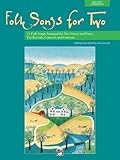
- Format: Book
- Instrument: Voice
- Genre: Folk
- Category: Vocal Collection
- Contributors: Ed. Jay Althouse
Rank #4

- P/V/G
- Pages: 152
- Instrumentation: Piano/Vocal/Guitar
Product prices and availability are accurate as of the date/time indicated and are subject to change. Any price and availability information displayed on Amazon at the time of purchase will apply.




