What’s actually slowing this PC down?
Pick the symptom - the matching free tool is one click away.
The Namesake is a tie only if the comparison makes room for two different strengths: Jhumpa Lahiri’s novel can linger inside a family’s thoughts and history, while Mira Nair’s film turns that long arc into carefully selected images, performances and transitions. The novel offers more interior access; the film shifts attention toward Gogol’s parents. Neither simply replaces the other.
What the novel and film are telling
Lahiri’s 2003 novel follows two generations of a Bengali-American family through tensions between assimilation and cultural preservation, hope for the future and longing for the past. Its attention to food, language, family customs and Hindu rituals keeps those tensions rooted in daily life rather than reducing them to a generic East-versus-West conflict. The National Endowment for the Arts describes the book’s family story and its central themes in its The Namesake reader resources.
| # | Preview | Product | Price | |
|---|---|---|---|---|
| 1 |
|
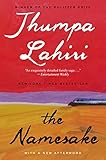
The Namesake: An NYT Bestselling Classic Novel About the Search for Belonging | $9.49 | Buy on Amazon |
| 2 |

|
Namesake: A Novel (The World of the Narrows, 2) | Buy on Amazon | |
| 3 |

|
Fahrenheit 451 | $13.58 | Buy on Amazon |
| 4 |

|
The Namesake: A Commissario Alec Blume Novel | $11.99 | Buy on Amazon |
| 5 |

|
Namesakes: The Origin | $14.77 | Buy on Amazon |
The title points to a family history, not just an unusual name. Gogol is named after Nikolai Gogol, his father Ashoke’s favorite Russian writer. Gogol’s discomfort with his name gathers together questions of inheritance, identity and belonging. The NEA’s discussion material asks readers to consider what other names matter in the novel and why; the name is one way the story makes cultural and personal history tangible.
Nair’s UK film, released in 2006, runs 122 minutes according to the BFI film listing. Nair described the story as a roughly 30-year saga that had to fit into about two hours. That difference in scale is the starting point for understanding the adaptation: the film has to select and reshape, not reproduce every stage of the book.
Do these 3 things before closing this tab:
1Scan for outdated or missing drivers - takes under a minute2Clear out junk files and repair common Windows errors3Fix the driver behind crashes, sound loss and screen glitches#1 Best Overall
What the book can do that the film cannot
Stay close to thought and memory
Lahiri called the novel “interior” and said she had not written it with a film adaptation in mind. Prose can remain with a character’s thought, memory or private uncertainty without needing to make it visible. That room matters in a story where a name carries different meanings for parents and child, and where identity develops over years rather than arriving in one decisive scene.
Give the family’s long arc more room
The novel’s decades-long progression lets readers watch relationships and ideas change across generations. A reader can spend time with the family’s routines and cultural practices as well as the moments of rupture. The book’s value is not simply that it contains more events; it can make gradual change legible from within.
What Nair’s film changes—and gains
It foregrounds Ashima and Ashoke
Nair said she was more interested in Gogol’s parents and that the filmmakers skipped Gogol’s high-school and college years. This shifts the balance: the novel’s naming and identity thread strongly foregrounds Gogol, while the film gives the parents more emphasis. The change makes the immigrant parents’ experience and their relationship to home a more pronounced part of the screen story.
It uses transitions and images to compress time
“The key to making a 30-year saga in two hours is in the transitions,” Nair told the BFI. She described linking Calcutta and New York so they could feel like one city, a visual way to express an immigrant’s simultaneous relationship to two places. In a Directors Guild of America interview, she described wanting “either a series of stills, with actors moving within the frame, or single-take masters.” These choices give the film a visual and emotional grammar that a scene-by-scene fidelity checklist would miss.
Free tools Windows power users keep installed
One-click scans. No signup required.
Rank #3
Nair also described shaping the film’s rhythm to move between laughter and sorrow. The screen version can make that movement immediate through performance, framing and editing, while the novel can give more space to the inner process beneath an emotion.
How to decide which version is stronger
| What matters to you | Better fit | Why |
|---|---|---|
| Private thought, memory and gradual change | The novel | It can stay inside characters’ experience across a longer family timeline. |
| Visual transitions and emotional compression | The film | Nair uses images and transitions to connect places and condense decades into a feature-length story. |
| Gogol’s name and identity as a central thread | The novel | The naming conflict is a key route into the story’s family history and identity questions. |
| The parents’ experience and relationship to home | The film | Nair said she was more interested in Ashima and Ashoke and shifted the emphasis toward them. |
This is why “it’s a tie” is a defensible verdict, not a claim that the works are identical or that audiences prefer them equally. The available sources establish no comparative audience poll or other measure of preference. Lahiri trusted Nair to adapt the book; after seeing the film, Lahiri said she wept and was moved by the story and Nair’s work. That response shows the author’s personal reaction, not a universal result or proof that she approved every individual change.
Rank #4
Which should you read or watch first?
Choose the novel first if you want the full interior and generational experience, especially the way Gogol’s name, family history and changing relationships unfold over time. Choose the film first if you prefer a concentrated visual interpretation that places greater weight on the parents and uses transitions to connect separate places and periods. If you encounter both, treat the film as Nair’s distinct interpretation of Lahiri’s story rather than as a substitute for every part of the book.
Quick Recap
Best Value
Product prices and availability are accurate as of the date/time indicated and are subject to change. Any price and availability information displayed on Amazon at the time of purchase will apply.