In movies, glasses are never just glasses. They’re a visual shorthand, a storytelling tool that can signal intelligence, vulnerability, authority, social awkwardness, or quiet rebellion before a character ever speaks. From classic Hollywood to modern blockbusters, filmmakers have long understood that eyewear can lock an image into our collective memory as powerfully as a catchphrase or costume.
Think about how often glasses become inseparable from the character wearing them, shaping how audiences read their identity and evolution. They can disguise a hero in plain sight, suggest a private inner world, or mark the difference between who a character is and who they’re trying to be. Sometimes they’re shed for transformation, other times they’re the very thing that makes the character iconic, turning a simple accessory into a cultural symbol.
That’s why ranking the most iconic movie characters who wear glasses isn’t about fashion alone. It’s about how a pair of frames helped define personality, theme, and legacy, leaving an imprint on pop culture that extends far beyond the screen. As we move through these characters, we’re really celebrating how something so ordinary became cinematic shorthand for some of the most unforgettable figures in film history.
How We Ranked Them: Criteria for Icon Status, Cultural Impact, and Cinematic Legacy
Ranking movie characters who wear glasses means looking far beyond the frames themselves. We approached this list the same way film history does: by measuring how an image sticks, how it travels through culture, and how deeply it shapes a character’s identity on screen. Glasses aren’t just accessories here; they’re storytelling devices that helped turn fictional people into lasting icons.
#1 Best Overall

- Movie Night Party Favors: our movie night decoration kit contains 32 paper eyeglasses photo props in 16 styles, 2 of each, in a classic red black and gold combination, ideal for a movie night party and enough to capture important moments in a fun way
- Movie Theme Design: our party photo props feature classic movie night themed elements, including microphones, popcorn, movie tickets, video cameras, projectors, and more, to give your party a cinematic feel; These vivid movie decorations will make your party a hit and impress your guests
- Safe and Lightweight: these red black and gold movie glasses are made of quality cardboard, exquisite workmanship, clear printing, light weight, comfortable and soft to wear, will not cause extra pressure on the bridge of nose, specially designed for movie theater party
- Ideal Photo Props: designed with lots of fun elements, these movie themed party photo props look cute and chic for everyone; Take shareable photos of your friends and family at your movie night with these red carpet paper eyeglasses for unforgettable memories
- Wide Applications: whether you're hosting movie night parties, movie themed birthday parties, awards ceremonies, red carpet parties, viewing parties, back to school parties, bachelorette parties, or any other themed parties, our movie theater props are the ideal accessory to add fun and excitement
Icon Status: When Glasses Become Part of the Character’s DNA
First and foremost, we asked a simple question: can you picture the character without the glasses? If the answer feels wrong or incomplete, that’s a strong sign of true icon status. These are the characters whose eyewear is instantly recognizable, as essential as a fedora, a lightsaber, or a leather jacket.
In many cases, the glasses define how the character is introduced and remembered. They shape first impressions, signal intelligence or insecurity, and often become visual shorthand for the role itself. When parody, homage, or Halloween costumes rely on those frames to sell the character, they’ve earned their place in the ranking.
Cultural Impact: Beyond the Screen and Into Pop History
Iconic movie glasses don’t stay confined to the film they debut in. They bleed into pop culture, influencing fashion trends, inspiring endless references, and becoming part of the shared visual language of cinema. Some characters made certain styles famous; others forever changed how audiences associate glasses with power, genius, or transformation.
We also considered longevity. Characters whose look has endured across generations, reboots, memes, and merchandise naturally ranked higher than those who made a brief but flashy impression. True cultural impact is measured by how often a character’s image resurfaces long after the credits roll.
Cinematic Function: What the Glasses Actually Do in the Story
Not all movie glasses serve the same narrative purpose, and that distinction mattered. Some are symbols of dual identity, vulnerability, or repression, removed only when a character evolves or reveals their true self. Others are tools of authority, intellect, or emotional distance, reinforcing how a character moves through the world.
We gave extra weight to characters whose eyewear plays an active role in their arc. When glasses help communicate theme, character growth, or tension without a line of dialogue, they elevate the accessory into meaningful cinematic language.
Legacy: How the Character Lives On in Film History
Finally, we looked at legacy within the broader context of film history. Did this character influence later portrayals, inspire copycats, or redefine a familiar archetype? Did their look help cement the film’s place in the cultural canon?
The highest-ranked characters are those whose glasses feel timeless rather than dated. They continue to resonate because they’re tied to unforgettable performances, enduring stories, and images that remain instantly readable no matter when you first encountered them.
Quick wins for a faster PC:
Clear out junk files and repair common Windows errorsFree Scan →Scan for outdated or missing drivers - takes under a minuteDriver Scan →Repair Windows errors before they cause bigger problemsFix Now →The Rankings: The Most Iconic Movie Characters Who Wear Glasses (From Influential to Untouchable)
10. Doc Brown (Back to the Future)
Wild hair gets most of the attention, but Doc Brown’s oversized goggles and thick-rimmed glasses are inseparable from his image. They visually sell his status as the mad scientist before he ever explains a flux capacitor. The glasses ground his chaos, signaling brilliance barely contained by social norms.
More than a costume detail, they help make Doc instantly readable as eccentric genius. Remove them, and the character loses some of that delightful credibility.
9. Marge Gunderson (Fargo)
Marge’s simple wire-frame glasses quietly reinforce everything that makes her iconic. They suggest practicality, intelligence, and emotional transparency in a film full of deception and violence. Nothing about her look is flashy, which is exactly the point.
Her glasses become a visual counterweight to the chaos around her, making her calm authority feel earned. They’re a reminder that iconography doesn’t always have to shout.
Do these 3 things before closing this tab:
1Repair Windows errors before they cause bigger problems2Fix the driver behind crashes, sound loss and screen glitches3Clear out junk files and repair common Windows errors8. Bruce Banner (The Avengers)
Before the Hulk smashes anything, Banner’s glasses establish him as gentle, brilliant, and self-contained. They visually separate the man from the monster, turning a simple accessory into a symbol of restraint. When those glasses come off, audiences know what’s coming.
Across multiple films, that visual shorthand never loses its power. The glasses help humanize a character defined by uncontrollable force.
7. Velma Dinkley (Scooby-Doo)
Velma’s thick orange turtleneck and square glasses are pop culture shorthand for brains over brawn. Her glasses aren’t just part of her look; they’re central to recurring gags and plot mechanics. Lose the glasses, lose the clues.
Few characters are so immediately identifiable by eyewear alone. Velma helped cement the association between glasses and intelligence for generations of viewers.
6. Truman Burbank (The Truman Show)
Truman’s glasses are subtle but crucial, reinforcing his everyman normalcy within a meticulously controlled world. They make him look approachable, harmless, and unthreatening, which is exactly how the system wants him to appear. When his perception begins to shift, the glasses take on thematic weight.
They symbolize filtered reality, vision shaped by manipulation. In hindsight, they’re doing more narrative work than most props ever do.
5. Jeff Goldblum’s Seth Brundle (The Fly)
Before the transformation, Brundle’s glasses emphasize vulnerability, intellect, and social awkwardness. They visually frame him as a thinker rather than a physical presence. When he sheds them, it’s not just a style change; it’s the beginning of horror.
Rank #2

- PACKAGE INCLUDES: Set of 12 novelty paper glasses designed specifically for movie night themed parties and photo booth sessions
- VERSATILE DESIGNS: Fun and creative paper cutout glasses featuring various movie-themed shapes perfect for party photos and entertainment
- PARTY DECORATIONS: Ideal props for birthday celebrations, movie nights, theater parties, and special events to create memorable moments
- EASY ASSEMBLY: Ready-to-use party favors that require minimal setup, making them convenient for quick distribution to party guests
- SIZE AND MATERIAL: Lightweight paper construction with approximately 6-inch width, suitable for both and adults to wear comfortably.
The removal of the glasses marks a terrifying evolution. Few films use eyewear so effectively to signal a loss of humanity.
Recommended Free Tools
4. Clark Kent (Superman)
No ranking like this works without acknowledging cinema’s most famous disguise. Clark Kent’s glasses are a masterclass in visual storytelling, convincing audiences that a pair of frames can hide a god. They’re essential to the dual-identity mythology.
The brilliance lies in how ordinary they are. Those glasses don’t just hide Superman; they protect Clark Kent.
3. Neo (The Matrix)
Neo’s sleek black sunglasses became a defining symbol of late-’90s cool and digital rebellion. They reflect a world that isn’t quite real, turning eyes into unreadable surfaces. Style and theme merge perfectly in that design choice.
The glasses aren’t about seeing; they’re about refusing to be seen. Few characters made eyewear feel that philosophically charged.
The Tool Desk
Outbyte PC Repair FREEClear out junk files and repair common Windows errorsFree Scan →Outbyte Driver Updater FREEFix the driver behind crashes, sound loss and screen glitchesFind Drivers →2. Harry Potter (Harry Potter Series)
Harry’s round glasses are inseparable from his identity, transforming a potentially generic hero into an instantly recognizable icon. They emphasize vulnerability, youth, and emotional openness in a world of darkness. Without them, the lightning scar wouldn’t hit the same.
Across films, merchandise, and generations of fans, those glasses became shorthand for modern fantasy itself. They’re as essential as the wand.
1. Tyler Durden (Fight Club)
Tyler Durden’s red-tinted sunglasses aren’t just iconic; they’re confrontational. They distort reality, daring the audience to question what they’re seeing and why they’re drawn to it. The glasses turn him into a walking provocation.
They encapsulate the film’s themes of identity, control, and rebellion in a single image. Few characters have eyewear that feels this inseparable from their philosophy, making Tyler Durden untouchable at the top of the list.
Crashes, No Sound, or Screen Glitches?
Random freezes, missing sound and display glitches usually trace back to one bad driver. Find and replace yours safely.Free scan · under a minutePC Slower Than It Used to Be?
A free scan shows the junk files, broken settings and background clutter dragging Windows down - then fixes them in one click.Free scan · Windows 10 & 11Game-Changers and Scene-Stealers: Characters Who Redefined the Look
Not every iconic pair of movie glasses belongs at the very top of the rankings, but some characters changed how eyewear functioned on screen entirely. These are the scene-stealers who made glasses expressive, thematic, or downright unforgettable, even when they weren’t the centerpiece of the film.
Holly Golightly (Breakfast at Tiffany’s)
Holly Golightly’s oversized black sunglasses didn’t just define a character; they defined an era of cinematic style. Worn like emotional armor, they project glamour while quietly shielding vulnerability. Audrey Hepburn turned eyewear into a fashion statement that still echoes through pop culture decades later.
Those glasses helped sell Holly’s carefully curated persona, reinforcing the idea that image can be both power and disguise. Few characters made sunglasses feel so aspirational and emotionally loaded at the same time.
The Dude (The Big Lebowski)
The Dude’s tinted glasses are as relaxed and offbeat as the man wearing them. Slightly crooked, perpetually casual, they complete a look that rejects ambition, authority, and polish. They’re less about hiding and more about opting out.
In a film full of eccentric personalities, his eyewear quietly anchors the character’s worldview. It’s hard to imagine The Dude bowling, rambling, or philosophizing without them.
Jules Winnfield (Pulp Fiction)
Jules’ sunglasses add an extra layer of menace and cool to an already commanding presence. They obscure emotion, turning his stare into something unknowable and threatening. When he removes them, it feels intentional, almost ceremonial.
The glasses contribute to Quentin Tarantino’s myth-making, elevating Jules from hitman to cinematic icon. They’re part of the uniform that made the character instantly legendary.
Doc Brown (Back to the Future)
Doc Brown’s wild-eyed goggles and thick glasses perfectly visualize cinematic genius on the brink of chaos. They exaggerate his expressions, making his enthusiasm, panic, and brilliance feel larger than life. Science has rarely looked so entertaining.
What’s actually slowing this PC down?
Pick the symptom - the matching free tool is one click away.
His eyewear reinforces the character’s role as both mentor and madman. Without those lenses, Doc wouldn’t feel quite as electrifying or eccentric.
Rank #3

- 3D Movie Glasses - Our 3d glasses for movies at home are made from sturdy paperboard to deliver lightweight comfort during long viewing sessions, offering red/cyan anaglyph filters that reproduce depth for movies and TV shows
- Fit Comfort - Our 3d glasses for kids feature a flexible, foldable design that adapts to smaller heads and larger sizes alike, providing a snug, gentle fit that keeps lenses aligned for steady 3D effects
- Universal Compatibility - Our 3d glasses for movies at home work with a wide range of anaglyph 3D content including films, broadcasts, and home video, letting you enjoy classic red-blue 3D sources without special equipment
- Portable Foldable Design - Our 3d movie glasses fold flat to about 5.7 x 5.12 x 1.5 inches and weigh next to nothing, slipping into pockets or party kits so you can take immersive 3D viewing anywhere
- Value Pack Set - Our 3d glasses come as a 10-piece bundle of disposable yet durable paper viewers, ideal for family movie nights, classroom demos, or event giveaways
Edna Mode (The Incredibles)
Edna Mode’s massive circular glasses are an extension of her personality: bold, precise, and utterly uncompromising. They magnify her eyes, making every critique feel sharper and every command non-negotiable. The design turns her into an animated fashion authority.
In a film packed with superheroes, Edna steals scenes without superpowers, relying instead on style and presence. Her glasses are central to that dominance.
Annie Hall (Annie Hall)
Annie Hall’s oversized frames helped redefine romantic leads by rejecting conventional glamour. The glasses signal intelligence, individuality, and a refusal to perform femininity by Hollywood’s old rules. They made awkwardness stylish.
Free tools Windows power users keep installed
One-click scans. No signup required.
That look became shorthand for a new kind of leading character, one rooted in authenticity rather than polish. It’s a quiet revolution, but a lasting one.
These characters may not sit at the very top of the list, but their eyewear reshaped how audiences read personality, power, and identity on screen. In their own ways, they proved that glasses aren’t just accessories; they’re storytelling tools.
Glasses as Storytelling: What Eyewear Reveals About Personality, Power, and Transformation
In movies, glasses are rarely neutral. They’re visual shorthand, instantly communicating who a character is, who they pretend to be, or who they’re about to become. A single pair of frames can signal intellect, vulnerability, menace, or control before a word of dialogue is spoken.
Hollywood understands the power of that shorthand, which is why so many iconic characters are inseparable from their eyewear. Remove the glasses, and the character often feels incomplete, or worse, exposed.
Free tools Windows power users keep installed
One-click scans. No signup required.
Identity on Display
For many characters, glasses define how the world perceives them. Clark Kent’s mild-mannered frames don’t just hide Superman’s face; they sell the illusion of ordinariness. The glasses become a performance, reinforcing how identity in cinema is often something worn as much as lived.
Similarly, characters like Harry Potter wear their glasses as part of their vulnerability. The frames make him look younger, more fragile, and more relatable, grounding a mythic hero in something recognizably human.
Authority, Distance, and Power
Glasses can also create emotional distance, especially when paired with confidence or danger. Dark lenses and sharp frames often act like armor, keeping others at bay. Think of characters who never remove their sunglasses unless they want you to feel the weight of the moment.
In these cases, eyewear becomes a barrier between the character and the audience. It suggests control, secrecy, and dominance, turning a simple accessory into a power move.
The Tool Desk
Outbyte Driver Updater FREEScan for outdated or missing drivers - takes under a minuteDriver Scan →Outbyte PC Repair FREEClear out junk files and repair common Windows errorsFree Scan →Transformation and Revelation
Few visual cues signal transformation as clearly as the removal or replacement of glasses. When a character sheds their frames, it often marks a shift in confidence, self-awareness, or status. The audience is conditioned to read that moment as symbolic, even if it happens quietly.
Conversely, putting on glasses can represent growth or acceptance. It can mean embracing intelligence, responsibility, or a true self that was previously hidden. In cinema, glasses don’t just change how a character looks; they change how their story is read.
Across decades of film history, eyewear has functioned as visual storytelling at its most efficient. Whether signaling genius, danger, insecurity, or evolution, glasses help turn characters into icons long before they ever make the ranking.
Independent reader supportYour contribution helps us test, update, and keep practical guides available for everyone.Honorable Mentions: Memorable Movie Characters Who Just Missed the Cut
Not every glasses-wearing icon could crack the final ranking, but these characters remain unforgettable precisely because of how their eyewear shaped their screen presence. Some were edged out by cultural saturation, others by limited screen time, yet all left a lasting impression on movie history. Think of this group as the hall of fame just outside the spotlight.
Recommended Free Tools
Doc Brown (Back to the Future)
Wild hair gets most of the attention, but Doc Brown’s oversized glasses are essential to selling his manic brilliance. They exaggerate his expressions, amplify his urgency, and visually underline that this is a man permanently thinking several timelines ahead. Without them, the character loses a layer of eccentric credibility.
Velma Dinkley (Scooby-Doo)
Across animated features and live-action adaptations, Velma’s thick frames are non-negotiable. They’re shorthand for intelligence, skepticism, and problem-solving competence in a world of chaos and costumed villains. Her glasses don’t just signal brains; they’re a visual promise that logic will eventually win.
Edna Mode (The Incredibles)
Edna’s massive circular glasses are as bold as her personality, turning her into a walking design manifesto. They project authority, precision, and absolute intolerance for mediocrity. In a film full of superpowers, her eyewear helps make her one of the most commanding figures on screen.
Rank #4
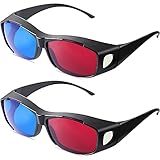
- What You Will Get: package contains 2 pieces of 3D style glasses, enough quantity can meet your various viewing demands and replacement, and you can share them with your partners and family
- Multiple Applications: these red blue 3D glasses are suitable for most kinds of red blue mode's three-dimensional film, 3D games, 3D picture appreciation, bring you nice using experience.Note: This product belongs to the category of red and blue 3D glasses and is only suitable for red and blue 3D films. Other types of 3D films cannot present the effect.
- Compatible with Most Devices: the simple red blue 3D glasses can be applied in general computer monitor, laptops, projectors, computers and most display devices.Note: Before officially watching the movie, you can adjust the screen brightness to a suitable value to present a better viewing effect
- Strong Material: these simple style 3D glasses adopt black PC frame and red and blue quality lens, which are flexible and reliable, not easy to break, light in weight and portable, can serve you for a long time
- Nice Performance: the 3D movie game glasses can also be applied by myopic friends, proper size provides comfortable using experience, stylish and comfortable; Moreover, it can be served as practical gifts for people who love watching movie and playing games, suitable for most people
Jules Winnfield (Pulp Fiction)
Jules’ dark sunglasses serve as emotional insulation, reinforcing his cool detachment and controlled menace. They keep the audience at a distance, making his moments of moral clarity hit even harder when they arrive. When the glasses come off, you feel the shift instantly.
Austin Powers (Austin Powers: International Man of Mystery)
Those thick, British frames are inseparable from the joke and the charm. Austin’s glasses intentionally clash with his supposed sex-symbol status, turning him into a walking parody of swinging ’60s cool. The result is a look that’s ridiculous, confident, and instantly recognizable.
Gordon Gekko (Wall Street)
Gekko’s sleek, rimmed glasses reflect his obsession with control, perception, and power. They sharpen his predatory calm, reinforcing the sense that he’s always watching, always calculating. In a film about excess and ambition, his eyewear becomes part of the armor.
These characters may have just missed the official ranking, but their glasses remain central to how audiences remember them. Each pair tells a story, adds texture, and proves that even outside the top spots, great eyewear can still define a cinematic legacy.
The Lasting Impact: How These Characters Shaped Fashion, Fandom, and Film History
What unites these characters isn’t just memorable eyewear, but how completely those glasses fused with identity. Over time, the frames stopped being props and became symbols, instantly communicating intelligence, danger, awkwardness, authority, or rebellion before a single line of dialogue landed. That kind of visual shorthand is rare, and cinema has been borrowing from it ever since.
From Costume Choice to Cultural Style Blueprint
Several of these characters turned glasses into fashion statements that escaped the screen. Harry Potter’s round frames, Neo’s razor-thin lenses, and Gordon Gekko’s sleek rims all triggered real-world trends, proving that movie wardrobes don’t just reflect culture, they reshape it. Eyewear brands, Halloween costumes, and even everyday office fashion still echo these designs decades later.
What’s striking is how specific these looks are. You can’t swap the frames without weakening the character, which is why so many replicas aim for exactness rather than approximation. In pop culture terms, that’s the difference between a recognizable outfit and a timeless icon.
Fandom, Identity, and Instant Recognition
In fandom spaces, glasses became shorthand for belonging. Cosplayers know that one well-chosen pair can complete a character even if the rest of the costume is minimalist. The frames act as visual passwords, signaling shared knowledge and affection for the source material.
This also helped broaden who got to be iconic on screen. Characters like Velma, Edna Mode, and Austin Powers embraced glasses not as flaws to overcome, but as integral extensions of personality. That shift quietly expanded the definition of cinematic cool.
Redefining How Film Uses Visual Symbolism
From a film history perspective, these characters reinforced the power of visual economy. Glasses became tools for storytelling, signaling intelligence, emotional distance, vulnerability, or transformation without exposition. When a character removes their glasses, audiences instinctively brace for change.
That language is now baked into filmmaking. Modern movies continue to use eyewear as character architecture, a legacy built by these unforgettable performances. In a medium obsessed with faces, these characters proved that sometimes the most important thing a hero wears isn’t a cape, a suit, or a weapon, but a perfectly chosen pair of frames.
Final Verdict: Why a Pair of Glasses Can Make a Character Legendary
When you line up the most iconic movie characters who wear glasses, a clear truth emerges: eyewear doesn’t just accessorize these characters, it defines them. The frames become inseparable from the face, the performance, and the mythology surrounding the role. Remove the glasses, and something essential goes missing.
Glasses as Character DNA
The best examples work because the glasses feel inevitable. Indiana Jones’ fedora may be famous, but without his professor’s spectacles, part of his dual identity disappears. Clark Kent’s glasses aren’t just a disguise, they’re a behavioral switch, altering posture, voice, and presence with astonishing efficiency.
Quick wins for a faster PC:
Clear out junk files and repair common Windows errorsFree Scan →Scan for outdated or missing drivers - takes under a minuteDriver Scan →Repair Windows errors before they cause bigger problemsFix Now →This is where glasses outperform flashier costume elements. They operate at a psychological level, signaling intellect, insecurity, authority, or rebellion before a character speaks a word. In film, that kind of shorthand is gold.
Iconography Built on Specificity
What elevates these characters from memorable to legendary is precision. Harry Potter’s round frames, Neo’s minimalist lenses, Velma’s oversized squares, and Gekko’s power-player rims aren’t interchangeable styles, they’re narrative choices. Each pair locks the character into a specific cultural moment while somehow remaining timeless.
That specificity fuels recognition. You don’t need dialogue, context, or even a full costume. A silhouette and the right pair of glasses can do all the work, which is the highest compliment pop culture can give a design.
Why We Keep Coming Back to Them
Audiences connect to these characters because glasses feel real. They ground fantastical worlds, high-concept plots, and outsized personalities in something familiar and human. For many viewers, these characters didn’t just look cool, they looked attainable.
Crashes, No Sound, or Screen Glitches?
Random freezes, missing sound and display glitches usually trace back to one bad driver. Find and replace yours safely.Free scan · under a minuteWindows Errors? Fix Them Before They Spread
Repair common Windows errors and clear accumulated junk for a smoother, more stable PC - no reinstall needed.Free scan · no reinstallThat relatability is why these performances endure. Glasses invite identification, not distance, allowing icons to feel personal even as they become mythic.
In the end, ranking the most iconic movie characters who wear glasses isn’t just about style or nostalgia. It’s about recognizing how a small visual choice can unlock deeper storytelling, sharper characterization, and lasting cultural impact. Cinema is built on faces, and sometimes the detail that makes a face unforgettable is as simple, and as powerful, as a perfectly chosen pair of frames.
Quick Recap
Product prices and availability are accurate as of the date/time indicated and are subject to change. Any price and availability information displayed on Amazon at the time of purchase will apply.




