Recommended Free Tools
Fantastic Four began in 1961 with a science-fiction adventure about four people changed by cosmic rays. Its lasting distinction was that the heroes were also a family: their public identities, disagreements, and personal flaws became part of the story. To understand the comic’s history, start with its first issue, then follow the original run or choose a later Marvel-recommended entry point.
How Fantastic Four began
Marvel identifies writer Stan Lee and artist Jack Kirby as the creators behind the Fantastic Four’s 1961 debut. The launch comic, Fantastic Four (1961) #1, introduced Reed Richards, Sue Storm, Ben Grimm, and Johnny Storm. Marvel’s series page identifies that original title as the starting point for its first and longest-running series.
![Fantastic Four: Solve Everything [Marvel Premier Collection]](https://m.media-amazon.com/images/I/515U+S7STvL._SL160_.jpg)

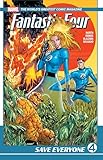

Dates for the debut depend on what is being dated. HISTORY reports that the first issue went on sale on August 8, 1961; that is an on-sale date, not the cover date. The Grand Comics Database catalogs the series as running from November 1961 through September 1996, a span expressed in cover dates. The two records describe different dates, not a contradiction.
What made the original comic distinctive
A science-fiction origin
The first adventure sends the group on an experimental spaceflight. Exposure to cosmic rays transforms them, giving each a different power. The setup joined superhero action to a science-fiction premise shaped by the era’s fascination with space exploration.
Quick wins for a faster PC:
Scan for outdated or missing drivers - takes under a minuteDriver Scan →Clear out junk files and repair common Windows errorsFree Scan →Fix the driver behind crashes, sound loss and screen glitchesFind Drivers →#1 Best Overall
A team that behaved like a family
Rather than presenting a polished, anonymous group of heroes, the comic made the four characters’ relationships central. They argued, clashed, and showed personal flaws. Their identities were public, too, creating room for stories about domestic life, celebrity, and attention from the media alongside fantastic threats.
HISTORY’s retrospective connects the debut to the intense U.S.–Soviet space-race climate and argues that the team’s conflicts and public profile helped distinguish the book from more idealized superhero conventions. It also interprets the title’s early success as a spur to Marvel’s expanding character universe. Those are the article’s historical interpretations, rather than proof that one comic alone caused a broader change.
The original run and its legacy
The 1961 series continued through its September 1996 cover-dated issue, according to the Grand Comics Database. That long span makes the original run a substantial reading project, not a short origin story. Marvel’s reading guides offer a bridge into it: its origins and must-reads paths direct readers toward early material, while its broader Start Here guide also includes later selections.
Marvel’s later retrospectives show how the team’s history has been revisited. Fantastic Four: Life Story retells the team’s decades through a real-world historical lens, while Marvel’s 2021 tribute marked the title’s 60th anniversary. These are retrospective treatments, not a complete publication chronology.
Do these 3 things before closing this tab:
1Fix the driver behind crashes, sound loss and screen glitches2Repair Windows errors before they cause bigger problems3Scan for outdated or missing drivers - takes under a minuteRank #3
Where to start reading Fantastic Four
| Reading path | Best for | What to expect |
|---|---|---|
| Begin with Fantastic Four (1961) #1 and follow Marvel’s origins or must-reads guide | Readers who want the original premise and its development in sequence | Historical context and the early team dynamic; older pacing and conventions may feel different from modern comics. |
| Choose a later entry point listed in Marvel’s Start Here guide | Readers who want to begin closer to a later era | The guide includes selected later material, including a Jonathan Hickman starting point and a 2014 volume. Check its specific issue and volume details before buying. |
These are two ways into the series, not competing claims about a single correct reading order. Starting at #1 gives the clearest view of the comic’s beginnings; a later selection can make the larger history easier to approach without reading every intervening issue. The guides are recommendations, not an exhaustive list, and their inclusion does not establish that a particular print edition is currently available.
Quick Recap
Best Value
Rank #4

- 10 Different Fantastic Four Comics – Dive into the action with a handpicked variety of issues featuring your favorite Marvel family.
- Kid & Adult Friendly – These comics are curated to ensure that every issue is appropriate for readers of all ages.
- No Inappropriate Fillers – Every comic in the set is directly related to the Fantastic Four, with no irrelevant or inappropriate content.
- Perfect Holiday Gift – Ideal for Christmas, X-Mas, or any special occasion for fans of superhero movies, graphic novels, and comics.
- For Collectors and New Readers Alike – Whether you're expanding your collection or just starting, this value set is a fantastic addition to any comic lover's library!
Product prices and availability are accurate as of the date/time indicated and are subject to change. Any price and availability information displayed on Amazon at the time of purchase will apply.




