Recommended Free Tools
Chewing gum did not begin with Thomas Adams. People in different parts of the world chewed natural resins long before factory-made gum appeared. Adams’s lasting role was helping turn chicle—a resin from sapodilla trees—into a commercial gum in the United States. His company later became closely associated with Chiclets, while pressure on natural supplies helped push manufacturers toward synthetic gum bases.
What people chewed before commercial gum
Chewing gum has no single origin story. Across cultures, people chewed materials from trees and other natural sources for different reasons, including flavor, freshening breath, or simply the pleasure of chewing.

Chicle is a natural resin obtained from sapodilla trees in southern Mexico and Central America. A 2009 account by the Smithsonian Magazine describes Maya and Aztec practices involving the resin. Maya people collected it by cutting sapodilla bark, then cooked and dried it into a material called “cha.” The account says it was used to quench thirst and stave off hunger. It also describes Aztec use of chicle as a breath freshener.
These accounts describe particular historical practices, not a single invention of chewing gum. Other traditions included chewing Greek mastic, birch-bark tar in Scandinavia, and spruce resin among Native American communities. The materials and customs differed; what they shared was the use of chewable natural substances long before industrial production.
Free tools Windows power users keep installed
One-click scans. No signup required.
How chewing gum became a commercial product
Commercial gum was already being sold before Adams entered the business. The International Chewing Gum Association’s history timeline dates John B. Curtis’s State of Maine Spruce Gum to 1848. It also identifies William F. Semple’s 1869 patent as an early milestone in modern gum development. That context matters: Adams did not invent chewing gum, but he helped establish chicle gum as a commercial product in the United States.
Thomas Adams and the chicle transition
According to Mondelēz International’s corporate history, Thomas Adams Sr. met Mexican president Antonio López de Santa Anna and obtained a large supply of chicle. Adams and his son initially tried, without success, to use it as a rubber substitute.
Mondelēz says that around 1869 the two began making unflavored, unsweetened chicle gum at home, rolling it flat and cutting it into pieces. The company history also says Adams registered a U.S. patent for preparing chicle to make gum in 1871. These details come from the company’s retrospective account, so they are best read as its history of the business rather than as independently established evidence for every anecdote.
Rank #2

- ✔️ Delicious Flavors - This gum variety pack features 10 gum packs with flavors that will keep your taste buds happy. Enjoy a different flavor in each piece for a truly delicious experience.
- ✔️ Sugar Free Chewing Gum variety pack with Xylitol- Enjoy the delicious taste of Tridents Sugar Free Gum that contains xylitol. Benefit from the variety of flavors that Tridents Gum has to offer.
- ✔️Four out of Five dentists- With Tridents Sugar Free Gum, you can enjoy the benefits of sugarless gum! Four out of five dentists recommend it as a great way to prevent plaque and promote oral health.
- ✔️Strengthens Teeth - Tridents pack strengthens teeth by reducing plaque buildup and protecting enamel. Enjoy fresh breath and a stronger smile with this 10 pack of gum samples!
- ✔️ Long Lasting Flavor- Enjoy the long lasting flavor of Tridents Gum with every pack! Each piece is designed to freshen breath and help fight cavities, so you can get maximum enjoyment without worry.
The shift from experimenting with chicle to selling it as something to chew was a practical change in use. Instead of treating the resin as a potential rubber substitute, Adams’s business made it into a product consumers could buy and chew. That helped connect a long-standing natural material with the growing commercial gum trade.
PC Slower Than It Used to Be?
A free scan shows the junk files, broken settings and background clutter dragging Windows down - then fixes them in one click.Free scan · Windows 10 & 11Crashes, No Sound, or Screen Glitches?
Random freezes, missing sound and display glitches usually trace back to one bad driver. Find and replace yours safely.Free scan · under a minuteHow the Adams business became associated with Chiclets
Mondelēz’s history says Thomas Adams Jr. became company president after his father retired in 1898. In 1899, he built a larger gum business by merging six prominent manufacturers in the United States and Canada; the resulting business became successful as a maker of Chiclets.
This supports the association between the Adams business and Chiclets around the turn of the twentieth century, but it does not settle a definitive invention date or identify a single inventor. An industry timeline gives a different earlier date and credits Henry Fleer with inventing Chiclets, so the available accounts do not justify presenting one origin story as certain. What is supported is that Chiclets became a notable product of the Adams business after the 1899 merger.
Rank #3

- Pack of 8 Trident Sugar Free Chewing Gum flavors, 14 sticks per pack
- Gift Set includes one pack each of: Trident Original, Spearmint, Mint Bliss, Tropical Twist, Bubblegum, Island Berry Lime, Cinnamon, and Watermelon Twist
- Trident Chewing Gum helps prevent cavities by reducing plaque acids and strengthening teeth
- Packaged in a white gift box, perfect for gifting!
Why gum moved away from chicle
Chicle’s commercial success depended on harvesting sapodilla resin and selling it into distant markets. The Smithsonian reported that demand from North American gum makers made chicle workers and communities in Mexico, Guatemala, and Belize dependent on buyers, while changes in purchasing affected local economies.
The same 2009 Smithsonian account reported that unsustainable harvesting had killed at least a quarter of Mexico’s sapodilla trees by the mid-1930s. It also said manufacturers later shifted toward cheaper synthetic bases as demand and supply pressures grew, and that the United States was no longer importing chicle from Mexico by 1980. These figures and claims are reported by that article; its account does not establish the underlying data independently.
The Tool Desk
Outbyte PC Repair FREERepair Windows errors before they cause bigger problemsFix Now →Outbyte Driver Updater FREEFix the driver behind crashes, sound loss and screen glitchesFind Drivers →The change in gum’s material base was therefore more than a technical substitution. The move away from natural chicle reflected the difficulty of supplying a mass market from a resource that had to be harvested from living trees. Synthetic bases offered manufacturers a cheaper alternative, while reducing the industry’s reliance on chicle.
Rank #4
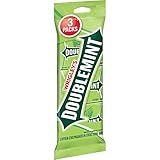
- REFRESHING MINT FLAVOR: Enjoy the classic minty taste of WRIGLEY'S Doublemint Gum, a flavor that has become a worldwide favorite. Share the cool freshness of this refreshing mint gum with friends for unforgettable moments
- CONVENIENT TO SHARE: Each of the three (3) pack of gum contains 15 individually wrapped gum sticks, making it easy to share your favorite minty treat with friends and family anytime, anywhere
- TIMELESS CLASSIC: WRIGLEY'S Doublemint Gum has been a beloved choice since 1914, providing a trusted mint experience that people enjoy across generations with its double mint gum flavor
- DOUBLE THE PLEASURE: With WRIGLEY'S Doublemint Gum, enjoy the simple pleasure of minty freshness while creating new memories. It's perfect for doubling your enjoyment in each chew of this double mint gum
- PERFECT FOR SOCIAL OCCASIONS: Carry packs of gum to social events to easily break the ice and connect with others. It's your go-to companion for making new friends effortlessly
A modern chicle example—and a historical footnote
Natural chicle did not disappear entirely from gum-making. The Smithsonian reported that a gum called Chicza launched in Britain in 2009 and was marketed as biodegradable. That is a period-specific report, not evidence that the product is currently available or that its present ingredients are unchanged.
The Smithsonian also reported that the average American chewed 105 sticks of gum a year by the 1920s. Because the article does not identify the original statistical source or methodology, this is best treated as a historical estimate reported by the magazine, not a verified primary statistic.
Quick Recap
Product prices and availability are accurate as of the date/time indicated and are subject to change. Any price and availability information displayed on Amazon at the time of purchase will apply.
What’s actually slowing this PC down?
Pick the symptom - the matching free tool is one click away.




