Do these 3 things before closing this tab:
1Clear out junk files and repair common Windows errors2Fix the driver behind crashes, sound loss and screen glitches3Repair Windows errors before they cause bigger problemsIn Esther Inglis-Arkell’s 2015 comic list, the five “best” demons promise odd benefits or entertaining stories, while the five “worst” threaten inconvenience, harm, or sheer absurdity. These are playful rankings drawn from folklore and demonological writing—not a factual assessment of supernatural beings or a guide to possession.
How the list judges “best” and “worst”
The ranking appeared in an io9 article by Esther Inglis-Arkell on July 23, 2015. Its categories are jokes, not standardized religious or scholarly classifications. The article weighs imagined usefulness against inconvenience and danger, and sometimes favors an entry simply because its story has a comic premise. The accounts also come from different traditions, so each claim belongs to its source rather than to a single verified system of demonology. Read the original article.
| # | Preview | Product | Price | |
|---|---|---|---|---|
| 1 |

|
Thirteen Ghosts | $7.99 | Buy on Amazon |
| 2 |

|
Horror 20 Movie Collection | $15.96 | Buy on Amazon |
| 3 |
|
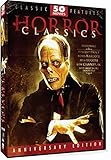
HORROR CLASSICS 50 MOVIE MEGAPACK | $15.79 | Buy on Amazon |
| 4 |
![Jaws 3-Movie Collection [DVD]](https://m.media-amazon.com/images/I/51nbLoYzBlL._SL160_.jpg)
|
Jaws 3-Movie Collection [DVD] | $5.00 | Buy on Amazon |
| 5 |

|
Ghost Ship (DVD) (WS) | $5.00 | Buy on Amazon |
The five “worst” demons in the article
1. Aquiel
The article says Aquiel presides over Sundays, then jokes about the consequences if a Wisconsin senator were possessed by a being associated with the Sabbath. It is a political punchline, not evidence of a historical episode or a demonstrated power. Source: Inglis-Arkell’s article.
2. Surgat
In the Grimoire of Honorius tradition, Surgat is described with the line, “Surgat is he who opens all locks.” The article treats that alleged ability as an unhelpful possession perk. This is a textual attribution, not a real-world claim that locks can be opened by a demon. Source: Inglis-Arkell’s article.
Crashes, No Sound, or Screen Glitches?
Random freezes, missing sound and display glitches usually trace back to one bad driver. Find and replace yours safely.Free scan · under a minuteWindows Errors? Fix Them Before They Spread
Repair common Windows errors and clear accumulated junk for a smoother, more stable PC - no reinstall needed.Free scan · no reinstall#1 Best Overall
- Factory sealed DVD
The grimoire itself should not be casually presented as a medieval papal manual. Arthur Edward Waite’s discussion says there is no evidence Pope Honorius III wrote it, places its likely composition near the end of the sixteenth century, and says its first edition is said to have appeared in 1629. Waite, The Book of Ceremonial Magic.
3. Agares
The article portrays Agares as a teacher of languages whose lessons amount only to offensive words, with an added return-home motif. That is the article’s comic version of the figure; the account is not independently established here as a primary-text description. Source: Inglis-Arkell’s article.
Rank #2
4. Ronove
Ronove gets a place among the worst through a joke about rhetoric lessons and the label “taker of old souls.” The article’s suggestion of harm to older people or pets belongs to its comic retelling and should not be read as verified history or evidence of danger. Source: Inglis-Arkell’s article.
5. Beelzebub
This entry invokes the Loudun possession and witchcraft proceedings of the early seventeenth century, including accusations against a priest and the use of torture. Those proceedings are a historical subject, but accusations are not proof that possession occurred. The article’s ironic use of “confirmed” is not a factual conclusion. Source: Inglis-Arkell’s article.
Rank #3
- An instant library of 50 horrorics assembled on 12 DVD's.
The five “best” demons in the article
1. Azazel
The article connects Azazel with the scapegoat ritual and notes uncertainty about whether the word refers to a being or a place. It then jokes that a possessed person could ask about Azazel’s portrayals in Supernatural, Sandman, and Fallen. The article’s pop-culture gag does not settle the figure’s meaning; a Jewish Encyclopedia entry provides broader reference context without making that interpretation simple or certain. Source: Inglis-Arkell’s article; Jewish Encyclopedia: Azazel.
2. Ben Tamalion
In the article’s account, Rabbi Shimon bar Yochai expels Ben Tamalion from a princess, and her father then allows anti-Jewish laws to be removed. Inglis-Arkell notes the scarcity of information about the figure. A linked scholarly volume concerns Matthew and Judaic traditions, but its relevant page is restricted, so the full textual history and details of this retelling are not established by that reference. Source: Inglis-Arkell’s article; Google Books record.
Rank #4
3. Andras
The article jokes about advice on killing and an owl-headed form. Those details are part of its comic account, not established facts about a being, and the entry is not practical advice. Source: Inglis-Arkell’s article.
4. Asmodeus
The article links Asmodeus with carnal desire and retells a story involving a woman’s successive husbands and an escape involving fish smoke. That is one particular version, not a universal account. The Jewish Encyclopedia offers wider context on the figure, while the article supplies the specific humorous retelling. Source: Inglis-Arkell’s article; Jewish Encyclopedia: Ashmedai.
Recommended Free Tools
Best Value
- Factory sealed DVD
5. Belphegor
Belphegor’s entry combines sloth with a joke about a 1690 play by John Wilson, an alleged diplomatic appointment to France, and Paris in April. These elements are presented as part of the article’s comic premise; they should not be treated as independently verified details of a demonological tradition. Source: Inglis-Arkell’s article.
Independent reader supportYour contribution helps us test, update, and keep practical guides available for everyone.What the ranking does—and does not—tell you
The list works as pop-culture folklore: the “best” entries offer an amusing benefit or memorable tale, while the “worst” entries turn alleged abilities and historical stories into reasons to decline. It does not establish a real hierarchy of risk, provide evidence that possession happens, or supply a reliable test for supernatural claims. Its ten entries are best read as Inglis-Arkell’s jokes about stories attached to these names.
Quick Recap
Product prices and availability are accurate as of the date/time indicated and are subject to change. Any price and availability information displayed on Amazon at the time of purchase will apply.




