The Tool Desk
Outbyte Driver Updater FREEFix the driver behind crashes, sound loss and screen glitchesFind Drivers →Outbyte PC Repair FREERepair Windows errors before they cause bigger problemsFix Now →Caves strip horror down to its most primal components: darkness, confinement, and the slow realization that escape is never guaranteed. Long before a monster appears or a body count begins, the setting itself turns hostile, weaponizing silence, narrow passages, and the oppressive weight of the earth above. Unlike haunted houses or remote forests, caves offer no illusion of control; once you descend, the surface world becomes a distant memory.
The fear is as psychological as it is physical. Total darkness disorients time and space, while twisting tunnels erase any sense of direction, turning survival into a guessing game played on borrowed oxygen. Characters are forced inward, confronting panic, mistrust, and buried trauma as much as any external threat, which is why cave-set horror often feels brutally intimate. The environment doesn’t just heighten tension, it actively collaborates with it.
That makes caves a natural home for some of horror’s most effective survival tales and creature features. Whether grounded in realism or plunging into the monstrous, these films exploit the subterranean setting to push fear past jump scares into sustained dread. The following selections demonstrate how filmmakers across eras and countries have used caves to trap audiences in the dark, proving that sometimes the scariest thing is simply going deeper.
How We Ranked Them: Criteria for the Most Effective Cave Horror Films
With a setting as inherently hostile as an underground cavern, not every horror film that ventures below the surface earns its place among the genre’s best. To separate atmospheric essentials from forgettable detours, we evaluated how each film exploits the cave environment not just as a backdrop, but as an active engine of fear. These rankings prioritize films that understand subterranean horror as a total sensory experience rather than a novelty location.
Do these 3 things before closing this tab:
1Fix the driver behind crashes, sound loss and screen glitches2Clear out junk files and repair common Windows errors3Scan for outdated or missing drivers - takes under a minute#1 Best Overall
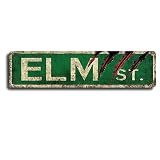
- High-Quality Material: Crafted from sturdy metal tin ensuring durability and longevity.
- Retro Design: Features natural wear and rust, adding an authentic vintage feel.
- Movie-Themed Decor: Perfect for Elm Street enthusiasts and film collectors.
- Easy to Hang: Pre-drilled holes for quick and convenient hanging.
- Versatile Decor: Suitable for homes, bars, inns, cafes, or any horror-themed setting.
Claustrophobia and Spatial Terror
The most effective cave horror films make you feel the walls closing in long before they actually do. We favored movies that use tight framing, restricted movement, and disorienting geography to generate sustained anxiety. When a film can make a single crawlspace feel as dangerous as any creature, it earns high marks.
Use of Darkness and Limited Visibility
Darkness is the defining weapon of cave horror, and how a film deploys it matters. Practical lighting, headlamps, flares, and fading batteries heighten realism while forcing the audience to share the characters’ vulnerability. Films that rely on shadow, negative space, and what remains unseen often prove far more unsettling than those that overexpose their threats.
Psychological Pressure and Group Dynamics
Survival horror thrives on stress fractures within the group, and caves accelerate those breakdowns. We ranked films higher when panic, mistrust, or buried personal conflicts become as dangerous as the environment itself. When fear turns inward and characters start making fatal choices, the horror deepens beyond surface-level scares.
Integration of Threats, Human or Otherwise
Whether the danger comes from creatures, cults, or the cave itself, the threat must feel inseparable from the setting. The strongest entries ensure that monsters couldn’t exist without the cave, and that escape routes are dictated by geology rather than plot convenience. When the environment and antagonist feel symbiotic, the tension becomes relentless.
Atmosphere, Sound Design, and Sensory Immersion
Echoes, dripping water, muffled screams, and oppressive silence are essential tools of subterranean terror. Films that leverage sound design to distort distance and direction often leave a deeper impact than those relying solely on visuals. We rewarded movies that make the audience feel trapped inside the cave, sharing every breath and every mistake.
Lasting Impact and Genre Influence
Finally, we considered each film’s legacy within survival horror and creature features. Some cave-set movies redefine expectations, inspire imitators, or remain touchstones for claustrophobic filmmaking years later. These are the films that linger, not just because of what lurks in the dark, but because they remind us how fragile we become once the light disappears.
The Descent into Darkness: Ranks #10–#7 (Claustrophobia, Survival, and Early Shocks)
These early entries establish the foundation of cave horror: physical confinement, unreliable light, and the creeping realization that rescue is unlikely. While they may not reach the genre’s most harrowing heights, each film weaponizes isolation and geography to deliver potent dread. The caves here are hostile long before any monster appears, turning simple survival into a losing battle.
#10 – The Cave (2005)
Bruce Hunt’s The Cave is a slick, early-2000s creature feature that leans heavily into aquatic terror and biological horror. Set in an uncharted cave system beneath a ruined Romanian abbey, the film thrives on the idea that evolution has turned the darkness itself into a predator. While the CGI creatures show their age, the film’s submerged tunnels and air-pocket traps create genuine panic.
Recommended Free Tools
What earns its spot is atmosphere over innovation. The cave feels ancient, sealed off from time, and fundamentally wrong. Even when the film slips into action-horror territory, the setting never stops feeling oppressive and lethal.
#9 – Sanctum (2011)
Inspired by real-life cave diving disasters, Sanctum strips horror down to physics, pressure, and human error. There are no monsters here, only collapsing tunnels, violent floods, and oxygen running out one breath at a time. The film’s commitment to realism makes every decision feel terminal.
Sanctum excels at showing how caves punish arrogance. Its 3D photography emphasizes depth and vertical drops, turning the environment into a maze of irreversible choices. The horror comes from inevitability, not surprise, and that slow dread lingers.
#8 – Catacombs (2007)
Set beneath Paris, Catacombs blends rave culture, urban legend, and subterranean paranoia into a grim descent beneath the city of light. The film weaponizes disorientation, using identical tunnels and bone-lined walls to erode the protagonist’s grip on reality. What begins as a party turns into a waking nightmare with no clear exit.
Though divisive, Catacombs understands one crucial truth: caves destroy spatial logic. Sound travels wrong, distances lie, and panic spreads faster than darkness. Its final act delivers a nihilistic punch that recontextualizes everything that came before.
#7 – As Above, So Below (2014)
Found-footage horror finds rare synergy with setting in As Above, So Below, which plunges its characters into the Paris catacombs as a literal descent into hell. The film fuses historical myth, religious symbolism, and survival horror into a relentless forward march with no retreat. Every tunnel feels tighter, every choice more cursed.
Rank #2
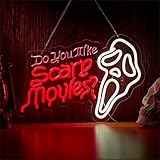
- This Neon Sign says“Do You Like Scary Movies” in a unique font, perfect for cinema, theatre or to add a gothic touch to your home decor.Create a Spooktacular Atmosphere,Perfect for Halloween parties, haunted houses, or simply adding a touch of gothic flair to your home decor. This eye-catching neon sign will transport you to a world of thrills and chills.
- Safe And Durability:Unlike the traditional glass neon light,neon wall sign is made of safe and reliable materials to ensure durability.The LED neon signs are made of high quality acrylic backplane and silicone light stripe.It is energy -saving and safe, without the risk of glass crushing and leakage of harmful substances. Neon light can be placed in the children's room safely, providing bright lighting without stimulating the eyes.
- Easy to install: Led sign provides power by USB connection.Plug it into a power supply, computer interface or power bank to light up. There are two pre-drilled holes on the acrylic backing of the neon sign. It can be easily hung or fixed on the wall. You can place it anywhere you want to decorate it and just hang it.Of course you can also put it on the table. Please note:The product includes hooks.
- Perfect Surprise:Do You Like Scary Movies sign can be used for horror theme cinema, game room, room gothic style decoration, man cave, horror movie theater, Internet bar, haunted house, escape room, masquerade, party, club, etc. LED neon lights are the best Halloween decoration and perfect gift for horror lovers.
- Service:Our first goal is to make you satisfied with our neon room sign.If you have any questions about neon light sign, please contact us as soon as possible, and we will solve it for you as soon as possible.
What elevates it is momentum. The camera never lets the audience breathe, mirroring the characters’ mounting terror as logic collapses alongside architecture. The catacombs become a psychological labyrinth, punishing guilt as much as curiosity, and proving how effective caves are when paired with existential horror.
Monsters in the Black: Ranks #6–#4 (Creature Features and Escalating Terror)
As the list climbs, caves stop being merely hostile environments and start harboring things that hunt back. These films lean into creature-feature mechanics, but the subterranean setting keeps the danger intimate and inescapable. Darkness becomes camouflage, tunnels become traps, and survival turns into a brutal game of hide-and-seek.
#6 – Black Water: Abyss (2020)
Black Water: Abyss traps its characters inside a flooded cave system with a massive saltwater crocodile, blending survival horror with stripped-down monster movie tension. The cave amplifies every threat: rising water limits oxygen, narrow passages restrict movement, and visibility drops to nothing. There is no safe distance from the creature, only moments where it hasn’t surfaced yet.
What makes the film effective is its restraint. The crocodile is used sparingly, often implied rather than shown, while the cave itself inflicts just as much damage as the animal. It understands that in a cave, even escape routes can become death sentences.
#5 – The Cave (2005)
The Cave plunges a team of explorers into an uncharted Romanian cave system where ancient creatures have evolved in total darkness. While the film leans heavily into mid-2000s creature-feature aesthetics, its setting does a lot of the heavy lifting. The deeper the team goes, the less the cave resembles a place humans were ever meant to enter.
The monsters themselves reflect the environment: blind, feral, and perfectly adapted to vertical shafts and flooded chambers. The Cave thrives on escalation, stacking threats until the location feels utterly overrun. It may be pulpy, but it understands caves as ecosystems that reject intrusion.
Free tools Windows power users keep installed
One-click scans. No signup required.
#4 – 47 Meters Down: Uncaged (2019)
By relocating its shark terror from open water to submerged cave ruins, 47 Meters Down: Uncaged finds a far crueler playground. These underwater caves erase the illusion of escape, replacing endless ocean with stone ceilings, dead ends, and collapsing passages. Every wrong turn turns panic into suffocation.
The sharks are terrifying, but the true horror comes from spatial confinement. The film weaponizes low visibility and tight squeezes, forcing characters to move deeper into danger just to survive the moment. It’s a reminder that caves don’t need supernatural elements to feel nightmarish—adding predators just seals the coffin.
No Way Out: Ranks #3–#1 (The Definitive Cave Horror Experiences)
At the top of the list, caves stop being mere locations and become antagonists in their own right. These films don’t just trap characters underground; they dismantle their sense of orientation, time, and humanity. By the time escape becomes a goal, survival itself is already in question.
#3 – As Above, So Below (2014)
As Above, So Below reimagines the Paris Catacombs as a modern descent into Hell, using real underground tunnels to ground its supernatural terror. The film fuses found-footage immediacy with mythological horror, turning narrow passageways into moral tests rather than physical obstacles. Every chamber feels like a puzzle designed to punish the sins characters thought they’d buried.
Crashes, No Sound, or Screen Glitches?
Random freezes, missing sound and display glitches usually trace back to one bad driver. Find and replace yours safely.Free scan · under a minuteWindows Errors? Fix Them Before They Spread
Repair common Windows errors and clear accumulated junk for a smoother, more stable PC - no reinstall needed.Free scan · no reinstallWhat elevates the film is how the cave space warps reality itself. Geometry breaks down, time loops, and the deeper the group travels, the more the tunnels reflect internal guilt and unresolved trauma. The Catacombs don’t just trap bodies; they expose souls, making escape contingent on psychological reckoning rather than physical strength.
#2 – The Ruins (2008)
Though not a traditional cave movie in the strictest sense, The Ruins earns its place through how it uses subterranean confinement as existential horror. Beneath a seemingly open archaeological site lies a network of tunnels and pits that become impossible to escape once entered. The earth itself turns hostile, sealing off the outside world with quiet, merciless intent.
The film’s power lies in its slow, hopeless degradation of survival logic. Every attempt to escape leads to further injury, infection, or isolation, with the underground spaces amplifying despair rather than suspense. It’s cave horror stripped of spectacle, replacing monsters with inevitability and the crushing realization that the ground beneath you has already decided your fate.
#1 – The Descent (2005)
No film captures the raw, suffocating terror of caves quite like The Descent. From its opening moments, the movie weaponizes tight spaces, pitch-black darkness, and disorientation long before introducing its infamous creatures. The cave system feels aggressively hostile, as if it’s actively collapsing in response to human presence.
Rank #3

- Halloween 3-Movie Collection (Blu-ray + Digital)
What makes The Descent definitive is how it balances primal survival horror with psychological unraveling. The crawlers are terrifying, but they arrive only after the cave has already broken the characters emotionally and physically. Every squeeze through a rock tunnel, every failed climb, reinforces the central truth: underground, panic is louder than screams, and there is no such thing as a clean escape.
Honorable Mentions and Deep Cuts for Hardcore Subterranean Horror Fans
Not every effective cave horror film fits neatly into a Top 10 ranking. Some are too obscure, too structurally strange, or too niche in their appeal—but for seasoned genre fans, these titles offer some of the most unnerving subterranean nightmares ever committed to screen. Consider these essential deep cuts for viewers who crave darkness without compromise.
As Above, So Below (2014)
Often dismissed on release, As Above, So Below has aged into a cult favorite thanks to its relentless descent into metaphorical and literal hell. Set in the Paris Catacombs, the film uses found-footage chaos to turn historical tunnels into a spiritual labyrinth where guilt manifests as physical punishment. The caves here aren’t just tight and dark; they’re judgmental, warping time, space, and identity as punishment for unresolved sins.
Sanctum (2011)
Sanctum leans hard into realism, depicting cave diving as a slow-motion death trap governed by physics rather than monsters. Inspired by true events, the film’s underwater caverns create a uniquely suffocating variant of subterranean horror, where air pockets and narrow passages become life-or-death calculations. Its terror comes from inevitability, as human error compounds with environmental hostility in spaces that allow no improvisation.
What’s actually slowing this PC down?
Pick the symptom - the matching free tool is one click away.
The Cave of the Yellow Dog… Meets Cannibal Holocaust’s Shadow (At the Earth’s Core, 1976)
While dated in effects, At the Earth’s Core deserves recognition for pioneering the idea of subterranean worlds as alien ecosystems. Vast underground caves house monstrous creatures and warped civilizations, reframing the Earth itself as unknowable and hostile beneath the crust. It’s less about claustrophobia and more about existential unease—the fear that humanity has never truly owned the ground it walks on.
La Cueva / In Darkness We Fall (2014)
This Spanish survival horror strips the genre to its ugliest instincts. After a cave accident traps a group of friends underground, desperation erodes morality with frightening speed. The tunnels feel oppressive not because of monsters, but because they remove all social masks, revealing how quickly civility collapses when oxygen, food, and hope run out.
Time Trap (2017)
Time Trap offers a cerebral twist on cave horror, turning an unassuming cavern into a temporal anomaly where time fractures the deeper you go. The fear here is subtle and existential, rooted in the realization that escape may cost decades—or centuries—of life above ground. It’s a rare example of science fiction amplifying cave horror rather than softening it.
The Cave of Forgotten Dreams (2010)
Not horror in the traditional sense, Werner Herzog’s documentary becomes unintentionally terrifying through its reverence for deep time. The Chauvet caves feel sacred, fragile, and profoundly alien, reminding viewers how small and temporary humanity is compared to the stone that surrounds it. The dread comes not from threat, but from perspective—standing inside a place that predates fear itself.
These films may not dominate mainstream horror discussions, but they deepen the genre’s relationship with underground terror. For viewers willing to trade clean scares for suffocating atmosphere, moral collapse, and cosmic insignificance, these cave-set nightmares offer some of the most rewarding descents horror has to offer.
Independent reader supportYour contribution helps us test, update, and keep practical guides available for everyone.Recurring Themes in Cave Horror: Isolation, Primal Fear, and Human Breakdown
Across decades and subgenres, cave-set horror returns to the same psychological pressure points, using stone and darkness as instruments of terror rather than simple backdrops. What makes these films endure isn’t just what lurks in the tunnels, but what the environment strips away from the people trapped inside them. Caves force horror to confront humanity at its most reduced state.
Isolation as Absolute Disconnection
Unlike haunted houses or remote cabins, caves sever contact completely. There is no horizon, no weather, no sense of external life continuing beyond the walls. Radios fail, compasses lie, and time becomes abstract, creating a uniquely hopeless isolation that films like The Descent and La Cueva exploit with surgical precision.
This isolation isn’t just physical but existential. Characters realize that rescue depends not on endurance, but on luck, and luck has no jurisdiction underground. The cave becomes a closed system where survival is governed by error margins measured in inches and minutes.
Quick wins for a faster PC:
Fix the driver behind crashes, sound loss and screen glitchesFind Drivers →Repair Windows errors before they cause bigger problemsFix Now →Scan for outdated or missing drivers - takes under a minuteDriver Scan →Darkness and the Return of Primal Fear
Cave horror taps into a fear older than language: the terror of what exists beyond firelight. Vision is constantly compromised, forcing characters and audiences alike to imagine threats before they’re ever seen. Filmmakers weaponize negative space, allowing silence, echoes, and flickering headlamps to do the work monsters usually handle.
This sensory deprivation regresses characters into instinct-driven beings. Fear responses override rational thought, and survival becomes physical rather than moral. In these films, darkness isn’t hiding danger—it is the danger.
Rank #4
![Beast From Haunted Cave + Ski Troop Attack (2-Disc Double Feature) [Blu-ray]](https://m.media-amazon.com/images/I/51dD2xWgNVL._SL160_.jpg)
- A crash course in Corman economics - Beast from Haunted Cave and Ski Troop Attack were shot back to back and use much of the same cast and crew!
The Environment as an Unfeeling Antagonist
Caves don’t stalk, scheme, or seek revenge, which makes them more frightening than sentient villains. Rockfalls, flooding tunnels, and narrowing passages act with total indifference, crushing bodies and plans alike. Films like The Cave and Sanctum treat geology as fate, emphasizing how small mistakes are punished without malice or mercy.
This removes any possibility of negotiation or escape through cleverness. The cave doesn’t care who you are or what you deserve. It only responds to gravity, pressure, and time.
Psychological Erosion and Moral Collapse
As oxygen thins and escape routes disappear, so does social order. Group dynamics fracture under pressure, revealing cowardice, cruelty, and desperation that polite society usually suppresses. Cave horror thrives on watching alliances rot in real time, often turning fellow survivors into the most immediate threat.
These breakdowns feel inevitable rather than shocking. When survival is reduced to limited resources and narrowing options, morality becomes another casualty. The scariest realization in many cave films isn’t that something is hunting the group, but that they may not deserve to escape together.
Humanity Reduced to Flesh and Instinct
Caves strip away civilization’s protections, reducing characters to breath, muscle, and fear. Injury becomes catastrophic, exhaustion irreversible, and panic contagious. In this environment, even minor wounds or wrong turns carry fatal weight, grounding the horror in bodily vulnerability.
This emphasis on physical limitation makes cave horror uniquely punishing. There are no heroic last stands here, only endurance and entropy. Survival feels less like victory and more like an accident.
Why Cave Horror Endures
These recurring themes explain why cave-set horror remains so potent across cultures and decades. The setting amplifies fear not through spectacle, but through subtraction—light, space, certainty, and morality all disappear. What remains is a confrontation with the most basic question horror can ask: who are you when the world closes in and no one is coming to save you?
Final Verdict: Which Cave Horror Film Is Truly the Most Terrifying—and Why
After decades of subterranean nightmares, one title consistently claws its way to the surface as the most devastating example of cave horror. Not because it has the biggest creatures or the highest body count, but because it weaponizes every fear the setting offers and refuses to let the audience breathe. The film that most completely understands what caves do to the human mind and body is Neil Marshall’s The Descent.
Why The Descent Still Outpaces the Rest
The Descent succeeds by stacking dread layer upon layer before the first creature ever appears. Its early stretches of near-total darkness, collapsing tunnels, and spatial disorientation are already enough to induce panic. By the time the Crawlers emerge, the audience is primed to accept them not as a twist, but as an inevitability born from the cave itself.
What makes the film uniquely terrifying is how it fuses psychological erosion with physical annihilation. The cave becomes a pressure cooker for grief, guilt, and rage, turning survival into a moral nightmare as much as a physical one. Every death feels earned, ugly, and irreversible, reinforcing the sense that escape is not a reward but a statistical anomaly.
Creatures as Consequence, Not Gimmick
Unlike many cave horror films where monsters feel imported into the setting, The Descent makes its creatures feel like an extension of the environment. The Crawlers are pale, blind, and feral—perfectly adapted to the darkness, while the humans are grotesquely out of place. This imbalance keeps tension high, as the cave clearly belongs to something else now.
More importantly, the film never lets the audience forget that the cave was already deadly before the monsters arrived. The true horror isn’t being hunted, but being trapped in a world where human senses, ethics, and hierarchies no longer function.
Why Other Cave Films Fall Short
Films like Sanctum, The Cave, and As Above, So Below each excel in specific areas—realism, spectacle, or mythological ambition. Yet many offer moments of relief through heroics, exposition, or narrative control. The Descent denies that comfort, embracing chaos and attrition as its guiding principles.
Even its endings, depending on the cut, refuse catharsis. Survival does not equal safety, and trauma is not something you climb out of. The cave leaves a mark that daylight cannot erase.
Free tools Windows power users keep installed
One-click scans. No signup required.
The Final Word on Cave Horror
The most terrifying cave horror film is the one that understands caves are not just locations, but systems designed to break people down. The Descent remains unmatched because it treats fear as cumulative, inescapable, and profoundly human. It doesn’t ask whether you can escape the darkness—it asks what parts of yourself you’d lose trying.
That is why cave horror endures, and why this film still stands at the genre’s deepest, darkest point. When the walls close in and the light fails, it reminds us that some places are not meant to be conquered—only survived, if you’re lucky.
Quick Recap
Product prices and availability are accurate as of the date/time indicated and are subject to change. Any price and availability information displayed on Amazon at the time of purchase will apply.




