Do these 3 things before closing this tab:
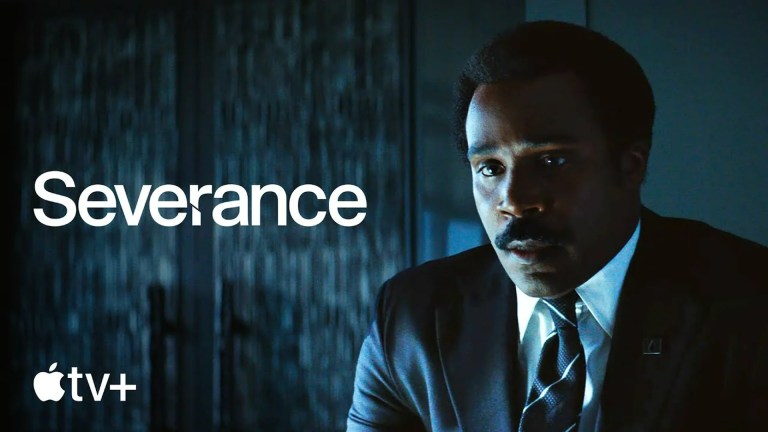
1Repair Windows errors before they cause bigger problems2Fix the driver behind crashes, sound loss and screen glitches3Clear out junk files and repair common Windows errorsSpoilers for the Season 2 finale of Severance. The finale’s defining reveal is not a newly unmasked villain: Mark chooses to remain with his innie, leaving Gemma outside Lumon while he runs back toward Helly. Creator Dan Erickson says that choice reflects the relationships that have come to define Mark’s identity. It also sharpens the show’s central question—who is responsible when a corporation divides people into selves with unequal power? The episode does not confirm one definitive villain, and Erickson says Lumon’s intentions around Gemma were deliberately left partly open.
What the finale reveals—and what it does not
In the Season 2 finale, Mark reaches the threshold of escape with Gemma, his wife and the person his outie has been trying to recover. Instead of leaving with her, he turns back toward Helly and stays in Lumon as his innie. The moment makes the cost of the severance procedure personal: Mark’s innie is not simply a tool his outie can switch off, but a person with attachments and a choice of his own.
| # | Preview | Product | Price | |
|---|---|---|---|---|
| 1 |

|
Severance: Season 1 | $18.49 | Buy on Amazon |
| 2 |
![Severance - Series 1 [Blu-ray] [Region A & B & C]](https://m.media-amazon.com/images/I/41H7RjkDq4L._SL160_.jpg)
|
Severance - Series 1 [Blu-ray] [Region A & B & C] | $41.07 | Buy on Amazon |
| 3 |

|
Poldark Season 2 - Blu-ray | $18.75 | Buy on Amazon |
| 4 |

|
Fight Club | $3.99 | Buy on Amazon |
That is the episode’s major shift in how to read the conflict. The immediate question is no longer only whether Mark can get Gemma out. It is whether the innie’s life and relationships count as much as the outie’s—and who gets to decide. The finale does not reveal a single hidden mastermind or provide a complete account of why Lumon has kept Gemma. Treating either as settled would go beyond what the episode and creator commentary establish.
Why Mark’s decision changes the villain question
Erickson described the choice as rooted not in a simple contest between two women, but in how each relationship helps define Mark. “It’s not even because it’s a choice between these two women, but because we had built up how much each of these relationships define Mark’s identity,” he told TheWrap on March 21, 2025.
Outdated Drivers Are Slowing You Down
One free scan finds every outdated or missing driver and matches the right update for your exact hardware.Free scan · exact hardware matchWindows Errors? Fix Them Before They Spread
Repair common Windows errors and clear accumulated junk for a smoother, more stable PC - no reinstall needed.Free scan · no reinstall#1 Best Overall
That explanation supports a reading of Mark’s decision as an assertion of his innie’s identity. It does not make the choice uncomplicated or erase Gemma’s peril. It does show why the finale resists a tidy rescue-story ending: the innie has relationships of his own, while Lumon’s system has created the conditions that make those relationships and choices possible at such terrible cost.
Apple describes the premise as a surgical division between employees’ work and personal memories, with Mark confronting “the true nature of his work … and of himself.” The official series page lists the second season’s release date as January 17, 2025. Severance’s basic mechanism is therefore more than a workplace oddity: it creates separate selves, while the corporation controls the environment in which one of those selves must live.
Rank #2
- Drama, Blu-Ray
Who could be called the villain?
The title’s singular “a villain” invites a character-level answer, but the strongest evidence points to a distinction between individual antagonists and the institution that empowers them. A useful way to judge each reading is to separate on-screen conduct from stated motive and inference:
| Candidate reading | What the episode supports | What remains uncertain |
|---|---|---|
| Lumon as the antagonist | The severance system divides employees’ memories and gives the company power over the work lives of its innies. | The available creator comments do not establish one complete institutional motive for the Gemma storyline. |
| A Lumon leader or representative | Individual characters can enact or defend the company’s power on screen; the episode’s actions matter more than job title alone. | The reviewed creator and cast coverage does not confirm that one person is the definitive villain behind the finale’s events. |
| Mark himself | His decision has consequences for Gemma and demonstrates that the innie is making a consequential choice. | Calling Mark a villain is an interpretation, not a creator-confirmed verdict; it risks overlooking the coercive system that formed his circumstances. |
This comparison does not make all readings equally persuasive. Lumon has the clearest structural power: it created and operates the procedure that separates the employees’ lives. Individual characters can still be culpable for what they do within that system. Mark, meanwhile, is responsible for a decision with consequences, but the finale presents that decision as bound up with an identity and relationships Lumon’s system has helped produce.
Rank #3
- Brand New in box. The product ships with all relevant accessories
Gemma’s fate remains an open question
The most important limit on a confident villain theory is the unanswered question of Lumon’s purpose in keeping Gemma. Erickson called the finale’s moment involving Lumon’s intentions “a moment that, to some extent, we intentionally left open to interpretation,” in his March 21, 2025 interview with TheWrap.
That is confirmation of deliberate ambiguity, not confirmation of any particular explanation. The finale makes Gemma’s situation consequential, but it does not establish a definitive motive that can be used to name one person as the show’s master villain. A theory about why Lumon wants her may fit the clues; it remains a theory until the story supplies more evidence.
Rank #4
The deeper target is the power imbalance
Severance began with an ordinary-sounding escape fantasy. Creator Dan Erickson told the Television Academy that the premise started with the question, “What if I could just jump ahead to the end of the day and have already done the work?” The Academy describes the series as dystopian science fiction, workplace drama, and black comedy that explores identity, grief, and the corporate machine.
The finale turns that premise inside out. Skipping the workday would be harmless if no person had to experience it. But severance does not remove the work; it creates an innie who experiences it without access to the outie’s memories or ordinary control over their shared life. Mark’s choice forces viewers to consider whether that innie is entitled to a life of his own—and how much responsibility belongs to the people and institution that made his existence possible.
That is why the finale can change how viewers assess the show’s antagonists without settling the identity of a single villain. The human characters’ actions still matter, but the power imbalance is built into Lumon’s procedure. The series invites judgment of both the people who wield that power and the system that makes it durable.
What is confirmed beyond the finale
Apple reported that the complete first and second seasons were streaming globally on Apple TV+ in its March 24, 2025 PaleyFest LA announcement; streaming availability can change by date and territory. The Los Angeles Times reported Apple’s Season 3 announcement in its March 21, 2025 finale coverage. That is historical context, not a current release schedule.
Quick Recap
Product prices and availability are accurate as of the date/time indicated and are subject to change. Any price and availability information displayed on Amazon at the time of purchase will apply.