Roy Haynes, the jazz drummer whose career stretched from the swing and bebop scenes of the 1940s into the 2010s, died on November 12, 2024, at age 99. His daughter, Leslie Haynes-Gilmore, reported that he died following a short illness. The National Endowment for the Arts (NEA) acknowledged his death the following day.
Who was Roy Haynes?
Born in Roxbury, Massachusetts, in 1925, Haynes developed as a drummer in Boston and began performing professionally in the mid-1940s. In 1945, he joined the Luis Russell band, then moved to Lester Young’s band. From the late 1940s through the mid-1950s, he played with major figures including Miles Davis, Charlie Parker, Bud Powell and Kai Winding.

Haynes was known both as a sought-after sideman and as a bandleader. He formed his own band in 1958, and his work continued across changing currents in jazz rather than remaining tied to a single school. His long career included swing and bebop, post-bop and avant-garde settings, early jazz-rock work with vibist Gary Burton, the contemporary-sounding Hip Ensemble and, in 1981, Chick Corea’s Trio Music band.
What made Haynes’s drumming distinctive?
Haynes adapted his role to the music around him. The NEA describes him as an especially effective accompanist for singers: he could accent a vocal without overwhelming it. He worked with Sarah Vaughan for five years in the mid-1950s, a setting that called for attentiveness as much as rhythmic drive.
#1 Best Overall
His approach also changed the feel of an instrumental group. When he substituted for Elvin Jones in John Coltrane’s quartet, the NEA describes Haynes’s playing as lighter and less aggressive than Jones’s, altering the ensemble’s sound. The contrast is a useful example of Haynes’s flexibility, not a simple ranking of the two drummers.
Haynes himself resisted over-explaining his work. In a 2014 interview published by the NEA, he said, “I don’t analyze things. I don’t try to.” The NEA also attributes to Thelonious Monk a vivid description of Haynes’s drumming: “an eight ball right in the side pocket.”
Rank #2
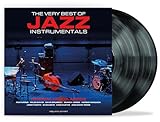
- Jazz instrumental collection
Who did Roy Haynes play with?
His collaborators included Lester Young, Charlie Parker, Miles Davis, Thelonious Monk, Sarah Vaughan and John Coltrane, as well as later-generation musicians such as Roland Kirk, Chick Corea and Pat Metheny. The range reflects the different roles Haynes could fill: accompanying a singer, contributing to a small-group bebop setting or responding to the more open approaches of later modern jazz.
Haynes’s recording and touring continued into the 2010s. Pat Metheny, who toured with him in the late 1980s, called him “the human manifestation of whatever it is that the word ‘hip’ was supposed to mean before it just became a word,” describing a musician who was “always in the moment” while remaining “eternal and classic.”
Quick wins for a faster PC:
Clear out junk files and repair common Windows errorsFree Scan →Fix the driver behind crashes, sound loss and screen glitchesFind Drivers →Rank #3

- Height: 7.75in / 20cm, Width: 6in / 15cm
- By Michael Ochs
- Hardcover
- 576 pages
- Imprint: Taschen
Roy Haynes’s honors
- The NEA named Haynes a 1995 Jazz Master fellow, its highest honor in jazz.
- He received the Jazzpar Prize in 1994.
- He received a Grammy Lifetime Achievement Award in 2012.
- His albums Fountain of Youth (2004) and Whereas (2007) were Grammy-nominated, according to The Guardian.
Where to start listening to Roy Haynes
The NEA’s selected discography offers a way into different periods of Haynes’s work. We Three is listed as a 1958 release; Out of the Afternoon, an acclaimed bandleader album featuring Roland Kirk, followed in 1962. Later selections include Te Vou! (1995), The Roy Haynes Trio (2000) and Whereas (2006).
For a concise starting pair, try We Three and Out of the Afternoon. Those are the release years in the NEA’s selected discography; they do not specify the date or format of any later reissue. The NEA and Guardian accounts establish the albums as notable recordings, but do not establish current retail or streaming availability.
Quick Recap
Best Value

- COLLECTION STARTER lots can be used for vintage decoration, as party items or unique gifts
- GENUINE VINYL RECORDS are in this lot. Most of these records are playable but some may come scuffed or the labels may have faded
- CREATIVE TYPES use these to make room dividers, curtains, shop decors, heat them up and shape them into bowls, ashtrays, key chains, guitar picks
- VARIOUS GENRES may be found in this lot. Blues, rock, jazz, rnb, hip-hop, pop, sould, disco, country genres are most common ones
Rank #4

- 8 essential jazz instrumental classics – Features landmark recordings including Dave Brubeck’s “Take Five,” Miles Davis’s “So What,” John Coltrane’s “Naima,” Art Blakey’s “Moanin’,” and Stan Getz’s “The Girl from Ipanema.
- Limited edition splatter vinyl – A visually stunning collector’s pressing, each copy features a unique splatter pattern. Strictly limited quantity.
- 180g audiophile quality – Pressed on heavyweight 180-gram vinyl for superior sound fidelity, warmth, and durability.
- Historic performances – Includes original studio recordings with legendary lineups: Paul Desmond, Joe Morello, John Coltrane, Duke Ellington, Thelonious Monk, Cannonball Adderley, Bill Evans, and more.
- Made in the EU – Manufactured to the highest standards in the European Union, ensuring exceptional audio quality and premium packaging.
Product prices and availability are accurate as of the date/time indicated and are subject to change. Any price and availability information displayed on Amazon at the time of purchase will apply.




