Do these 3 things before closing this tab:
1Repair Windows errors before they cause bigger problems2Scan for outdated or missing drivers - takes under a minute3Clear out junk files and repair common Windows errorsRick Derringer died on May 26, 2025, at age 77. The guitarist, singer, songwriter and producer died in Ormond Beach, Florida. His caretaker, Tony Wilson, announced the death on May 27 and said Derringer died at 8:09 p.m. with his wife, Jenda Derringer, and Wilson present.
Derringer was far more than the musician behind “Rock and Roll, Hoochie Koo.” He became nationally famous as the teenage lead singer and guitarist of the McCoys, helped shape records by Johnny and Edgar Winter, produced the first six albums by “Weird Al” Yankovic, and co-wrote and performed “Real American,” the song later identified with Hulk Hogan.
| # | Preview | Product | Price | |
|---|---|---|---|---|
| 1 |
|
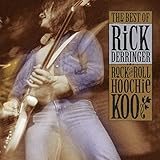
The Best Of Rick Derringer: Rock And Roll, Hoochie Koo | $7.42 | Buy on Amazon |
| 2 |

|
Rock & Roll Hoochie Koo - Best Of Relaunched | $15.51 | Buy on Amazon |
| 3 |

|
Rock & Roll Hoochie Koo | $14.99 | Buy on Amazon |
| 4 |

|
Rock N Roll Hoochie Koo | $25.00 | Buy on Amazon |
| 5 |

|
Rock and Roll Hoochie Koo | $30.56 | Buy on Amazon |
A career that began with “Hang On Sloopy”
Born Richard Dean Zehringer on August 5, 1947, Derringer was only 17 when the McCoys’ 1965 recording of “Hang On Sloopy” reached No. 1 in the United States. The success made him one of the most recognizable young musicians in American rock.
Derringer sang and played guitar in the McCoys, and “Hang On Sloopy” remained the group’s defining recording. It also became a lasting Ohio cultural reference. Commonly cited state-history accounts identify it as Ohio’s official rock song, although the song’s importance to Derringer’s story is best understood as the beginning of his career rather than its complete definition.
Free tools Windows power users keep installed
One-click scans. No signup required.
#1 Best Overall
He did not remain a one-hit teenage performer. After the McCoys, Derringer moved through hard rock, blues-rock, session work, solo recording, production and soundtrack-related projects. His career connected the pop success of the 1960s with the heavier album-rock and studio culture of the 1970s and the crossover entertainment of the 1980s.
“Rock and Roll, Hoochie Koo” became his signature solo hit
Derringer wrote “Rock and Roll, Hoochie Koo,” but his solo recording was not the song’s first appearance. Johnny Winter and his band recorded it in 1970, during the period when Derringer was closely connected to Winter’s musical circle. Derringer later recorded his own version for his 1973 solo debut, All American Boy.
That version became Derringer’s defining solo success. It reached No. 23 on the Billboard Hot 100 in 1974 and gave him a durable rock-radio anthem built around a sharp guitar riff, a driving rhythm section and an exuberant vocal performance.
The song’s life did not end with its original chart run. It appeared in the 1993 film Dazed and Confused and was used in the fourth season of Stranger Things, introducing it to audiences who were not necessarily familiar with Derringer’s earlier work. Its continued placement in film and television helped turn the track into a shorthand for loud, unpretentious 1970s rock.
Recommended Free Tools
He was a producer and sideman as well as a frontman
Derringer’s public image was often reduced to a guitar hero with a signature song, but his studio career was broader. AllMusic describes him across several roles: guitarist, singer, songwriter, producer, bandleader, studio player and sideman. His recorded associations included Johnny Winter, Steely Dan, Todd Rundgren, Barbra Streisand and Bette Midler.
Those credits matter because Derringer often served as a musical connector. He could perform in front of an audience, contribute guitar in a studio, lead his own band or help another artist turn a collection of songs into a finished album. His work with the Winter brothers was particularly important to his reputation.
Rank #2
- Rock & Roll Hoochie Koo Das Beste von Unleashed
- Produkttyp: ABIS MUSIC
- Marke: Cleopatra
Edgar Winter’s They Only Come Out at Night
Derringer produced Edgar Winter’s They Only Come Out at Night, the album associated with “Frankenstein” and “Free Ride.” The GRAMMY Museum identifies Derringer as the album’s producer and notes that “Frankenstein” became a No. 1 instrumental hit.
PC Slower Than It Used to Be?
A free scan shows the junk files, broken settings and background clutter dragging Windows down - then fixes them in one click.Free scan · Windows 10 & 11Crashes, No Sound, or Screen Glitches?
Random freezes, missing sound and display glitches usually trace back to one bad driver. Find and replace yours safely.Free scan · under a minuteProduction on a record like They Only Come Out at Night required more than guitar technique. Derringer helped shape the sound, performances and arrangement choices that made the album commercially powerful while preserving Winter’s unusual blend of rock, blues, keyboards and instrumental experimentation. His role showed why he continued to receive work beyond the front of the stage.
Derringer produced “Weird Al” Yankovic’s first six albums
One of the most consequential chapters in Derringer’s career came through an unlikely-seeming partnership with Alfred Matthew “Weird Al” Yankovic. In a 2024 interview published by the GRAMMY organization, Yankovic said Derringer produced his first six albums.
Yankovic explained that the connection began through Jake Hooker, who managed Derringer. The producer helped give Yankovic an early professional recording framework as the accordion-playing performer developed his parody songs and original comedy material into a successful album career.
The credit is easy to overlook because Derringer is usually discussed in classic-rock terms, while Yankovic’s catalog belongs to comedy, pop and novelty music. But it demonstrates the range of Derringer’s studio instincts. He was not simply recreating the sound of his own records; he was helping another artist establish a distinctive identity.
Rank #3
That production relationship also makes Derringer part of the history of comedy-rock recording. Yankovic’s earliest albums reached listeners through the same basic channels as mainstream rock records, and Derringer’s experience, contacts and musical judgment helped make those recordings sound like serious studio productions rather than disposable sketches.
“Real American” gave him a second, wrestling-era legacy
Derringer’s music reached another enormous audience through professional wrestling. He co-wrote and performed “Real American” with Bernard Kenny. The song later became famous as Hulk Hogan’s entrance theme and remains one of the most recognizable pieces of 1980s wrestling music.
A CBS Sports oral history records Derringer’s account of the song’s origin: he and Kenny initially wrote it for the U.S. Express, the tag team of Barry Windham and Mike Rotunda. Hogan then selected it as his own theme. That history is important because it separates the song’s creators from the performer who made it part of his public persona.
Hulk Hogan did not write “Real American.” Derringer and Kenny wrote the song, Derringer performed it, and Hogan’s entrance helped give it its enduring cultural association. For wrestling fans, the opening remains inseparable from the image of Hogan striding toward the ring; for music listeners, it is another example of Derringer writing a song that could function immediately and memorably in a visual setting.
The track also broadened Derringer’s audience beyond classic-rock radio. People who may not know the McCoys or All American Boy can still recognize “Real American” from wrestling broadcasts, retrospectives, comedy and sports-culture references.
Rank #4
Later recordings kept the catalog active
Derringer continued recording and performing well beyond his 1970s peak. AllMusic lists activity and releases extending into the 2020s, including the 2022 re-recording collection Rock and Roll Hootchie Koo: The Best Of – Relaunched and 2024 releases including Rock the Yacht and My Double Gold Life.
The spelling differences across catalog listings are worth noting. The original song is conventionally titled “Rock and Roll, Hoochie Koo,” while later releases and marketplace listings may use variations such as “Hootchie Koo” or “Rock N’ Roll Hoochie Coo” in their titles. Readers searching for the music may need to try more than one catalog spelling.
A later Louder Sound retrospective also reported that Derringer toured three times with Ringo Starr’s All-Starr Band and participated in Peter Frampton’s Guitar Circus. Those later appearances fit the pattern of his career: Derringer remained a working musician whose value extended beyond the records most commonly used in his obituary.
The Tool Desk
Outbyte Driver Updater FREEScan for outdated or missing drivers - takes under a minuteDriver Scan →Outbyte PC Repair FREERepair Windows errors before they cause bigger problemsFix Now →For guitarists, the song remains playable as well as listenable
“Rock and Roll, Hoochie Koo” has an especially durable appeal to guitarists because its identity is carried by a direct, riff-centered arrangement rather than elaborate studio effects. Readers who want to study the part can look for licensed guitar tab for Rock and Roll Hoochie Koo through established sheet-music retailers. Arrangement difficulty, notation format and licensing can differ, so the exact edition should be checked before purchase.
That practical afterlife is part of Derringer’s legacy. His best-known songs continue to work in several forms: as radio recordings, film and television cues, wrestling entrance music, album cuts and material that musicians can learn and perform themselves.
What is known about his death
The confirmed public details are limited. Derringer died in Ormond Beach, Florida, on May 26, 2025, at age 77. Tony Wilson announced the death the following day and gave the time as 8:09 p.m., saying Derringer’s wife, Jenda, and Wilson were with him.
Best Value
No definitive public cause of death was established in the sources reviewed for this obituary. Later retrospectives referred to recent illness and a reported triple bypass, but those details should not be treated as an official cause unless his family or another authoritative source confirms them.
The circumstances should therefore remain secondary to the documented career. Derringer left behind a body of work that crossed the McCoys’ teenage pop success, 1970s hard rock, major studio collaborations, comedy music and professional wrestling. “Rock and Roll, Hoochie Koo” was the solo song most closely attached to his name, but it was only one chapter in a career that began with “Hang On Sloopy” and continued in the studio long after the hits.
Frequently Asked Questions
When did Rick Derringer die?
Rick Derringer died on May 26, 2025, in Ormond Beach, Florida. He was 77. His death was announced on May 27 by caretaker Tony Wilson, who said Derringer died at 8:09 p.m. with his wife, Jenda Derringer, and Wilson present.
What was Rick Derringer’s cause of death?
A definitive public cause of death was not established in the sources reviewed. Later reports mentioned recent illness and a reported triple bypass, but those details should be treated as attributed reports rather than an official cause.
Did Rick Derringer write “Hang On Sloopy”?
Derringer was the McCoys’ lead singer and guitarist on the 1965 recording of “Hang On Sloopy.” He should not be described as the song’s writer. His major songwriting credits include “Rock and Roll, Hoochie Koo” and, with Bernard Kenny, “Real American.”
What songs is Rick Derringer best known for?
He is best known for performing “Hang On Sloopy” with the McCoys, writing and recording “Rock and Roll, Hoochie Koo,” and co-writing and performing “Real American,” later associated with Hulk Hogan. He was also an important producer for Edgar Winter and “Weird Al” Yankovic.
The Bottom Line
Rick Derringer’s legacy cannot be reduced to one guitar riff. He was the teenage voice of “Hang On Sloopy,” the writer and performer of “Rock and Roll, Hoochie Koo,” a producer for Edgar Winter and “Weird Al” Yankovic, and the co-writer and performer behind “Real American.” He died on May 26, 2025, at 77, leaving a catalog that reached classic-rock listeners, studio musicians, comedy fans and generations of wrestling audiences.
Quick Recap
Product prices and availability are accurate as of the date/time indicated and are subject to change. Any price and availability information displayed on Amazon at the time of purchase will apply.




