Presumed Innocent endures because it sits at the crossroads of genre craft and cultural anxiety, asking how much faith we place in institutions and how easily narrative can manipulate truth. Both the 1990 Harrison Ford film and the Apple TV+ series adapt Scott Turow’s novel with seriousness and polish, yet they reflect fundamentally different storytelling instincts. One is a taut studio thriller built for impact; the other is prestige television designed for immersion.
Two Adaptations, Two Storytelling Philosophies
The modern series expands the novel outward, adding texture, psychology, and contemporary relevance through length and detail, and it often succeeds in making the case feel lived-in and morally thorny. But the 1990 film compresses the same material into a lean, purposeful machine, trusting audience intelligence and performance to do the heavy lifting. Where the series interrogates every motive, the film weaponizes restraint, letting silence, editing, and implication create tension that lingers.
| # | Preview | Product | Price | |
|---|---|---|---|---|
| 1 |
|
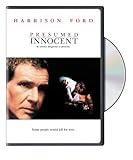
Presumed Innocent (DVD) | $4.11 | Buy on Amazon |
| 2 |

|
Presumed Innocent | $9.84 | Buy on Amazon |
| 3 |

|
Presumed Innocent | $6.79 | Buy on Amazon |
| 4 |
![Presumed Innocent [DVD] [1990] [Region 1] [US Import] [NTSC]](https://m.media-amazon.com/images/I/41kBghAtMIL._SL160_.jpg)
|
Presumed Innocent [DVD] [1990] [Region 1] [US Import] [NTSC] | $17.00 | Buy on Amazon |
| 5 |

|
Presumed Innocent | $8.22 | Buy on Amazon |
That contrast speaks to why Presumed Innocent still matters now: it’s a rare story elastic enough to expose the strengths and weaknesses of its era. The Apple TV+ version reflects a moment when television prioritizes depth and process, sometimes at the expense of momentum. Alan J. Pakula’s film, anchored by Ford’s controlled star power, embodies a time when thrillers aimed for precision and cultural punch, proving that less screen time can leave a deeper bruise.
The Case for Economy: How the 1990 Film Turns a Dense Legal Thriller into a Taut Two-Hour Experience
Alan J. Pakula’s Presumed Innocent understands something the modern adaptation occasionally forgets: momentum is not the enemy of complexity. By compressing Scott Turow’s dense novel into just over two hours, the film sharpens its themes rather than diluting them. Every scene is engineered to advance character, plot, or unease, often accomplishing all three at once.
Quick wins for a faster PC:
Fix the driver behind crashes, sound loss and screen glitchesFind Drivers →Clear out junk files and repair common Windows errorsFree Scan →Scan for outdated or missing drivers - takes under a minuteDriver Scan →#1 Best Overall
- Factory sealed DVD
The Apple TV+ series benefits from sprawl, but it also exposes how repetition can blunt suspense. The film, by contrast, treats narrative economy as a virtue, trusting implication over explanation. That trust pays dividends in tension, forcing the audience to stay alert rather than comfortably informed.
Editing as Storytelling, Not Illustration
Pakula’s direction, paired with the precise editing, turns absence into a weapon. Key emotional beats are underplayed or left offscreen, compelling viewers to fill in the moral gaps themselves. The result is a thriller that feels constantly active, even in its quietest moments.
Scenes rarely linger beyond their narrative usefulness. Courtroom exchanges, marital confrontations, and investigative reveals are trimmed to their most revealing elements, creating a rhythm that mirrors Rusty Sabich’s tightening predicament. The series often revisits similar beats to deepen psychology, but the film’s refusal to rest on any one moment keeps anxiety simmering.
Performance Over Exposition
Harrison Ford’s performance is central to why this economy works. His Rusty is defined by what he withholds rather than what he explains, allowing guilt, arrogance, and vulnerability to coexist uncomfortably. Ford’s star persona is used strategically, inviting trust only to gradually destabilize it.
The Tool Desk
Outbyte PC Repair FREEClear out junk files and repair common Windows errorsFree Scan →Outbyte Driver Updater FREEFix the driver behind crashes, sound loss and screen glitchesFind Drivers →Supporting performances benefit from the same restraint. Brian Dennehy, Raul Julia, and Bonnie Bedelia sketch fully realized characters with minimal screen time, their motivations implied through glances and clipped dialogue. Where the series spells out emotional subtext, the film relies on actors to communicate it wordlessly.
Crafted Atmosphere Instead of Narrative Padding
Gordon Willis’s shadow-heavy cinematography and John Williams’ subdued score contribute to a sense of institutional rot without demanding narrative detours. The film builds mood through visual cohesion rather than supplemental storylines. Chicago’s legal corridors feel oppressive not because we spend more time in them, but because every visit counts.
This discipline keeps the mystery front and center. The film never confuses realism with accumulation, a trap prestige television often falls into. By choosing suggestion over saturation, Presumed Innocent becomes not just efficient, but incisive.
Why Brevity Strengthens the Blow
The ultimate power of the 1990 film lies in how quickly it moves and how long it stays with you. Its final turns land with force precisely because the narrative hasn’t been softened by overfamiliarity. When revelations arrive, they feel earned and unsettling rather than inevitable.
Free tools Windows power users keep installed
One-click scans. No signup required.
The series offers nuance, modern context, and emotional granularity, and those qualities have real value. But the film’s disciplined compression transforms the same material into something sharper and more unsettling, proving that in legal thrillers, as in law itself, precision often matters more than volume.
Star Power vs. Ensemble Prestige: Harrison Ford’s Movie-Star Gravity Compared to the Series’ Subtler Performances
One of the most decisive differences between the 1990 film and the Apple TV+ series lies in how they deploy their actors. The movie is built around Harrison Ford as a singular gravitational force, while the series opts for a prestige ensemble approach that deliberately diffuses attention. Both strategies have merit, but only one consistently sharpens the story’s edge.
The Strategic Use of a Movie Star
Harrison Ford’s casting is not incidental; it is the film’s most potent narrative weapon. In 1990, Ford embodied American decency and moral reliability, and Presumed Innocent weaponizes that image with quiet intelligence. The film understands that every close-up carries cultural baggage, allowing suspicion to creep in precisely because the audience wants to trust him.
That tension never needs to be verbalized. Ford’s restraint, his occasional flashes of irritation or entitlement, do more to complicate Rusty Sabich than pages of dialogue ever could. The performance benefits from the film’s confidence that a star’s presence can do narrative labor on its own.
Do these 3 things before closing this tab:
1Repair Windows errors before they cause bigger problems2Fix the driver behind crashes, sound loss and screen glitches3Clear out junk files and repair common Windows errorsPrestige Television’s Democratic Focus
The Apple TV+ series, led by Jake Gyllenhaal, takes a fundamentally different approach. Rather than leaning on one dominating screen presence, it distributes emotional weight across judges, prosecutors, spouses, and colleagues. This creates a textured professional ecosystem, one that reflects modern prestige television’s interest in systems rather than singular figures.
Rank #2
- {htmlentities(PRESUMED INNOCENT MOVIE)}
Gyllenhaal delivers a controlled, thoughtful performance, but the series rarely allows him to command scenes in the way Ford does. Rusty becomes one compelling figure among many, rather than the destabilizing center of gravity. The result is richer context, but reduced dramatic intensity.
When Subtlety Becomes Dilution
The ensemble focus encourages psychological nuance, yet it also softens the story’s moral ambiguity. By spending so much time inside multiple perspectives, the series explains its characters rather than letting them unsettle us. Motivations are clarified, behaviors contextualized, and emotional responses carefully traced.
In contrast, the film’s supporting players exist in sharper relief precisely because they are not fully unpacked. Dennehy, Julia, and Bedelia leave impressions that linger because they remain partially unknowable. The movie trusts the audience to sit with discomfort, while the series often rushes to interpret it.
Recommended Free Tools
Cultural Impact Through Concentration
Ford’s performance helped cement Presumed Innocent as a defining legal thriller of its era. His star power didn’t just sell tickets; it shaped how audiences processed the story’s central question of guilt and authority. The film’s legacy is inseparable from the way it challenged one of Hollywood’s most dependable heroes.
The series, despite its craftsmanship, feels less culturally disruptive. Its ensemble excellence earns respect, but rarely shock. In choosing balance over dominance, it trades the electric unease of a star-driven thriller for a more measured, more familiar prestige experience.
Pacing on Trial: Weekly Prestige Television vs. the Relentless Momentum of Classic Cinema
If performance and perspective define how Presumed Innocent feels, pacing defines how it grips. This is where the Apple TV+ series and Alan J. Pakula’s 1990 film part ways most decisively. One is designed to be absorbed in measured installments; the other is engineered to move, relentlessly, toward judgment.
The Luxury and Liability of Weekly Structure
The series benefits from time. Eight episodes allow it to explore office politics, marital strain, and ethical gray zones that the film can only imply. Courtroom procedures unfold in granular detail, and character relationships are given space to breathe.
Yet that space often works against tension. Because the audience knows it has hours left, revelations feel provisional rather than urgent. Cliffhangers are calibrated for retention, not shock, which blunts the story’s inherent anxiety about truth arriving too late.
Momentum as Moral Pressure
The 1990 film, by contrast, moves with a sense of inevitability. Pakula’s direction keeps scenes lean, transitions sharp, and narrative digressions minimal. Every exchange feels like it’s pushing Rusty closer to exposure, whether he deserves it or not.
This compression creates pressure. The audience doesn’t have time to intellectually sort through every motivation; it reacts emotionally, moment to moment, mirroring Rusty’s own loss of control. The film’s pacing becomes a moral force, forcing judgments before comfort sets in.
Suspense Built Through Withholding
Classic cinema often relies on what it refuses to explain, and Presumed Innocent exemplifies that discipline. The film withholds inner monologue, psychological reassurance, and narrative safety nets. Its speed ensures ambiguity stays alive, unresolved, and therefore unsettling.
What’s actually slowing this PC down?
Pick the symptom - the matching free tool is one click away.
The series, shaped by contemporary prestige expectations, tends to clarify as it goes. Emotional beats are revisited, themes reinforced, and character choices recontextualized. That thoroughness is admirable, but it diffuses suspense by turning mystery into process.
Efficiency as Impact
At just over two hours, the film delivers a complete moral reckoning with no excess tissue. Its pacing doesn’t merely serve the plot; it defines the experience, leaving viewers unsettled long after the final reveal. The shock lands harder because the story never pauses to cushion it.
Rank #3
The series offers depth, intelligence, and polish, but its extended rhythm makes the story feel less dangerous. In slowing Presumed Innocent down, it makes it safer to consume. The film’s relentless momentum, meanwhile, refuses that comfort, and that refusal is precisely why it endures.
Tone, Suspense, and the Art of the Reveal: Why the Film’s Ending Lands Harder
A Controlled Descent Into Darkness
Alan J. Pakula’s film maintains a steady, somber tone that never signals when or how relief might arrive. From the opening frames to the final courtroom revelations, the mood remains ominous and unresolved, conditioning the audience to expect something unsettling rather than cathartic. That tonal discipline matters, because it primes viewers to accept the ending not as a twist, but as a moral reckoning.
The Apple TV+ series, by contrast, modulates its tone more openly. Moments of intimacy, extended character study, and thematic reassurance soften the descent. This makes the show more humane and accessible, but it also subtly promises emotional safety the story was never meant to offer.
The Reveal as Violation, Not Explanation
The 1990 film’s ending is devastating precisely because it refuses to explain itself emotionally. When the truth is revealed, Pakula doesn’t linger on reaction shots or moral clarification. The audience is given just enough information to understand what has happened, and then left alone with the implications.
That restraint turns the reveal into a violation of expectation. It doesn’t feel designed to be processed; it feels designed to be survived. The series, more interested in psychological completeness, contextualizes its ending with character insight and thematic closure, making the truth feel tragic but comprehensible rather than shocking.
Harrison Ford and the Power of Unknowing
Harrison Ford’s performance is essential to why the film’s ending lands so hard. His Rusty Sabich is reactive, opaque, and frequently unsure of his own moral footing. Ford plays him as a man discovering the limits of his self-knowledge in real time.
PC Slower Than It Used to Be?
A free scan shows the junk files, broken settings and background clutter dragging Windows down - then fixes them in one click.Free scan · Windows 10 & 11Outdated Drivers Are Slowing You Down
One free scan finds every outdated or missing driver and matches the right update for your exact hardware.Free scan · exact hardware matchBy the final scenes, that lack of certainty becomes devastating. The audience realizes they have trusted someone who may never have fully understood himself, and the film never retroactively redeems that trust. The series’ Rusty, by comparison, is more psychologically legible, which makes the ending feel like confirmation rather than revelation.
Finality Versus Aftermath
The film ends with a sense of brutal finality. There is no promise of emotional repair, no extended aftermath to soften the blow. The story stops not because everything is resolved, but because the damage is complete.
Prestige television is structurally resistant to that kind of ending. Even when a season concludes decisively, the form encourages reflection, discussion, and thematic summation. The series’ ending is thoughtful and measured, but the film’s is merciless, and Presumed Innocent is ultimately a story that benefits from mercy being withheld.
Why Less Time Makes the Truth Hurt More
Because the film arrives at its conclusion quickly, the audience has no opportunity to rehearse its response. There is no narrative decompression chamber. The truth arrives, detonates, and lingers.
The series, for all its intelligence and craft, gives viewers time to emotionally prepare. In doing so, it transforms a shocking moral rupture into a comprehensible dramatic outcome. The film denies that comfort, and in denying it, achieves a level of impact the longer form can’t quite replicate.
What the Apple TV+ Series Gets Right: Character Depth, Modern Sensibilities, and Expanded Themes
For all the ways the 1990 film ultimately proves more devastating, the Apple TV+ series is far from a misfire. In fact, its strengths are clear, deliberate, and rooted in the advantages of long-form storytelling. Where the film compresses, the series excavates, turning Presumed Innocent into a slow-burn character study as much as a legal thriller.
Deeper Interior Lives
The most obvious upgrade is character depth. The series gives Rusty Sabich and those around him room to exist beyond the demands of plot, exploring emotional contradictions the film could only imply. Relationships are not just functional but textured, shaped by history, resentment, and unspoken compromise.
This approach benefits supporting characters in particular. Figures who were once narrative tools become fully realized participants in the moral ecosystem of the story. Their choices feel motivated not by genre necessity, but by psychology.
A More Contemporary Moral Lens
The series also benefits from a modern sensibility that reframes the story’s power dynamics. Gender politics, institutional accountability, and professional misconduct are examined with greater scrutiny than a 1990 studio thriller would have allowed. The affair at the center of the story is no longer just a scandal; it’s an ethical fault line.
This recalibration doesn’t rewrite the narrative so much as recontextualize it. The show understands that audiences today are less interested in courtroom mechanics alone and more invested in how systems enable harm. That awareness gives the story added relevance without feeling performative.
Thematic Expansion Over Shock
With eight episodes to work with, the series leans into themes the film could only gesture toward. Marriage, ambition, self-deception, and the corrosive nature of secrecy are explored from multiple angles, often lingering uncomfortably. The result is a version of Presumed Innocent that feels more introspective than incendiary.
That expansion, however, comes at a cost. The series favors comprehension over disorientation, ensuring viewers understand how and why events unfold. It is thoughtful, emotionally literate, and dramatically sound, even if it sacrifices the raw jolt that made the film so unforgettable.
What’s actually slowing this PC down?
Pick the symptom - the matching free tool is one click away.
Prestige Craft and Controlled Performances
Technically, the Apple TV+ production is impeccable. The direction is restrained, the cinematography muted and somber, and the performances carefully calibrated for prestige drama rather than star-driven intensity. It is designed to be absorbed, discussed, and revisited.
That restraint is admirable, and often effective. Yet it also underscores the central trade-off: the series wants to be understood, while the film wanted to unsettle. In doing so, the show succeeds on its own terms, even as it inadvertently highlights why the earlier version still cuts deeper.
Independent reader supportYour contribution helps us test, update, and keep practical guides available for everyone.Cultural Impact and Staying Power: Why the 1990 Presumed Innocent Endures
When weighing the two versions, cultural imprint matters as much as craft. The 1990 Presumed Innocent didn’t just succeed as a thriller; it lodged itself into the collective memory of audiences who encountered it in theaters, on cable, and later on VHS and DVD. It became a reference point for adult studio thrillers that trusted viewers to keep up and sit with discomfort.
A Star Persona That Did the Heavy Lifting
Harrison Ford’s casting proved decisive in a way no modern prestige ensemble can quite replicate. Coming off a decade of iconic hero roles, Ford weaponized audience trust, using his everyman credibility to make Rusty Sabich’s moral ambiguity feel dangerous rather than academic. The performance didn’t ask for sympathy; it assumed it, then quietly dismantled it.
Do these 3 things before closing this tab:
1Repair Windows errors before they cause bigger problems2Scan for outdated or missing drivers - takes under a minute3Clear out junk files and repair common Windows errorsThat subversion lingered. For many viewers, Presumed Innocent marked the moment Ford stopped being a pure movie star and became something more unsettling, more adult. The series, strong as its cast is, doesn’t have an equivalent cultural shortcut to exploit or betray.
Efficiency as a Cultural Weapon
The film’s two-hour runtime is a feature, not a limitation. Its narrative economy forces every scene to do double duty, advancing plot while tightening psychological pressure. The result is a viewing experience that feels relentless without being rushed.
That efficiency made the film endlessly rewatchable. Viewers return not to parse motivations but to feel the machinery click into place, to see how the misdirection was engineered. The series invites analysis; the film invites obsession.
The Twist That Entered the Canon
Presumed Innocent’s ending landed with force because it arrived without preparation disguised as explanation. The reveal wasn’t just shocking; it was destabilizing, reframing the entire moral universe of the story in seconds. In 1990, that kind of ending felt transgressive, even cruel.
Best Value
Its influence is visible in decades of legal and psychological thrillers that followed. The Apple TV+ series handles its revelations with care and clarity, but in doing so, it forfeits the kind of gut-punch that becomes part of pop culture shorthand.
A Product of the Monoculture Era
The film also benefited from arriving before entertainment fragmented into algorithm-driven niches. Presumed Innocent was encountered collectively, debated broadly, and absorbed into a shared understanding of what an adult thriller could be. Its impact was amplified simply by being unavoidable.
The series exists in a more crowded, more ephemeral landscape. Even strong streaming hits struggle to linger once the next prestige release arrives. The 1990 film endures because it didn’t just reflect its moment; it helped define one.
Why It Still Feels Dangerous
Most importantly, the film retains a sense of risk. It doesn’t explain itself, soften its implications, or reassure the audience that moral clarity will prevail. That danger is why it continues to feel alive decades later.
Quick wins for a faster PC:
Fix the driver behind crashes, sound loss and screen glitchesFind Drivers →Repair Windows errors before they cause bigger problemsFix Now →Scan for outdated or missing drivers - takes under a minuteDriver Scan →The series is intelligent, relevant, and impressively crafted. But the film is bolder, sharper, and more willing to leave scars. In a genre built on doubt, that willingness is why Presumed Innocent still stands apart.
Final Verdict: Good TV, Great Film — and Why the Harrison Ford Version Still Wins
The Value of Compression
The Apple TV+ series proves that Presumed Innocent still works as prestige drama. It deepens character psychology, modernizes the politics, and benefits from performances that feel calibrated for close, patient viewing. As television, it is confident, intelligent, and often absorbing.
But the 1990 film understands something fundamental about thrillers: compression creates power. By forcing every scene to justify its existence, the film sharpens tension instead of diffusing it. What the series explores, the film weaponizes.
Star Power With Purpose
Harrison Ford’s performance remains the defining advantage. He brings not just empathy, but cultural authority, weaponizing his everyman image against the audience’s expectations. Watching Ford unravel feels transgressive precisely because we trust him so instinctively.
The series offers strong, nuanced work, but it lacks that singular cinematic presence. Television often thrives on ensembles; this story benefits from a gravitational center. In 1990, Ford was that center, and the film is built around his ability to command belief even as doubt corrodes everything else.
Cinema Leaves Less Room to Hide
The film’s formal discipline also works in its favor. Pakula’s direction denies comfort, using restraint instead of exposition and silence instead of reassurance. There is no sense that the story is cushioning its implications for audience approval.
The series, by contrast, reflects modern storytelling norms that prioritize clarity and context. That makes it accessible and thoughtful, but also safer. In a narrative about moral compromise, safety is the enemy of impact.
Endurance Over Elaboration
Ultimately, the question is not which version is more thorough, but which one lingers. The series rewards engagement in the moment, inviting discussion and analysis while it unfolds. The film embeds itself in memory, resurfacing years later with the same unsettling force.
Crashes, No Sound, or Screen Glitches?
Random freezes, missing sound and display glitches usually trace back to one bad driver. Find and replace yours safely.Free scan · under a minutePC Slower Than It Used to Be?
A free scan shows the junk files, broken settings and background clutter dragging Windows down - then fixes them in one click.Free scan · Windows 10 & 11Presumed Innocent on Apple TV+ is good television, made with care and intelligence. Presumed Innocent in 1990 is great cinema, built to disturb, provoke, and endure. Both have value, but only one still feels dangerous—and that is why Harrison Ford’s version continues to win.
Quick Recap
Product prices and availability are accurate as of the date/time indicated and are subject to change. Any price and availability information displayed on Amazon at the time of purchase will apply.




