What’s actually slowing this PC down?
Pick the symptom - the matching free tool is one click away.
Phil Lesh embodied one of the Grateful Dead’s defining musical ideas: treat a song as something alive, not a fixed arrangement. His bass often moved like an independent melodic voice, answering Jerry Garcia’s guitar and Bob Weir’s parts while staying alert to the rest of the band. Calling him an “uncompromising embodiment” is an interpretation, not a claim that he alone defined the Dead; his importance lies in how distinctly his playing put the group’s appetite for musical risk into practice.
What made Phil Lesh’s bass playing different?
A conventional bass part often anchors a song by reinforcing its pulse and outlining its harmony. Lesh could do that, but his role frequently extended beyond it: he played arpeggios, took melodic routes of his own, and created counterpoint with the guitars. The Grateful Dead’s official biography called his sound a “low-end guitar,” a phrase that captures how often the bass functioned as another lead voice rather than merely a foundation.
| # | Preview | Product | Price | |
|---|---|---|---|---|
| 1 |

|
American Beauty | $24.97 | Buy on Amazon |
| 2 |

|
Workingman's Dead | $24.99 | Buy on Amazon |
| 3 |

|
Shakedown Street | $23.51 | Buy on Amazon |
| 4 |
|
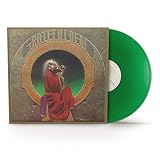
Blues For Allah (50th Anniversary Remaster)(Amazon Exclusive) | $24.98 | Buy on Amazon |
That independence did not mean simply stepping forward to solo. Lesh’s lines mattered because they interacted with the ensemble: they could answer, complicate, or redirect what Garcia and Weir were playing. Instead of a single melodic lead over a stable backing, a Dead performance could have several musical ideas moving at once.
How his musical background shaped his approach
Lesh had studied classical violin and played jazz trumpet before Garcia recruited him to join the Warlocks in 1965. He had not played bass before taking the role. His shift to an unfamiliar instrument helps explain why his part did not begin from the usual assumptions about what a rock bassist should do: he brought experience with instruments and traditions in which melodic movement and ensemble interplay were central.
#1 Best Overall
Garcia later described Lesh’s playing as complex and difficult even for him to understand. In a 1981 interview quoted in the Grateful Dead’s official tribute, Garcia said, “Phil is an incredibly complex and brilliant guy. He does things for reasons of his own that, just like his music, are not easy for me to understand.” The remark conveys both Lesh’s distinctiveness and the fact that his choices were not always predictable to his bandmates.
Improvisation meant listening, not abandoning the song
The Dead’s live songs could change from performance to performance. In a 2009 Associated Press interview, Lesh described the process this way: “It’s always fluid, we just pretty much figure it out on the fly.” That is evidence of a responsive, improvisational practice, not proof that the band entered every performance without structure. Songs gave the musicians a framework; within it, their choices could shift as they listened and played.
Rank #2
The official tribute recalls Lesh’s son Grahame describing a piece of advice from his father: “Never play the same thing once.” It is best understood as a reported expression of Lesh’s openness to variation, not a verified rule followed in every song or performance. The larger point is that repeating a part exactly was less important than responding to what the music was doing in that moment.
Songwriting gave Lesh another kind of voice
Lesh was not only an instrumental force. He composed or helped create songs that became part of the Dead’s catalog, including “Box of Rain,” “Unbroken Chain,” and “Pride of Cucamonga.” These songs show another side of his contribution: he helped shape the group’s recorded repertoire as well as the changing musical conversations heard onstage.
Rank #3
How the music continued after the original Dead run
After the Grateful Dead’s original run, Lesh continued performing in Phil Lesh and Friends and The Other Ones. These were later projects, not the original Grateful Dead lineup. The Other Ones’ live album The Strange Remain documents one part of that post-Dead period and offers a point of entry for readers interested in how Lesh kept working within the music’s open-ended spirit.
In a 2006 interview reproduced in the official Grateful Dead tribute, Lesh explained why he abandoned a plan to create an orchestral work based on the band’s music: he concluded that setting it in one fixed version would not fit its evolving nature. He said, “there’s no such thing as closure with the music, that music demands to constantly be evolving.” The comment puts his later activity in context: for Lesh, the music was not a finished object but a practice that could keep changing through new performances and collaborators.
Rank #4
- Amazon Exclusive Green Vinyl
Why “uncompromising embodiment” fits—with a qualification
Lesh’s uncompromising quality was not a matter of being louder or more conspicuous than everyone else. It was his commitment to letting the bass roam, to making room for surprise, and to treating ensemble playing as an active exchange. That approach makes him a particularly clear embodiment of the Dead’s musical ethos, but not its sole embodiment: Garcia, Weir, and the other members also shaped the band’s sound and identity.
Phil Lesh died on October 25, 2024. His legacy is not only the sound of a bass line that refused to stay in the background; it is also the model of a musician who kept listening for where the music could go next.
Read the Grateful Dead’s Phil 85, Part 2 retrospective and the official Phil Lesh site.
Quick Recap
Product prices and availability are accurate as of the date/time indicated and are subject to change. Any price and availability information displayed on Amazon at the time of purchase will apply.