Outdated Drivers Are Slowing You Down
One free scan finds every outdated or missing driver and matches the right update for your exact hardware.Free scan · exact hardware matchWindows Errors? Fix Them Before They Spread
Repair common Windows errors and clear accumulated junk for a smoother, more stable PC - no reinstall needed.Free scan · no reinstallHollywood moves fast, and today’s movie news reflects an industry balancing spectacle with strategy. From studios recalibrating release calendars to filmmakers unveiling first looks designed to dominate social feeds, the conversation right now is about momentum—what’s breaking through, what’s stalling, and what audiences are clearly responding to. This snapshot captures the stories shaping the next wave of theatrical and streaming releases, without the noise.
What makes today’s headlines feel especially consequential is how interconnected they are. Casting announcements are signaling long-term franchise plans, box office performance is quietly rewriting sequel strategies, and new trailers are testing how much novelty audiences still crave. Taken together, these developments reveal where Hollywood’s confidence is growing and where it’s becoming more cautious.
Franchise Strategy and Casting Shifts
Major studios are locking in high-profile talent for multi-film commitments, a clear sign that franchise planning is becoming more centralized and risk-averse. These casting moves aren’t just about star power; they’re about stabilizing brands in an era where audience loyalty is harder to guarantee. Expect ripple effects across release schedules and creative teams as these deals solidify.
Box Office Signals Studios Can’t Ignore
Recent theatrical performance is sending a mixed but revealing message. Event films are still drawing crowds, while mid-budget releases continue to struggle for attention, reinforcing the widening gap in what gets prioritized for theaters versus streaming. Studios are already adjusting marketing spends and sequel prospects based on these numbers.
#1 Best Overall
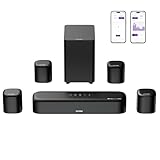
- 7.1ch Dolby Atmos Surround Sound System for TV: This 7.1ch sound bar features 3 main channels for crisp dialogue and 4 surround speakers. Power the rear right surround speaker to pair it wirelessly with sound bar. The setup delivers an immersive surround sound audio experience, making you feel fully engaged in the action. Note: Recommended for space of 108 to 270 ft².
- 4 Surround Speakers for Home Theater Sound System: The Aura A60 Pro soundbar for tv comes with 2 wired front surround speakers and 2 wired rear surround speakers, positioned to create a wide, room-filling soundstage. The rear speakers connect wirelessly with the soundbar, minimizing cable clutter and optimizing space efficiency.
- Dolby Atmos Delivers an Immersive 3D Soundscape: This 7.1ch dolby atmos soundbar enhances your listening experience with multidimensional audio that surrounds you from every direction, upgrading your home theater with powerful, dynamic sound that brings each scene to life.
- 5.25-inch Wired Subwoofer with BassMX Technology: The Aura A60 Pro sound bar comes with a 5.25" wired subwoofer powered by BassMX technology to boost low-frequency performance. An optimized magnetic structure and diaphragm produce deep, powerful bass. Enjoy enhanced low-end sound and experience the impact of every beat.
- Precision Audio Tuning Redefined: Customize your audio experience with the Ultimea App, designed for precise sound control. It provides 121 professionally tuned EQ presets across styles such as Bass, Pop, Classical, and Rock, along with 10-band control and 6 tailored EQ modes including Movie, Music, Voice, Sport, Game, and Night. Using the advanced “Customize” option, you can adjust audio details to suit your personal taste, ensuring every sound is tuned exactly how you prefer.
Trailers, First Looks, and the Attention Economy
New footage dropping this week underscores how crucial first impressions have become. Trailers are leaning harder into tone and spectacle, often revealing more than they once did, as studios compete for immediate online engagement. For audiences, it offers a clearer sense of what’s worth the wait—and what might be better suited for a couch viewing.
New Projects & Greenlights: What’s Officially Moving Forward (and Why It Matters)
If trailers and casting deals show intent, greenlights confirm commitment. This week’s batch of officially approved projects reveals where studios and streamers are placing real financial and creative bets, separating speculative development from productions that are actually happening. For audiences, these announcements offer the clearest preview yet of what will shape theaters and home screens over the next 12 to 24 months.
Studio Tentpoles Getting the Go-Ahead
Several major studios have quietly moved long-gestating franchise entries into active production, signaling renewed confidence in recognizable IP. These greenlights often follow strong international performance or sustained streaming engagement, even when domestic box office results were mixed. The takeaway is clear: brands with global reach and merchandising potential remain the safest path forward, especially as studios look to stabilize theatrical slates.
Notably, creative leadership is being locked in earlier than usual, with directors and writers attached through post-production and potential sequels. That level of commitment suggests studios are prioritizing cohesion and long-term planning over reactive course correction. For fans, it increases the likelihood of more consistent tone and fewer mid-franchise pivots.
What’s actually slowing this PC down?
Pick the symptom - the matching free tool is one click away.
Streaming Originals Narrow Their Focus
On the streaming side, new greenlights are noticeably more selective. Platforms are favoring projects with built-in awareness—adaptations, recognizable creators, or genre hooks that travel well internationally. Big-budget original concepts are still happening, but they’re increasingly paired with clear audience targeting and franchise potential.
This shift reflects a post-correction streaming landscape where growth is no longer the sole metric. Success is now measured in retention, rewatchability, and cultural impact, which is why fewer projects are moving forward, but with stronger marketing and longer-term positioning behind them.
Mid-Budget and Indie Films Find Strategic Paths
While traditional studio mid-budget films remain scarce, several are moving forward through co-financing deals and distribution partnerships. These projects often blend prestige ambitions with commercial sensibilities, aiming for festival launches followed by carefully timed theatrical or hybrid releases. It’s a model that reduces risk while still allowing original storytelling to reach wide audiences.
For moviegoers, this means fewer surprise wide releases, but more curated rollouts designed to build word of mouth. The greenlights may be quieter, but they point to a healthier ecosystem for films that don’t fit neatly into franchise or blockbuster categories.
The Tool Desk
Outbyte Driver Updater FREEScan for outdated or missing drivers - takes under a minuteDriver Scan →Outbyte PC Repair FREERepair Windows errors before they cause bigger problemsFix Now →Why These Greenlights Signal a Broader Shift
Taken together, the projects moving forward reveal an industry leaning into clarity. Studios want fewer question marks, streamers want measurable engagement, and creatives are being asked to think beyond single installments. What’s officially happening now offers a sharper, more realistic picture of where Hollywood believes momentum truly lies—and which kinds of stories are most likely to make it from announcement to screen.
Casting Shifts & Star Power Plays: Key Roles, Surprise Additions, and Industry Implications
If greenlights reveal what studios want to make, casting announcements show how they plan to sell it. Recent deals underscore a renewed emphasis on dependable star power, strategic surprise casting, and ensemble configurations designed to appeal across theatrical, streaming, and international markets. In a tighter production climate, who gets hired has become as important as what gets made.
A-List Anchors Are Back in Demand
Studios are once again prioritizing recognizable leads to stabilize big investments, particularly in franchise entries and high-concept originals. Established names are being attached earlier in development, sometimes before a director is finalized, signaling how critical star attachment has become for financing, distribution commitments, and global pre-sales.
This shift doesn’t mean risk-taking has vanished, but it does mean studios want a familiar face at the center. For audiences, it translates to projects that feel easier to grasp at a glance, with casting choices doing some of the marketing heavy lifting well before trailers arrive.
Unexpected Casting Choices Generate Buzz
Alongside safe bets, several high-profile projects have leaned into left-field casting that sparks conversation online and within the industry. Comedians stepping into dramatic roles, prestige actors entering genre franchises, and international stars joining Hollywood tentpoles are all being used to refresh familiar IP.
These choices are rarely accidental. Surprise casting creates early buzz without relying on costly marketing campaigns, while also signaling tonal intent. When done right, it reframes audience expectations and positions a project as more than a routine installment.
Streaming Casts for Longevity, Not Just Openings
On the streaming side, casting strategies are increasingly about sustainability. Platforms are favoring actors who can commit to multi-season arcs or potential spin-offs, even for projects initially framed as limited series. Ensemble depth is becoming just as important as headline names.
Rank #2

- Simplified 5.1ch Dolby Atmos Setup: Enjoy immersive 4D sound with real Dolby Atmos and 5.1-channel audio. Five built-in speakers, including two side-firing drivers, create wide surround without rear speakers. Precision DSP ensures <0.5 ms latency for smooth, theater-like sound. Setup takes less than 1 minute.
- Voice Clarity Enhancement: VoiceMX technology uses advanced DSP algorithms to isolate and enhance vocal frequencies in real time. Dialogue remains crisp and easy to follow by separating speech from background effects and music, even at low volumes or during intense scenes.
- 300W Output with 6-Driver System: Featuring five precision-tuned full-range drivers and a dedicated wired wooden subwoofer, the system delivers up to 300W of peak power for bold, room-filling sound. With a frequency response of 45 Hz–18 kHz and a maximum SPL of 99 dB, it reproduces everything from subtle nuances to explosive cinematic effects.
- 18 mm High-Excursion Driver: Powered by BassMX technology, the wired wooden subwoofer features a 18 mm high-excursion driver, a 5.3L tuned cabinet, and a high-density magnetic circuit. This design delivers deeper, tighter bass with greater air displacement and enhanced low-frequency performance—bringing more realism to every scene.
- HDMI eARC for True Dolby Atmos: HDMI eARC supports up to 37 Mbps of bandwidth, unlocking the full potential of lossless Dolby Atmos 5.1-channel audio. Compared to standard ARC, eARC delivers richer surround effects and greater detail. CEC integration allows the TV and soundbar to work together with unified control.
This approach reflects hard-earned lessons from earlier streaming cycles. Retention-driven casting means fewer stunt hires and more emphasis on performers who can grow with a property, helping shows build long-term viewer attachment rather than brief launch-week spikes.
Do these 3 things before closing this tab:
1Repair Windows errors before they cause bigger problems2Scan for outdated or missing drivers - takes under a minute3Clear out junk files and repair common Windows errorsWhat These Moves Mean for the Industry
Collectively, these casting shifts highlight an industry recalibrating its relationship with talent. Stars still matter, but they’re being deployed more strategically, balancing familiarity with novelty and global appeal. For actors, it means fewer but more carefully chosen opportunities, often tied to broader franchise or brand potential.
For audiences, the upside is clearer creative intent. Casting is no longer just about marquee value; it’s a storytelling signal, a market strategy, and increasingly, a promise of what kind of experience awaits when the lights go down or the app opens.
Trailers, Footage & First Reactions: Early Buzz and What Audiences Should Watch For
Once casting sets expectations, trailers and early footage lock them in. Studios are increasingly using first looks as precision tools, designed less to explain plot and more to communicate tone, scale, and confidence. In a crowded release calendar, that initial impression often determines whether a movie becomes a must-see or slips into the background noise.
Trailers as Tone-Setting Events
Modern trailers are shorter, sharper, and more deliberate about what they reveal. Many recent previews emphasize mood over narrative, leaning on striking imagery, controlled needle drops, and carefully chosen dialogue moments. The goal is to sell a feeling rather than a synopsis, trusting that intrigue will drive conversation.
This approach also reflects audience fatigue with overexposure. Studios have learned that showing too much can dilute anticipation, especially for franchise films where plot mechanics are already familiar. A confident trailer now withholds answers, inviting speculation instead of spelling everything out.
Footage Drops and Industry Showcases
Exclusive footage unveiled at events like CinemaCon and major festivals continues to shape early narratives long before wide releases hit the internet. Even when clips don’t immediately go public, detailed reactions from exhibitors, critics, and industry insiders ripple outward, influencing perception. A strong room response can reset expectations overnight.
These showcases often highlight elements that trailers can’t fully sell, such as performance nuance, visual effects polish, or tonal consistency across extended scenes. When insiders describe footage as “playing better than expected,” it’s usually a signal that a project may outperform early skepticism.
First Reactions and the New Word of Mouth
Social media-first reactions remain a powerful, if imperfect, indicator of momentum. While early posts tend to skew positive, patterns still emerge around standout performances, pacing issues, or tonal surprises. Savvy readers look for consistency across reactions rather than isolated praise.
Free tools Windows power users keep installed
One-click scans. No signup required.
Studios now design early screenings with this ecosystem in mind. Carefully timed embargo lifts and curated invite lists aim to shape the initial conversation, knowing that those first few hours can define a movie’s online identity heading into its final marketing push.
What Audiences Should Actually Watch For
Beyond hype, certain signals matter more than others. Pay attention to how trailers handle character introductions, whether action sequences feel grounded or over-processed, and how confident a film seems in its own identity. A trailer that knows exactly what it is can be more reassuring than one trying to appeal to everyone at once.
Equally important is how reactions frame expectations. When early buzz focuses on craft, performances, or emotional impact rather than spectacle alone, it often points to a film with staying power. In an era of constant content, those are the projects most likely to linger after the opening weekend.
Box Office Watch: Hits, Misses, and What the Numbers Reveal About Audience Trends
If trailers and early buzz set expectations, box office results are where those promises are tested in public. Recent weekends continue to underline a familiar truth: audiences are more selective than ever, but they’ll still show up decisively when a movie clearly delivers on its pitch. The gap between hits and misses has widened, making opening weekends and second-week drops especially revealing.
Recommended Free Tools
The Wins: Clarity, Confidence, and Event Appeal
Movies that open strong right now tend to share one key trait: a clear reason to exist theatrically. Whether it’s a star-driven spectacle, a trusted franchise entry, or a concept that plays bigger on a massive screen, successful releases communicate value upfront. Audiences want to know exactly what kind of night at the movies they’re buying.
Premium formats remain a major driver of upside. IMAX and large-format screens are disproportionately boosting totals for films that lean into scale, sound, and visual ambition. When a movie is designed for that experience, viewers are increasingly willing to pay extra, even as overall ticket-buying becomes more selective.
Rank #3

- Your purchase includes: 1 AV receiver, 5 speakers, 1 Sub-Woofer and Speaker wire.Waterproof : No
- Dimensions: AV Receiver – 17” W x 6” H x 12” D | Four Speakers (each) – 4” W x 6” H x 4” D | Center speaker – 10” W x 4” H x 4” D | Subwoofer – 11” W x 11” H x 13” D
- Technical specs: HDMI – 4 | Standby Power Consumption – ≤ 0.2 W | Frequency Response – 28Hz/25kHz
- Bluetooth for streaming all your favorite music and podcasts. No wireless functionality
- Easy setup with Yamaha YPAO room optimization and flexible speaker placement options, including virtual cinema front
The Misses: Marketing Confusion and Franchise Fatigue
On the flip side, underperformers often stumble before release. Vague marketing, tonal inconsistency, or a sense that a film could wait for streaming all contribute to softer openings. In a crowded release calendar, movies that don’t quickly communicate urgency are getting lost.
Franchise fatigue also continues to assert itself. Familiar IP alone is no longer a guarantee, especially when audiences sense diminishing returns or recycled storytelling. Recent box office dips suggest viewers are voting with their wallets, demanding either genuine reinvention or a compelling new hook.
Quick wins for a faster PC:
Repair Windows errors before they cause bigger problemsFix Now →Scan for outdated or missing drivers - takes under a minuteDriver Scan →Clear out junk files and repair common Windows errorsFree Scan →The Power of Word of Mouth in the Second Weekend
Beyond opening numbers, legs matter more than ever. Films that overperform expectations often do so because audiences actively recommend them, driving steadier holds in weeks two and three. Strong audience scores and organic social chatter now carry more weight than traditional advertising once a movie is in theaters.
Conversely, sharp second-weekend drops usually signal a disconnect between marketing promises and the actual experience. In today’s landscape, disappointment travels fast, and casual moviegoers are quick to redirect their time and money elsewhere.
What the Numbers Say About Where Audiences Are Headed
Taken together, current box office trends point to a recalibrated audience. Viewers aren’t abandoning theaters, but they are curating their choices, prioritizing movies that feel intentional, well-crafted, and worth leaving home for. Mid-budget films with strong concepts are finding success, while bloated releases without clear identity struggle to justify their scale.
For studios, the message is increasingly clear. Success now depends less on volume and more on precision: smarter release dating, sharper marketing, and films that understand exactly who they’re for. As the numbers keep showing, audiences will meet that effort with enthusiasm when they feel respected rather than sold to.
Franchise & IP Developments: Sequels, Reboots, and Shared Universe Updates
As box office patterns continue to reward clarity and originality, studios are reassessing how they handle their biggest franchises. Sequels and reboots remain central to theatrical strategy, but the emphasis has shifted from sheer volume to sustainability. The goal now is not just keeping an IP alive, but restoring trust and excitement around it.
Sequels Are Slowing Down, Not Going Away
Studios are increasingly spacing out sequels to avoid audience burnout. Recent announcements suggest longer development windows, fewer overlapping releases, and a renewed focus on standalone storytelling within established worlds. For audiences, that means fewer “placeholder” entries and more sequels positioned as true events.
This approach is especially visible in action and sci‑fi franchises that once followed rigid release patterns. By easing off the accelerator, studios are betting that anticipation can be rebuilt, rather than assumed. It’s a corrective move shaped directly by recent box office lessons.
Reboots Aim for Reinvention, Not Replication
The era of near shot-for-shot reboots appears to be fading. Current reboot strategies lean toward tonal shifts, genre blends, or reframing familiar characters through new perspectives. Executives have openly acknowledged that nostalgia alone no longer guarantees turnout.
Audiences have responded more positively when reboots feel additive rather than redundant. Whether through modern themes, unexpected casting, or bold creative voices, the most successful revivals are those that justify their existence beyond brand recognition.
Shared Universes Are Being Streamlined
Shared universes aren’t disappearing, but their scope is tightening. After years of sprawling continuity and mandatory viewing, studios are simplifying entry points and reducing cross-platform dependency. Films are once again being designed to function independently, even when they exist within a larger mythology.
This recalibration reflects audience fatigue with homework-heavy franchises. By lowering the barrier to entry, studios hope to win back casual moviegoers while still rewarding dedicated fans who follow every chapter.
Legacy IP Faces a Generational Handoff
Many long-running franchises are now navigating a delicate transition between legacy characters and new leads. Rather than abrupt replacements, recent projects have favored gradual handoffs, allowing audiences time to invest in the next generation. When handled carefully, these transitions can extend a franchise’s lifespan without alienating its core base.
Do these 3 things before closing this tab:
1Clear out junk files and repair common Windows errors2Fix the driver behind crashes, sound loss and screen glitches3Repair Windows errors before they cause bigger problemsThe challenge lies in balance. Lean too heavily on the past, and the franchise stalls; move on too quickly, and it risks losing emotional continuity. Studios that strike that balance stand to redefine what longevity looks like in modern Hollywood.
Rank #4

- An all-in-one home theater package - The YHT-4970U comes with a Dolby Atmos AV Receiver (Yamaha RX300A), a 5.1 speaker package (two front channel speakers, a center channel speaker, two surround channel speakers, and a powered subwoofer), plus a subwoofer cable and speaker wire all in one box.
- Step into lifelike sonic worlds - Dolby Atmos and DTS Virtual:X for deeply dimensional, lifelike sound that draws you into every moment of your favorite entertainment, plus crystal-clear dialogue so you can hear every word.
- Stunning visual realism - Supports ultra-high definition 4K/120 and 8K/60 video, high-performance HDMI switching, advanced Dolby Vision and HDR10+ dynamic range technologies, HDMI eARC/ARC and next-gen gaming features like ALLM and VRR.
- Room Correction - Experience perfect sound in any room. An included setup microphone measures your room’s acoustics and speaker characteristics, allowing the receiver to automatically optimize sound performance.
- Easy streaming with Bluetooth Multipoint - Stream all your favorite music, podcasts and audiobooks wirelessly. Built-in Bluetooth Multipoint lets you pair two source devices and instantly switch between them.
Why These Moves Matter Right Now
Taken together, these franchise shifts signal an industry listening more closely to audience behavior. Viewers have made it clear they’re open to familiar worlds, but only when those worlds feel thoughtfully curated and creatively alive. The success or failure of upcoming sequels and reboots will likely determine how aggressively studios pursue IP-driven slates moving forward.
For moviegoers, this moment offers cautious optimism. If the lessons of recent box office cycles hold, the next wave of franchise films may feel less obligatory and more inspired, restoring the sense of excitement that once defined event cinema.
Behind-the-Scenes Industry Moves: Studio Strategy, Director Deals, and Production Changes
As franchise strategy recalibrates on screen, equally significant shifts are happening quietly behind studio doors. Executive reshuffles, targeted greenlights, and recalibrated spending models are redefining how movies get made and which projects move forward. For audiences, these internal decisions often determine not just what arrives in theaters, but when and how confidently it’s supported.
Studios Are Prioritizing Fewer, Clearer Bets
After years of volume-driven slates, major studios are narrowing their focus. The emphasis has shifted toward fewer releases with clearer marketing identities, longer development runways, and more disciplined budgets. This approach reflects lessons learned from post-pandemic volatility, where overproduction diluted attention and strained resources.
The change is especially visible at legacy studios balancing theatrical and streaming mandates. Films now need a stronger case for theatrical exclusivity, while streaming originals face higher quality thresholds before receiving a greenlight. The result is a slower pipeline, but one designed to reduce risk and improve long-term brand value.
Director Deals Signal Creative Trust and Risk Management
First-look and multi-picture deals with filmmakers are back in favor, but with more guardrails. Studios are aligning with directors who bring a defined audience or genre credibility, using these partnerships to anchor slates rather than chase trends. The goal is stability: a recognizable creative voice that can deliver consistently within budget.
At the same time, studios are being more selective about auteur-driven passion projects. Creative freedom still exists, but it’s increasingly paired with performance benchmarks and tighter oversight. For filmmakers, the upside is clearer expectations; for studios, it’s a way to balance artistry with accountability.
Production Is Following Incentives and Infrastructure
Where movies are made continues to shift as tax incentives and production infrastructure evolve. States and international hubs offering competitive rebates and skilled crews are drawing projects away from traditional centers, reshaping the global production map. This mobility allows studios to stretch budgets further without compromising scale.
These moves also affect timelines. Relocating productions can introduce logistical challenges, but studios are betting the savings justify the complexity. For audiences, this often translates to ambitious visuals at mid-range budgets, a trade-off that has become increasingly attractive in a cost-conscious market.
Post-Strike Realities Are Reshaping Schedules
The ripple effects of recent labor disruptions are still being felt. Studios are spacing releases more carefully, building buffers into schedules to avoid bottlenecks and burnout. Development cycles are longer, but productions are entering principal photography with more polished scripts and clearer creative alignment.
This cautious pacing may frustrate fans waiting on delayed titles, but it reflects a broader industry reset. By stabilizing workflows now, studios are aiming to avoid the stop-start chaos that defined recent years, setting the stage for a more predictable and sustainable release calendar ahead.
Free tools Windows power users keep installed
One-click scans. No signup required.
Awards Season & Prestige Signals: Films Gaining Momentum and Why They’re in the Conversation
As release calendars stabilize, awards season narratives are quietly taking shape earlier than usual. Studios are signaling confidence through strategic festival placements, platform releases, and carefully timed trailer drops designed to position certain titles as serious contenders. In a market recalibrating after disruption, prestige has become a key differentiator again.
Festival Breakouts Are Setting the Early Tone
Recent premieres at Sundance, Berlin, and Cannes have already sparked buzz around a handful of films that combine strong auteur voices with accessible storytelling. These aren’t purely experimental plays; they’re character-driven dramas, elevated genre pieces, and socially resonant stories that voters traditionally embrace. Early critical response is being leveraged aggressively, with studios locking in fall release dates to keep momentum alive.
For audiences, festival buzz now functions as an early trust signal. A strong debut can turn a smaller film into an essential theatrical experience, especially as word-of-mouth spreads faster through social platforms and curated screenings.
Prestige Studios Are Playing the Long Game
Searchlight, A24, and specialty arms of major studios are once again dominating the awards conversation through disciplined release strategies. Rather than flooding the market, these labels are spacing titles carefully, allowing each film its own oxygen in the conversation. Limited releases paired with filmmaker Q&As and targeted marketing are designed to build credibility before wider expansion.
PC Slower Than It Used to Be?
A free scan shows the junk files, broken settings and background clutter dragging Windows down - then fixes them in one click.Free scan · Windows 10 & 11Outdated Drivers Are Slowing You Down
One free scan finds every outdated or missing driver and matches the right update for your exact hardware.Free scan · exact hardware matchBest Value

- 5.1.2ch Surround Sound System: A 5.1.2-channel system featuring up-firing speakers, surround sound, and a powerful subwoofer creates lifelike, multidimensional audio. Feel the Sky Around You—raindrops falling from above, helicopters circling overhead, thunder rumbling in all directions. Sound isn’t just around you, it engulfs you, as if the ceiling disappeared. This is Dolby Atmos: not just heard, but felt.
- Up-Firing Drivers with Neodymium Core: The up-firing channels use neodymium internal magnets and 18-core large voice coils to enhance height precision and vertical throw. This aerospace-grade configuration ensures better high-frequency dynamics, delivering focused and elevated sound images that unlock the true potential of Dolby Atmos.
- 360° SurroundX Audio: SurroundX technology combines two rear surround speakers and dual up-firing Atmos drivers to build a true 360° sound field. Powered by intelligent spatial algorithms, the system precisely positions audio around and above you—enhancing Dolby Atmos with a more natural, three-dimensional soundstage. Note: Not compatible with DTS.
- Lossless Audio Transmission: Unlock full Dolby Atmos performance with HDMI eARC, supporting up to 37Mbps bandwidth for lossless 5.1.2-channel audio. Compared to regular ARC, eARC delivers richer detail and better surround effects with no compression. With CEC, your TV and soundbar work as one—power, volume, and input sync automatically for effortless control.
- Advanced App Control: Customize every detail of your audio experience with the Ultimea App. Fine-tune your surround sound with 13-step level adjustment (-6 to +6), optimize with a 10-band graphic EQ, and choose from 121 preset sound settings. Enjoy seamless OTA updates that unlock new features and keep your system performing at its peak.
This approach also reflects tighter budgets. Prestige doesn’t require scale anymore; it requires clarity of vision and sustained critical engagement. Studios that understand this are shaping narratives months in advance, not scrambling in December.
Performances Are Emerging as the Strongest Currency
Actor-driven buzz is one of the clearest indicators of awards momentum this year. Transformative roles, unexpected casting against type, and ensemble-heavy dramas are drawing attention from critics groups and early guild chatter. Studios are leaning into performance-focused campaigns, emphasizing craft over spectacle.
For viewers, this means awards season films are likely to feel more intimate and emotionally grounded. These are movies designed to be talked about, dissected, and remembered, not just consumed.
Box Office Is No Longer the Only Validation Metric
Several films gaining awards traction aren’t box office powerhouses, and that’s no longer a liability. Studios are openly separating commercial success from prestige success, recognizing that awards recognition drives long-term value through streaming, library strength, and brand identity. A modest theatrical run paired with strong reviews can be just as valuable as a breakout hit.
This shift also broadens the range of films in the conversation. International titles, smaller-scale American indies, and riskier narratives are finding space alongside studio-backed contenders, signaling a healthier and more diverse awards ecosystem.
Why This Season Feels Different
The underlying theme across awards hopefuls this year is intentionality. With fewer films in the pipeline and more scrutiny on spending, studios are being selective about what they push as prestige. Every campaign feels more curated, every contender more deliberate.
For audiences tracking the race, this clarity is refreshing. The films gaining momentum aren’t just chasing trophies; they’re reflecting an industry recalibrating its values, prioritizing storytelling, performance, and lasting impact over noise.
What’s Next: Upcoming Announcements, Release Windows, and Stories to Track
As awards momentum sharpens, the next wave of announcements will clarify which studios are thinking long-term and which are chasing short-term noise. The coming weeks are less about surprise drops and more about signaling intent, with release calendars, casting moves, and festival strategies quietly setting the table for the rest of the year.
Release Windows Will Do the Talking
Studios are expected to firm up fall and early winter release dates, particularly for films straddling the line between commercial appeal and awards viability. Watch for strategic platform releases that begin in select cities before expanding, a model increasingly favored for performance-driven dramas. These decisions often reveal confidence levels long before reviews hit.
For audiences, release timing will hint at tone and ambition. A late-year slot suggests awards aspirations, while a crowded summer pivot may signal a recalibrated commercial play.
Trailers That Define the Conversation
The next round of trailers will be more revealing than usual. Studios are cutting previews that emphasize mood, performance, and thematic weight rather than plot mechanics, aiming to position films as cultural events rather than weekend distractions. A strong trailer debut can instantly reshape expectations and elevate a project into the wider conversation.
Pay attention to where these trailers land. High-profile sports broadcasts, prestige TV finales, and major festival launches are becoming preferred stages for films seeking instant credibility.
Recommended Free Tools
Casting Announcements and Creative Reunions
Casting news is poised to accelerate, particularly around directors with recent critical wins. Actors are gravitating toward filmmakers with a clear artistic identity, and studios are quick to publicize reunions or unexpected pairings that suggest seriousness of intent. These announcements often double as branding exercises, framing projects months before a frame is shot.
This trend benefits viewers by signaling which projects are likely to prioritize character and craft. When top-tier talent aligns early, it usually reflects confidence in the material.
Industry Shifts Worth Watching
Beyond individual films, broader industry moves will shape what audiences ultimately see. Streaming strategies remain in flux, with more platforms reassessing theatrical-first approaches for select titles. Festival lineups, labor negotiations, and evolving international co-productions will all influence how and when films reach viewers.
These shifts matter because they affect access. The path a film takes to the screen increasingly determines its cultural footprint as much as its quality.
Quick wins for a faster PC:
Clear out junk files and repair common Windows errorsFree Scan →Fix the driver behind crashes, sound loss and screen glitchesFind Drivers →As the calendar fills in, the story of the year will come into focus through accumulation rather than spectacle. Each announcement, trailer, and release date is a clue, revealing an industry trying to balance ambition with sustainability. For moviegoers paying attention, the roadmap is already there, pointing toward a slate defined by intention, patience, and a renewed belief in films that resonate beyond opening weekend.
Quick Recap
Product prices and availability are accurate as of the date/time indicated and are subject to change. Any price and availability information displayed on Amazon at the time of purchase will apply.

