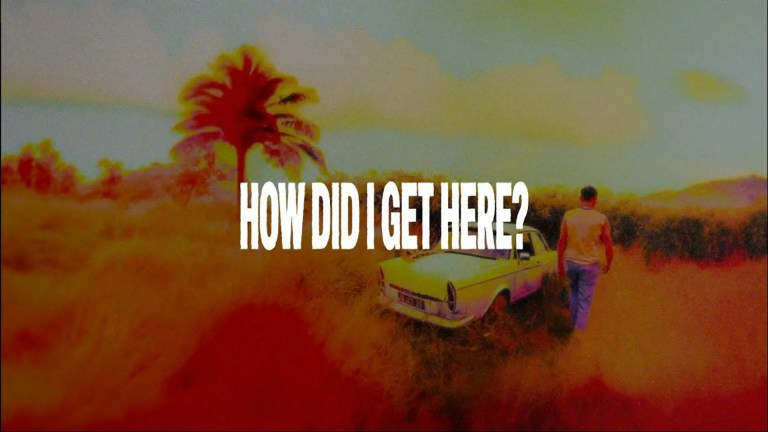
Kendrick Lamar and Drake’s 2024 feud escalated from a long-running rivalry into a tightly packed exchange of diss tracks released over days. It began in earnest when Lamar rejected the “big three” label on “Like That,” then accelerated through Drake’s “Push Ups,” Lamar’s “Euphoria” and “6:16 in LA,” and a rapid sequence of increasingly personal songs. The lyrics included serious allegations by both artists; those claims are not established facts. The battle later reached the Grammys and a lawsuit over “Not Like Us.”
Why Kendrick Lamar and Drake were feuding
The 2024 battle had roots in a relationship that was once collaborative. Drake and Lamar worked together on “Buried Alive Interlude” in 2011 and “Poetic Justice” in 2012, and Lamar toured with Drake. In 2013, Lamar’s verse on Big Sean’s “Control” named Drake among several rappers he wanted to surpass. Lamar framed it as competitive ambition: “I got love for you all, but I’m trying to murder you.” In rap-battle context, “murder” is a boast about lyrical competition, not a literal threat. The Associated Press’ account of the history and timeline traces the dispute’s earlier stages.
The tension surfaced again in October 2023, when J. Cole’s “First Person Shooter” grouped Cole, Drake and Lamar as rap’s “big three.” On March 22, 2024, Lamar appeared on Future and Metro Boomin’s “Like That” and rejected the framing: “The big three,” he rapped, “it’s just big me.” J. Cole briefly entered the exchange with “7 Minute Drill,” then apologized and withdrew.
The diss tracks in order
The release sequence became unusually compressed in late April and early May. Dates can refer to a leak, a social-media post, a premiere or an official release, so the chronology below identifies the events where the distinction matters. The songs mixed criticism of music and status with personal allegations; the latter remain claims made in lyrics, not verified reporting. CBS’ chronology also recounts the exchange and the artists’ accusations and denials.
PC Slower Than It Used to Be?
A free scan shows the junk files, broken settings and background clutter dragging Windows down - then fixes them in one click.Free scan · Windows 10 & 11Outdated Drivers Are Slowing You Down
One free scan finds every outdated or missing driver and matches the right update for your exact hardware.Free scan · exact hardware match#1 Best Overall

- Read Before You Buy — No Video Output: These adapters support charging and USB 2.0 data transfer, but cannot transmit video signals. Except for standard USB webcams (which use USB data only), they are not compatible with HDMI/DisplayPort cables, video-capable USB-C hubs, or docking stations with video output.
- Convert USB-A Ports to USB-C: Designed to connect USB-C earphones, cables, flash drives, card readers, and other USB-C accessories to standard USB-A ports. Plug-and-play with no drivers or software required.
- Aluminum Alloy Housing: Built with a sturdy aluminum alloy shell that aids in heat dissipation and protects against daily wear and scratches. Designed to maintain a stable and secure connection.
- Compact & Travel-Friendly: The ultra-compact design allows the adapter to stay plugged into your device without blocking adjacent ports or adding bulk, reducing wear and tear on your original USB ports.
- 12-Month Warranty: Backed by a 12-month manufacturer warranty for peace of mind. Designed to meet strict quality control standards for reliable everyday performance.
- “Push Ups” — Drake. The track circulated in mid-April and was later premiered; accounts differ on the date because they describe different release stages. Drake attacked Lamar’s stature and career choices and also addressed other artists.
- “Taylor Made Freestyle” — Drake. Posted between April 19 and 24, the song used AI-generated vocal imitations resembling Tupac Shakur and Snoop Dogg. Neither artist nor estate is established as having approved the imitations. Tupac’s estate threatened legal action, and Drake removed the track.
- “Euphoria” — Kendrick Lamar. Released April 30, Lamar attacked Drake’s artistry and public persona.
- “6:16 in LA” — Kendrick Lamar. Released May 3, it targeted Drake’s circle and OVO, Drake’s label and collective.
- “Family Matters” — Drake. Also released May 3, the track turned to allegations about Lamar’s relationship and children. Those allegations are not established by the cited reporting.
- “Meet the Grahams” — Kendrick Lamar. Released May 3–4, shortly after “Family Matters,” it addressed Drake’s family and alleged that Drake had a daughter who was unknown to the public. The existence of that alleged daughter is not established; Drake denied having one in “The Heart Part 6.”
- “Not Like Us” — Kendrick Lamar. Released May 4, it made further serious allegations about Drake. They are accusations in the lyrics, not facts established by the sources cited here.
- “The Heart Part 6” — Drake. Released May 5, the response denied allegations, including the claim that he had a secret daughter, and said false information had been planted.
What happened after “Family Matters”
Lamar’s “Meet the Grahams” followed “Family Matters” within hours, shifting the exchange from attacks on rap standing toward Drake’s family. “Not Like Us” arrived the next day, keeping the conflict in public view with another set of serious accusations. Drake answered with “The Heart Part 6,” denying claims and asserting that false information had been fed to Lamar.
The sequence made the battle feel like a direct, real-time exchange, but proximity is not proof: neither the songs nor the reporting cited here independently verifies the personal claims. The tracks’ targets and tactics also differed, ranging from criticism of artistic credibility and industry status to attacks involving family and personal conduct. Whether one artist “won” is an interpretation, not an objectively scored result.
Rank #2

- 5-in-1 USB-C Hub: Experience comprehensive connectivity featuring a Power Delivery input, two USB-A 2.0 ports, a USB-A 3.0 port, and an HDMI port. (Note: The USB-C power delivery input port is only for connecting an external wall charger to power your laptop and cannot power peripheral devices.)
- 90W Pass-Through Charging: Achieve optimal charging with 90W pass-through power to your laptop, supported by a total input of 100W, with the hub reserving 10W for operational efficiency. (Note: Wall charger not included.)
- Quick Data Transfers: Accelerate your productivity with rapid data transfers using a high-speed 5Gbps USB 3.0 port and two 480Mbps USB 2.0 ports.
- 4K HDMI Display: Enhance your visual experience with a hub capable of delivering 4K resolution at 30Hz in both mirror and extend modes. Please note that this hub is compatible with MacBook (macOS 12 and newer), Windows 10 and 11, ChromeOS, and laptops equipped with DP Alt Mode and Power Delivery. Note: This device is not compatible with Linux.
- What You Get: Anker USB-C Hub (5-in-1, 4K HDMI), welcome guide, 18-month warranty, and our friendly customer service.
Why “Not Like Us” stayed in the headlines
Five Grammy wins
At the 67th Grammy Awards in 2025, “Not Like Us” won five awards: Best Rap Performance, Best Rap Song, Best Music Video, Record of the Year and Song of the Year. The Recording Academy’s Kendrick Lamar page lists the awards.
Drake’s lawsuit against UMG
Drake sued Universal Music Group (UMG) over the publication and promotion of “Not Like Us”; Lamar was not a defendant in that case. In October 2025, a federal judge dismissed the lawsuit, concluding that a reasonable listener would not understand the song, in the context of an incendiary rap battle, as conveying verifiable facts. As the Associated Press reported, Judge Jeannette A. Vargas wrote: “Although the accusation that Plaintiff is a pedophile is certainly a serious one, the broader context of a heated rap battle, with incendiary language and offensive accusations hurled by both participants, would not incline the reasonable listener to believe that ‘Not Like Us’ imparts verifiable facts about Plaintiff.” That was the court’s reasoning about the case, not a finding resolving every factual dispute in the songs. AP’s report on the dismissal explains the ruling.
Rank #3

- Sleek 7-in-1 USB-C Hub: Features an HDMI port, two USB-A 3.0 ports, and a USB-C data port, each providing 5Gbps transfer speeds. It also includes a USB-C PD input port for charging up to 100W and dual SD and TF card slots, all in a compact design.
- Flawless 4K@60Hz Video with HDMI: Delivers exceptional clarity and smoothness with its 4K@60Hz HDMI port, making it ideal for high-definition presentations and entertainment. (Note: Only the HDMI port supports video projection; the USB-C port is for data transfer only.)
- Double Up on Efficiency: The two USB-A 3.0 ports and a USB-C port support a fast 5Gbps data rate, significantly boosting your transfer speeds and improving productivity.
- Fast and Reliable 85W Charging: Offers high-capacity, speedy charging for laptops up to 85W, so you spend less time tethered to an outlet and more time being productive.
- What You Get: Anker USB-C Hub (7-in-1), welcome guide, 18-month warranty, and our friendly customer service.
Appeal status as of October 8, 2026
Drake appealed the dismissal. Music Business Worldwide reported that the Second Circuit scheduled oral argument for December 4, 2026. That date is still in the future as of October 8, 2026, so no appeal outcome is established here. Music Business Worldwide’s report gives the hearing schedule.
Quick Recap
Best Value

- 5-in-1 Connectivity: Equipped with a 4K HDMI port, a 5 Gbps USB-C data port, two 5 Gbps USB-A ports, and a USB C 100W PD-IN port. Note: The USB C 100W PD-IN port supports only charging and does not support data transfer devices such as headphones or speakers.
- Powerful Pass-Through Charging: Supports up to 85W pass-through charging so you can power up your laptop while you use the hub. Note: Pass-through charging requires a charger (not included). Note: To achieve full power for iPad, we recommend using a 45W wall charger.
- Transfer Files in Seconds: Move files to and from your laptop at speeds of up to 5 Gbps via the USB-C and USB-A data ports. Note: The USB C 5Gbps Data port does not support video output.
- HD Display: Connect to the HDMI port to stream or mirror content to an external monitor in resolutions of up to 4K@30Hz. Note: The USB-C ports do not support video output.
- What You Get: Anker 332 USB-C Hub (5-in-1), welcome guide, our worry-free 18-month warranty, and friendly customer service.
Rank #4

- Dual Converters, Infinite Potential:Includes 2× USB C male to USB A female adapters and 2× USB A male to USB C female adapters. Perfect for a wide range of uses—tablets with Bluetooth keyboards, expand USB ports on macbook, and more. Two different converters for all your daily needs
- Next-Level 10Gbps & 3A Charging: No more slow 480Mbps, this usb to usb c adapter has a transfer speed of up to 10Gbps, allowing you to do more transferring in less time. This usb adapter fits both USB A and USB C charger, supporting up to 3A fast charging
- Upgraded Exquisite Craftsmanship: With an aluminum alloy housing and metal connector, the usbc to usb adapter is extremely durable and sturdy. Rigorously tested to withstand more than 10,000 times of plugging and unplugging, ensuring long-lasting performance
- Broad Compatible: The usb c to usb adapter widely supports all USB C/ USB A devices like laptops, tablets, cellphones, car chargers, and phone chargers. Such as compatible with MacBook Pro/Air 2023/2022, Thunderbolt 4/3 Devices,Apple MagSafe Watch 9/8/7/SE/Ultra, iPad Pro 2022/2021, Samsung Galaxy S23/S20/S10, and iPhone 17/16/15 Pro. Plug and play
- Please Note: To reach 10Gbps speed, keep the cable under 3.3 ft. For USB A Male to USB C adapters, try flipping the USB C connector. USB C Male to USB A adapters support bidirectional 10Gbps transfer within 3.3 ft
Product prices and availability are accurate as of the date/time indicated and are subject to change. Any price and availability information displayed on Amazon at the time of purchase will apply.