Free tools Windows power users keep installed
One-click scans. No signup required.
R.F. Kuang’s Katabasis turns an academic power struggle into a fantasy descent into Hell: graduate students Alice Law and Peter Murdoch set aside their rivalry to search for their professor’s soul. Their quest makes institutional dependence part of the danger. Alice’s ambitions are tied to her standing in analytic magick, and the professor’s recommendation matters to her future. The novel’s central tension is not simply whether the students can escape Hell, but what their willingness to risk themselves reveals about ambition, mentorship and the approval that institutions can make feel indispensable.
What is Katabasis about?
Katabasis is a fantasy novel by R.F. Kuang. The HarperReach listing gives 26 August 2025 as its UK release date; that date should not be assumed to apply to every territory or edition. The story follows Alice Law, an aspiring leading mind in analytic magick, and fellow graduate student Peter Murdoch as they travel to Hell to recover their professor’s soul. HarperReach’s book listing identifies the novel and its UK publication details, while the Associated Press describes Alice’s attempt and the academic recommendation among her motivations.

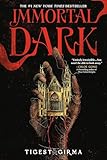



The setup makes the quest more than a supernatural rescue mission. Alice and Peter are students whose prospects are bound up with an adviser and the field they hope to enter. Their journey takes that familiar imbalance—students seeking knowledge and opportunity from people with institutional power—and literalizes it in a world where the stakes are impossible to ignore.
How does the novel turn academic ambition into a journey through Hell?
Hell gives Kuang a fantasy framework for examining the costs of striving within an institution. Alice’s goal is not merely intellectual achievement: recognition and a recommendation can shape whether she advances. That dependence helps explain why the students would undertake an extraordinary journey for a professor. Their choices are driven by loyalty and attachment, but also by the system in which their futures are entangled with his standing and favor.
Recommended Free Tools
#1 Best Overall
The result is a two-sided portrait of academic life. Institutions can exert power through the people who control access, recognition and advancement; students, meanwhile, are not passive symbols of victimhood. Alice and Peter have their own ambitions, rivalry and capacity to act. The novel’s “manic glory” lies in that collision: the energy students bring to intellectual life is also what can make them vulnerable to its demands.
This is a literary argument, not empirical evidence about universities or graduate education. The supernatural premise heightens the pressure for dramatic purposes; it cannot establish how common any particular academic experience is in real life.
Rank #2
What does the title suggest about the book’s scale of critique?
In a comparison with Kuang’s Babel, Scroll characterizes Babel as taking a broader institutional perspective, while Katabasis brings institutional discomfort closer to the graduate student’s experience. That distinction is useful without treating either novel as a complete account of academia: Katabasis focuses its critique through the students’ immediate ambitions, relationships and dependence on academic approval. Scroll’s framing likewise foregrounds both institutions and students, rather than casting ambition as something imposed on students from outside.
What does Kuang say about the afterlife behind the premise?
In an Associated Press interview, Kuang connected the novel’s afterlife premise to an image she remembered from childhood: “As a child, I was told when you die you go to heaven and heaven is where you eat cake all day and just get to hang out with your friends,” said the 29-year-old Chinese American novelist, who was raised Christian and publishes as R.F. Kuang. The remark offers a personal point of connection to imagining what comes after death; it should not be mistaken for a complete statement of the novel’s themes. The Associated Press interview reports the quote and its context.
How have reviewers responded?
The available reviews offer sharply different responses, not a demonstrated critical consensus. The Guardian frames the book as a descent into academia’s hellscape, emphasizing the institutional critique. The Washington Post calls it a “bloated, tedious epic,” a sharply negative judgment about the reading experience. These are the reviewers’ assessments, not settled facts about the novel’s success or value. The Guardian’s review and the Washington Post’s review make clear why readers may encounter very different expectations.
Independent reader supportYour contribution helps us test, update, and keep practical guides available for everyone.Who is Katabasis likely to interest?
The premise may appeal to readers drawn to fantasy that uses an impossible setting to scrutinize recognizable power relationships, particularly the friction between scholarly ambition and dependence on mentors or institutions. Readers looking for a straightforward quest detached from questions of status and professional advancement may find that the academic frame is central rather than incidental. The strongest way to approach the book is as a novel staging a debate about ambition and institutional approval—not as a report on graduate life.
Quick Recap
Best Value
Product prices and availability are accurate as of the date/time indicated and are subject to change. Any price and availability information displayed on Amazon at the time of purchase will apply.




