Free tools Windows power users keep installed
One-click scans. No signup required.
Idiocracy can feel uncomfortably familiar, but that is a judgment about the film’s satire—not proof that it predicted a measurable social future. Ben O’Shea made that case in a PerthNow opinion published 4 May 2024. The film’s political rhetoric, commercialism and popular culture invite comparisons with real life; its story of society-wide intellectual decline remains an exaggerated fictional premise, not an established account of social change.
What is Idiocracy about?
Mike Judge’s 2006 comedy follows Joe Bauers, an average U.S. Army member selected for a suspended-animation experiment. He wakes 500 years later in a society the film depicts as having regressed. The premise lets Judge turn contemporary habits into a broad, comic vision of the future; it is not a scientific forecast about intelligence, fertility or how societies develop. NPR’s 2009 Fresh Air archive recounts Judge’s thoughts about evolution, observations at Disneyland in 2001 and the idea of extending trends he noticed into a far-future setting.
| # | Preview | Product | Price | |
|---|---|---|---|---|
| 1 |
|
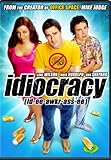
Idiocracy | $13.66 | Buy on Amazon |
| 2 |

|
IDIOCRACY (WS/RPKG) IDIOCRACY (WS/RPKG) | $12.40 | Buy on Amazon |
| 3 |

|
Idiocracy | Buy on Amazon | |
| 4 |

|
Idiocracy - Widescreen Edition DVD (Includes Special Features) | $19.74 | Buy on Amazon |
Why does the satire feel familiar?
O’Shea’s “eerily similar” framing is one interpretation, part of a comparison that was already circulating years before his 2024 article. In a 2016 Time essay, Joel Stein described the film as eerily similar to the world he saw around him and reported remarks from Judge and co-writer Etan Cohen. The Los Angeles Times also described the film taking on a real-life political dimension during the 2016 U.S. election cycle. These accounts show that viewers and commentators have repeatedly found the satire resonant; they do not demonstrate that contemporary life matches the film as a whole. Read Stein’s 2016 Time essay and the Los Angeles Times’ 2016 coverage.
Where are the real-life parallels—and where do they stop?
Political rhetoric and leadership
Commentators have connected the film’s leadership and public language to political rhetoric, particularly in coverage during the 2016 election cycle. That is a reading of the satire, not evidence that Judge predicted a specific leader or event. The film’s fictional society is deliberately heightened for comedy.
#1 Best Overall
Advertising and commercialism
Judge has said that he exaggerated trends he noticed, including more profanity and advertising. Corporate product placement is also part of the film’s satire, as discussed in the Fresh Air archive. Those details help explain how the comedy turns recognizable commercial habits into an absurd fictional world; they do not establish a forecast about the future of advertising. Judge discusses his approach in a 2022 New Yorker interview.
Public language and popular culture
The film’s coarse language and broad depiction of popular culture are among the elements that can make it feel contemporary to some viewers. Judge has described profanity as one of the trends he exaggerated. Familiarity in these details is a basis for interpretation, not confirmation that the film accurately anticipated what people would watch, say or value.
Rank #2
The supposed decline of intelligence
The film’s central social premise should be treated most cautiously. Its imagined relationship between reproduction and a population-wide decline in intelligence is part of the comic fiction; the cited coverage and interviews do not establish it as a real-world demographic trend. A viewer can find the premise provocative without treating it as evidence about intelligence or fertility.
What has Mike Judge said about the comparisons?
Judge has joked about claims that the film was prescient. In Joel Stein’s Time article, he said, “I’m no prophet,” then added, “I was off by 490 years.” The joke refers to the film’s 500-year setting; it is not a literal estimate of predictive accuracy. Stein’s article was published 12 May 2016.
What’s actually slowing this PC down?
Pick the symptom - the matching free tool is one click away.
Rank #3
In a 2018 interview, Judge also expressed uncertainty about the comparisons: “But I don’t really know what to make of it, or how much of it relates to the movie when people throw around the word ‘idiocracy’ on Twitter.” His response leaves room for the film to resonate without claiming that current events reproduce its fictional world. Read the WRAL interview.
Independent reader supportYour contribution helps us test, update, and keep practical guides available for everyone.How should viewers read Idiocracy today?
Read it as satire that magnifies trends into an absurd future, not as a prediction to be scored against the present. The political, commercial and cultural parallels are arguments viewers and writers make about particular aspects of the film. They do not verify its larger story of social decline. That distinction preserves what makes the comparison interesting while avoiding a claim the film—and the cited accounts—cannot prove.
Quick Recap
Rank #4
- Idiocracy - Widescreen Edition DVD (Includes Special Features)
Product prices and availability are accurate as of the date/time indicated and are subject to change. Any price and availability information displayed on Amazon at the time of purchase will apply.




