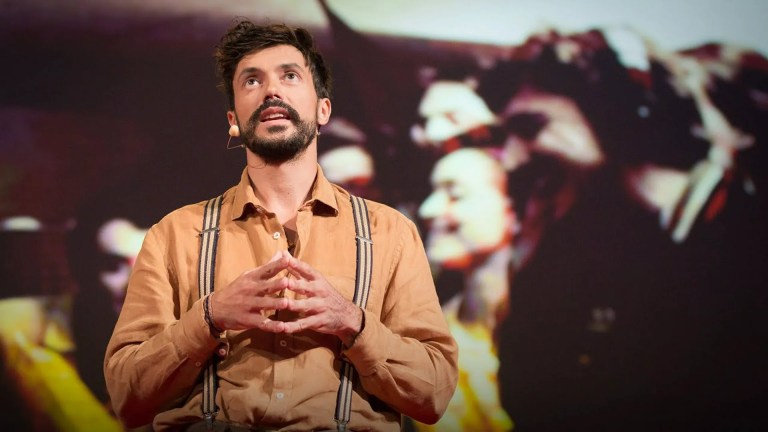
Hundreds of creatives warn against an AI slop future through a Human Artistry Campaign initiative launched on January 22, 2026. Approximately 800 artists, writers, actors, and musicians signed “Stealing Isn’t Innovation,” demanding authorization and payment for creative work used to develop AI systems while supporting responsible AI as a tool.
The campaign says unlicensed use can damage creators’ economic position and contribute to an information environment crowded with misinformation, deepfakes, and low-quality synthetic material. Its proposed answer is not a ban on all AI: it is licensing, consent, compensation, recordkeeping, provenance transparency, labeling, and enforceable rights.
Key takeaways
- The Verge reported on January 22, 2026, that approximately 800 artists, writers, actors, and musicians had signed the Human Artistry Campaign’s “Stealing Isn’t Innovation” initiative.
- The campaign demands authorization, licensing, compensation, recordkeeping, provenance transparency, and enforcement when creative work is used to develop generative-AI systems.
- The campaign does not call for a blanket ban on artificial intelligence; it supports AI as a tool when development respects creators and rights holders.
- “AI slop” is campaign rhetoric for a flood of low-quality synthetic material, misinformation, and deepfakes—not a quantified scientific finding established by the campaign’s launch coverage.
- The campaign’s proposed alternative to unlicensed training is an authorized market in which creators and rights holders can decide whether and how their work is used.
What happened when hundreds of creatives warned against an AI slop future?
Hundreds of creatives warn against an AI slop future through a Human Artistry Campaign initiative launched on January 22, 2026. Approximately 800 artists, writers, actors, and musicians signed “Stealing Isn’t Innovation,” demanding that technology companies obtain authorization and pay for creative work used to develop AI systems rather than treating unlicensed training as innovation.
The Verge’s report, published January 22, 2026, identified authors George Saunders and Jodi Picoult, actors Cate Blanchett and Scarlett Johansson, and musicians including R.E.M., Billy Corgan, and The Roots among the reported supporters. The campaign’s own website also lists creators such as Cyndi Lauper, Common, and Bonnie Raitt.
What’s actually slowing this PC down?
Pick the symptom - the matching free tool is one click away.
#1 Best Overall
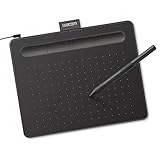
- Wacom Intuos Small Graphics Drawing Tablet: Enjoy industry leading tablet performance in superior control and precision with Wacom's EMR, battery free technology that feels like pen on paper
- Works With All Software: Wacom Intuos tablet can be used in any software program to explore new facets of digital creativity; draw, paint, edit photos/videos, create designs, and mark up documents
- What the Professionals Use: Wacom's industry leading pen technology and pen to paper feeling makes it the preferred drawing tablet of professional graphic designers
- Software and Training Included: Only Wacom gives you software with every purchase. Register your Intuos tablet and gain access to some of the best creative software and Wacom's online training
- Wacom is the Global Leader in Drawing Tablet and Displays: For over 40 years in pen display and tablet market, you can trust that Wacom to help you bring your vision, ideas and creativity to life
The initiative was organized by the Human Artistry Campaign, a coalition representing interests across music, publishing, performance, photography, news, and other creative fields. The Authors Guild described the effort as a coordinated print, digital, and social-media campaign calling for AI systems not to be trained on unlicensed creative work.
What does the campaign mean by “AI slop”?
In this campaign, “AI slop” means a flood of low-quality AI-generated material that organizers associate with a broader digital environment containing misinformation and deepfakes. The term is a pejorative description used in advocacy, not a measured scientific category.
The campaign argues that unauthorized use of human creative work could weaken creators’ economic position and reduce incentives to produce original work. The campaign further warns that an ecosystem filled with synthetic, misleading, or low-quality material could erode trust in both online information and creative work.
Those are the campaign’s warnings, not established findings that every form of AI training inevitably produces low-quality output. The defensible claim is narrower: the Human Artistry Campaign says unlicensed training may contribute to an information environment containing misinformation, deepfakes, and low-quality synthetic content. The campaign’s statement of its position frames the dispute around permission, payment, and respect for copyright rather than around a rejection of every AI application.
Quick wins for a faster PC:
Clear out junk files and repair common Windows errorsFree Scan →Scan for outdated or missing drivers - takes under a minuteDriver Scan →Repair Windows errors before they cause bigger problemsFix Now →What are the creatives demanding from AI companies?
The campaign’s central demand is that AI developers use creative work through authorization and licensing instead of relying on unlicensed copying. The campaign presents licensing, partnerships, compensation, and enforceable agreements as the basis for a workable relationship between AI companies and creative industries.
Rank #2

- Word-first 16K Pressure Levels: The upgraded stylus features 16,384 levels of pressure sensitivity and supports up to 60 degrees of tilt, delivering smoother lines and shading for a natural drawing experience. With no battery or charging needed, it operates like a real pen, making it easy for beginners to create effortlessly. This functionality helps novice artists develop their skills and explore their creativity without the intimidation of complex tools
- Designed for Beginners: This drawing pad desinged with 8 customizable shortcuts for both right and left-hand users, express keys create a highly ergonomic and convenient work platform
- Perfectly Adapted for Android: The XPPen Deco 01 V3 art tablet supports connections with Android devices running version 10.0 and above. It is recommended to download the XPPen Tools Android application, which adapts to your smartphone's screen aspect ratio, ensuring accurate mapping. It also supports mapping on Android screens with different aspect ratios in portrait mode
- Large Drawing Space, Bigger Bold Inspiration: This expansive drawing pad has10 x 6.25-inch helps you break through the limit between shortcut keys and drawing area
- Easy Connectivity for Beginners: The Deco 01 V3 offers USB-C to USB-C connectivity, plus adapters for USB C. This ensures easy connection to various devices, allowing beginner artists to set up quickly and focus on their creativity without compatibility concerns. Whether using a laptop, tablet, or desktop, the Deco 01 V3 provides a seamless experience, making it an ideal choice for those just starting their digital art journey
| Campaign demand | What it would mean in practice |
|---|---|
| Authorization and licensing | Rights holders could decide whether their work enters an AI training or development arrangement and negotiate terms through the market. |
| Compensation | Creators and rights owners could receive payment when their work, voices, likenesses, or other protected contributions are used. |
| Opt-out rights | Creators could prevent their work from being used to train generative-AI systems where an opt-out mechanism applies. |
| Consent for voices and likenesses | Performers would have a say over the use of recognizable voices and likenesses, with fair-market compensation. |
| Recordkeeping | AI developers would maintain records about material included in training datasets or other development processes. |
| Provenance transparency | People could receive more information about where creative or synthetic material came from and how it was used. |
| AI-content labeling | Content generated solely by AI would be identified as such, according to the campaign’s principles. |
| Enforcement | Rights holders would have meaningful ways to enforce agreements and challenge unauthorized use. |
The Human Artistry Campaign’s core principles also oppose new copyright or intellectual-property exemptions that would permit exploitation without permission. The principles extend beyond text and images to performers’ voices and likenesses, an area where consent and compensation are especially important to the coalition.
Is the Human Artistry Campaign opposed to artificial intelligence?
No. The Human Artistry Campaign does not present itself as opposed to all artificial intelligence or every use of AI. The campaign says AI can serve as a tool that supports creative work, provided that AI development respects human creativity and the rights of people whose work makes those systems possible.
The campaign’s principles also acknowledge non-creative uses such as recommendation systems, scheduling, content identification, and more efficient payment systems. The distinction is between responsible applications and the unauthorized exploitation of creative work, not between a world with AI and a world without it.
| Position the campaign supports | Position the campaign rejects |
|---|---|
| AI used as a tool that assists creative work | Using creators’ work without authorization or regard for copyright obligations |
| Licensing and partnerships between rights holders and AI companies | Assuming that unlicensed copying is automatically innovation or progress |
| Consent and fair-market compensation for voices and likenesses | Exploiting performers’ identities without permission or payment |
| Transparent records and provenance information | Opaque training materials and unclear content origins |
| Useful non-creative applications such as recommendation or scheduling | New legal exemptions that enable exploitation without permission |
Who signed the “Stealing Isn’t Innovation” campaign?
Approximately 800 artists, writers, actors, and musicians signed the initiative, according to The Verge’s January 22, 2026, report. Reported individual supporters include George Saunders, Jodi Picoult, Cate Blanchett, Scarlett Johansson, R.E.M., Billy Corgan, and The Roots.
The campaign website lists a broader cross-disciplinary roster that includes Cate Blanchett, Cyndi Lauper, George Saunders, Scarlett Johansson, Billy Corgan, Common, Bonnie Raitt, and many other creators. Signatory totals and the website’s roster can change, so the approximately 800 figure describes the launch-time reporting rather than a permanent membership count.
Rank #3

- Customize Your Workflow: The 6 customizable press keys on Huion H640P drawing tablet for pc let you assign your most-used commands—like undo, zoom, brush switch, or save—so you can keep your hands on the tablet and your mind on the art. Whether you're a digital painter switching brushes, or a comic artist zooming in and out, these keys keep your workflow smooth and uninterrupted. Plus, the Huion driver lets you save different shortcut profiles for different apps, so you never have to reconfigure when switching software.
- Professional Pen Performance: Huion H640P drawing pad for computer comes with the battery-free PW100 stylus that's always ready when inspiration strikes. With 8192 levels of pressure sensitivity, every light sketch, or bold stroke responds naturally to your hand—just like a real pen. The 5080 LPI resolution and 233 PPS report rate deliver lag-free, precise strokes, so you can draw confidently without second-guessing your cursor. The pen side buttons help you switch between pen and eraser instantly.
- Compact and Portable: Huion H640P computer graphics tablet features a compact, ultra-portable design at just 0.3 inches thin and 0.61 lbs light, so it slides easily into your backpack—perfect for sketching in coffee shops, taking notes in class, or editing on the go between home and studio. The 6x4 inch active area offers enough room for natural pen movements while fitting comfortably on crowded desks, or lecture hall seats.
- Stable Compatibility: Huion H640P graphic drawing tablet works seamlessly with Mac, Windows, Linux PCs, and Android smartphones/tablets (OS version 6.0 or later). Left-handed friendly, and you just need to flip the tablet and adjust the settings in the driver. Please note: H640P does NOT support iPhone/iPad.
- Move Beyond the Mouse: Huion Inspiroy H640P is a pen tablet that replaces your mouse for more natural, precise control. Freehand draw, take notes, or even play OSU—everything you do with a mouse, you can do better with a pen. The precise tip makes it ideal for detailed photo editing, graphic design, or signing PDF. Meanwhile, the ergonomic pen grip helps you avoid the strain that comes from hours of using a mouse.
Institutional supporters and coalition members include the Recording Industry Association of America, SAG-AFTRA, the Authors Guild, the National Music Publishers’ Association, the News Media Alliance, and American Photographic Artists. The coalition’s breadth matters because the dispute affects different kinds of rights: book text, recorded music, journalism, photographs, performances, voices, likenesses, and other creative contributions.
Why is licensing becoming part of the AI debate?
Licensing is increasingly discussed by some rights owners and AI companies as a possible compromise because licensing can create permission, payment, and defined usage terms without requiring every AI application to be prohibited.
The Verge reported examples including major record labels partnering with AI-music startups and publishers developing licensing or blocking standards for AI search and training. Those examples do not establish that the entire industry has reached an agreement. They show why the campaign’s preferred alternative is a negotiated market rather than a blanket rejection of AI development.
The practical disagreement remains substantial. A licensing system would need to address which rights are covered, who can grant permission, how payment is calculated, how training records are kept, how creators opt out, and how violations are detected and enforced. The campaign’s principles identify those areas, but the January 2026 launch did not create a universal licensing framework for every creative sector.
What is the campaign’s timeline?
| Date | Event |
|---|---|
| January 22, 2026 | The Verge published its report on the launch of the “Stealing Isn’t Innovation” campaign. |
| January 22, 2026 | The Authors Guild asked members and supporters to join the initiative. |
| January 22, 2026 | The campaign website presented its licensing-and-partnership message and creator signatory roster. |
| August 12, 2026 | The current research date for this article; campaign totals, website content, policy positions, and related licensing activity should be rechecked before republication. |
The Authors Guild’s January 22 announcement characterized the initiative as a coordinated campaign and urged participation. The launch therefore represented both a public statement from individual creators and an organized institutional response from several creative-sector groups.
Rank #4

- 4 Pack for More Fun: Apply the newest flexible liquid crystal technology, brighter and clearer than most LCD writing tablet. Take pressure-sensitive technology, you can draw lines of different thicknesses through different pressure levels. Package includes 4 pack lcd writing tablet (Blue, Light blue, Green and Pink), free children's imagination and creativity.
- 8.5 Inch Colorful Lcd writing Tablet: TQU kids LCD doodle board is a creative education and learning toy, perfect support for drawing, writing, spelling, math, remark, and notes which can let your kids freely release their natural instincts. With erase button on the front and lock switch. You can draw and erase easily by pressing the button on the front of the board. The pen fits snug on top of tablet and it will not come loose.
- Easy to use and Durable: The LCD writing tablet for kids is easy to use, just use the stylus to write, draw, scribble, doodle anything you want. Press the erase button to clear the screen in one second. Or press the lock key to save the screen contents. Our magic reusable drawing tablet is built in a button battery.
- Safe & Portable Toddler Travel Toys: Great for quiet, take-along entertainment. It’s an easy way to color on the go without lugging a bunch of stuff in the car or to a restaurant or church.
- Perfect Gift Idea: The multi-functional LCD writing tablet is a great gift choice for kids. It can be an educational toy for preschoolers. A perfect parent-pick gift for 3 4 5 6 7 8 year old girls and boys on back to school, homeschool, birthday, Easter, Children's Day, Thanksgiving Day, Christmas and any occasion.
What does this campaign not prove?
The campaign does not prove that all AI training has been legally determined to be theft. “Stealing Isn’t Innovation” is advocacy language describing the organizers’ view of unauthorized use; it is not a court ruling or a universal legal classification.
Free tools Windows power users keep installed
One-click scans. No signup required.
The campaign also does not show that all 800 signatories oppose AI technology. The Human Artistry Campaign explicitly supports responsible AI uses and AI as a creative tool. Nor does the campaign’s warning establish, as an independent scientific result, that unauthorized training will necessarily cause model collapse, reduce U.S. competitiveness, or produce AI slop in every case. Those broader consequences should remain attributed to campaign materials when discussed.
The strongest supported conclusion is more specific: a large coalition of creative professionals and organizations is demanding that AI companies obtain permission, negotiate licenses, compensate rights holders, preserve records, disclose provenance, and label solely AI-generated content. The coalition is attempting to shape the rules of AI development, not simply eliminate the technology.
Why does the campaign matter to creators and audiences?
For creators, the campaign raises questions about control over the economic and personal value of their work. A writer may care about the use of book text, a musician about recordings and compositions, a performer about a voice or likeness, and a photographer about images and attribution. The campaign treats those concerns as connected but not identical rights problems.
For audiences, the campaign focuses on trust. Provenance records and AI-content labels could help people understand whether a piece of media was made by a person, generated solely by AI, or produced through a combination of human and machine tools. The campaign argues that clearer origin information is necessary as misinformation, deepfakes, and synthetic content become harder to distinguish from human-created material.
Do these 3 things before closing this tab:
1Clear out junk files and repair common Windows errors2Fix the driver behind crashes, sound loss and screen glitches3Repair Windows errors before they cause bigger problemsBest Value

- PLEASE NOTE:XPPen Artist13.3 Pro drawing tablet Need to connect with computer,you need to use it with your computer or laptop, the 3 in 1 cable is included
- Drawing Tablet with Screen: Tilt Function- XPPen Artist 13.3 Pro supports up to 60 degrees of tilt function, so now you don't need to adjust the brush direction in the software again and again. Simply tilt to add shading to your creation and enjoy smoother and more natural transitions between lines and strokes
- Graphics Tablets: High Color Gamut- The 13.3 inch fully-laminated FHD Display pairs a superb color accuracy of 88% NTSC (Adobe RGB≧91%,sRGB≧123%) with a 178-degree viewing angle and delivers rich colors, vivid images, and dazzling details in a wider view. Your creative world is now as powerful as it is colorful
- Drawing Pad: One is enough- The sleek Red Dial on the display is expertly designed with creators in mind, its strategic placement allows for natural drawing postures. With just one wheel, you can effortlessly zoom in and out, adjust brush sizes, and flip the canvas—all tailored to suit the habits of everyday artists. The 8 customizable shortcut keys allow you to personalize your setup, streamlining your workflow and enhancing creative efficiency
- Universal Compatibility & Software Support:supports Windows 7 (or later), Mac OS X 10.10 (or later), Chrome OS 88 (or later), and Linux systems. Fully compatible with major creative software including Photoshop, Illustrator, SAI, and Blender 3D. Register your device to access additional programs like ArtRage 5 and openCanvas for expanded creative possibilities.
Whether governments, courts, rights holders, and AI companies adopt the campaign’s preferred framework remains unresolved. Licensing deals, consent standards, opt-out systems, dataset records, provenance tools, and enforcement mechanisms will determine whether the proposed compromise becomes a practical system rather than a set of principles.
Frequently Asked Questions
Is the “Stealing Isn’t Innovation” campaign against all AI?
The campaign is not a blanket rejection of artificial intelligence. The Human Artistry Campaign says AI can support creative work and serve useful functions such as recommendation, scheduling, content identification, and payment efficiency when development respects creators and rights holders.
How many creatives signed the AI campaign?
The campaign’s approximately 800 signatories were reported by The Verge on January 22, 2026. The roster and total may change after the launch, so the figure should be understood as a launch-time report rather than a permanent count.
What does “AI slop” mean in the campaign?
In this story, “AI slop” is campaign rhetoric for a flood of low-quality AI-generated material associated by organizers with misinformation and deepfakes. It is not a quantified scientific finding showing that all AI training causes low-quality output.
What does the Human Artistry Campaign want AI companies to do?
The campaign proposes authorization, licensing, partnerships, compensation, opt-out rights, consent for voices and likenesses, training-data recordkeeping, provenance transparency, AI-content labeling, and enforcement instead of blanket opposition to AI development.
The Bottom Line
The “Stealing Isn’t Innovation” campaign is a coordinated demand for authorized, compensated, and transparent use of creative work in AI development. Its approximately 800 launch-time signatories warned that unlicensed training could contribute to an ecosystem of misinformation, deepfakes, and low-quality synthetic content, while still acknowledging that AI can be a legitimate creative and practical tool when human rights and permission are respected.
Quick Recap
Product prices and availability are accurate as of the date/time indicated and are subject to change. Any price and availability information displayed on Amazon at the time of purchase will apply.