AI can help human creators produce faster, explore more ideas, reach more formats, and work at a scale that once required a larger team. It does not remove the need for human authorship. In a media environment filled with synthetic output, the creator’s perspective, reporting, taste, judgment, rights awareness, and accountability become more—not less—valuable.
For documentary makers and other independent publishers, the winning approach is straightforward: let AI handle bounded, repetitive production work, while humans control the story, verify the evidence, clear the rights, disclose realistic synthetic media, and make the final creative decisions.
AI is a force multiplier, not a substitute for authorship
AI can help one creator research more efficiently, edit faster, produce versions for more platforms, and experiment with formats that once required a production team. But the durable value in content creation still comes from human direction: choosing what matters, knowing what is true, adding perspective, making ethical decisions, and taking responsibility for the finished work.
That distinction is especially important in documentary work. A generated draft may be useful. A generated voice may be technically convincing. A synthetic image may be visually striking. None of those things automatically supplies evidence, lived experience, editorial judgment, or the right to use another person’s identity and work. The strongest model is human-led creation: use AI to remove friction while making the creator’s contribution more valuable and more visible.
PC Slower Than It Used to Be?
A free scan shows the junk files, broken settings and background clutter dragging Windows down - then fixes them in one click.Free scan · Windows 10 & 11Outdated Drivers Are Slowing You Down
One free scan finds every outdated or missing driver and matches the right update for your exact hardware.Free scan · exact hardware match#1 Best Overall

- Digital Stereo Sound: Fine-tuned drivers provide enhanced digital audio for music, calls, meetings and more
- Rotating Noise Canceling Mic: Minimizes unwanted background noise for clear conversations; the rotating boom arm can be tucked out of the way when you’re not using it
- Handy In-line Controls: Simple in-line controls on the headset cable let you adjust the volume or mute calls without disruption
- Plug-and-Play USB Computer Headset: Simply plug the USB-A connector into your computer and you’re ready to talk or listen without the need to install software
- Padded Comfort: Comfortable headphones with adjustable headband features swivel-mounted, leatherette ear cushions for hours of comfort and is easy to clean
What AI changes for creators
AI lowers the cost of many production tasks and expands the number of options available to an individual creator. It does not guarantee a better story, a larger audience, or higher income. Its practical benefit is that creators can spend less time on repetitive work and more time on the decisions audiences actually remember.
| AI can assist with | The creator still needs to decide |
|---|---|
| Transcription, captioning, translation, and rough organization | Which testimony is relevant, accurate, fair, and safe to publish |
| Outlines, title ideas, thumbnail concepts, and alternate versions | The editorial angle, promise to the audience, and final presentation |
| Noise reduction, sharpening, upscaling, repair, resizing, and formatting | Whether an enhancement changes meaning or creates a misleading impression |
| Rough cuts, asset variations, and platform-specific adaptations | The rhythm, emphasis, context, and emotional shape of the work |
| Brainstorming, visual exploration, and draft copy | Original reporting, interpretation, performance, fact-checking, and accountability |
Adobe’s 2025 Global Creators’ Toolkit Report illustrates how quickly these tools are entering ordinary workflows. It reported that 86% of surveyed creators were actively using creative generative AI. Common uses included editing, enhancement and upscaling, creating new image and video assets, and ideation. The survey covered more than 16,000 creators in eight countries, with an emphasis on emerging and semi-professional creators. It is therefore useful evidence of adoption, not a census of every professional creator.
The survey also found that creators commonly use more than one AI tool. That matters because AI is becoming a workflow layer rather than a single application: one tool may transcribe an interview, another may remove background noise, another may create captions or translations, and a fourth may help prepare platform-specific versions.
Where human creators can benefit most
1. More time for reporting and creative decisions
For a documentary maker, transcription can turn hours of interview footage into a searchable working document. An editor can ask a tool to group remarks by topic or identify repeated terms, then review the underlying footage before making any editorial decision. A writer can use AI to produce several possible structures, but still decide which sequence is honest, comprehensible, and dramatically effective.
The gain is not simply speed. It can change what a small team is capable of attempting. A solo creator may be able to produce captions in several languages, create vertical excerpts from a long-form film, or prepare an accessible transcript without abandoning the main edit. A researcher may have more time to verify a claim because the first-pass organization is faster. A producer may be able to test several visual treatments before committing to one.
Those benefits are strongest when AI handles bounded tasks with clear review criteria. They become weaker when a creator asks a system to make unreviewed decisions about evidence, people, or meaning.
2. A wider creative range
AI can generate alternatives that help a creator explore an idea: different visual compositions, title directions, story structures, narration drafts, color treatments, or ways to explain a difficult concept. The creator’s role is to set the brief, reject weak or misleading options, and combine useful elements into a coherent work.
This is closer to an accelerated sketching process than to automatic authorship. A generated option can reveal what the creator does not want. It can help a small team compare possibilities early, when changes are still inexpensive. It can also make localization and repurposing more practical, provided that every version preserves the original meaning and is reviewed by someone who understands the audience and subject.
Do these 3 things before closing this tab:
1Fix the driver behind crashes, sound loss and screen glitches2Clear out junk files and repair common Windows errors3Scan for outdated or missing drivers - takes under a minute3. More formats and distribution choices
A single interview, lesson, investigation, or film can produce a main release, a trailer, captioned excerpts, an audio version, translated clips, a vertical cut, a newsletter, and educational materials. AI can assist with the mechanical work of creating these versions, but the versions should not be identical copies pushed everywhere without thought. Each platform has different expectations, aspect ratios, time limits, and audience needs.
Creators with an existing library can also consider continuous YouTube livestreaming from recorded videos. StreamNeo describes a cloud-based service for continuously streaming recorded video on YouTube with automatic recovery. This is a distribution and archive-repurposing option, not an AI content generator. It is relevant when a creator owns or has permission to use every video, soundtrack, appearance, logo, and other element in the stream. A continuous channel still needs a clear audience proposition and should be monitored for rights claims and platform compliance.
Rank #2

- Digital Stereo Sound: Fine-tuned drivers provide enhanced digital audio for calls, meetings, music, and more
- Rotating Noise-Canceling Mic: Minimizes unwanted background noise for clear conversations; the rotating boom arm can be tucked out of the way when not in use
- Handy Inline Controls: Simple inline controls on the headset cable let you adjust the volume or mute calls without disruption
- USB-C Plug-and-Play: Simply plug the USB-C cable into your computer, including MacBook Neo laptops, and you're ready to talk or listen without installing software.
- Padded Comfort: Comfortable USB C headphones with adjustable headband feature swivel-mounted, leatherette ear cushions for hours of comfort
Turn a Recorded Archive Into an Always-On YouTube Channel
StreamNeo lets you upload a video and paste a YouTube stream key to start a continuous broadcast from the cloud. Your PC can stay off while the stream runs, making the workflow useful for creators with an owned or licensed archive who want to keep a YouTube channel live without leaving an encoder running.
StreamNeo checks stream health every 30 seconds and automatically restarts dropped streams. That helps with continuity, but it does not replace review of rights claims, audience fit, or YouTube compliance for each video and asset.
Quick wins for a faster PC:
Repair Windows errors before they cause bigger problemsFix Now →Scan for outdated or missing drivers - takes under a minuteDriver Scan →Clear out junk files and repair common Windows errorsFree Scan →Creators can use the free 24-hour 720p/30fps trial with no card at signup to test an archive, stream key, and channel proposition before deciding whether the workflow suits them.
4. Better access for smaller teams
Human-led AI workflows can help emerging creators compete on consistency without pretending to be a large studio. Captioning, translation, audio cleanup, file organization, and resizing are meaningful barriers when one person is doing everything. Removing some of that friction can free the creator to interview more people, improve visual storytelling, respond to the audience, or spend longer on a difficult investigation.
That does not erase the gap between a draft and a finished work. A small team still needs reliable source management, editorial review, rights clearance, backups, and time to correct mistakes. AI makes some tasks cheaper; it does not make care unnecessary.
The valuable layer is still human judgment
AI can produce options, but it does not independently know which option is appropriate for a particular community, source, subject, or moment. Creators supply the criteria that make an option useful.
- The brief: what the work is trying to say and who it serves.
- Selection: which generated or recorded material belongs in the final work.
- Context: what a statement, image, or event means beyond its surface appearance.
- Verification: whether a claim is supported by reliable evidence.
- Taste: the choices of tone, rhythm, humor, restraint, and emphasis that distinguish one creator from another.
- Accountability: who answers when a subject is misrepresented, a fact is wrong, or a right has been infringed.
Adobe’s research found interest in AI agents that learn a creator’s style, but it also identified human control and trust as important conditions for adoption. That is a useful warning against confusing personalization with authorship. A tool may learn recurring patterns in someone’s work; it does not earn the experiences, relationships, or responsibility behind that style.
The same principle appears in the U.S. Copyright Office’s January 2025 report on copyright and AI-assisted works. The report says that protection may be available when a human determines sufficient expressive elements, including through human-authored material, creative arrangement, or meaningful modification. A prompt alone, without further human authorship, is generally not enough to establish copyright in the resulting expressive output. The legal analysis is fact-specific and applies within a U.S. framework; other jurisdictions may take different approaches.
For practical purposes, creators should be able to explain what they contributed: the reporting, script, performance, structure, selection, visual direction, arrangement, editing, or transformation. Keeping source files and edit records can help demonstrate that contribution, although documentation by itself does not guarantee copyright protection.
Why generic AI output is a weak business strategy
The ability to generate content cheaply does not mean audiences or platforms will value every generated item. When production becomes abundant, originality, usefulness, and trust become more important filters.
The Tool Desk
Outbyte Driver Updater FREEScan for outdated or missing drivers - takes under a minuteDriver Scan →Outbyte PC Repair FREEClear out junk files and repair common Windows errorsFree Scan →Rank #3

- Wireframe headset fits securely for active speakers and vocal performers
- Permanently charged electret condenser cartridge delivers detailed, crisp vocals
- Unidirectional cardioid polar pattern rejects unwanted noise for improved sound quality and higher gain-before-feedback
- Flexible gooseneck design and discrete adjustment capabilities optimize microphone positioning for further source isolation
- TA4F (TQG) connector seamlessly integrates with Shure wireless body packs
YouTube’s monetization guidance warns that generic or unoriginal content made from templates can be ineligible when it appears mass-produced and lacks the creator’s original insights or perspective. This is not a blanket ban on AI assistance. It is a warning against treating AI as a volume machine that produces interchangeable videos with minimal human contribution.
Meta has likewise described measures against spammy tactics such as mass reposting, unrelated captions, and spam networks. Its 2025 guidance said that accounts using those tactics may receive reduced reach and lose monetization eligibility, while the company said it was investing in ways to help original creators succeed.
The practical distinction is meaningful:
- An AI-assisted explainer with original reporting, a clear argument, a real performance, and careful editing has a defensible human contribution.
- A channel that automatically changes a title, swaps a stock image, and republishes nearly identical scripts at scale may look like the generic, mass-produced output platforms are trying to reduce.
- A documentary excerpt with accurate captions and translated versions can increase access.
- A collection of unreviewed translations that change a source’s meaning can damage trust and create reputational or legal risk.
AI can help a creator publish more consistently, but consistency should not be confused with repetition. Platform rules change, and monetization decisions are ultimately made under the applicable platform policies and account circumstances.
Authenticity becomes more valuable as synthetic media spreads
When realistic images, voices, and video become easy to generate, a recognizable human point of view can become a competitive advantage. Audiences may follow a creator because they value the person’s expertise, humor, taste, lived experience, investigative standards, or willingness to explain how a conclusion was reached.
Recommended Free Tools
Documentary creators have especially strong reasons to make that relationship clear. A viewer needs to know whether an image is archival footage, a contemporary recording, a reconstruction, an illustration, or a synthetic scene. A recreated event can be legitimate when it is clearly identified as a reconstruction. It becomes deceptive when it is presented as evidence that the camera actually captured.
The same rule applies to narration and interviews. A cloned voice that makes a real person appear to say something they never said is not merely a stylistic choice. It can affect privacy, publicity, endorsement, defamation, and platform-policy issues, even where copyright is not the central question. A creator’s own voice and editorial accountability are often more valuable than a technically seamless synthetic substitute.
Disclosure: when AI use must be made clear
YouTube
YouTube requires disclosure when content is meaningfully altered or synthetically generated and appears realistic. Its examples include making a real person appear to say or do something they did not, altering footage of a real event or place, or generating a realistic scene that never occurred.
YouTube distinguishes those cases from ordinary production assistance. Its examples of assistance that do not by themselves require altered-content disclosure include outlines, scripts, thumbnails, titles, infographics, captions, sharpening, upscaling, repair, and idea generation. Synthetic music, another person’s cloned voice, and realistic fabricated events are examples that do require disclosure under the cited guidance.
Free tools Windows power users keep installed
One-click scans. No signup required.
YouTube says disclosure itself does not limit audience reach or monetization eligibility. Repeated failure to disclose, however, may lead to penalties that can include content removal or suspension from the YouTube Partner Program. If a viewer could reasonably mistake a generated scene for real documentary evidence, disclose it rather than relying on a narrow interpretation of the rule.
Meta
Meta says it labels a wider range of AI-generated video, audio, and image content when it detects industry-standard AI indicators or when users disclose that content was AI-generated. Its stated approach is generally to provide context through labels rather than remove content solely because AI was used, unless another policy is violated or the material creates a particularly high risk of serious deception.
Rank #4
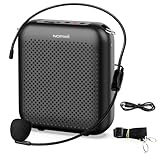
- Effective for Teaching - With a 10-watt output power,the portable voice amplifier with wired headset microphone make your voice louder and travel further, helping students listen more clearly and attentively. Its lightweight and portable design makes it a favorite among teachers, fitness instructors, tour guides, promotion events
- Loud and Clear Sound - 3-inch speakers plus a booster circuit makes the voice amplifier crystal clear sound with good sound quality, effectively saving the teacher's throat. Designed for educators, trusted by professionals. Teacher must haves
- Teach Without Ear-Piercing Feedback - The Voice Amplifier utilizes advanced frequency shifting technology to supress feedback effectively. To ensure optimal performance, maintain a distance of 20 cm between the microphone and the amplifier to avoid any feedback issues
- Week-Long Battery- 2000 mAh battery supports 12-15 hours continuous teaching, 4000 mAh battery supports 25-30 hours continuous teaching. Full-day outdoor events without recharge anxiety. USB-C rechargeable
- Simple and Practical, Teacher-Centric Design - Only 2 steps: 1.Turn on the amplifier; 2.Plug the microphone into the MIC port of the amplifier. Now, it's ready. Unlike buttons, the analog dial offers finer volume increments. Ultra-lightweight with clip-on belt strap – teach hands-free
For advertising, Meta’s 2026 advertising-transparency update describes AI info labels for ads created or significantly edited with Meta’s generative AI tools and says detection is expanding to third-party tools through industry-standard signals. Implementation can vary by region and product, so advertisers should check the rules for the market in which an ad will run before publication.
Platform labels are not a complete ethical standard. A creator may need to explain a reconstruction, altered interview, synthetic voice, or generated illustration even when an automated label is not applied. Disclosure should help the audience understand what they are seeing, not merely satisfy the narrowest available interface requirement.
Provenance helps, but it does not prove truth
Provenance systems can record information about where media came from and how it was created or edited. OpenAI has described work involving C2PA metadata, cross-platform watermarking, and an image-verification tool. These mechanisms can support a more transparent workflow, especially when a project moves through multiple editing applications.
Provenance is not a truth machine. Metadata can be missing, stripped, incomplete, or misunderstood. A file with a provenance record can still contain a false claim, and a file without one is not automatically fake. Treat C2PA data and watermarks as useful context alongside source checking, permissions, captions, and editorial notes.
Copyright, training, and ownership risks
The U.S. Copyright Office’s report supports a human-centered approach to AI-assisted copyright, but it does not settle every question creators face. The Office’s wider AI initiative has identified unresolved issues around the use of copyrighted works to train AI systems, licensing, and potential liability. Its 2025 annual report noted that a pre-publication draft of Part 3, concerning generative-AI training, was released on May 9, 2025.
Creators should treat the following as separate questions:
What’s actually slowing this PC down?
Pick the symptom - the matching free tool is one click away.
- Can I claim exclusive rights in the output? A minimally modified machine-generated result may not receive the same protection as a work in which a human determines the expressive elements.
- Did I have permission to provide the input? Uploading a client’s footage, a private interview, copyrighted images, music, or a reference voice to an AI service may create contractual, confidentiality, or rights issues.
- What do the tool’s terms permit? Services differ in how they address inputs, outputs, training, retention, commercial use, and account data. Read the current terms for the specific tool and plan.
- Does the work use someone’s identity? A face, voice, name, likeness, or apparent endorsement may trigger privacy, publicity, contractual, or platform concerns even if no copyrighted file was copied.
- Can the audience mistake invention for evidence? Copyright clearance does not make a fabricated event documentary evidence. The factual status and presentation still need review.
A cautious workflow retains the original recordings, licensed assets, prompts where relevant, intermediate edits, approvals, and a note of what a human changed or selected. Obtain permission for music, footage, images, voices, and likenesses. Do not assume that a tool’s ability to generate an output means the output is clear for commercial publication.
A human-led AI workflow that creators can actually use
- Define the human contribution first. Write the angle, audience promise, key claims, tone, boundaries, and desired result before opening a prompt window. For a documentary, identify what is known, what is disputed, and what evidence is still needed.
- Give AI a bounded assignment. Ask for a transcript, an outline, a list of possible questions, rough chapter markers, caption formatting, or alternate headline ideas. Specify what the tool must not invent and what requires source verification.
- Keep source material traceable. Label original interviews, archival files, generated illustrations, licensed stock, and working exports separately. Do not allow a generated image or audio file to become indistinguishable from evidence in the project folder.
- Verify every material fact. AI drafts can contain invented citations, stale information, and confident errors. Check names, dates, quotations, statistics, locations, translations, and causal claims against primary documents, recordings, or qualified sources.
- Add original value. Bring in reporting, personal experience, analysis, performance, commentary, visual direction, creative arrangement, or a meaningful edit. The final work should offer more than a generated surface.
- Review rights and permissions. Check the terms for the AI service and clear music, stock footage, photographs, voices, likenesses, and reference material. Separate permission to use an input from permission to commercialize an output.
- Disclose realistic synthetic media. Use the relevant platform controls for fabricated events, realistic synthetic people, cloned voices, synthetic music, and materially altered real footage. Add plain-language context when the viewer could otherwise misunderstand the material.
- Preserve provenance and decisions. Keep prompts, source assets, edit history, approvals, and final human decisions where practical. Use provenance metadata when available, but do not treat it as a substitute for fact-checking or permission.
- Repurpose selectively. Make a platform-specific version rather than publishing identical automated copies everywhere. Recheck captions, translations, framing, music rights, disclosures, and links in each version.
- Measure trust as well as reach. Watch corrections, substantive comments, retention, repeat viewers, complaints about authenticity, and questions from subjects. A short-term spike is not necessarily a healthy audience relationship.
- Keep the creator visible. Explain the reporting, show the work where appropriate, identify reconstructions, and give audiences a clear person or team responsible for the result.
Production fundamentals still matter
AI-assisted editing cannot rescue unintelligible source audio. If a project depends on interviews, narration, livestreams, or voiceover, a USB microphone for content creators can be a practical starting point for recording clear human speech. This is a buying category, not a claim that every model performs equally, and creators should choose based on their room, connection type, monitoring needs, portability, and budget. A quiet recording space, proper microphone placement, headphones, and a backup recording plan often matter as much as the device.
The wider category of creator gear can include lighting, smartphone tripods, webcams, microphone arms, pop filters, and external SSDs for media files. These products support the human parts of the workflow: interviewing, presenting, filming, storing source material, and reviewing edits. They are not substitutes for editorial judgment, and no particular brand or model should be treated as tested or endorsed without independent verification.
Creators using Windows workstations may also encounter ordinary storage, driver, application, or performance problems during video, audio, design, or AI-assisted production. General Windows troubleshooting for video editors can begin with free steps such as checking available storage, updating from the hardware manufacturer, backing up projects, reviewing application requirements, and isolating a failing drive or peripheral. Third-party maintenance software may be relevant to some users, but it should not be presented as a guarantee of editing performance or as a replacement for manufacturer support. Review current product suitability and terms before installing anything.
A documentary example: from interview to multi-format release
Imagine a creator has recorded six interviews for a 30-minute documentary.
Best Value

- 2.4G Wireless MIC Headset System Set: Only for Mic Jack, not Aux Jack, otherwise it doesn't work.Built-in high sensitivity 360° omnidirectional professionalmicrophone, empty area transmission to 160 Feet (50m) Plug and Play / Stable Frequency / High Sensitivity / Stable Signal / Low Delay / Low Radiation / Anti-howling /No Interference.It is a portable Karaoke equipment.Excludes Amp&Not applicable for Phone PC and Laptop. No Bluetooth capability.
- Cordless Microphone Plug and Play: Please turn on the power switch of the transmitter and receiver, and the red light will flash for about 2 seconds. After successful matching, the red light stops and stays on, indicating that it is connected. It can be used directly after plugging into the device.
- Widely compatible with multiple scenarios: Receiver plug 3.5mm 1/8'' & 6.35mm 1/4'' microphone, which is very suitable for tour guides/fitness coaches/yoga teachers/classroom teachers/singing/conferences/speech/online podcasts/outdoor live broadcasts/yoga coaches/dance coaches/promotions/games/loudspeakers/voice amplifiers/PA systems/etc.
- Dual-head USB rechargeable microphone: The transmitter and receiver have built-in 400 mAh rechargeable lithium-ion batteries. The dual-head USB charging function can charge the transmitter and receiver at the same time. It only takes 1-2 hours to fully charge. It uses the latest low-power chip. The microphone can be used for about 8-10 hours after it is fully charged.
- Head MIC and Handheld Mic: The headset microphone is detachable and portable, and easy to install. Take off the headset and it becomes a handheld microphone, which gives you another way to use the microphone.Wireless Head MIC and Handheld Mic 2 in 1.
- The creator stores the original camera and audio files, records consent and usage restrictions, and writes the film’s central question.
- An AI tool produces searchable transcripts and rough topic labels. The editor returns to the recordings to confirm every selected quotation, pause, translation, and speaker identification.
- The creator builds the structure and decides which conflicting accounts require additional reporting. AI may suggest an order, but the editor decides what context the audience needs.
- Noise reduction and caption generation are used as production assistance. The creator reviews captions against the audio, especially names, technical terms, and emotionally important statements.
- A synthetic illustration is created for a concept that was never filmed. It is labeled as an illustration or reconstruction and is never placed where viewers could mistake it for archival evidence.
- The finished documentary is adapted into a trailer, a vertical excerpt, a transcript, and translated clips. Each version is checked for changed meaning, rights restrictions, platform dimensions, and disclosure requirements.
- If the creator builds an ongoing channel from the completed films, a service such as StreamNeo may help with continuous streaming from the recorded archive. The creator remains responsible for the rights and editorial suitability of everything in that stream.
StreamNeo fits this archive-repurposing step when the creator owns or has permission to use the completed films. Upload a video and paste a YouTube stream key; the cloud stream can continue while the PC stays off, while the creator remains responsible for rights claims and platform compliance.
In this example, AI increases capacity without taking responsibility for the story. The human contribution is not hidden in the background; it is the reason the work has documentary value.
The commercial advantage is trust, not maximum output
AI makes it tempting to measure success by the number of videos, posts, thumbnails, or language versions produced. For human creators, more useful measures include whether the audience understands the work, whether subjects feel accurately represented, whether corrections are handled openly, whether viewers return, and whether the creator can explain the origin of important material.
The creators best positioned to benefit are likely to be those who combine efficiency with a distinct promise: reliable reporting, a recognizable visual language, specialist knowledge, unusual access, compelling performance, or an editorial standard that audiences can identify. AI can help deliver that promise more often. It cannot invent the trust behind it.
Frequently Asked Questions
Does every piece of AI-assisted content need to be disclosed?
Not necessarily. YouTube generally distinguishes ordinary assistance such as outlining, captions, sharpening, upscaling, repair, and idea generation from realistic synthetic or altered content. Disclosure is expected when realistic media makes a person appear to say or do something they did not, fabricates a realistic event or place, uses a cloned voice, or creates other materially deceptive scenes. Platform rules can change, so check the current requirements before publishing.
Can a creator copyright an AI-assisted work?
In the United States, the U.S. Copyright Office’s January 2025 report says AI-assisted work may receive protection when a human determines sufficient expressive elements through human-authored material, creative arrangement, or meaningful modification. A prompt alone is generally not enough. The result depends on the facts, and copyright rules differ by country.
Will platforms monetize content made with AI?
AI-assisted content can be monetizable, but using AI does not guarantee eligibility. YouTube warns that generic, template-based, mass-produced content without original insights or perspective may be ineligible. Original reporting, commentary, performance, education, entertainment value, and meaningful creative transformation make the human contribution clearer.
What’s actually slowing this PC down?
Pick the symptom - the matching free tool is one click away.
How should documentary creators use generative AI responsibly?
Clearly identify reconstructions, generated illustrations, synthetic narration, and fabricated scenes whenever a viewer could mistake them for real evidence. Keep original recordings and source notes, verify every factual claim, obtain permissions, and use platform disclosure controls where required.
Can a creator turn an existing video archive into a continuous livestream?
It can be useful for creators with an owned or licensed archive who want an ongoing YouTube channel. StreamNeo describes continuous cloud-based livestreaming from recorded videos with automatic recovery. The service does not remove responsibility for music, footage, appearances, rights claims, or platform compliance.
StreamNeo is worth testing when the goal is a continuous YouTube channel rather than a one-time upload. Its free 24-hour 720p/30fps trial requires no card at signup, giving the creator a practical way to check the archive, rights position, and audience proposition first.
The Bottom Line
AI can make human creators faster, more experimental, and more capable of serving multiple formats and audiences. The lasting advantage belongs to creators who use it to remove production friction while increasing human contribution: original perspective, evidence, judgment, rights awareness, disclosure, and accountability.
Free tools Windows power users keep installed
One-click scans. No signup required.
Quick Recap
Product prices and availability are accurate as of the date/time indicated and are subject to change. Any price and availability information displayed on Amazon at the time of purchase will apply.