Free tools Windows power users keep installed
One-click scans. No signup required.
Some purpose-built video-game interventions show promise for specific mental-health goals, especially in young people. But the evidence does not establish a universal list of ordinary games that treat mental illness. A game may offer structured practice, distraction, or a personally meaningful coping activity; it should not replace professional care.
Can video games help with depression or anxiety?
Sometimes—but the answer depends on what kind of game is meant, who plays it, and what outcome is being measured. A therapeutic game is designed to teach or practice a technique. A casual or commercial game is primarily entertainment, even if someone finds it calming or absorbing. A prescription digital therapeutic is a regulated product with a defined indication. Evidence for one category cannot automatically be applied to the others.
A 2024 systematic review and exploratory meta-analysis of therapeutic games for young people included 14 studies, 2,027 participants, and 18 effect sizes. Across the outcomes assessed, it found a small-to-medium overall effect (d = .35; 95% confidence interval .23–.47; p < .001). The review found that interventions with a rational-emotive-behavioural focus were the only significant moderator for improvement in depression and/or anxiety. The authors also called for replication and attention to methodological and procedural concerns. This is a qualified signal about studied interventions, not proof that any game will help any player. Read the review record.
A separate 2024 review examined 145 randomized controlled studies of applied and casual games among people aged 6–24. In clinical samples, applied games had the most favorable findings for social skills, verbal memory, and anxiety; casual games had the most favorable findings for depression, anxiety, and ADHD. Studies in healthy samples also reported promising distraction in medical settings and short-term affect findings. The interventions and outcomes varied, so these results do not amount to a ranking of the best commercial games. See the review in Clinical Psychology Review.
#1 Best Overall

- Interactive Therapy Game for Emotional Growth – Created for school counselors, therapists, teachers, and families, this game promotes emotional expression in children, teens, and adults. Used in group settings or at home, it encourages healthy conversations about emotions, fostering deeper understanding.
- Family Therapy Game that Promotes Open Conversations – Strengthen your relationship with your child or family members through engaging gameplay that invites discussions about anger, fear, sadness, and joy. Perfect for helping children express their emotions comfortably in a safe environment.
- 208 Thought-Provoking Questions on Emotions – With 208 carefully crafted questions, this game explores a range of emotions, offering a fun and educational experience. An essential tool for CBT therapy, emotional regulation, and developing social skills in children and teens.
- Build Self-Esteem and Social Skills – Ideal for both kids and adults, this game fosters meaningful conversations that help build self-esteem and develop key social skills. Great for use in therapy sessions, classrooms, and family game nights to enhance emotional awareness.
- Designed by USA-Based Experts in Emotional Health – Proudly developed by Therapy U, a company based in the USA, this game is trusted by professionals nationwide.
A 2022 systematic review focused specifically on video-game interventions for people diagnosed with depressive disorders and reported encouraging overall findings. It does not establish that ordinary entertainment games can replace psychotherapy or other care. Read the review.
Which games are worth considering?
There is no evidence-based “best game” list that applies across diagnoses, ages, and goals. The examples below are different kinds of products, not interchangeable treatments. Check current access and suitability before relying on any of them.
Rank #2

- STRATEGIC TAKE THAT GAMEPLAY – Race to treat your Disorders using Drug and Therapy cards while protecting yourself from opponents who may steal what you need or hand you new conditions. Every turn adds a twist that keeps players engaged.
- EASY TO LEARN, CHALLENGING TO MASTER – With simple rules and short turns, Side Effects is fast to pick up but rewards clever timing, hand management, table awareness, and bold risks. A sharp mix of accessibility and depth for adults and hobby gamers.
- SXSW AWARD FINALIST RECOGNITION – Side Effects earned a finalist spot for the SXSW Gamer’s Voice Award, celebrated for its striking visual style, inventive gameplay, and ability to spark conversation at every table.
- DYNAMIC PLAYER INTERACTION – Begin with four Disorder cards and search for (or steal) the Drug cards needed to treat them. Episode cards disrupt plans, flip advantages, and create dramatic momentum swings that keep every round unpredictable.
- CRAFTED AS A WORK OF ART - Designed by Jade Shames and Ben Bronstein with support from Kat Thek and Jen Igartua, Side Effects pairs bold illustration with refined design to create a striking, memorable tabletop experience.
| Game or program | What it is for | What the evidence or source establishes | Important limit |
|---|---|---|---|
| SPARX | A structured interactive fantasy game designed to deliver cognitive behavioural therapy to adolescents with clinically significant depression. | A randomized non-inferiority trial studied the program with adolescents seeking help for depression. It used seven sequential modules, a guide to contextualize exercises, and real-life challenges. Participants who were not improving were prompted to seek help from referring clinicians. Read the trial. | This is a studied self-help intervention for a particular adolescent population, not a general-purpose entertainment title. The University of Nottingham project page says it is available only in specific geographic regions; check the page for current access. SPARX project information. |
| MindLight | A biofeedback game presented by its makers as an aid for children managing stress and anxiety. Biofeedback is used as real-time input to the game. | The official site describes the game and promotes randomized-trial evidence. Visit the official site. | The cited efficacy claims come from the vendor, not an independent evidence review. Current price, geographic availability, platforms, and terms are not established here; do not treat promotional wording as independent proof. |
| Goodville | A free-to-play mobile farm-game adventure that has included health and wellbeing guidance through a collaboration with the World Health Organization. | WHO reported that 1.5 million players had engaged with its assistant Florence and more than 930,000 had completed a dedicated quest line. Those are engagement counts, not measures of clinical improvement. Read WHO’s December 12, 2024 announcement. | It illustrates health information appearing inside a mainstream game; the reported figures do not show that the game treats mental illness. |
A distinct case: EndeavorRx for ADHD
EndeavorRx is a prescription digital therapeutic delivered as a mobile game, not a general coping game for depression or anxiety. Its official indication is to improve attention function in children ages 8–17 with primarily inattentive or combined-type ADHD and a demonstrated attention issue. FDA’s record classifies it as digital therapeutic software for ADHD and lists a substantial-equivalence decision dated December 13, 2023. The product information says it is prescription-only, should be part of a therapeutic program, and is not a stand-alone therapeutic or a substitute for ADHD medication. Eligibility and access should be discussed with a qualified clinician. FDA record · Product and safety information.
How to choose a game as a coping activity
If you are considering an ordinary game for comfort or distraction, treat it as a personal coping activity rather than a prescribed treatment. What feels absorbing or reassuring varies from person to person. The evidence reviewed above does not certify a particular entertainment title as therapy.
Quick wins for a faster PC:
Clear out junk files and repair common Windows errorsFree Scan →Scan for outdated or missing drivers - takes under a minuteDriver Scan →Repair Windows errors before they cause bigger problemsFix Now →Rank #3

- ACTIVE PLAY THAT OPENS CONVERSATIONS - Unlike card-only therapy games for kids and teens, dartboard play helps kids open up faster, stay engaged and participate through movement.
- TWO GAMES, ONE BOARD - Feelings Frenzy turns emotion recognition into a collect-and-win game; Daring Darts pairs color-coded emotional, social and action cards with throws to score.
- MORE VARIETY, MORE REPLAY VALUE - 96 cards across both games, including 40 emotion cards for Feelings Frenzy and 56 varied prompts for Daring Darts; more depth than a basic discussion deck.
- THERAPIST-DESIGNED, EASY TO ADAPT - Created by a family therapist for counseling games, SEL sessions, classrooms and home; adults can read and guide prompts to fit age and comfort level.
- FLEXIBLE FOR REAL SESSIONS - For one child with an adult or small groups taking turns; play a few rounds or continue to the win condition. Includes board, 6 magnetic darts and instructions.
- Name the goal. Decide whether you want a brief distraction, a relaxing routine, social connection, or structured practice. Those are different aims and do not imply the same clinical benefit.
- Check what the game actually is. Look for whether it delivers a defined therapeutic technique, is mainly entertainment, or is a prescription product with a narrow indication.
- Match the evidence to the player. Consider the age group, clinical status, condition, and outcome studied. Findings in young people do not automatically apply to adults, and evidence for one diagnosis does not establish benefit for another.
- Consider the support around it. For a therapeutic program, find out whether it includes clinician involvement, progress monitoring, or instructions for what to do if symptoms worsen. Do not assume those safeguards exist in an ordinary game.
- Verify practical details. Availability, region, device compatibility, cost, and prescription requirements can change. Check the current official information rather than relying on an old recommendation.
- Notice how it affects you. If playing increases distress, interferes with sleep or responsibilities, or becomes difficult to stop, take a break and seek support from someone you trust or a health professional.
When a game is not enough
A game can sit alongside other support, but the evidence here does not justify using games instead of professional care. If depression, anxiety, or another mental-health concern is persistent, worsening, or disrupting daily life, speak with a qualified health professional about appropriate help. For guidance on evidence-based approaches to mental, neurological, and substance-use conditions, see the WHO mhGAP guideline.
Quick Recap
Best Value
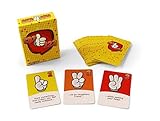
- NEW UPDATED VERSION 2.0! You asked for it, we made it: now with 80% more cards for more diverse gameplay
- HELPS TEACH CBT: CBT 123 uses Cognitive Behavioral Therapy to teach kids how their thoughts, feelings, and behaviors are connected
- EXCITING GAMEPLAY: Players work to pick up sets of 1, 2, and 3 cards, acting out the fun situations on the sets
- EASY TO PLAY: CBT 123 is extremely easy to learn and put into practice. A game can be played in 15-20 minutes
- Great for school counselors, therapists, and other professionals who work with children on anxiety, anger, depression, and coping skills. Includes a link for a free downloadable worksheet to expand its therapeutic value. For 2-4 players, ages 7-16
Rank #4
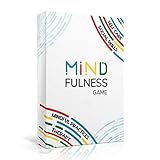
- CREATED BY PROFESSIONALS | Hello, we're Arcia! We've developed our mindfulness therapy game by asking ourselves a simple yet profound question. How can we teach kids, teens and/or adults about important personal traits such as Self Care, Social Communication Skills, Mindfulness and Visualizations? The answer: Make a game that's fun, engaging and also teaches these very important life skills.
- ALL IN 1 GAME | The game includes 10 True/False Cards, 14 Mindful Practices Cards, 6 Visualizations Cards, 10 Social Skills Cards & 10 Self Care Cards. Unlike other therapy tools, our main focus was to create an interactive, brain engaging game that helps children, teens and adults feel grounded, find calm, improve focus and relax. We're here to teach and remind you that mindfulness matters!
- GROUP THERAPY MADE FUN | Our mindfulness game is recommended for group play therapy. Play with up to 5 players. The instructions were made easy because no one likes confusing instructions! 1) Shuffle the deck and place it in the middle of the group. 2) Choose a random player to start the game. 3) The player who picks the card is considered the "Leader" of that round. 4) The leader reads the card out loud to the group and follows the prompts. 5) Keep playing clockwise and have fun! 🙂
- LARGE, STURDY CARDS | You'll love our large premium quality game, designed to be BIGGER & LONGER LASTING than other mindful card educational games. The feelings playing cards are made to last several years. It's aesthetically pleasing design makes it perfect for counseling, group occupational therapy, psychologist, and family fun! Improve your self esteem, anxiety, mental health, anger control and stress less by learning to be mindful.
- WHO'S IT FOR? | The mindfulness behavioral therapy game is for kids, teen & adults. It's a great game to express your feeling. For social workers, therapists, psychologists, counseling, classroom & activities for teens. Makes a great gift for family, friends, therapist decorations, school psychologist, guidance counselor & more!




