What’s actually slowing this PC down?
Pick the symptom - the matching free tool is one click away.
Start by asking girls what makes it difficult to attend school, learn, continue through later grades, or feel safe. Then work with them, families, educators, and trusted local organizations to address the barriers they identify. Depending on the community, that may mean safer transport, help with essential learning materials, a more inclusive school environment, or a referral to qualified health or protection services.
There is no single intervention that fits every community. The most useful support is locally chosen, shaped by girls’ views, and revisited to see whether it is helping.
What supporting girls’ education and wellbeing involves
Enrolment is only one part of education. Girls also need to be safe, included, supported in their learning, and able to continue as they progress through school. Opportunities to learn across subjects and consider future study or careers matter too. UNICEF frames girls’ education in terms of access, safety, support, learning, and opportunity, rather than attendance alone (UNICEF’s overview of girls’ education).
That broader view changes the question a community asks. It is not only, “Are girls enrolled?” It is also, “Can they get to school, take part in lessons, get help when something goes wrong, and continue their education?” A girl may be enrolled but miss classes because travel is difficult, lack materials needed to participate, or feel unsafe at school. A short-term increase in attendance would not, by itself, show that those other problems had been resolved.
Windows Errors? Fix Them Before They Spread
Repair common Windows errors and clear accumulated junk for a smoother, more stable PC - no reinstall needed.Free scan · no reinstallCrashes, No Sound, or Screen Glitches?
Random freezes, missing sound and display glitches usually trace back to one bad driver. Find and replace yours safely.Free scan · under a minute#1 Best Overall

- 45 PIECE SET: Bulk pack contains everything your K-12 students need to get organized & start the school year off right
- WHAT’S INCLUDED: 5 # 2 pencils, pencil sharpener with lid cover, canvas pencil case, 5 ink pens (black, red, & blue ink), 5 (primary colors) colored pencils, 3 highlighters, 4 paper pocket folders, non-toxic wax crayons, righty/lefty scissors, 4 art erasers, 2 1-subject notebooks, composition book, 2 glue sticks, & standard/metric ruler!
- BASIC SCHOOL SUPPLIES: Why shop & pay separately for 1 of every essential for your kids when you can get them all in 1 convenient packaged set?
- DETAILS: Products are safety compliant and made for kids! Highlighters are water-based, pencilsharpener collects shavings, scissors are made for little hands, “lead” pencils are graphite, ruler measures inches and centimeters both, & can be tucked into a 3-ring binder (spiral notebooks too!), rubber erasers work well as art erasers or for small/big mistakes, & zipper pencil holder stores all included accessories!
- PERFECT FOR TEACHERS & PARENTS: Whether your child is homeschooled or goes off to preschool, kindergarten, 1st-5th grades, or middle school (junior high), or even summer camp, this school supply pack is ideally suited to meet their needs as they grow & learn
Wellbeing belongs in the same conversation because conditions affecting health and safety can interfere with learning. UNESCO identifies violence, inequality, bullying, discrimination, early and unintended pregnancy, and malnutrition among health-related barriers to education (UNESCO’s health and education overview). A community response should therefore consider both what helps a girl get to school and what helps her learn and feel supported once there.
Begin by finding out what girls say they need
Do not assume that a visible or familiar problem is the main obstacle. A school may need books, but girls may identify an unsafe route, bullying, inaccessible facilities, or pressure to leave school as the more urgent issue. Barriers can differ between neighborhoods and among girls in the same community.
Start with open questions rather than a proposed solution. For example: What makes it easier or harder to attend? What would help you feel safe and included? Is there something that makes it difficult to take part in lessons or continue to the next grade? Which change would matter most to you? These are prompts for a conversation, not a checklist that every girl must answer. Let girls decide what they are comfortable sharing.
Ask about the whole school experience
With appropriate privacy and safeguarding, invite girls to describe what helps or prevents them from attending, participating, feeling safe, and continuing their education. Ask what change they would prioritize and what kind of support would feel useful. Avoid making girls disclose personal experiences publicly or treating one person’s account as representative of everyone.
Where feasible, give girls more than one way to contribute. Some may prefer a private conversation or a small group to speaking in a large meeting. Be clear about who will hear their views and how those views may affect decisions. If adults have already settled a decision, do not present the discussion as if girls can still choose it. Honest limits build more trust than promises that cannot be kept.
Listen to people who understand the local setting
Consult families, teachers, school leaders, community groups, and established local organizations alongside girls. Their perspectives can clarify practical constraints, existing services, and whether a proposed response is safe and sustainable. UNICEF identifies issues such as transport, the costs of books, uniforms, and other necessary materials, gender norms, poverty, child marriage, gender-based violence, and gaps in school safety or sanitation as possible barriers (UNICEF’s 2021 report on social-protection pathways).
Use consultation to understand which barrier is actually affecting girls and what support is already available. A transport concern, for instance, calls for a different response than a lack of books; a concern about violence or health calls for appropriate specialist support, not simply a community donation. The same proposed activity may also work differently across locations. The available sources describe global issues and selected programs, but do not establish one intervention as the right answer everywhere.
Rank #2
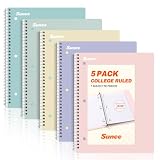
- AWESOME 5-PACK: Ideal for color-coding by subject or child, this 5-pack of 1 Subject Notebooks comes in elegant shades of Pink,Purple, Blue, Green, Yellow, with 70 college ruled pages per notebook.
- COLLEGE RULED: Each 8" x 10-1/2" notebook features 70 double-sided sheets with red margin lines and is 3-hole punched, allowing for easy transfer to your binder.
- CLEAN TEAR-OUT: Micro-perforated pages ensure a neat tear-out, leaving you with 10 1/2" x 7 1/2" sheets. Accommodates double-sided writing and prevents ink bleed-through from your favorite gel pens.
- DURABLE COIL LOCK SPIRAL: The sturdy coil lock spiral keeps pages securely in place and resists snags. The coated cover withstands frequent transfers in and out of backpacks, briefcases, and vehicles.
- 3-HOLE PUNCHED DESIGN: Easily organize and store your notes in a 3-ring binder, reducing clutter in your study or work area.
Keep consultation respectful and safe
- Offer ways for girls to share views without speaking in a large group, where feasible.
- Explain how their input will be used and what decisions are still open.
- Do not promise money, services, or confidentiality that the community cannot provide.
- If a conversation raises a concern about violence, abuse, health, or immediate safety, follow locally verified safeguarding and professional referral procedures rather than trying to investigate or manage the case yourself.
Match the response to the barrier
Once a need is identified, choose a response that addresses it directly. UNICEF describes social-protection pathways in relation to different barriers, and the World Bank includes safe and inclusive schools and community engagement among approaches used to support girls’ education (World Bank Group’s girls’ education overview). These sources support a context-specific approach, not a universal ranking of interventions.
Quick wins for a faster PC:
Clear out junk files and repair common Windows errorsFree Scan →Fix the driver behind crashes, sound loss and screen glitchesFind Drivers →Repair Windows errors before they cause bigger problemsFix Now →| Barrier girls identify | Possible community response | What to check before acting |
|---|---|---|
| Travel to school feels unsafe or is difficult | Work with families, schools, or trusted local groups to explore a safer, practical transport arrangement. | Ask girls whether the proposed route and arrangement address their concern; check who will oversee it and whether it can be maintained. |
| Necessary learning materials are unaffordable or unavailable | Ask the school or a trusted organization which books, uniforms, or other materials are actually needed, then coordinate targeted support. | Confirm needs before purchasing or donating. A generic supply drive may not provide the materials girls need. |
| School conditions undermine safety or inclusion | Raise specific concerns with school leaders and local partners, and identify practical improvements to make the environment safer and more responsive to girls. | Include girls in identifying the issue and assessing whether the change addresses it; account for local policies and resources. |
| Bullying, discrimination, violence, or health concerns affect learning | Use established, locally verified school safeguarding, health, or protection services and trusted professional referrals. | Do not substitute informal community action for qualified support, particularly where safety or health is at stake. |
| Social expectations make it harder to continue education | Work with trusted community members, educators, and established organizations on respectful engagement that supports girls’ education and continued participation. | Listen to girls about the pressures they face and avoid responses that expose them to stigma or retaliation. |
For transport, the key is not simply arranging a ride: it is finding out what makes the journey difficult and checking whether the proposed arrangement addresses that concern. Girls should be able to comment on the route and whether the support is practical for their circumstances. Adults and partner organizations need to agree who is responsible for organizing and overseeing the response, and whether it can continue beyond an initial trial.
For learning materials, start with a needs check rather than a shopping list. Books, uniforms, and other necessary materials can be unaffordable for some girls, but needs vary by school and student. Ask which items are required, how many are needed, and how they should reach the intended students. If materials are not the barrier girls identified, buying them may use resources without making attendance, safety, or learning easier.
For school conditions and inclusion, take specific concerns to the people who can act on them, such as school leaders and relevant local partners. Girls should help describe the problem and say whether a proposed change improves their experience. No universal facility upgrade, school policy, or accommodation is specified; those need to be discussed locally with people who understand the school’s conditions and responsibilities.
For violence, bullying, discrimination, or health concerns, take care not to turn community involvement into amateur case management. A community group can help connect people with established services, but sensitive disclosures require locally verified safeguarding and professional procedures. The right contact and process will depend on where the community is; the sources here do not provide location-specific referral details.
The Tool Desk
Outbyte Driver Updater FREEFix the driver behind crashes, sound loss and screen glitchesFind Drivers →Outbyte PC Repair FREERepair Windows errors before they cause bigger problemsFix Now →Build a response with girls and trusted local partners
After selecting a priority, agree on a small plan rather than launching a broad effort without clear responsibility. Community engagement can complement practical assistance: UNESCO describes a program approach involving community awareness, training for teachers and leaders, and support for girls’ retention, re-entry, and access to education. The account covers examples from Mali, Nepal, and Tanzania; those examples illustrate possible approaches, not proof that the same design will work everywhere (UNESCO’s program account).
- Define the barrier. Write down the specific problem girls identified, who is affected, and what would count as an improvement from their perspective.
- Choose a feasible action. Select a response that addresses the barrier, can be delivered safely, and does not duplicate support already available.
- Assign roles. Agree which school, community group, or established organization will coordinate the work, who will provide the support, and how concerns will be handled.
- Include girls in decisions. Ask girls to help shape the action and the way its usefulness will be assessed. Participation should not require them to take on responsibility that belongs to adults or institutions.
- Set a review point. Decide when participants will check whether the support reached the girls it was meant to reach and whether it changed the identified barrier.
It can help to write the plan in a few plain sentences: “Girls identified this barrier; this is the action we will try; these people are responsible; this is how girls can raise concerns; and this is when we will review it.” That makes it easier to distinguish a real commitment from a general intention to help. It also gives partners a shared reference if the action needs to change.
Rank #3

- Visible Application: Disappearing purple formula helps kids see where the glue is.
- Mess-Free: Applies smoothly and dries clear for a neat finish.
- Educator’s Choice: The #1 teacher brand, ideal for younger learners' crafting and projects.
- Safe and Non-toxic: Acid-free formula is perfect for classrooms and homes.
- Bulk Value: Contains 30, 0.24-ounce (7-gram) Elmer’s craft glue sticks.
Keep the plan proportional to the need and to the capacity of the people delivering it. A small, clearly assigned action may be more manageable than a wide-ranging campaign with no agreed responsibilities. Before starting, check whether a school or trusted organization already provides related support, whether the proposed action can be maintained, and what will happen if it cannot continue. No costs or comparative cost-effectiveness for different interventions are provided, so communities should not assume that one option is cheaper or more effective everywhere.
For donations, verify needs with a local school or trusted organization before buying materials. UNICEF identifies the cost of books, uniforms, and other necessary materials as a barrier for some girls; that does not mean every school needs the same items or that supplies alone resolve other obstacles. There is no specific product or brand identified as appropriate for all communities.
Make safety and wellbeing part of the plan
A community effort should not treat attendance as the only measure of success. Ask whether girls can participate, learn, and seek help without facing bullying, discrimination, violence, or other harms. UNESCO’s list of health-related barriers also includes early and unintended pregnancy and malnutrition, underscoring that some concerns require health or protection expertise rather than a school-supplies response.
Make safety part of planning from the beginning, not an afterthought. Consider who will interact with girls, who is responsible for an activity, and how a girl can raise a concern. Do not ask girls to recount sensitive experiences to prove that a problem exists. If something concerning is disclosed, respond according to locally verified procedures and connect the person with qualified help rather than investigating the matter or circulating details.
- Use locally verified professional, health, or safeguarding services for concerns that need specialist help.
- Check that any activity involving girls has clear adult responsibility and a safe way to raise concerns.
- Consider whether the proposed support can reach the girls most affected, including those who may be less visible in school or community discussions.
- Do not collect or circulate sensitive personal information unless there is a clear, safe, and appropriate reason.
The sources here do not identify referral contacts, local school policies, financial assistance, disability accommodations, or available services for a particular place. Those details must be confirmed locally before a program is organized.
Check whether the support is helping
Agree with girls and community partners on a few meaningful indicators tied to the original problem. Depending on the intervention, these might include whether the identified transport difficulty was reduced, whether requested materials reached the intended students, or whether girls report improved access, safety, or support. These are examples for local planning, not a universal measurement framework prescribed by the cited organizations.
Choose measures that the community can actually review without creating unnecessary data collection or exposing private information. If the plan is about materials, ask whether the specified items reached the intended students. If the priority is safety or inclusion, girls’ views about whether the change feels useful and safe may be more informative than simply counting how many people attended an event. Avoid treating a single number as proof that all girls’ experiences have improved.
Rank #4

- BUY A BIC AND WE’LL GIVE A BIC: This back to school season, when you purchase BIC highlighters, we will donate one to teachers and classrooms in need
- BACK TO SCHOOL ESSENTIAL: One 5-count pack of BIC Brite Liner Highlighters in assorted fluorescent colors, sized right for a student's backpack, pencil case, or a teacher's classroom supply drawer
- BUILT FOR STUDENTS: Chisel tip highlights broad lines across textbook passages or fine-underlines key terms in notes, making it the right tool for studying, test prep, and everyday class work
- TRANSLUCENT INK THAT STAYS OUT OF THE WAY: Ink emphasizes what matters on the page without covering the text below, so students can highlight and still read every word they marked
- LONG-LASTING INK: Each highlighter writes up to eight hours without drying out, even with the cap left off, so a 5-pack carries students from the first day of school through the end of the semester
Review both delivery and experience
- Delivery: Did the support reach the intended girls, and was it available when needed?
- Barrier: Did the specific obstacle that prompted the response become easier to manage?
- Experience: Do girls say the change is useful and safe, and are there unintended problems?
- Continuation: Can the responsible local partners maintain the response or connect it to existing services?
If the answer is no, return to the girls and partners involved, find out what did not work, and adjust or stop the action. A review is most useful when it informs a decision rather than merely reporting that an activity took place. Share back what was learned and what will happen next, including when the group decides not to continue an approach.
Independent reader supportYour contribution helps us test, update, and keep practical guides available for everyone.Choose among possible actions carefully
When several ideas compete for time or resources, compare them against the same practical questions instead of assuming that the most visible activity has the greatest value.
- Does it address a barrier girls themselves identified?
- Did girls help choose the response?
- Can it be delivered safely and inclusively?
- Will it reach the girls most affected, rather than only those easiest to contact?
- Can a school or trusted local organization sustain or coordinate it?
- How will girls and partners know whether it helped?
These questions can help make trade-offs explicit. A materials drive may be a sensible response if cost is the barrier and the school has confirmed exactly what is needed. It is a poor fit if girls say the primary issue is unsafe travel. A community-awareness activity may be relevant where local expectations affect whether girls can continue, but it should be planned with trusted local partners and with attention to possible stigma or retaliation. A referral is appropriate for concerns requiring professional help, but it is not a substitute for addressing other practical barriers to learning.
This is a decision aid, not a validated scoring system. No comparative effect sizes or cost-effectiveness estimates for individual interventions are provided, so local evidence and informed judgment remain important. The goal is not to identify a universally best program; it is to select an action that fits the stated need, can be carried out responsibly, and can be reviewed with the girls affected.
What community examples can—and cannot—show
UNESCO’s account includes a statement from Safia, identified as a community leader on Pemba island: “Through the Joint Programme, more community members encourage the education of girls and boys, while discouraging early marriage and unintended pregnancy. It was helpful to persuade the government offices to establish a secondary school in our community.” Her account illustrates one participant’s experience; it is not an independent evaluation showing that the same program or outcome will apply in other communities.
The account describes examples from Mali, Nepal, and Tanzania, and can help readers see that community awareness, teacher and leader training, and support for retention, re-entry, and access have been part of program approaches. It should not be read as evidence that every community needs the same activities or will achieve the same results. No comparative effect sizes for these components are provided.
Likewise, global topic pages and program examples can help communities identify possible barriers and approaches, but they cannot tell a particular neighborhood which intervention is needed. The decision should rest on girls’ stated priorities, local conditions, safe implementation, and a check on whether the response made a difference.
Free tools Windows power users keep installed
One-click scans. No signup required.
Best Value

- Premium Thick Paper: 180gsm weight resists bleed-through and withstands frequent handling
- Key Ring Design: Perfect for attaching to bags, backpacks, or keys - always have your notes handy
- 5 Color Assortment: Choose from 5 vibrant colors (purple, blue, green, pink, white) to suit your style and organizational needs
- Generous Quantity: 50 sheets per color (totaling 250 cards) provides plenty of space for all your notes
- Ideal Size: The 3x5 inch size index card is perfect for quick jotting, to-do lists, flashcards
Frequently Asked Questions
How can I support girls’ education in my community?
Ask girls, families, educators, and trusted local organizations what is making attendance, learning, safety, or continued schooling difficult. Then choose a practical response that matches the identified barrier, agree who is responsible, and review with girls whether it helped.
What can communities do to keep girls in school?
There is no single solution for every place. Depending on what girls identify, support could include exploring safer transport, helping with necessary books or other materials, making school environments safer and more inclusive, or working with trusted partners on barriers linked to social expectations. Check local needs before choosing an intervention.
How can I help girls feel safe and supported at school?
Listen to girls about what feels unsafe or excluding, and work with school leaders and trusted local partners on a response. For violence, bullying, health, or protection concerns that need specialist help, use locally verified professional or safeguarding services rather than trying to investigate or manage the situation informally.
Should I donate school supplies?
First ask a local school or trusted organization which books, uniforms, or other necessary materials are actually needed. The cost of such materials can be a barrier for some girls, but needs differ and a generic donation may not address the main obstacle.
Recommended Free Tools
How can we tell whether a community effort is working?
Agree on a few locally meaningful checks with girls and partners. These might include whether the intended girls received the support, whether the particular barrier became easier to manage, and whether girls say the change is useful and safe. The sources do not prescribe a universal measurement framework.
The Bottom Line
Start by listening to girls, identify the barrier they want addressed, and work with trusted local partners on a safe, specific response. Check back with the girls involved: support is useful when it fits local needs and helps them access, participate in, and continue their education.
Quick Recap
Product prices and availability are accurate as of the date/time indicated and are subject to change. Any price and availability information displayed on Amazon at the time of purchase will apply.

