To say “Happy St. Patrick’s Day!” in Irish, say Lá Fhéile Pádraig sona duit! when addressing one person. For a group, use Lá Fhéile Pádraig sona daoibh!
To say “Happy St. Patrick’s Day!” in Irish, use:



Lá Fhéile Pádraig sona duit!
This is the form to use when speaking to one person. When addressing two or more people—or a group on a card, poster, or social-media post—say:
Lá Fhéile Pádraig sona daoibh!
Irish is also called Gaeilge or, in English, simply Irish. Calling it “Irish” is clearer here because “Gaelic” can also refer to Scottish Gaelic.
What’s actually slowing this PC down?
Pick the symptom - the matching free tool is one click away.
#1 Best Overall
Approximate pronunciation
These English-friendly spellings are only rough guides. Irish pronunciation varies by dialect, so they should not be treated as exact phonetic transcriptions.
- Lá Fhéile Pádraig sona duit! — approximately “law leh Paw-drig suna ghit”
- Lá Fhéile Pádraig sona daoibh! — approximately “law leh Paw-drig suna yee-uv”
For more reliable pronunciation, listen to an Irish-language audio resource or consult a qualified Irish teacher. The approximation is useful for getting started, but it cannot represent every regional Irish sound in ordinary English spelling.
What each word means
| Irish | Meaning or function |
|---|---|
| Lá | day |
| Fhéile Pádraig | St. Patrick’s Day |
| sona | happy |
| duit | to you, addressing one person |
| daoibh | to you, addressing multiple people |
The distinction between duit and daoibh is the key practical detail. Use duit for an individual recipient and daoibh for a group. The phrase is a natural holiday greeting, not necessarily a word-for-word recreation of every English way of expressing the same idea.
Which version should you use?
- For one friend or family member: Lá Fhéile Pádraig sona duit!
- For several friends: Lá Fhéile Pádraig sona daoibh!
- For a public caption or message to an unspecified audience: the plural daoibh form is often the safer choice because it addresses everyone reading it.
- For a greeting card addressed to one named person: use duit.
A blessing-style alternative
If you want something warmer or more ceremonial than the direct “Happy St. Patrick’s Day” greeting, you can write:
Recommended Free Tools
Beannachtaí na Féile Pádraig dhuit!
This means approximately “St. Patrick’s Day blessings to you!” when addressing one person. For a group, use:
Beannachtaí na Féile Pádraig oraibh!
This blessing-style wording is an additional option, not a correction to the simpler sona greeting. The direct form is usually the easiest choice for a casual message, conversation, greeting card, or holiday caption.
Why the accent marks matter
Keep the fada accents in the polished Irish spelling:
Lá Fhéile Pádraig sona duit!
The marks over á and é are called fadas. They are part of standard Irish spelling and can affect pronunciation and meaning, so they should not be silently removed in a finished greeting. Use Pádraig, the Irish form of Patrick, rather than replacing it with the English name.
Also avoid changing the Irish phrase to “St. Patty’s Day.” That English nickname is not the Irish form of Patrick and does not belong inside this Irish-language greeting.
Want to learn more Irish?
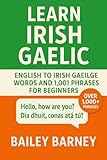
You do not need a reference book to use this greeting. If you want to build on it with everyday expressions, an Irish phrasebook can provide additional greetings, useful vocabulary, and pronunciation help. An Irish-English dictionary or Irish grammar reference is another optional choice for learners who want to understand forms such as sona, duit, and daoibh in greater detail.
For broader learning opportunities, Gaeilge.ie—administered by Foras na Gaeilge—serves as a portal to Irish-language organizations, teaching bodies, dictionaries, terminology, and related resources. Availability of classes and pronunciation programs varies by location and provider.
Independent reader supportYour contribution helps us test, update, and keep practical guides available for everyone.Quick copy-and-paste answer
To one person: Lá Fhéile Pádraig sona duit!
To a group: Lá Fhéile Pádraig sona daoibh!
Approximate pronunciation: “law leh Paw-drig suna ghit” for one person; “law leh Paw-drig suna yee-uv” for a group.
Free tools Windows power users keep installed
One-click scans. No signup required.
Language notes in this guide are based on the IrishCentral explanation of the greeting and supporting vocabulary and grammar entries from Teanglann; Gaeilge.ie is included as a broader Irish-language learning resource.
Best Value

- Used Book in Good Condition
Frequently Asked Questions
How do you say “Happy St. Patrick’s Day” in Irish?
Use Lá Fhéile Pádraig sona duit! when speaking to one person. For two or more people, use Lá Fhéile Pádraig sona daoibh!.
How do you pronounce Lá Fhéile Pádraig sona duit?
A rough guide is “law leh Paw-drig suna ghit.” This is an English approximation, not an exact pronunciation, and Irish dialects differ.
What is the difference between duit and daoibh?
Use duit for one person and daoibh for multiple people. The plural form is often suitable for a public post addressed to everyone reading it.
Do these 3 things before closing this tab:
1Repair Windows errors before they cause bigger problems2Scan for outdated or missing drivers - takes under a minute3Clear out junk files and repair common Windows errorsShould the accents be included in the Irish greeting?
Yes. The fadas in Lá, Fhéile, and Pádraig are part of standard Irish spelling and should be retained in a polished greeting.
The Bottom Line
The simplest correct greeting is Lá Fhéile Pádraig sona duit! for one person and Lá Fhéile Pádraig sona daoibh! for a group. Keep the fadas, and remember that the pronunciation guides are approximate.
Quick Recap
Product prices and availability are accurate as of the date/time indicated and are subject to change. Any price and availability information displayed on Amazon at the time of purchase will apply.